
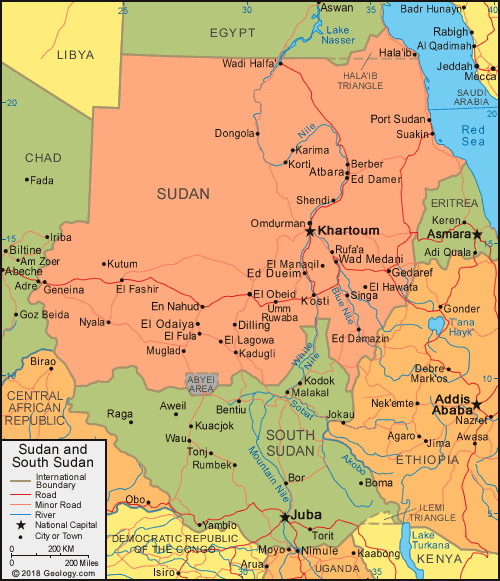
Sudan is a large country located in Northeast Africa. It gained independence from British and Egyptian colonial rule in 1956. However, in the decades after independence, the country has faced a number of conflicts and challenges.
One of the most significant conflicts in Sudan’s history was the Sudanese Civil War, which lasted from 1955 to 2005. This conflict was fought between the northern and southern regions of the country, and it was largely driven by religious and cultural differences between the Muslim north and the Christian and animist south. Southern Sudanese rebels fought for autonomy and self-determination, while the government in Khartoum sought to maintain its control over the entire country.
In 2011, South Sudan gained independence from Sudan, following a referendum in which the majority of southern Sudanese voted in favor of independence. Despite the split, however, tensions have continued between the two nations, and there have been ongoing conflicts in the border regions.
Currently, the fighting in Sudan iscomplex and multi-faceted, involving numerous political, ethnic, and economic factors. However, to provide a brief overview:
Sudan has a long and tumultuous history, with numerous conflicts and changes of government over the years. In 2011, South Sudan gained its independence from Sudan after years of civil war.
However, conflict continues in various parts of Sudan, particularly in the Darfur region, where rebels have been fighting against government forces since the early 2000s. The conflict in Darfur is largely driven by ethnic tensions between the Arab-dominated government and the non-Arab ethnic groups in the region.
In addition to the conflict in Darfur, there have also been clashes between the Sudanese government and rebel groups in other parts of the country, including the Sudan People’s Liberation Movement-North (SPLM-N) in the Nuba Mountains and Blue Nile regions.
Many of these conflicts have their roots in Sudan’s history of colonization, political tension between different communities, andeconomic struggles.
Sudan was colonized by Egypt and England in the late 1800s, which disrupted the social fabric of the country and created a divide between Arab and African ethnic groups. This divide was further exacerbated by unequal distribution of land and resources, leading to tension and conflict.
In 1956, Sudan gained independence from its colonizers. However, the country struggled with political instability and several military coups in the years following independence.
The current conflict in Sudan has its roots in the ousting of former President Omar al-Bashir in 2019. Following his removal, a transitional government was established, but the military and civilian factions have been at odds over the country’s future direction.
The ongoing conflict is also fueled by economic struggles, including inflation, high unemployment, and a shortage of basic necessities like food and water. These challenges have led to protests and demonstrations, which have sometimes turned violent.
Additionally, there has been long-standing tension between different ethnic groups in SudanSudan is a country located in Northeast Africa. The country has a complex history of civil war and ethnic conflict. The roots of the conflict can be traced back to the colonial period when Sudan was under British rule.
During the colonial period, the British divided Sudan into two regions: the predominantly Muslim north and the predominantly Christian and animist south. The British favored the north and granted them more privileges, which led to tensions with the south. After Sudan gained independence from Britain in 1956, the north continued to dominate political and economic power, leading to further marginalization of the south.
In 1983, the Sudanese government declared Sharia law, which exacerbated the division between the Muslim north and Christian and animist south. This led to the outbreak of the first Sudanese civil war, which lasted until 2005 and claimed over 2 million lives.
After the civil war ended, South Sudan was granted independence in 2011, but this did not bring an end to conflict inSudan. The country has a long history of ethnic and regional tensions, as well as conflicts between the government and rebel groups.
The current fighting in Sudan is primarily centered in the western region of Darfur, which has been plagued by violence and unrest since the early 2000s. The conflict in Darfur began as a result of tensions between nomadic Arab herders and farmers from African tribes. The government, led by President Omar al-Bashir, supported the Arab herders and armed them to protect their interests. This led to armed clashes with the African farmers, who in turn formed rebel groups to fight against the government and the Arab militias.
In response to the rebellion, the government launched a brutal counter-insurgency campaign in Darfur, which has been marked by widespread human rights abuses, including rape, torture, and extrajudicial killings. The government has also been accused of using chemical weapons and committing genocide against the African tribes in Darfur.
In addition to theSudan, located in Northeast Africa, has a long history of conflict and political unrest. One of the main conflicts in Sudan is the one occurring in Darfur, a region in the western part of the country, which has been ongoing since 2003.
In Darfur, the conflict primarily arises from disagreements over natural resources such as land and water between the central government in Khartoum and African tribes in the region. The government, which is dominated by Arab groups, has been accused of providing support to Arab militias who have been targeting African civilians in Darfur. These militias often attack African villages, burning them down, killing or raping villagers, and driving the survivors from their homes.
The conflict has resulted in large-scale atrocities, including the use of chemical weapons and committing genocide against the African tribes in Darfur. The Sudanese government has also been accused of using rape as a weapon of war, with many women and girls being attacked and abused by government forces and allied militias.
Attemptsto understand the conflict in Sudan require some knowledge of the country’s history. Sudan is a complex and diverse country, made up of many ethnic and religious groups. There have been many issues that have contributed to the conflict in Sudan, including poverty, political instability, and longstanding ethnic tensions.
Historically, Sudan has been ruled by a series of colonial powers, including the British and the Egyptians. After gaining independence in 1956, Sudan has experienced a series of military coups and civil wars. The conflict in Darfur, in western Sudan, which began in 2003, is a result of demands by non-Arab tribes for greater autonomy and resources from the Sudanese government. The conflict has resulted in significant loss of life and displacement.
The ongoing conflict in Sudan involves two main groups: the Sudanese government, and various armed opposition groups. Government forces, along with allied militias, have been accused of committing numerous human rights abuses against civilians, including women and girls. These abuses, which includeSudan is a country located in northeastern Africa. It has a long and complicated history, with multiple conflicts and issues that have led to the current situation of fighting.
One of the most significant conflicts in Sudan’s recent history was the long-running civil war that took place between 1983 and 2005. The war was fought between the central government, located in the north, and the Sudan People’s Liberation Army (SPLA), a rebel group made up mainly of members of the south’s Christian and animist minority.
The war led to widespread violence and displacement, with an estimated two million people killed and over four million people displaced. In 2005, a peace agreement was signed that granted the south a degree of autonomy and laid the groundwork for a referendum on independence. In 2011, South Sudan officially seceded from Sudan to become an independent nation.
Despite the end of the war, the country has struggled with ongoing conflicts in other parts of the country. The regionof Darfur has experienced violence and displacement since the early 2000s, with tensions between rebel groups and government forces often leading to deadly clashes. These conflicts have been fueled by ethnic and political divisions, as well as competition over natural resources in the region.
In recent years, the situation in Sudan has been further complicated by a power struggle between the military and civilian leaders. In 2019, longtime dictator Omar al-Bashir was ousted from power following months of protests, and a transitional government was established with the goal of transitioning to democratic rule.
However, this transition has been marred by ongoing violence and human rights abuses, particularly in the Tigray region. Since November 2020, government forces have been in conflict with rebel groups in the region, causing significant displacement and prompting accusations of ethnic cleansing.
Overall, the situation in Sudan is complex and multifaceted, with underlying factors of ethnic and political divisions, competition over resources, and power struggles between various groups.
 thelivingbreathingjamesbrown.com