

China has previously said its lunar base will likely be powered by nuclear energy, and will include a lander, hopper, orbiter and rover, all of which would be constructed by the Chang’e 6, 7 and 8 missions. It wasn’t immediately clear in the interview if the entire base will be built with lunar soil. In 2021, China officially announced its plans to build the International Lunar Research Station in cooperation with Russia. This aims to be fully autonomous at first, with robots carrying out tasks such as exploiting local resources. Ding Lieyun, an expert from the Chinese Academy of Engineering, said a team is designing a robot named “Chinese Super Masons” to make bricks out of lunar soil, according to Changjiang Daily. The robot tasked with making the “lunar soil brick” will be launched during China’s Chang’e-8 mission around 2028. Another robot called “lunar Super Water Well Digger” is also being created right now. Another is “Lunar Water-Oxygen-Hydrogen Extractor” is being created. Another is also being created to re-use human feces in food creation using earthworm embedded technologies. All options are on the table. Even eating cardboard with artificial flavoring. Also, growing fish meat and beef meat in the Lab. And earthworms farming. Oxygen Cyclomagatron to create oxygen.
But Ordering tasks from earth and seeing them taking place on the moon by robots building a moon base will be a huge challenge. With several multi-task Robots with Nuclear Powered Energy Sources, any Nuclear explosion on the dark side of the moon would cause a sudden negative Orbit change to the moon and this one Act would cause a direct negative Act to earth’s orbit and rotation causing sudden rotation shifts on earth until Earth completely counter-collapsed. This could take place as quickly as 5 years. Possibly 2 years.
Neither Russia or China have a proven Record of Planet Base Technologies and many things that could be done will be experimental. Nor does any Country on Earth. Exciting? Or could the experimental Moon Base on the Dark Side of the Moon ultimately exterminate all of Mankind? A huge Fuel Explosion or Mining Explosion could do the same thing.
Don’t say No Way! There’s always a way…
One issue with using Helium-3 as an energy source is that it is extremely rare on Earth. The most significant sources of Helium-3 are on the moon, and the cost of mining and transporting the Helium-3 to Earth would likely be prohibitively expensive. Additionally, the use of Helium-3 as an energy source would require significant technological advancements to be made in order to harness its energy efficiently. Finally, while Helium-3 fusion reactions do not produce radioactive waste, they do produce high levels of neutron radiation, which could present safety challenges for workers and the environment.
According to Chinese state media, the Chinese Atomic Energy Authority has confirmed the presence of helium-3 inside the crystal. This isotope of helium is rare on Earth, but scientists (and science-fiction authors) have long speculated it could be present in significant amounts on the moon.
I’m thinking that Russia’s and China’s Moon Base is being done to create self-serving National Pride for their own people, but would be based totally on complete experimentation. I find it amusing, but utterly impractical as a Base for Launches to other Planets. Why go to any of these other utterly inhospitable Planets?


Construction is slated for 2026 through 2035, and crews could start operating from the base by 2036.
https://www.google.com/amp/s/www.inverse.com/innovation/horizons-china-russia-moon-base/amp

What exactly is being created?
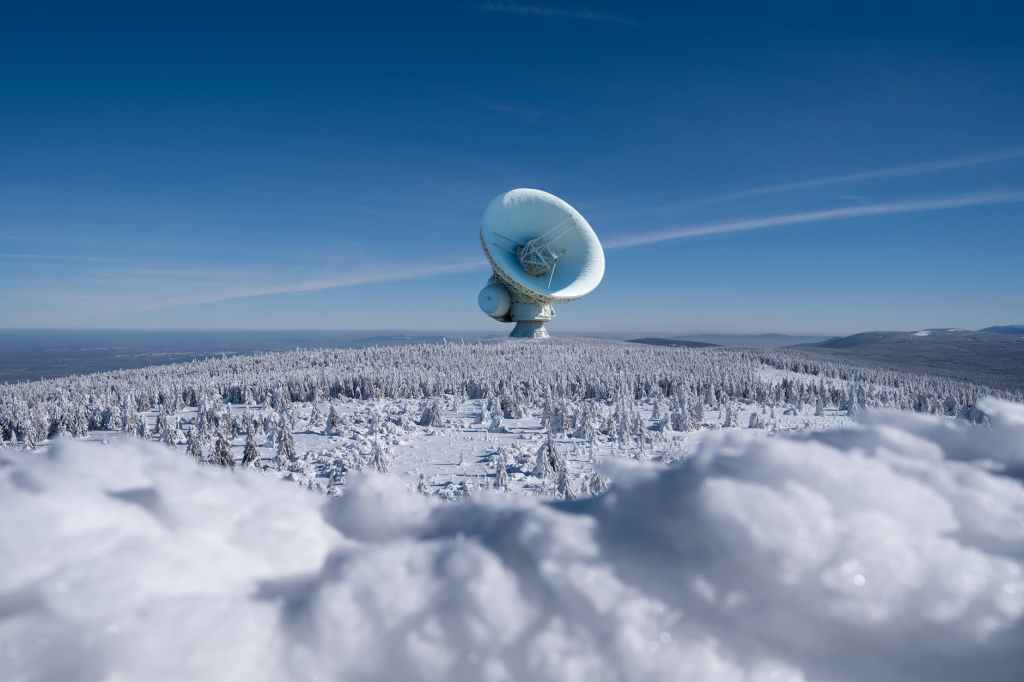
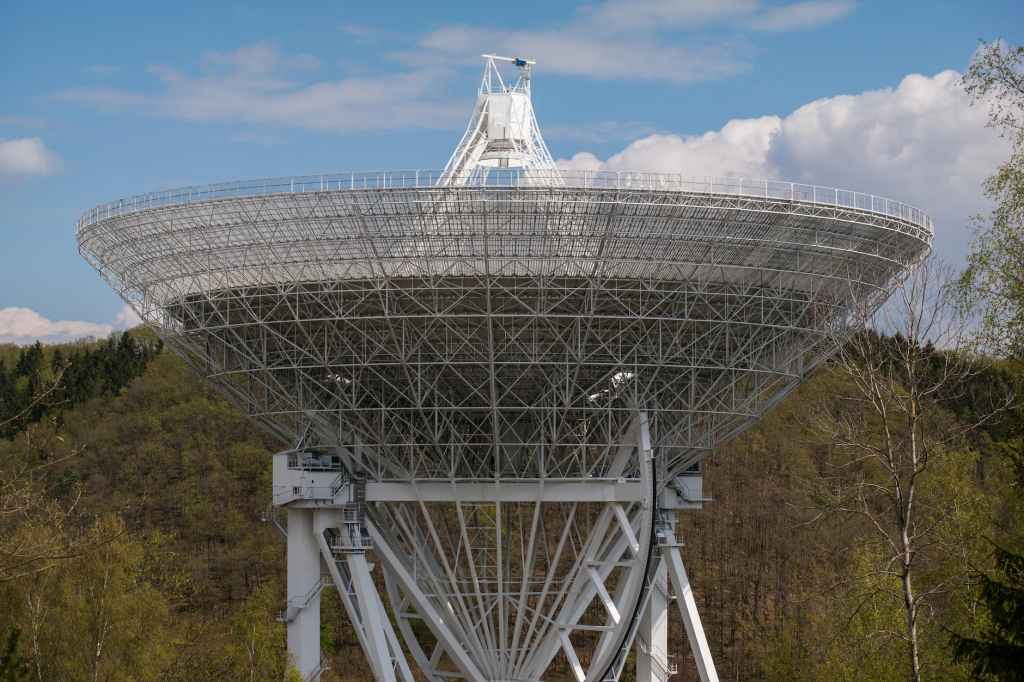
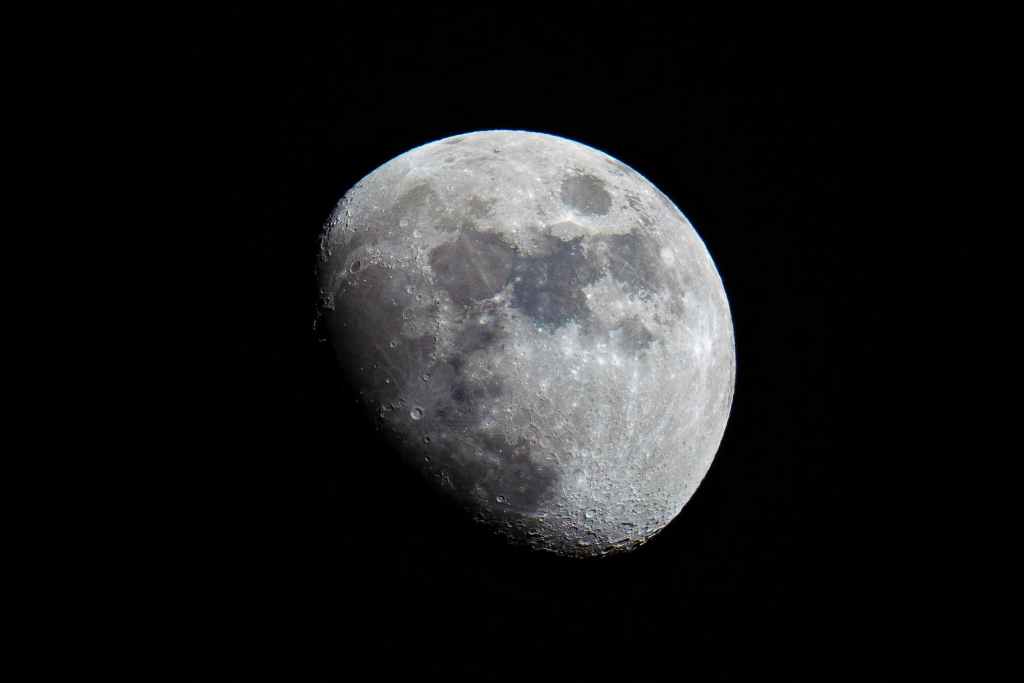
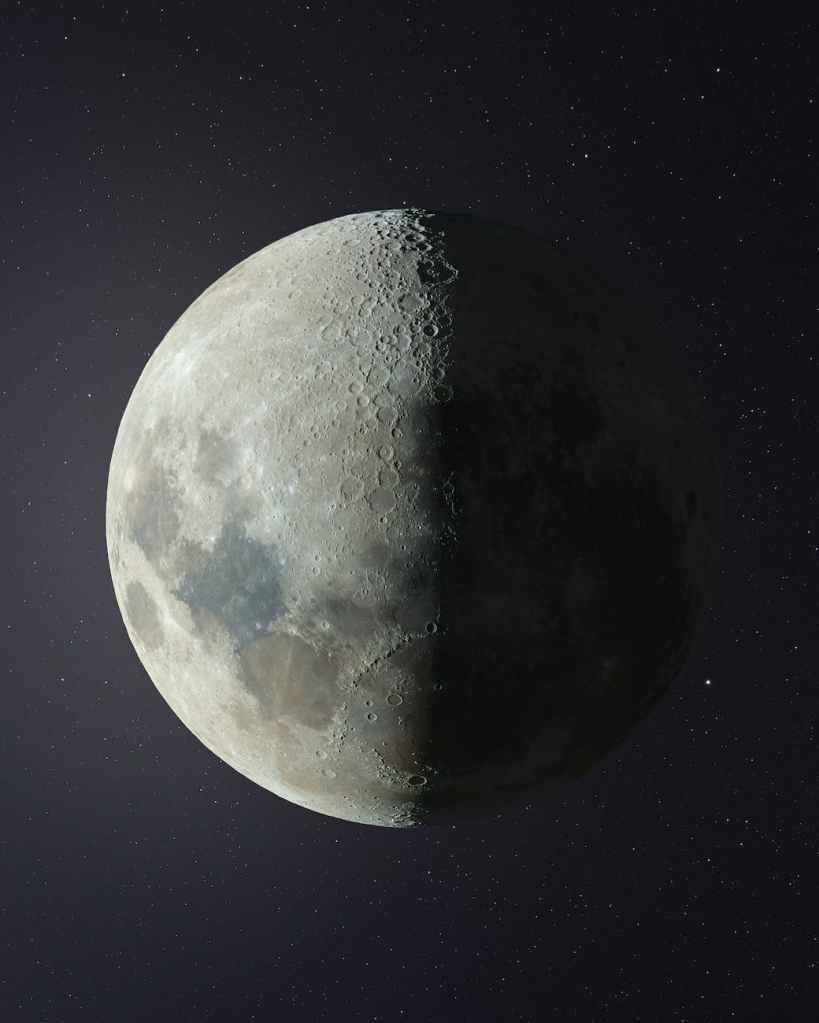
China is planning a moon base on the dark side of the moon for several reasons. The dark side of the moon has never been explored or colonized before, and as such, it presents new opportunities for scientific research and exploration. The lack of radio interference on the dark side of the moon can also make it an ideal location for astronomical observations and communications. Additionally, a lunar base on the dark side of the moon could serve as a testing ground for technologies and techniques that could be used in future deep space missions. It could also be used as a base for potential mining operations for resources such as helium-3, which could be used for fusion energy production.
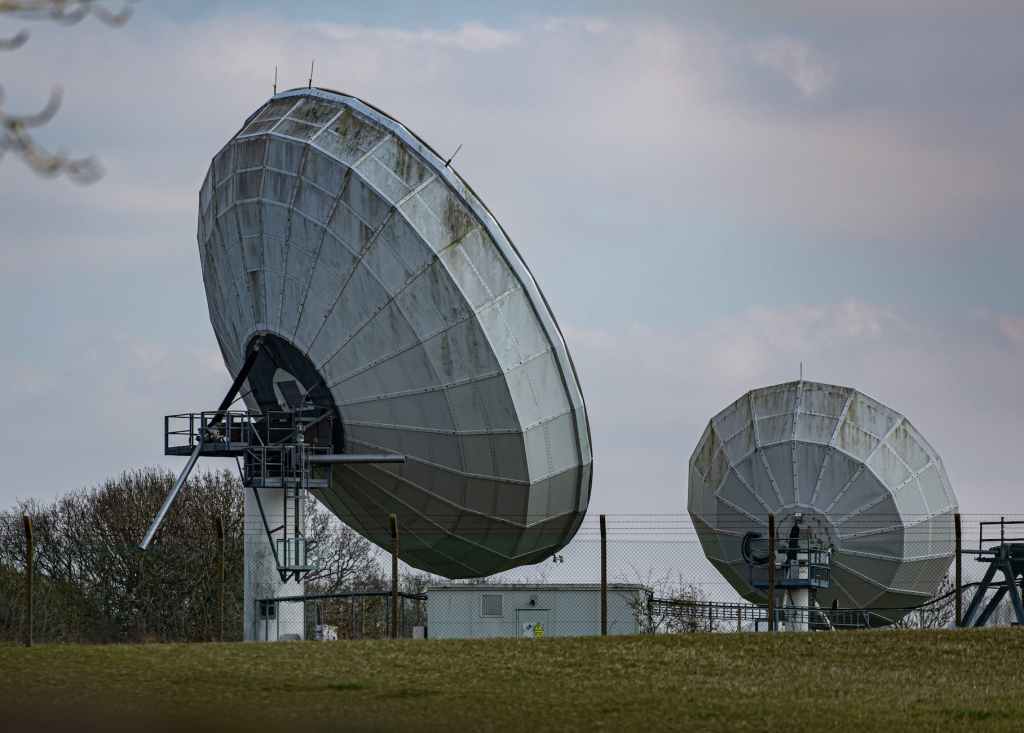
Communication with the China Moon base on the dark side of the moon is possible through a relay satellite placed in a halo orbit around the second Lagrange (L2) point of the Earth-Moon system. The relay satellite will act as a bridge, receiving signals from the Moon base and retransmitting them to Earth. As the relay satellite orbits around L2, it will always remain in line-of-sight with both the Moon base and the Earth, ensuring continuous communication. The relay satellite could also be used to provide high-speed data transfer, allowing for the transmission of large amounts of scientific data and images from the Moon base to Earth.
The second Lagrange point (L2) is a point in space where the gravitational forces of two large bodies, such as the Earth and Moon, balance out the centrifugal force felt by a smaller object at that point.
For the Earth and Moon system, the L2 point is situated on the opposite side of the Moon from Earth, about 60,000 km beyond the Moon. At this point, the gravitational pull of the Earth and Moon cancel out the centrifugal force felt by a smaller object, allowing it to remain in a stable position in relation to the Moon and Earth.
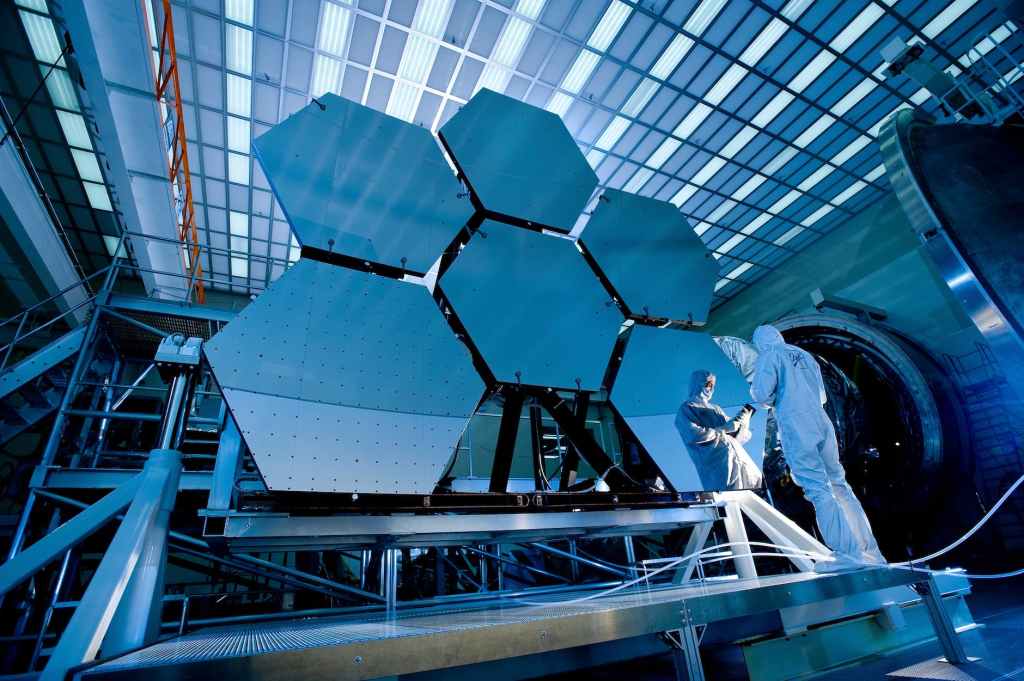
L2 is often considered as a possible location for space telescopes, as objects placed at that point can observe a constant section of the sky while remaining in a stable orbit. Several satellites in the second Lagrange point (L2) of the Earth-Moon system. Some examples include the
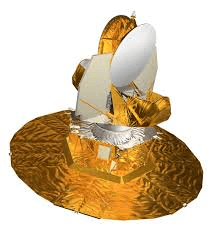
Wilkinson Microwave Anisotropy Probe (WMAP) and the James Webb Space Telescope (JWST).
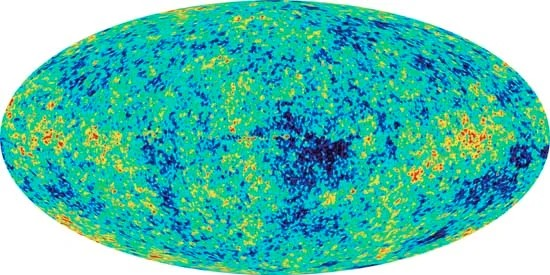
Full sky map of 13 billion years ago…
The Wilkinson Microwave Anisotropy Probe, originally known as the Microwave Anisotropy Probe, was a NASA spacecraft operating from 2001 to 2010 which measured temperature differences across the sky in the cosmic microwave background – the radiant heat remaining from the Big Bang.





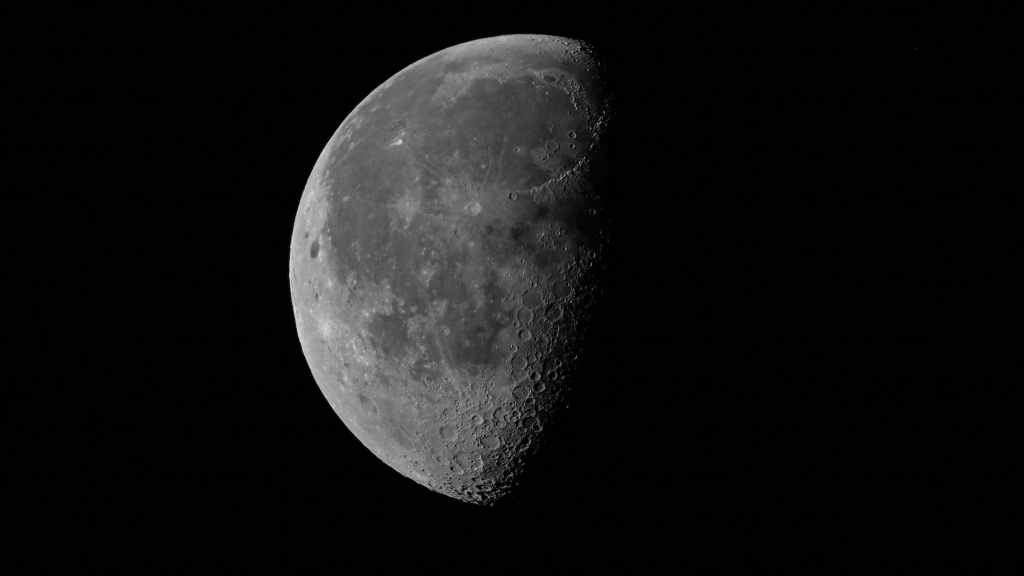



The scientist noted that the moon is still the “main field” of deep space exploration and the construction of an international lunar research station was a historical necessity.

https://english.news.cn/20230317/7b1674b0be1f491097f15dc60ebcd02d/c.html
https://en.m.wikipedia.org/wiki/Chinese_Lunar_Exploration_Program
| Chang’e 6 | May 2024 | Long March 5 | Lunar sample return | Lunar orbiter, lander, and sample return; scheduled to land at the South Pole–Aitken basin near the lunar south pole.[18] |
|---|---|---|---|---|
| Chang’e 7 | 2026 | Long March 5 | Lunar surface survey | Lunar orbiter, lander, rover, and mini-flying probe; expected to perform in-depth exploration of the lunar south pole to look for resources.[21] |
| Chang’e 8 | 2028 | Long March 5 | Lunar surface survey | Full mission details are currently unknown; will test ISRU and 3D-printing technologies, ahead of future crewed exploration of the Moon.[21] |
And fully operational by 2036? So, what’s happening between 2028 and 2036?
For a good view of what’s planned?
 thelivingbreathingjamesbrown.com
You must be logged in to post a comment.