
I Hope this Read will inspire you to become a “Big Shot” and create the Next Big Company building entire neighborhoods using AI and 3D PRINTING. They’re doing this already in Texas!
Is it incredibly Complicated? No, nothing is incredibly complicated once you learn the ropes. It’s not new when you go do it. Go out and find out all that you can. Then, you might get used to the concept of 3D PRINTING in Home’s Construction. Does allowing AI and 3D PRINTERS to team up scare you? AI is intrigued with this idea. To build entire neighborhoods in record time? In a fraction of the time it takes to build homes now? I’ve even shared where you might find the money for such ambitious projects. Just keep reading.
Isn’t everything tied to Money? How much will it Cost Me? Will the Home Last or break apart? What is the Truth?
Building Codes may not be in place yet in your local jurisdiction. This is totally New Stuff. It’s still in its infancy stage in many ways. But once this Takes Off, it’s gonna Skyrocket! And with the aid of AI, whole neighborhoods could be built in record time.
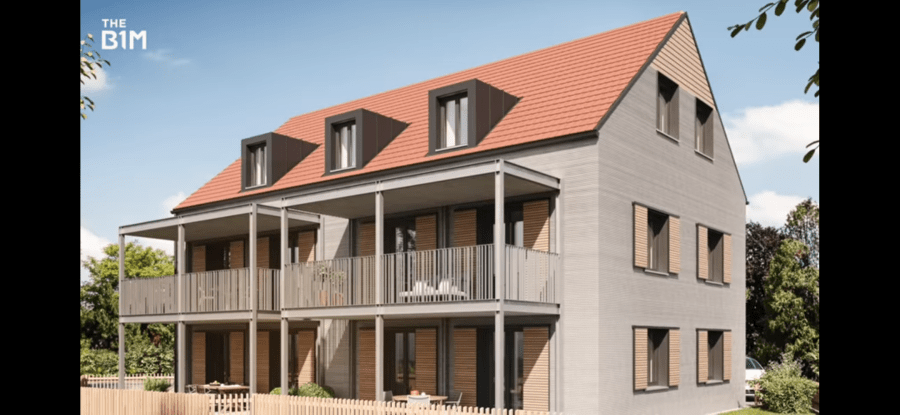
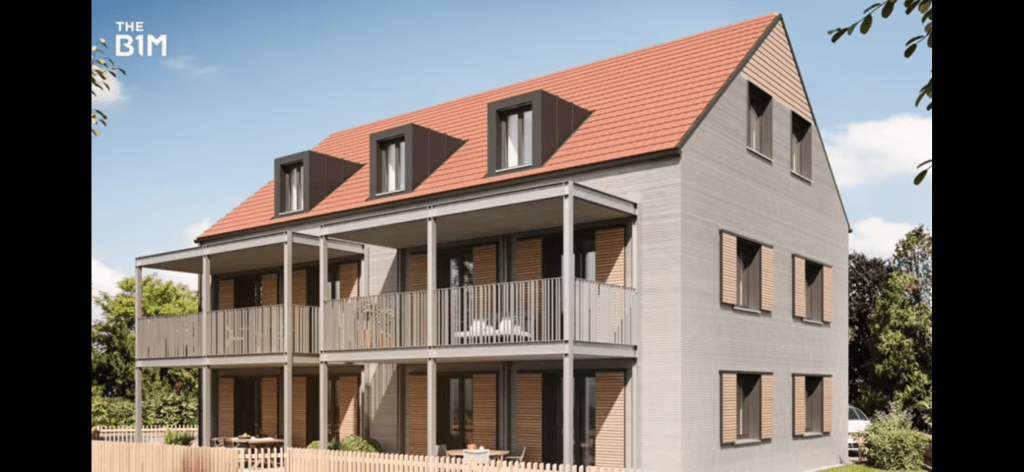
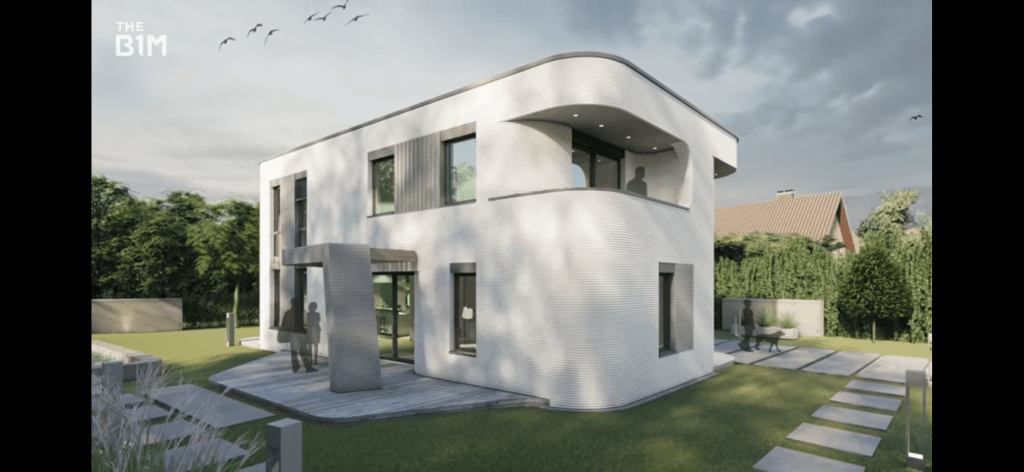
In Germany, things are about to completely change the way the World sees 3D Printing. Look at these two Homes-
The 1st is a 5-Apartment three level home!
AI and 3D printers could be used to build an entire neighborhood in record time:
- AI could be used to design the homes. AI could be used to create designs for homes that are both efficient and aesthetically pleasing. This would save time and money on the design process, and it would ensure that the homes are built to meet the needs of the residents.
- 3D printers could be used to build the homes. 3D printers could be used to print the homes layer by layer, using a variety of materials, including concrete, steel, and wood. This would allow the homes to be built quickly and efficiently, and it would reduce the amount of waste generated during construction.
- AI could be used to manage the construction process. AI could be used to manage the construction process, ensuring that all of the tasks are completed on time and within budget. This would help to ensure that the project is completed on schedule, and it would help to avoid any unforeseen delays or problems.
By using AI and 3D printers, it is possible to build an entire neighborhood in a fraction of the time it would take using traditional construction methods. This would help to address the global housing crisis, and it would provide affordable housing for millions of people around the world.
Here are some additional benefits of using AI and 3D printers to build a neighborhood:
- Increased sustainability: 3D printing can be used to create homes that are more sustainable than traditional homes. For example, 3D printers can be used to print homes with insulation made from recycled materials, which can help to reduce energy costs.
- Improved safety: 3D printing can be used to create homes that are safer than traditional homes. For example, 3D printers can be used to print homes with reinforced walls and ceilings, which can help to protect residents from natural disasters.
- Enhanced customization: 3D printing can be used to create homes that are customized to the needs of the residents. For example, 3D printers can be used to print homes with different layouts, sizes, and features.
Overall, AI and 3D printers have the potential to revolutionize the way we build homes. By using these technologies, we can build homes that are faster, cheaper, more sustainable, safer, and more customizable than ever before.
There are a number of companies and investors who could lead the way in funding a massive new AI and 3D printing project for an entire neighborhood. These include:
- Construction companies: Construction companies are always looking for new ways to build homes more quickly and efficiently. AI and 3D printing could help them to do this, and it could also help them to reduce costs.
- Real estate developers: Real estate developers are always looking for new ways to build affordable housing. AI and 3D printing could help them to do this, and it could also help them to create more sustainable and energy-efficient homes.
- Governments: Governments are often interested in finding new ways to provide affordable housing for their citizens. AI and 3D printing could help them to do this, and it could also help them to create more sustainable and energy-efficient communities.
- Philanthropic organizations: Philanthropic organizations are often interested in finding new ways to improve the lives of people in need. AI and 3D printing could help them to do this, and it could also help them to create more sustainable and energy-efficient communities.
These are just a few of the companies and investors who could lead the way in funding a massive new AI and 3D printing project for an entire neighborhood. By working together, these groups could help to create a more sustainable and affordable future for everyone.
Here are some additional companies and investors who may be interested in funding such an exciting and progressive project of building entire neighborhoods:
- Google: Google has been investing heavily in AI and 3D printing technologies. They could use their resources to help fund a project like this.
- Siemens: Siemens is a global engineering company with a strong focus on sustainability. They could use their expertise to help design and build a sustainable neighborhood using AI and 3D printing.
- Bill Gates: Bill Gates is a well-known philanthropist who has a strong interest in sustainability. He could use his resources to help fund a project like this.
- The Rockefeller Foundation: The Rockefeller Foundation is a philanthropic organization that has a long history of investing in sustainable development. They could use their resources to help fund a project like this.
I hope this list helps you identify some potential partners for your project.
3D printing is a rapidly developing technology that has the potential to revolutionize the construction industry. 3D printing for construction, also known as C3DP, is a process of creating three-dimensional structures by depositing material layer by layer. This process can be used to create a wide variety of structures, from simple homes to complex buildings.
There are many benefits to using 3D printing for construction. First, it can significantly reduce the time and cost of construction. 3D printers can create structures much faster than traditional construction methods, and they can do so with less labor. Second, 3D printing can create structures that are more durable and energy-efficient than traditional structures. 3D printers can use a variety of materials, including concrete, steel, and polymers, which can be customized to meet the specific needs of a structure. Third, 3D printing can be used to create structures in remote or difficult-to-access locations. This is because 3D printers are not limited by the need for roads, power, or water.
There are also some challenges to using 3D printing for construction. First, 3D printers are still relatively expensive. However, the cost of 3D printers is expected to decrease as the technology continues to develop. Second, 3D printing requires a high level of accuracy and precision. This can be a challenge in complex structures. Third, 3D printing can be a time-consuming process. This is because 3D printers must deposit material layer by layer.
Despite the challenges, 3D printing for construction is a promising technology with the potential to revolutionize the industry. As the technology continues to develop, 3D printing is likely to become more affordable, accurate, and efficient. This will make it a more viable option for a wider range of construction projects.
Here are some additional things to consider about 3D printing for construction:
- Sustainability: 3D printing can be a more sustainable way to build than traditional methods. This is because 3D printers can use recycled materials, and they can create structures that are more energy-efficient.
- Customization: 3D printing can be used to create structures that are customized to meet the specific needs of a project. This can be useful for things like creating homes that are wheelchair accessible or buildings that are designed to withstand earthquakes.
- Innovation: 3D printing is a new technology, and it is constantly evolving. This means that there are always new possibilities for using 3D printing in construction. For example, 3D printers could be used to create self-healing structures or buildings that can adapt to changing environmental conditions.
https://www.xometry.com/resources/3d-printing/best-3d-printers-for-construction/
The basic cost of 3D-printing a house is considerably less than the cost of building a traditional house. The construction process requires less labor and storage of materials. Other factors may offset this benefit, but for now, it is too early to say for certain what that effect will be.
This appears to be a Gold Mine to me. And the question is-When are you gonna get involved in mining this Gold too?
 thelivingbreathingjamesbrown.com
You must be logged in to post a comment.