
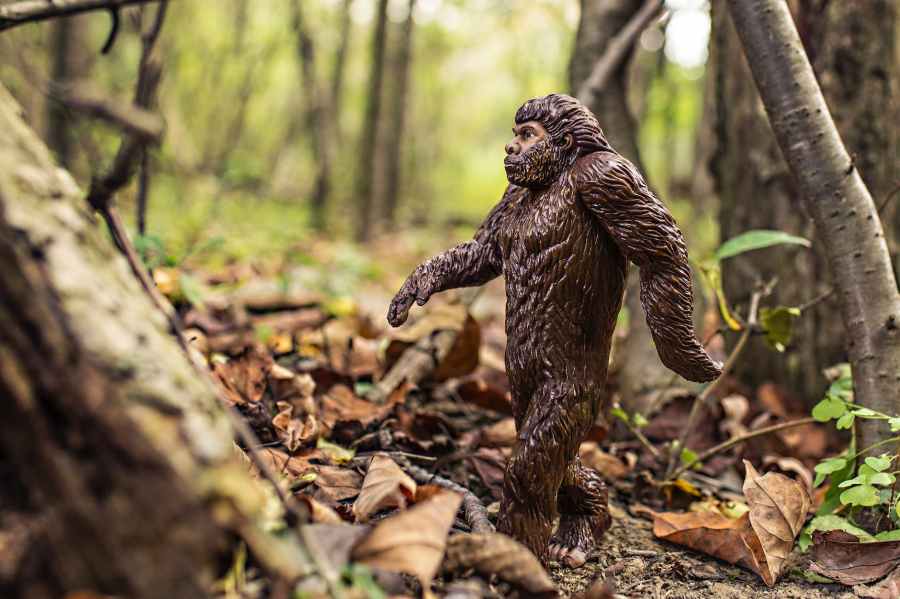
The evolution of man is a long and complex process, but here is a brief overview of the major steps:
- Australopithecus (4-2 million years ago): The earliest known hominids, or human ancestors, were bipedal and had relatively small brains. They lived in Africa and may have been the ancestors of later hominids, such as Homo habilis.Opens in a new windowWikipediaAustralopithecus fossil
- Homo habilis (2.4-1.4 million years ago): These hominids had larger brains than Australopithecus and were the first to make and use tools. They lived in Africa and may have been the ancestors of Homo erectus.Opens in a new windowWikipediaHomo habilis fossil
- Homo erectus (1.9-135,000 years ago): These hominids had even larger brains than Homo habilis and were the first to migrate out of Africa. They lived in Africa, Asia, and Europe and were the first to use fire and control their environment.Opens in a new windowAustralian MuseumHomo erectus fossil
- Homo neanderthalensis (400,000-40,000 years ago): These hominids lived in Europe and Asia and were closely related to modern humans. They had larger brains than modern humans, but their bodies were more robust. They went extinct about 40,000 years ago, possibly due to competition with modern humans.Opens in a new windowAustralian MuseumHomo neanderthalensis fossil
- Homo sapiens (200,000 years to present): Modern humans evolved in Africa and eventually migrated to all parts of the world. They have the largest brains of any hominid and are the only surviving species of the genus Homo.Opens in a new windowNatureHomo sapiens fossil
In addition to these major steps, there were many other hominid species that evolved over time. Some of these species were successful for a time, but eventually went extinct. Others, such as Homo sapiens, were able to adapt to new environments and survive.
The migration of early humans is a complex topic, but it is generally believed that they first migrated out of Africa about 2 million years ago. They eventually spread to all parts of the world, except for Antarctica. The reasons for this migration are not fully understood, but it is likely that they were driven by a combination of factors, such as climate change, resource availability, and competition with other hominid species.
The earliest known human bones have been found in Africa, but they have also been found in Asia, Europe, and Australia. The oldest known human bones are from Jebel Irhoud, Morocco, and are dated to about 360,000 years ago. These bones show that anatomically modern humans were living in Africa at least this early.
The evolution of man is a fascinating and complex topic. It is a story of change and adaptation, and it is a story that is still being written.
There is genetic evidence that modern humans and Neanderthals interbred, which means that there were some instances of mating between the two species. This interbreeding is thought to have happened in several places around the world, including Europe, Asia, and the Middle East.
The evidence for this interbreeding comes from the analysis of DNA from ancient remains. When scientists compare the DNA of modern humans to the DNA of Neanderthals, they find that there are small genetic overlaps. These overlaps are thought to be the result of interbreeding between the two species.
The exact timing and extent of this interbreeding is still not fully understood, but it is thought to have happened between 47,000 and 65,000 years ago. It is also thought that the interbreeding was not limited to one specific group of humans or Neanderthals, but rather that it happened in many different places and times.
The reason why humans and Neanderthals interbred is still not fully understood. However, some scientists believe that it may have been due to a combination of factors, such as competition for resources, social interactions, and cultural exchange.
The interbreeding between humans and Neanderthals has had a lasting impact on our species. Today, all non-African humans carry some Neanderthal DNA, which suggests that this interbreeding was significant. This Neanderthal DNA may have contributed to our physical and cognitive abilities, and it may also have helped us to adapt to new environments.
The discovery of interbreeding between humans and Neanderthals has challenged our understanding of human evolution. It has shown that our species is not as separate from other hominids as we once thought, and it has also shown that our genetic makeup is more complex than we previously realized. This discovery is just one more piece of evidence that shows how interconnected we are to all other life on Earth.
Peo8ple have different skin colors and physical features because of a combination of genetics and environment.
- Genetics: The genes that we inherit from our parents determine our skin color, eye color, hair color, and other physical features. These genes are passed down from generation to generation, and they can vary from person to person.
- Environment: The environment in which we live can also affect our skin color and physical features. For example, people who live in sunny climates tend to have darker skin than people who live in cloudy climates. This is because darker skin helps to protect against the harmful effects of ultraviolet radiation from the sun.
The combination of genetics and environment has led to the wide variety of skin colors and physical features that we see in the world today.
Here are some specific examples of how genetics and environment can affect skin color:
- Melanin: Melanin is the pigment that gives our skin its color. It is produced by cells called melanocytes in the skin. The amount of melanin that we produce is determined by our genes. People with more melanin tend to have darker skin, while people with less melanin tend to have lighter skin.
- UV radiation: UV radiation from the sun can damage our skin. Darker skin is more resistant to UV radiation than lighter skin. This is why people who live in sunny climates tend to have darker skin.
- Vitamin D: Vitamin D is an important nutrient that our bodies need. We can get vitamin D from sunlight, but darker skin absorbs less sunlight than lighter skin. This means that people with darker skin may need to get more vitamin D from their diet.
It is important to note that skin color is not a reliable indicator of a person’s race or ethnicity. Race and ethnicity are social constructs, and they are not based on biology. There are people of all races and ethnicities with a wide variety of skin colors.
Studies have shown that all non-Africans have some Neanderthal DNA in their genomes, which suggests that interbreeding between humans and Neanderthals was significant. This Neanderthal DNA may have contributed to our physical and cognitive abilities, and it may also have helped us to adapt to new environments.
The exact genes that we inherited from Neanderthals are still being studied, but some of the genes that have been identified are involved in the following:
- Immunity: Neanderthal DNA may have helped to improve our immune system. This is because Neanderthals lived in different environments than modern humans, and they may have been exposed to different pathogens.
- Brain development: Neanderthal DNA may have also helped to improve our brain development. This is because Neanderthals had larger brains than modern humans, and they may have had some cognitive advantages. They may have been able to communicate using telepathy, sign language and more.
- Skin and hair: Neanderthal DNA may also be involved in the development of our skin and hair. This is because Neanderthals had different skin and hair colors than modern humans, and they may have had some adaptations to different environments.
It is important to note that the effects of Neanderthal DNA are still being studied, and we do not yet fully understand how they impact our health and well-being. However, the research that has been done so far suggests that Neanderthal DNA may have had some beneficial effects on our species.
It is possible that humans will use genetics to pick out their child one day. This is a controversial topic, and there are many ethical concerns that need to be considered. However, the technology is developing rapidly, and it is possible that this will become a reality in the future.
There are a number of ways that genetics could be used to pick out a child. For example, parents could choose to have a child with certain genetic traits, such as intelligence, athleticism, or resistance to disease. They could also choose to have a child with a specific gender or eye color.
There are a number of ethical concerns that need to be considered before this technology is used. For example, some people worry that it could lead to discrimination against people with certain genetic traits. Others worry that it could create a new class of people who are seen as superior to others.
It is important to have a public discussion about these issues before this technology is used. We need to make sure that we are using it in a way that is ethical and responsible.
Here are some of the ethical concerns that need to be considered:
- Discrimination: If parents are able to choose the genetic traits of their children, it could lead to discrimination against people with certain genetic traits. For example, people with genetic diseases could be seen as less desirable, and they could be discriminated against in employment, education, and other areas.
- Social inequality: If only wealthy people are able to afford to use this technology, it could lead to increased social inequality. The wealthy would be able to select for the best genetic traits, while the poor would be left with whatever they were born with.
- Loss of individuality: If parents are able to choose the genetic traits of their children, it could lead to a loss of individuality. Children would be seen as products of their parents’ choices, rather than as individuals in their own right.
These are just some of the ethical concerns that need to be considered before this technology is used. It is important to have a public discussion about these issues before we make any decisions about how to use this technology.
Neanderthals were likely to have picked out their mates based on a combination of factors, including physical appearance, social status, and personality.
- Physical appearance: Neanderthals were likely to have been attracted to mates who were healthy and strong. They may also have been attracted to mates who had symmetrical features, as this is a sign of good health.
- Social status: Neanderthals lived in hunter-gatherer societies, and social status would have been important for survival. Mates with high social status would have been able to provide more resources for their offspring, and they would have been more likely to be successful in raising their children.
- Personality: Neanderthals were likely to have been attracted to mates who were kind, cooperative, and supportive. These traits would have been important for raising children and for surviving in a harsh environment.
Of course, we can only speculate about how Neanderthals picked out their mates. There is no direct evidence to tell us what factors they considered important. However, based on what we know about other human societies, it is likely that they were influenced by a combination of physical appearance, social status, and personality.
It is also important to note that Neanderthals were not a monolithic group. They lived in different parts of the world, and they may have had different mating practices. It is possible that some Neanderthal groups were more influenced by physical appearance, while others were more influenced by social status or personality.
Ultimately, we do not know for sure how Neanderthals picked out their mates. However, the factors discussed above are likely to have played a role in their decision-making process.
The phrase “monkey lover” was first used in the 19th century as a derogatory term for people who were interested in the study of primates. It was often used by people who believed that humans were superior to other animals, and that the study of primates was a waste of time.
The phrase is thought to have originated from the belief that monkeys were closely related to humans, and that people who studied monkeys were therefore “monkey lovers.” This belief was based on the fact that monkeys share many physical similarities with humans, such as bipedalism, opposable thumbs, and large brains.
However, the phrase “monkey lover” is now considered to be offensive and outdated. It is no longer used in a scientific context, and it is generally only used by people who are trying to insult or belittle others.
Here are some examples of how the phrase “monkey lover” has been used in the past:
- In 1871, Charles Darwin wrote in his book The Descent of Man that “the expression of ‘monkey-lover’ was applied to [him] with much bitterness.”
- In 1922, the American primatologist Robert Yerkes was called a “monkey lover” by a group of people who were protesting his research on primates.
- In 1968, the American author and activist Jane Goodall was called a “monkey lover” by a group of people who were opposed to her work with chimpanzees.
Today, the phrase “monkey lover” is rarely used in a scientific context. It is more likely to be used by people who are trying to insult or belittle others. For example, someone might call another person a “monkey lover” if they are trying to make them feel stupid or inferior.
The phrase “monkey lover” is considered to be offensive because it implies that there is something wrong with being interested in primates. It also implies that people who study primates are not interested in humans, or that they believe that humans are not superior to other animals.
In conclusion, the phrase “monkey lover” was first used in the 19th century as a derogatory term for people who were interested in the study of primates. It is now considered to be offensive and outdated, and it is only used by people who are trying to insult or belittle others.
 thelivingbreathingjamesbrown.com