

Read the full address-
Ministry of External Affairs
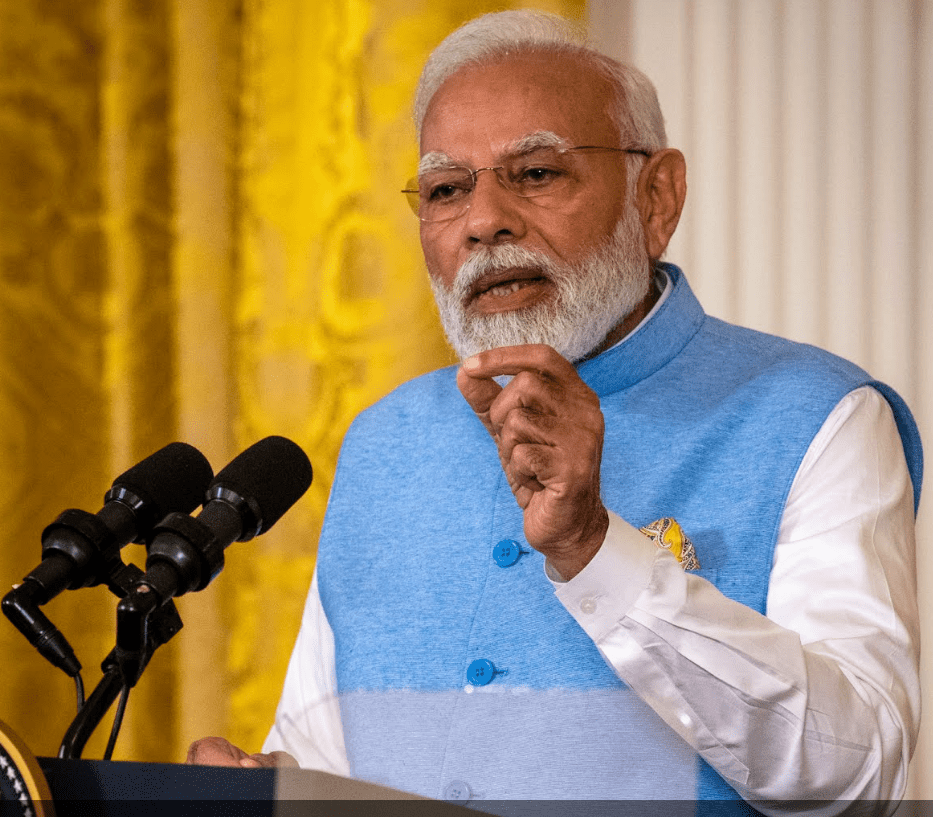
Address by Prime Minister, Shri Narendra Modi to the Joint Session of the US Congress
June 23, 2023
Mister Speaker,
Madam Vice President,
Distinguished Members of the US Congress,
Ladies and Gentlemen,
Namaskar!
It is always a great honour to address the United States Congress. It is an exceptional privilege to do so twice. For this honour, I extend my deepest gratitude on behalf of the 1.4 billion people of India. I see that nearly half of you were here in 2016. I feel your warmth as old friends. I can also see the enthusiasm of a new friendship in the other half. I remember Senator Harry Reid, Senator John McCain, Senator Orrin Hatch, Elijah Cummings, Alcee Hastings and others, who I met here in 2016, and who are sadly no longer with us.
Mister Speaker,
Standing here, seven Junes ago, that’s the June when Hamilton swept all the awards, I said that the hesitations of history were behind us. Now, when our era is at a crossroads, I am here to speak about our calling for this century. Through the long and winding road that we have travelled, we have met the test of friendship. A lot has changed since I came here seven summers ago. But a lot has remained the same – like our commitment to deepen the friendship between India and the United States. In the past few years, there have been many advances in AI – Artificial Intelligence. At the same time, there have been even more momentous developments in another AI – America and India.
Mister Speaker and Distinguished Members,
The beauty of democracy is the constant connect with the people, to listen to them, and feel their pulse. And, I know this takes a lot of time, energy, effort, and travel. It is a Thursday afternoon – a fly-out day for some of you. So, I am grateful for your time. I also know how busy you have been this last month.
Being a citizen of a vibrant democracy myself, I can admit one thing Mister Speaker – you have a tough job! I can relate to the battles of passion, persuasion and policy. I can understand the debate of ideas and ideology. But I am delighted to see you come together today, to celebrate the bond between world’s two great democracies – India and the United States. I am happy to help out whenever you need a strong bipartisan consensus. There will be – and there must be – a contest of ideas at home. But, we must also come together as one when we speak for our nation. And, you have shown that you can do it. Congratulations!
Mister Speaker,
The foundation of America was inspired by the vision of a nation of equal people. Throughout your history, you have embraced people from around the world. And, you have made them equal partners in the American dream. There are millions here, who have roots in India. Some of them sit proudly in this chamber. There is one behind me, who has made history! I am told that the Samosa Caucus is now the flavour of the House. I hope it grows and brings the full diversity of Indian cuisine here. Over two centuries, we have inspired each other through the lives of great Americans and Indians. We pay tribute to Mahatma Gandhi and Martin Luther King Junior. We also remember many others who worked for liberty, equality and justice. Today, I also wish to pay a heartfelt tribute to one of them – Congressman John Lewis.
Mister Speaker,
Democracy is one of our sacred and shared values. It has evolved over a long time, and taken various forms and systems. Throughout history, however, one thing has been clear.
Democracy is the spirit that supports equality and dignity.
Democracy is the idea that welcomes debate and discourse.
Democracy is the culture that gives wings to thought and expression.
India is blessed to have such values from times immemorial.
In the evolution of the democratic spirit, India is the Mother of Democracy.
Millennia ago, our oldest scriptures said,
‘एकम् सत् विप्रा बहुधा वदन्ति’.
It means – the truth is one but the wise express it in different ways.
Now, the US is the oldest and India the largest democracy.
Our partnership augurs well for the future of democracy.
Together, we shall give a better future to the world, and a better world to the future.
Mister Speaker,
Last year, India celebrated 75 years of its independence. Every milestone is important, but this one was special. We celebrated a remarkable journey of over 75 years of freedom, after a thousand years of foreign rule in one form or another. This was not just a celebration of democracy, but also of diversity. Not just of Constitution, but also of its spirit of social empowerment. Not just of our competitive and cooperative federalism, but also of our essential unity and integrity.
We have over two thousand five hundred political parties. Yes, you heard that right- two thousand five hundred. About twenty different parties govern various states of India. We have twenty-two official languages and thousands of dialects, and yet, we speak in one voice. Every hundred miles, our cuisine changes. From Dosa to Aloo Prantha and from Srikhand to Sandesh. We enjoy all of these. We are home to all faiths in the world, and we celebrate all of them. In India, diversity is a natural way of life.
Today, the world wants to know more and more about India. I see that curiosity in this House too. We were honoured to receive over hundred Members of the US Congress in India over the last decade. Everyone wants to understand India’s development, democracy and diversity. Everyone wants to know what India is doing right and how. Among close friends, I am happy to share the same.
Mister Speaker,
When I first visited the US as Prime Minister, India was the tenth largest economy in the world. Today, India is the fifth largest economy. And, India will be the third largest economy soon. We are not only growing bigger but we are also growing faster. When India grows, the whole world grows. After all, we are one sixth of the world’s population! In the last century, when India won its freedom, it inspired many other countries to free themselves from colonial rule. In this century, when India sets benchmarks in growth, it will inspire many other countries to do the same. Our vision is सबका साथ, सबका विकास, सबका विश्वास, सबका प्रयास. It means: Together, for everyone’s growth, with everyone’s trust and everyone’s efforts.
Let me share with you how this vision is translating into action, with speed and scale. We are focusing on infrastructure development. We have given nearly forty million homes to provide shelter to over hundred and fifty million people. That is nearly six times the population of Australia! We run a national health insurance programme that ensures free medical treatment for about five hundred million people. That is greater than the population of South America! We took banking to the unbanked with the world’s largest financial inclusion drive. Nearly five hundred million people benefited.
This is close to the population of North America! We have worked on building Digital India. Today, there are more than eight hundred and fifty million smart phones and internet users in the country. This is more than the population of Europe! We protected our people with two point two billion doses of made in India COVID vaccines, and that too free of cost! I may be running out of continents soon, so I will stop here!
Distinguished members,
The Vedas are one of the world’s oldest scriptures. They are a great treasure of humanity, composed thousands of years ago. Back then, women sages composed many verses in the Vedas. And today, in modern India, women are leading us to a better future. India’s vision is not just of development which benefits women. It is of women-led development, where women lead the journey of progress. A woman has risen from a humble tribal background, to be our Head of State.
Nearly one point five million elected women lead us at various levels and that is of local governments. Today, women serve our country in the Army, Navy and Air Force. India also has the highest percentage of women airline pilots in the world. And, they have also put us on Mars, by leading our Mars Mission. I believe that investing in a girl child lifts up the entire family. Empowering women, transforms the nation.
Mister Speaker,
India is an ancient nation with a youthful population. India is known for its traditions. But the younger generation is also making it a hub of technology. Be it creative reels on Insta or real time payments, coding or quantum computing, machine learning or mobile apps, FinTech or data science, the youth of India are a great example of how a society can embrace latest technology. In India, technology is not only about innovation but also about inclusion. Today, digital platforms are empowering the rights and dignity of people, while protecting privacy.
In the last nine years, over a billion people got a unique digital biometric identity connected with their bank accounts and mobile phones. This digital public infrastructure helps us reach citizens within seconds with financial assistance. Eight hundred and fifty million people receive direct benefit financial transfers into their accounts. Three times a year, over hundred million farmers receive assistance in their bank accounts at the click of a button. The value of such transfers has crossed three hundred and twenty billion dollars, and we have saved over twenty five billion dollars in the process. If you visit India, you will see everyone is using phones for payments, including street vendors.
Last year, out of every 100 real time digital payments in the world, 46 happened in India. Nearly four hundred thousand miles of optical fibre cables, and cheap data have ushered in a revolution of opportunities. Farmers check weather updates, the elderly get social security payments, students access scholarships, doctors deliver tele-medicine, fishermen check fishing grounds and small businesses get loans, with just a tap on their phones.
Mister Speaker,
A spirit of democracy, inclusion and sustainability defines us. It also shapes our outlook to the world. India grows while being responsible about our planet.
We believe:
माता भूमि: पुत्रो अहं पृथिव्या:
This means- “the Earth is our Mother and we are her children.”
Indian culture deeply respects the environment and our planet. While becoming the fastest growing economy, we grew our solar capacity by Two Thousand Three Hundred Percent! Yes, you heard it right – Two Thousand Three Hundred Percent!
We became the only G20 country to meet its Paris commitment. We made renewables account for over forty percent of our energy sources, nine years ahead of the target of 2030. But we did not stop there. At the Glasgow Summit, I proposed Mission LiFE- Lifestyle for Environment. This is a way to make sustainability a true people’s movement. Not leave it to be the job of governments alone.
By being mindful in making choices, every individual can make a positive impact. Making sustainability a mass movement will help the world reach the Net Zero target faster. Our vision is pro-planet progress. Our vision is pro-planet prosperity. Our vision is pro-planet people.
Mister Speaker,
We live by the motto of वसुधैव कुटुंबकम or The World is One Family. Our engagement with the world is for everyone’s benefit. The “One Sun, One World, One Grid” seeks to join us all in connecting the world with clean energy. “One Earth, One Health” is a vision for global action to bring quality healthcare to everyone, including animals and plants.
The same spirit is also seen in the theme when we Chair the G20 – “One Earth, One Family, One Future.” We advance the spirit of unity through Yoga as well. Just yesterday, the whole world came together to celebrate the International Day of Yoga. Just last week, all nations joined our proposal at the UN to build a Memorial Wall to honour the peacekeepers.
And this year, the whole world is celebrating the International Year of Millets, to promote sustainable agriculture and nutrition alike. During Covid, we delivered vaccines and medicines to over hundred and fifty countries. We reach out to others during disasters as first responders, as we do for our own. We share our modest resources with those who need them the most. We build capabilities, not dependencies.
Mister Speaker,
When I speak about India’s approach to the world, the United States occupies a special place. I know our relations are of great importance to all of you. Every Member of this Congress has a deep interest in it. When defence and aerospace in India grow, industries in the states of Washington, Arizona, Georgia, Alabama, South Carolina, and Pennsylvania thrive. When American companies grow, their research and development centres in India thrive. When Indians fly more, a single order for aircrafts creates more than a million jobs in forty four states in America.
When an American phone maker invests in India, it creates an entire ecosystem of jobs and opportunities, in both countries. When India and the US work together on semi-conductors and critical minerals, it helps the world in making supply chains more diverse, resilient and reliable. Indeed, Mister Speaker, we were strangers in defence cooperation at the turn of the century. Now, the United States has become one of our most important defence partners. Today India and the US are working together, in space and in the seas, in science and in semi-conductors, in start-ups and sustainability, in tech and in trade, in farming and finance, in art and artificial intelligence, in energy and education, in healthcare and humanitarian efforts.
I can go on and on. But, to sum it up, I would say,
The scope of our co-operation is endless,
The potential of our synergies is limitless,
And, the chemistry in our relations is effortless.
In all this, Indian Americans have played a big role. They are brilliant in every field, not just in Spelling Bee. With their hearts and minds, talent and skills, and their love for America and India, they have connected us; they have unlocked doors; they have shown the potential of our partnership.
Mister Speaker, Distinguished Members,
Every Indian Prime Minister and American President of the past has taken our relationship further. But our generation has the honour of taking it to greater heights. I agree with President Biden that this is a defining partnership of this century. Because it serves a larger purpose. Democracy, demography and destiny give us that purpose. One consequence of globalisation has been the over-concentration of supply chains.
We will work together to diversify, decentralize, and democratise supply chains. Technology will determine the security, prosperity and leadership in the Twenty First century. That is why our two countries established a new “Initiative for Critical and Emerging Technologies.” Our knowledge partnership will serve humanity and seek solutions to the global challenges of climate change, hunger and health.
Mister Speaker and distinguished Members,
The last few years have seen deeply disruptive developments. With the Ukraine conflict, war has returned to Europe. It is causing great pain in the region. Since it involves major powers, the outcomes are severe. Countries of the Global South have been particularly affected. The global order is based on the respect for the principles of the UN Charter, peaceful resolution of disputes, and respect for sovereignty and territorial integrity.
As I have said directly and publicly, this is not an era of war. But, it is one of dialogue and diplomacy. And, we all must do what we can to stop the bloodshed and human suffering. Mister Speaker, The dark clouds of coercion and confrontation are casting their shadow in the Indo Pacific. The stability of the region has become one of the central concerns of our partnership.
We share a vision of a free, open and inclusive Indo Pacific, connected by secure seas, defined by international law, free from domination, and anchored in ASEAN centrality. A region where all nations, small and large, are free and fearless in their choices, where progress is not suffocated by impossible burdens of debt, where connectivity is not leveraged for strategic purposes, where all nations are lifted by the high tide of shared prosperity.
Our vision does not seek to contain or exclude, but to build a cooperative region of peace and prosperity. We work through regional institutions and with our partners from within the region and beyond. Of this, Quad has emerged as a major force of good for the region.
Mister Speaker,
More than two decades after 9/11 and more than a decade after 26/11 in Mumbai, radicalism and terrorism still remain a pressing danger for the whole world. These ideologies keep taking new identities and forms, but their intentions are the same. Terrorism is an enemy of humanity and there can be no ifs or buts in dealing with it. We must overcome all such forces sponsoring and exporting terror.
Mister Speaker,
COVID-19’s biggest impact was the human loss and suffering it caused. I wish to remember Congressman, Ron Wright and the staff members who lost their lives to Covid. As we emerge out of the pandemic, we must give shape to a new world order. Consideration, care and concern are the need of the hour. Giving a voice to the Global South is the way forward. That is why I firmly believe that the African Union be given full membership of G20.
We must revive multilateralism and reform multilateral institutions, with better resources and representation. That applies to all our global institutions of governance, especially the United Nations. When the world has changed, our institutions too must change. Or, risk getting replaced by a world of rivalries without rules. In working for a new world order based on international law, our two countries will be at the forefront, as partners.
Mister Speaker and Distinguished members,
Today, we stand at a new dawn in our relationship that will not only shape the destiny of our two nations, but also that of the world. As the young American Poet Amanda Gorman has expressed:
“When day comes we step out of the shade,
aflame and unafraid,
the new dawn blooms as we free it.
For there is always light,
if only we’re brave enough to see it.”
Our trusted partnership is like the Sun in this new dawn that will spread light all around.
I am reminded of a poem that I once wrote :
आसमान में सिर उठाकर
घने बादलों को चीरकर
रोशनी का संकल्प लें
अभी तो सूरज उगा है ।
दृढ़ निश्चय के साथ चलकर
हर मुश्किल को पार कर
घोर अंधेरे को मिटाने
अभी तो सूरज उगा है।।
If I were to say it in English, it would be:
Raising its head in the skies,
Piercing through the dense clouds,
With the promise of light,
The sun has just risen.
Armed with a deep resolve,
Overcoming all the odds,
To dispel the forces of darkness,
The sun has just risen.
Mister Speaker and Distinguished Members,
We come from different circumstances and history, but we are united by a common vision. And, by a common destiny. When our partnership progresses, economic resilience increases, innovation grows, science flourishes, knowledge advances, humanity benefits, our seas and skies are safer, democracy will shine brighter, and the world will be a better place.
That is the mission of our partnership. That is our calling for this century. Mister Speaker and Distinguished members, Even by the high standards of our partnership, this visit is one of a great positive transformation. Together, we shall demonstrate that democracies matter and democracies deliver. I count on your continued support to the India-US partnership.
When I was here in 2016, I had said that “our relationship is primed for a momentous future”. That future is today. Thank you once again Mister Speaker, Madam Vice-President and the Distinguished Members for this honour.
God Bless America.
Jai Hind.
Long Live India-US friendship.
Washington DC
June 23, 2023
***********
JUNE 22, 2023
Joint Statement from the United States and India
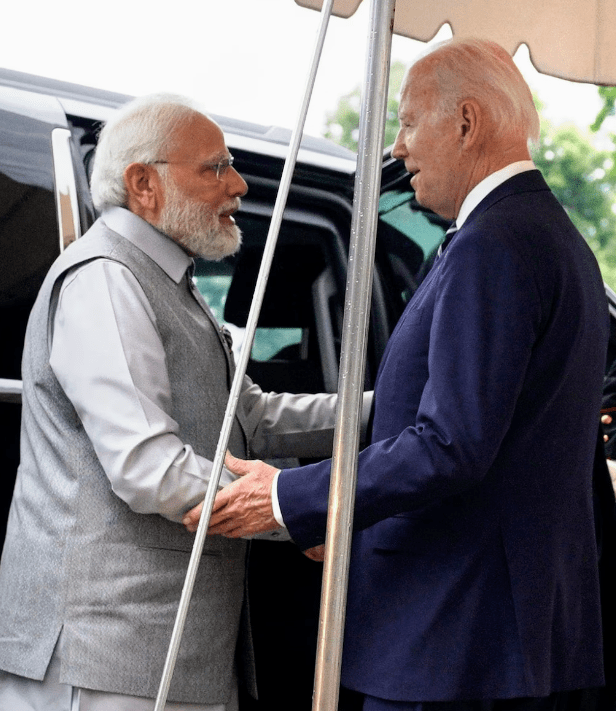
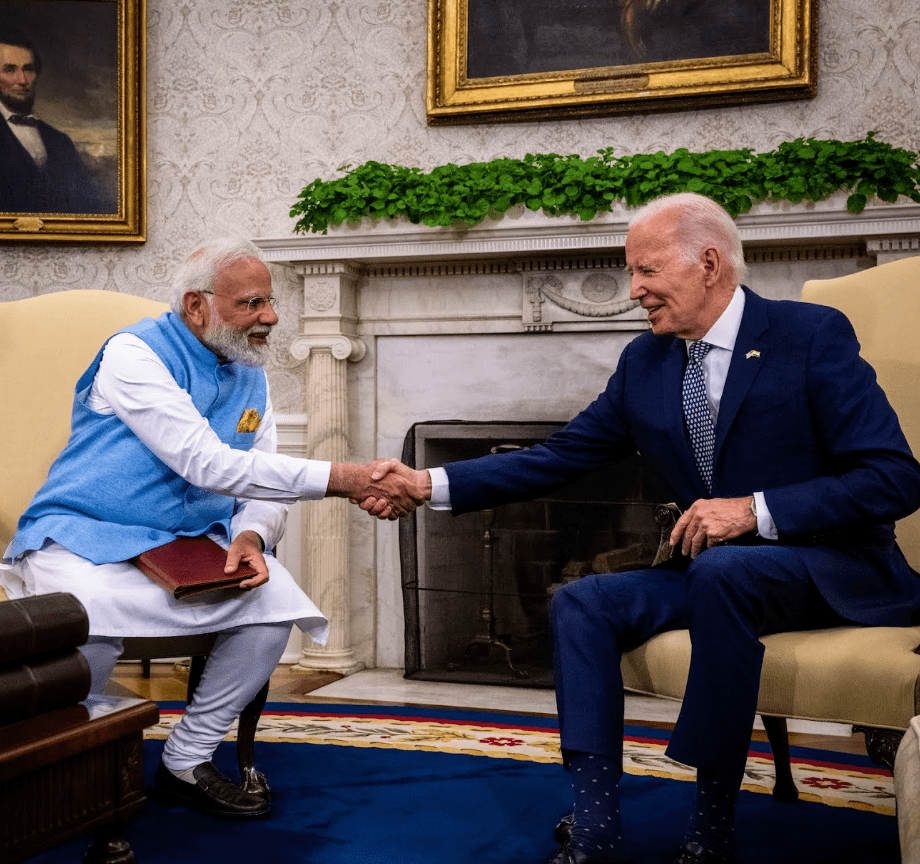
1. President Joseph R. Biden, Jr. and Prime Minister Narendra Modi today affirmed a vision of the United States and India as among the closest partners in the world – a partnership of democracies looking into the 21st century with hope, ambition, and confidence. The U.S.-India Comprehensive Global and Strategic Partnership is anchored in a new level of trust and mutual understanding and enriched by the warm bonds of family and friendship that inextricably link our countries together. Together, we will build an even stronger, diverse U.S.-India partnership that will advance the aspirations of our people for a bright and prosperous future grounded in respect for human rights, and shared principles of democracy, freedom, and the rule of law. Our cooperation will serve the global good as we work through a range of multilateral and regional groupings – particularly the Quad– to contribute toward a free, open, inclusive, and resilient Indo-Pacific. No corner of human enterprise is untouched by the partnership between our two great countries, which spans the seas to the stars.
Charting a Technology Partnership for the Future
2. President Biden and Prime Minister Modi affirm that technology will play the defining role in deepening our partnership. The leaders hailed the inauguration of the Initiative on Critical and Emerging Technology (iCET) in January 2023 as a major milestone in U.S.-India relations. They called on our governments, businesses, and academic institutions to realize their shared vision for the strategic technology partnership. The leaders recommitted the United States and India to fostering an open, accessible, and secure technology ecosystem, based on mutual confidence and trust that reinforces our shared values and democratic institutions.
3. President Biden and Prime Minister Modi set a course to reach new frontiers across all sectors of space cooperation. The leaders applauded our growing cooperation on earth and space science, and space technologies. They welcomed the decision of NASA and ISRO to develop a strategic framework for human spaceflight cooperation by the end of 2023.The leaders hailed the announcement by NASA to provide advanced training to Indian astronauts at the Johnson Space Center in Houston, Texas, with a goal of mounting a joint effort to the International Space Station in 2024.The leaders celebrated the delivery of the NASA-ISRO Synthetic Aperture Radar (NISAR) satellite to ISRO’s U.R. Rao Satellite Centre in Bengaluru, India, and looked forward to NISAR’s 2024 launch from India. Welcoming India’s Space Policy – 2023, the leaders called for enhanced commercial collaboration between the U.S. and Indian private sectors in the entire value chain of the space economy and to address export controls and facilitate technology transfer. President Biden deeply appreciated India’s signing of the Artemis Accords, which advance a common vision of space exploration for the benefit of all humankind.
4. President Biden and Prime Minister Modi committed their administrations to promoting policies and adapting regulations that facilitate greater technology sharing, co-development, and co-production opportunities between U.S. and Indian industry, government, and academic institutions. The leaders welcomed the launch of the interagency-led Strategic Trade Dialogue in June2023 and directed both sides to undertake regular efforts to address export controls, explore ways of enhancing high technology commerce, and facilitate technology transfer between the two countries.
5. President Biden and Prime Minister Modi hailed the signing of an MoU on Semiconductor Supply Chain and Innovation Partnership as a significant step in the coordination of our countries’ semiconductor incentive programs. This will promote commercial opportunities, research, talent, and skill development. The leaders welcomed an announcement by Micron Technology, Inc., to invest up to $825 million to build a new semiconductor assembly and test facility in India with support from the Indian government. The combined investment valued at $2.75 billion would create up to 5,000 new direct and 15,000 community jobs opportunities in next five years. The leaders also welcomed Lam Research’s proposal to train 60,000 Indian engineers through its Semiverse Solution virtual fabrication platform to accelerate India’s semiconductor education and workforce development goals, and an announcement by Applied Materials, Inc., to invest $400 million to establish a collaborative engineering center in India.
6. President Biden and Prime Minister Modi share a vision of creating secure and trusted telecommunications, resilient supply chains, and enabling global digital inclusion. To fulfill this vision, the leaders launched two Joint Task Forces on advanced telecommunications, focused on Open RAN and research and development in 5G/6G technologies. Public-private cooperation between vendors and operators will be led by India’s Bharat 6G Alliance and the U.S. Next G Alliance. We are partnering on Open RAN field trials and rollouts, including scaled deployments, in both countries with operators and vendors of both markets, backed by U.S. International Development Finance Corporation (DFC) financing. The leaders welcomed participation of Indian companies in the U.S. Rip and Replace Program. They endorsed an ambitious vision for 6G networks, including standards cooperation, facilitating access to chipsets for system development, and establishing joint research and development projects. President Biden and Prime Minister Modi also stressed the need to put in place a “Trusted Network/Trusted Sources” bilateral framework.
7. President Biden and Prime Minister Modi welcomed the establishment of a joint Indo-U.S. Quantum Coordination Mechanism to facilitate collaboration among industry, academia, and government, and our work toward a comprehensive Quantum Information Science and Technology agreement. The United States welcomes India’s participation in the Quantum Entanglement Exchange and in the Quantum Economic Development Consortium to facilitate expert and commercial exchanges with leading, like-minded quantum nations. The United States and India will sustain and grow quantum training and exchange programs and work to reduce barriers to U.S.-India research collaboration. The leaders welcomed the launch of a $2million grant program under the U.S.-India Science and Technology Endowment fund for the joint development and commercialization of Artificial Intelligence (AI) and quantum technologies, and encouraged public-private collaborations to develop high performance computing (HPC) facilities in India. President Biden also reiterated his government’s commitment to work with U.S. Congress to lower barriers to U.S. exports to India of HPC technology and source code. The U.S. side pledged to make its best efforts in support of India’s Center for Development of Advanced Computing (C-DAC) joining the U.S. Accelerated Data Analytics and Computing (ADAC) Institute.
8. The leaders welcomed 35 innovative joint research collaborations in emerging technologies funded by the U.S. National Science Foundation (NSF) and the Indian Department of Science and Technology (DST). Under a new implementation arrangement between NSF and DST, both sides will fund joint research projects in computer and information science and engineering, cyber physical systems, and secure and trustworthy cyberspace. Furthermore, NSF and India’s Ministry of Electronics and Information Technology will bring fresh funding for joint projects in applied research areas such as semiconductors, next generation communication, cyber security, sustainability and green technologies and intelligent transportation systems.
9. Both President Biden and Prime Minister Modi acknowledge the profound opportunities and significant risks associated with AI. Accordingly, they committed to develop joint and international collaboration on trustworthy and responsible AI, including generative AI, to advance AI education and workforce initiatives, promote commercial opportunities, and mitigate against discrimination and bias. The United States also supports India’s leadership as Chair of the Global Partnership on AI. The leaders applauded Google’s intent to continue investing through its $10 billion India Digitization Fund, including in early-stage Indian startups. Through its AI Research Center in India, Google is building models to support over 100 Indian languages.
10. President Biden and Prime Minister Modi hailed our deepening bilateral cooperation on cutting-edge scientific infrastructure, including a $140 million in-kind contribution from the Indian Department of Atomic Energy (DAE) to the U.S. Department of Energy’s (DOE’s) Fermi National Laboratory toward collaborative development of the Proton Improvement Plan-II Accelerator, for the Long Baseline Neutrino Facility — the first and largest international research facility on U.S. soil. They also welcomed the commencement of construction of a Laser Interferometer Gravitational-Wave Observatory (LIGO) in India. The leaders called on their administrations to extend these partnerships to advanced biotechnology and biomanufacturing, and enhance biosafety and biosecurity innovation, practices, and norms.
Powering a Next Generation Defense Partnership
11. The U.S.-India Major Defense Partnership has emerged as a pillar of global peace and security. Through joint exercises, strengthening of defense industrial cooperation, the annual “2+2” Ministerial Dialogue, and other consultative mechanisms, we have made substantial progress in building an advanced and comprehensive defense partnership in which our militaries coordinate closely across all domains. The leaders appreciated the strong military-to-military ties, mutual logistics support, and efforts to streamline implementation of foundational agreements. They noted that information sharing and placement of Liaison Officers in each other’s military organizations will spur joint service cooperation. They also reiterated their resolve to strengthen maritime security cooperation, including through enhanced underwater domain awareness. The leaders welcomed the launch of dialogues in new defense domains including space and AI, which will enhance capacity building, knowledge, and expertise.
12. Expressing their desire to accelerate defense industrial cooperation, the leaders welcomed the adoption of a Defense Industrial Cooperation Roadmap, which will provide policy direction to defense industries and enable co-production of advanced defense systems and collaborative research, testing, and prototyping of projects. Both sides are committed to addressing any regulatory barriers to defense industrial cooperation. The leaders also noted the decision of India’s Ministry of Defense and the U.S. Department of Defense to commence negotiations for concluding a Security of Supply arrangement and initiate discussions about Reciprocal Defense Procurement agreement.
13. President Biden and Prime Minister Modi hailed the landmark signing of an MoU between General Electric and Hindustan Aeronautics Limited for the manufacture of GE F-414 jet engines in India, for the Hindustan Aeronautics Limited Light Combat Aircraft Mk 2. This trailblazing initiative to manufacture F-414 engines in India will enable greater transfer of U.S. jet engine technology than ever before. The leaders committed their governments to working collaboratively and expeditiously to support the advancement of this unprecedented co-production and technology transfer proposal.
14. President Biden and Prime Minister Modi also welcomed India’s emergence as a hub for maintenance and repair for forward deployed U.S. Navy assets and the conclusion of Master Ship Repair Agreements with Indian shipyards. This will allow the U.S. Navy to expedite the contracting process for mid-voyage and emergent repair. As envisaged in the Defense Industrial Roadmap, both countries agree to work together for the creation of logistic, repair, and maintenance infrastructure for aircrafts and vessels in India.
15. The leaders welcomed the setting up and launch of the U.S.-India Defense Acceleration Ecosystem (INDUS-X). As a network of universities, startups, industry and think tanks, INDUS-X will facilitate joint defense technology innovation, and co-production of advanced defense technology between the respective industries of the two countries. The U.S. Department of Defense’s Space Force has signed its first International Cooperative Research and Development Agreement with Indian start-up 114 AI and 3rdiTech. Both companies will work with General Atomics to co-develop components using cutting edge technologies in AI and semiconductors respectively.
16. President Biden and Prime Minister Modi welcomed India’s plans to procure General Atomics MQ-9B HALE UAVs. The MQ-9Bs, which will be assembled in India, will enhance the ISR capabilities of India’s armed forces across domains. As part of this plan, General Atomics will also establish a Comprehensive Global MRO facility in India to support of India’s long-term goals to boost indigenous defense capabilities.
Catalyzing the Clean Energy Transition
17. As climate action and clean energy leaders, the United States and India share a common and ambitious vision to rapidly deploy clean energy at scale, build economic prosperity, and help achieve global climate goals. They recognize the critical role of the U.S. Inflation Reduction Act and India’s ambitious production-linked incentives scheme for cutting-edge clean and renewable technologies. The leaders highlighted the U.S.-India Climate and Clean Energy Agenda 2030 Partnership and Strategic Clean Energy Partnership (SCEP) as reflective of this commitment. The leaders welcomed joint efforts to develop and deploy energy storage technologies, including through the establishment of a new task force under SCEP. The leaders welcomed the launch of the U.S.-India New and Emerging Renewable Energy Technologies Action Platform, which will accelerate cooperation in green hydrogen, offshore and onshore wind, and other emerging technologies. They will collaborate to achieve their respective national goals to reduce the cost of green/clean hydrogen under India’s National Green Hydrogen Mission and the U.S. Hydrogen Energy Earthshot. The United States welcomed India’s decision to co-lead the multilateral Hydrogen Breakthrough Agenda. The leaders called for the development of joint efforts in carbon capture, utilization, and storage, given its role in reducing emissions. The leaders welcomed India’s VSK Energy LLC’s announcement to invest up to $1.5 billion to develop a new, vertically integrated solar panel manufacturing operation in the United States and India’s JSW Steel USA’s plans to invest $120 million at its Mingo Junction, Ohio, steel plant to better serve growing markets in the renewable energy and infrastructure sectors.
18. President Biden and Prime Minister Modi underscored the importance of decarbonizing the transportation sector, including by accelerating the deployment of zero emissions vehicles, continued collaboration to promote public and private financing for electric transportation, and the development of biofuels, including sustainable aviation fuels. To this end, the leaders lauded the creation and development of the Global Biofuels Alliance, which will be launched in July 2023, with the United States as a founding member. Both leaders welcomed the signing of an MOU under which the U.S. Agency for International Development will support Indian Railways’ ambitious target to become a “net-zero” carbon emitter by 2030.The United States and India also announced plans to create a payment security mechanism that will facilitate the deployment of 10,000 made-in-India electric buses in India, augmenting India’s focused efforts in reducing greenhouse gas emissions, improving public health, and diversifying the global supply chain.
19. India and the United States committed to create innovative investment platforms that will effectively lower the cost of capital and attract international private finance at scale to accelerate the deployment of greenfield renewable energy, battery storage, and emerging green technology projects in India. The United States and India will endeavor to develop a first-of-its kind, multibillion-dollar investment platform aimed at providing catalytic capital and de-risking support for such projects.
20. President Biden and Prime Minister Modi reaffirmed their support for the mission of the International Energy Agency (IEA), and President Biden pledged to continue working with the Government of India, IEA members, the IEA Secretariat, and other relevant stakeholders toward IEA membership for India in accordance with the provisions of the Agreement on an International Energy Program.
21. President Biden and Prime Minister Modi affirmed the intention of the two governments, as trusted partners, to work together to ensure that our respective markets are well-supplied with the essential critical minerals needed to achieve our climate, economic and strategic technology cooperation goals. The leaders pledged to hasten bilateral collaboration to secure resilient critical minerals supply chains through enhanced technical assistance and greater commercial cooperation, and exploration of additional joint frameworks as necessary. The United States enthusiastically welcomes India as the newest partner in the Mineral Security Partnership (MSP), to accelerate the development of diverse and sustainable critical energy minerals supply chains globally while agreeing to the principles of the MSP including environmental, social, and governance standards. The leaders lauded the announcement of India’s Epsilon Carbon Limited’s plans toinvest $650 million in a U.S. greenfield electric vehicle battery component factory.
22. President Biden and Prime Minister Modi underscored the important role nuclear energy plays in global decarbonization efforts and affirmed nuclear energy as a necessary resource to meet our nations’ climate, energy transition, and energy security needs. The leaders noted ongoing negotiations between the Nuclear Power Corporation of India Limited (NPCIL) and Westinghouse Electric Company (WEC) for the construction of six nuclear reactors in India. They welcomed intensified consultations between the U.S. DOE and India’s DAE for facilitating opportunities for WEC to develop a techno-commercial offer for the Kovvada nuclear project. They also noted the ongoing discussion on developing next generation small modular reactor technologies in a collaborative mode for the domestic market as well as for export. The United States reaffirms its support for India’s membership in the Nuclear Suppliers Group and commits to continue engagement with likeminded partners to advance this goal.
23. The leaders recognize that addressing sustainable consumption and production is a key component to achieving of the development, environment and climate ambitions of the 2030 Agenda for Sustainable Development and the SDGs. In this regard, President Biden welcomed Prime Minister Modi’s Lifestyle for Environment initiative (LiFE) as a successful national model to address the impacts of climate change, biodiversity loss, desertification and land degradation, and resolved to work together to implement the G20 High Level Principles on Lifestyles for Sustainable Development.
Deepening Strategic Convergence
24. As global partners, the United States and India affirm that the rules-based international order must be respected. They emphasized that the contemporary global order has been built on principles of the UN Charter, international law, and respect for sovereignty and territorial integrity of states.
25. President Biden and Prime Minister Modi expressed their deep concern over the conflict in Ukraine and mourned its terrible and tragic humanitarian consequences. The leaders underscored the serious and growing impacts of the war on the global economic system, including on food, fuel and energy security, and critical supply chains. They called for greater efforts to mitigate the consequences of the war, especially in the developing world. Both countries further pledge to render continuing humanitarian assistance to the people of Ukraine. They called for respect for international law, principles of the UN charter, and territorial integrity and sovereignty. Both countries concurred on the importance of post-conflict reconstruction in Ukraine.
26. The United States and India reaffirmed their resolve to counter any attempts to unilaterally subvert the multilateral system. The leaders underscored the need to strengthen and reform the multilateral system so it may better reflect contemporary realities. In this context both sides remain committed to a comprehensive UN reform agenda, including through expansion in permanent and non-permanent categories of membership of the UN Security Council. Sharing the view that global governance must be more inclusive and representative, President Biden reiterated U.S. support for India’s permanent membership on a reformed UN Security Council(UNSC). In this context, President Biden welcomed India’s candidature as a non-permanent member of the UNSC for the 2028-29 term, in view of India’s significant contributions to the UN system and commitment to multilateralism, as well as its active and constructive engagement in the Inter-Governmental Negotiations process on Security Council reforms, with an overall objective of making the UNSC more effective, representative, and credible.
27. President Biden and Prime Minister Modi recommitted themselves to empowering the Quad as a partnership for global good. The two leaders welcomed the progress made at the Hiroshima Summit last month among the four maritime democracies to further advance a positive and constructive agenda for peace and prosperity in the Indo-Pacific. The leaders welcomed progress on the Indo-Pacific Partnership for Maritime Domain Awareness, through which Quad partners are providing maritime domain data across the Indian Ocean, Southeast Asia, and the Pacific regions. The Quad to be hosted in India in 2024 would be another opportunity to continue the dialogue and consolidate cooperation. The leaders committed to continue working in partnership with regional platforms such as the Indian Ocean Rim Association, Indo-Pacific Oceans Initiative, and ASEAN to achieve shared aspirations and address shared challenges in the Indo-Pacific Region. Prime Minister Modi welcomed the United States joining the Indo-Pacific Oceans Initiative and President Biden welcomed India’s continued participation as an observer in the Partners in the Blue Pacific. 28. The leaders also welcomed the depth and pace of enhanced consultations between the two governments on regional issues including South Asia, the Indo-Pacific and East Asia and looked forward to our governments holding an inaugural Indian Ocean Dialogue in 2023.
29. President Biden and Prime Minister Modi reiterated their enduring commitment to a free, open, inclusive, peaceful, and prosperous India-Pacific region with respect for territorial integrity and sovereignty, and international law. Both leaders expressed concern over coercive actions and rising tensions, and strongly oppose destabilizing or unilateral actions that seek to change the status quo by force. Both sides emphasized the importance of adherence to international law, particularly as reflected in the United Nations Convention on the Law of the Sea (UNCLOS), and the maintenance of freedom of navigation and overflight, in addressing challenges to the maritime rules-based order, including in the East and South China Seas.
30. The leaders expressed deep concern about the deteriorating situation in Myanmar, and called for the release of all those arbitrarily detained, the establishment of constructive dialogue, and the transition of Myanmar toward an inclusive federal democratic system.
31. The leaders also condemned the destabilizing ballistic missile launches of the Democratic People’s Republic of Korea (DPRK), which violate relevant UN Security Council resolutions and pose a grave threat to international peace and security. They reaffirmed their commitment to the complete denuclearization of the Korean Peninsula and urged DPRK to comply with its obligations under these resolutions and engage in substantive dialogue. They stressed the importance of addressing the concerns regarding DPRK’s proliferation linkages related to weapons of mass destruction, their means of delivery, and related items in the region and beyond.
32. The United States and India stand together to counter global terrorism and unequivocally condemn terrorism and violent extremism in all its forms and manifestations. President Biden and Prime Minister Modi reiterated the call for concerted action against all UN-listed terrorist groups including Al-Qa’ida, ISIS/Daesh, Lashkar e-Tayyiba (LeT), Jaish-e-Mohammad (JeM), and Hizb-ul-Mujhahideen. They strongly condemned cross-border terrorism, the use of terrorist proxies and called on Pakistan to take immediate action to ensure that no territory under its control is used for launching terrorist attacks. They called for the perpetrators of the 26/11 Mumbai and Pathankot attacks to be brought to justice. They noted with concern the increasing global use of unmanned aerial vehicles (UAVs), drones and information and communication technologies for terrorist purposes and reaffirmed the importance of working together to combat such misuse. They welcomed the cooperation between our two governments on counterterrorism designations and homeland security cooperation, including in intelligence sharing and law enforcement cooperation, and called upon the Financial Action Task Force to undertake further work identifying how to improve global implementation of its standards to combat money laundering and the financing of terrorism.
33. The leaders reiterated their strong support for a peaceful, secure, and stable Afghanistan.They discussed the current humanitarian situation and concurred on the need to continue to provide immediate humanitarian assistance to the people of Afghanistan. The leaders urged the Taliban to abide by UNSC Resolution 2593 which demands that Afghan territory should never be used to threaten or attack any country, shelter or train terrorists, or plan or finance terrorist attacks. Committing to continue close consultations on the situation in Afghanistan, the leaders emphasized the importance of formation of an inclusive political structure and called on the Taliban to respect the human rights of all Afghans, including women and girls, and to respect freedom of movement.
34. President Biden and Prime Minister Modi looked forward to strengthening a long-term strategic partnership between the I2U2 countries of India, Israel, United Arab Emirates, and the United States to leverage markets to build more innovative, inclusive, and science-based solutions to enhance food and energy security, improve movement of people and goods across hemispheres, and increase sustainability and resilience.
35. President Biden and Prime Minister Modi reaffirmed their countries’ commitment to an open, secure, inclusive, safe, interoperable, and reliable Internet, and to continuing cooperation on a range of cybersecurity issues, including preventing and responding to cyber threats, promoting cybersecurity education and awareness and measures to build resilient cyber infrastructure. Both the United States and India are committed to sharing information about cyber threats and vulnerabilities, and to working together to investigate and respond to cyber incidents.
36. The United States and India reaffirm and embrace their shared values of freedom, democracy, human rights, inclusion, pluralism, and equal opportunities for all citizens. Both countries have a tradition of recognizing the diversity represented in their nations and celebrating the contributions of all their citizens. They reasserted that democracy, freedom, and rule of law are the shared values that anchor global peace and sustainable development. In keeping with the spirit of leaving no one behind, both leaders committed to working towards ensuring that fruits of economic growth and well-being reach the underprivileged. They also committed to pursue programs and initiatives that would facilitate women-led development, and enable all women and girls to live free from gender-based violence and abuse. President Biden underscored his appreciation for India’s participation in the Summit for Democracy process, and for efforts made by India toward sharing knowledge, technical expertise, and experiences with electoral management bodies of other democracies. The leaders also welcomed the re-launch of the Global Issues Forum, which would hold its next meeting at an appropriate time.
Propelling Global Growth
37. As two of the world’s largest democratic economies, the United States and India are indispensable partners in advancing global prosperity and a free, fair, and rules-based economic order. President Biden highlighted the impactful participation of Prime Minister Modi in the G7 Hiroshima Summit and looks forward to the G20 Summit in September in New Delhi. He applauded India’s leadership in its ongoing G20 Presidency, which has brought renewed focus on strengthening multilateral institutions and international cooperation to tackle global challenges such as climate change, pandemics, fragility and conflict, along with work to accelerate achievement of the UN Sustainable Development Goals, and lay the foundation for strong, sustainable, balanced, and inclusive growth.
38. President Biden and Prime Minister Modi are united in their determination to use the G20 to deliver on shared priorities for the G20 Leaders’ Summit, including improving the sovereign debt restructuring process; advancing the multilateral development bank evolution agenda, including mobilizing new concessional financing at the World Bank to support all developing countries; and raising the level of ambition on mobilizing private sector investment for quality, sustainable, and resilient infrastructure, including through the Partnership for Global Infrastructure and Investment. The United States looks forward to hosting the G20 presidency in 2026, nearly two decades after the first full-scale G20 Leaders’ Summit in Pittsburgh.
39. The United States and India recognize the potential of Digital Public Infrastructure (DPI) approaches for enabling open and inclusive digital economies. President Biden and Prime Minister Modi intend to work together to provide global leadership for the implementation of DPI to promote inclusive development, competitive markets, and protect individual rights. In this regard, the United States and India will explore how to partner together and align our efforts to advance the development and deployment of robust DPIs, including appropriate safeguards to protect, privacy, data security and intellectual property. They will explore developing a U.S.-India Global Digital Development Partnership, which would bring together technology and resources from both countries to enable development and deployment of DPIs in developing countries.
40. The leaders are committed to pursuing ambitious efforts to strengthen Multilateral Development Banks (MDBs) to address shared global challenges of the 21st century. In this regard, they emphasized the need for comprehensive efforts by MDBs to evolve their vision, incentive structure, operational approaches and financial capacity so that they are better equipped to address a wide range of SDGs and trans-boundary challenges including climate change, pandemics, conflicts and fragility. Recognizing multilateral efforts in this area, the leaders acknowledged the ongoing work under the Indian presidency of the G20 on strengthening MDBs including the report of the G20 Expert Group on Strengthening MDBs. By the G20 Leaders’ Summit in New Delhi, the United States and India will work together to secure G20 commitment to create a major new dedicated pool of funds at the World Bank to deploy concessional lending for global challenges, and to enhance support for crisis response in International Development Association recipient countries.
41. The leaders reaffirmed that the Indo-Pacific Economic Framework (IPEF) is an important pillar of our collective and collaborative efforts to build resilience in our supply chains, harness transformations in clean energy, and accelerate progress of our economies through anti-corruption efforts, efficient tax administrative practices, and capacity building measures. The leaders welcomed the substantial conclusion of negotiations on the proposed IPEF Supply Chain Agreement and committed to working with other partners expeditiously to conclude negotiations of the agreements under the clean economy and fair economy pillars to deliver concrete benefits that enhance the economic competitiveness and prosperity of countries in the Indo-Pacific. President Biden invited India to attend the APEC Summit in San Francisco in November 2023 as a guest of the host.
42. The U.S.-India trade and investment partnership is an engine for global growth, with bilateral trade exceeding $191 billion in 2022, nearly doubling from 2014. The leaders applauded the reconvening of the U.S.-India Commercial Dialogue and CEO Forum in March in New Delhi. They encouraged respective industries to take action on the recommendations from the CEOs for greater engagement and technical cooperation to build resilient supply chains for emerging technologies, clean energy technologies, and pharmaceuticals; promote an innovative digital economy; lower barriers to trade and investment; harmonize standards and regulations wherever feasible; and work towards skilling our workforces. The leaders support continued active engagement between the U.S. Treasury Department and the Indian Ministry of Finance under the Economic and Financial Partnership dialogue. They encouraged the U.S. Federal Insurance Office and the Insurance Regulatory and Development Authority of India to advance areas of mutual interest in the insurance sector under their existing MoU framework.
43. The United States and India have also taken steps toward deepening bilateral cooperation to strengthen our economic relationship, including trade ties. Underscoring the willingness and trust of both countries in resolving trade issues, the leaders welcomed the resolution of six outstanding WTO disputes between the two countries through mutually agreed solutions as well as their understandings on market access related to certain products of significance to the bilateral trade relationship. They also looked forward to reconvening the India-U.S. Trade Policy Forum before the end of 2023 to further enhance the bilateral trade relationship by addressing trade concerns and identifying further areas for engagement. India highlighted its interest in the restoration of its status under the U.S. Generalized System of Preferences program, which could be considered in relation to eligibility criteria determined by the U.S. Congress. The leaders supported intensifying the work to advance progress on issues related to the eligibility criteria. Prime Minister Modi also expressed India’s interest towards being recognized as a Trade Agreements Act-designated country by the United States to further enhance the integration of both economies and to further promote trade and investment between two countries. In this regard, the leaders welcomed the initiation of discussions between both sides at an official level on issues related to bilateral government procurement.
44. The leaders welcomed focused efforts under the re-launched U.S.-India Commercial Dialogue to expand cooperation in the areas of Talent, Innovation, and Inclusive Growth. President Biden expressed appreciation for the significant workforce development efforts undertaken by several of the Indian companies taking part in the U.S.-India CEO Forum to upskill more than 250,000 employees and promote STEM learning within local communities across the United States. Both leaders applauded the concept of an “Innovation Handshake” under the Commercial Dialogue that will lift up and connect the two sides’ dynamic startup ecosystems, address specific regulatory hurdles to cooperation, and promote further innovation and job growth, particularly in emerging technologies. The Innovation Handshake demonstrates the resolve on both sides to further bolster their shared vision of an elevated strategic technology partnership, leveraging the strength and ingenuity of their respective private sectors to identify new innovations and match them with industry requirements across the priority sectors identified under the iCET framework.
45. Recognizing the essential role that micro, small and medium-sized enterprises (MSMEs) play in advancing inclusive growth, expanding exports, and boosting employment across our respective cities, towns, and rural areas, the leaders welcomed plans under the Commercial Dialogue to organize a forum to promote the role and scope of MSMEs in bilateral trade and a digital commerce showcase to strengthen the engagement of women-owned and rural enterprises in particular. They commended the work of the U.S. Small Business Administration and the Indian Ministry of Micro, Small and Medium Enterprises, which are pursuing increased cooperation and intend to formalize their work through a MoU to support entrepreneurs and MSMEs.
46. President Biden and Prime Minister Modi again welcomed Air India’s historic agreement with Boeing to acquire more than 200 American-made aircraft. This purchase will support more than one million American jobs across 44 states and contribute to ongoing efforts to modernize the civil aviation sector in India. Boeing has announced a $100 million investment on infrastructure and programs to train pilots in India, supporting India’s need for 31,000 new pilots over the next 20 years. The leaders also welcomed Boeing’s announcement of its completion of a C-17 aftermarket support facility for MRO and a new parts logistics center in India to capture future synergies between defense and civil aviation.
Empowering Future Generations and Protecting the Health of our People
47. President Biden and Prime Minister hailed the growing bilateral education partnership between the United States and India. Indian students are on pace to soon become the largest foreign student community in the United States, with an increase of nearly 20 percent in Indian students studying in the United States last year alone. The leaders welcomed the establishment of a new Joint Task Force of the Association of American Universities and leading Indian educational institutions, including the Indian Institutes of Technology, and the nomination of councils on each side, and noted their interim recommendations for expanding research and university partnerships between the two countries. They also welcomed the establishment of Indo-U.S. Global Challenge Institutes to spark deeper research partnerships and people-to-people exchanges between a range of diverse institutions in the U.S. and India in semiconductors, sustainable agriculture, clean energy, health and pandemic preparedness, and emerging technologies.
48. The leaders welcomed an announcement by the U.S. Department of State that it would launch a pilot to adjudicate domestic renewals of certain petition-based temporary work visas later this year, including for Indian nationals, with the intent to implement this for an expanded pool of H1B and L visa holders in 2024 and eventually broadening the program to include other eligible categories.
49. The leaders affirmed that the movement of professional and skilled workers, students, investors and business travelers between the countries contributes immensely to enhancing bilateral economic and technological partnership. While acknowledging the important steps taken to augment processing of visa applications, they noted the pressing need to further expedite this process. The leaders also directed officials to identify additional mechanisms to facilitate travel for business, tourism, and professional and technical exchanges between the two countries.
50. Concomitant with the rapid growth in our strategic partnership and demand for travel, both sides intend to open new consulates in each other’s countries. The United States intends to initiate the process to open two new consulates in India in the cities of Bengaluru and Ahmedabad. India will take steps to operationalize its new consulate in Seattle later this year, and open two new consulates at jointly identified locations in the United States.
51. The leaders recognized the role of asocial security totalization agreement in protecting the interests of cross border workers and reaffirmed the intent to continue ongoing discussions concerning the elements required in both countries to enter into a bilateral social security totalization agreement.
52. President Biden and Prime Minister Modi celebrate the historic and active collaboration across the full expanse of our respective health sectors. They welcomed the opportunity for deeper collaboration to secure pharmaceutical supply chains. The leaders encouraged their administrations to continue their strong collaboration on pandemic preparedness, supported by epidemiology training; laboratory strengthening and point of entry surveillance; and food safety and regulation. The leaders applauded collaborations between research institutes of both countries on affordable cancer technology programs, including for the development of AI enabled diagnostic and prognosis prediction tools, and on diabetes research. The leaders committed to holding a U.S.-India Cancer Dialogue, hosted by President Biden’s Cancer Moonshot, to bring experts together from both countries to identify concrete areas of collaboration to accelerate the rate of progress against cancer. They also called for expanded collaboration on digital health platforms including responsible use of cutting-edge technologies like AI, and to explore cooperation in research and the use of traditional medicine. President Biden lauded Prime Minister Modi’s plan to eliminate tuberculosis in India by 2025, five years ahead of the target set by the UN’s sustainable development goals, hailing it as a big step forward that will inspire other countries to action.
53. President Biden and Prime Minister Modi welcomed the opportunity for deeper collaboration to secure, de-risk, and strengthen pharmaceutical supply chains, with a focus on active pharmaceutical ingredients, key starting materials, and key vaccine input materials. They also underscored the need for strengthening global collaboration network on research and development in medical countermeasures, vaccines, therapeutics and diagnostics to promote access to safe, effective, and innovative medical products in an affordable manner.
54. President Biden and Prime Minister Modi committed to work toward a broader and deeper bilateral drug policy framework for the 21st century. Under this framework, both countries aspire to expand cooperation and collaboration to disrupt the illicit production and international trafficking of illicit drugs, including synthetic drugs, such as fentanyl and Amphetamine Type Stimulants and illicit use of their Precursors. Toward this end, they committed to a holistic public health partnership to prevent and treat illicit drug use, address workforce shortages and skilling requirements, and showcase a secure, resilient, reliable and growing pharmaceutical supply chain as a model for the world.
55. Prime Minister Modi conveyed his deep appreciation for the repatriation of antiquities to India by the United States. Both sides expressed strong interest in working quickly toward a Cultural Property Agreement, which would help to prevent illegal trafficking of cultural property from India and enhance cooperation on the protection and lawful exchange of cultural property.
56. The Leaders welcomed the establishment of the Tamil Studies Chair at the University of Houston and reinstating the Vivekananda Chair at the University of Chicago to further research and teaching of India’s history and culture.
57. Prime Minister Modi looked forward to the visit of President Biden to the G20 Leaders’ Summit in New Delhi in September 2023.
58. Taken together, the leaders today affirmed that this document, in its breadth and depth, represents the most expansive and comprehensive vision for progress in the history of our bilateral relationship. Still, our ambitions are to reach ever greater heights, and we commit both our governments and our peoples to this endeavor, now and into the future.
*****
JUNE 22, 2023SPEECHES AND REMARKS
 thelivingbreathingjamesbrown.com
You must be logged in to post a comment.