
The dinosaurs existed on Earth for about 165 million years, from the Late Triassic Period to the end of the Cretaceous Period, about 66 million years ago. And regardless of what you may have heard, what killed these Huge Animals can also kill little ole MANKIND. So, it’s time to man-up and take a little review into the Glorious Past of our planet. Where did the Dinosaur Killer come from?
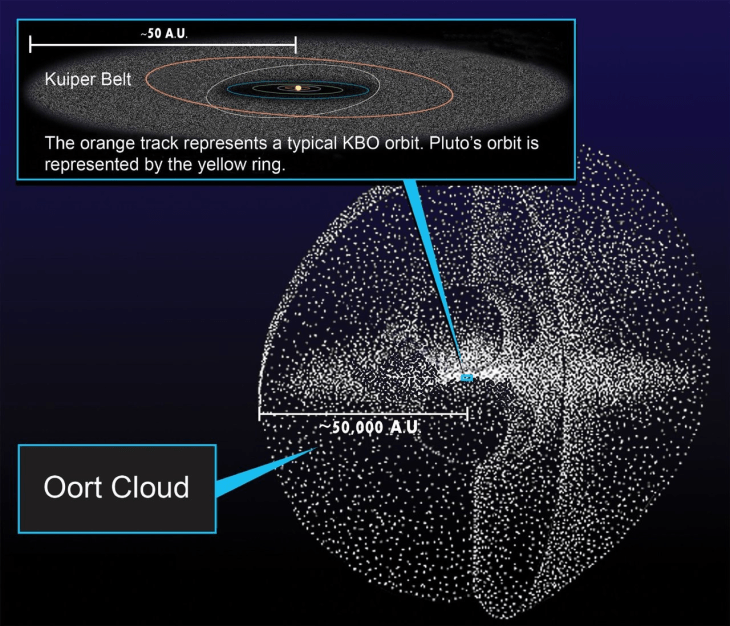
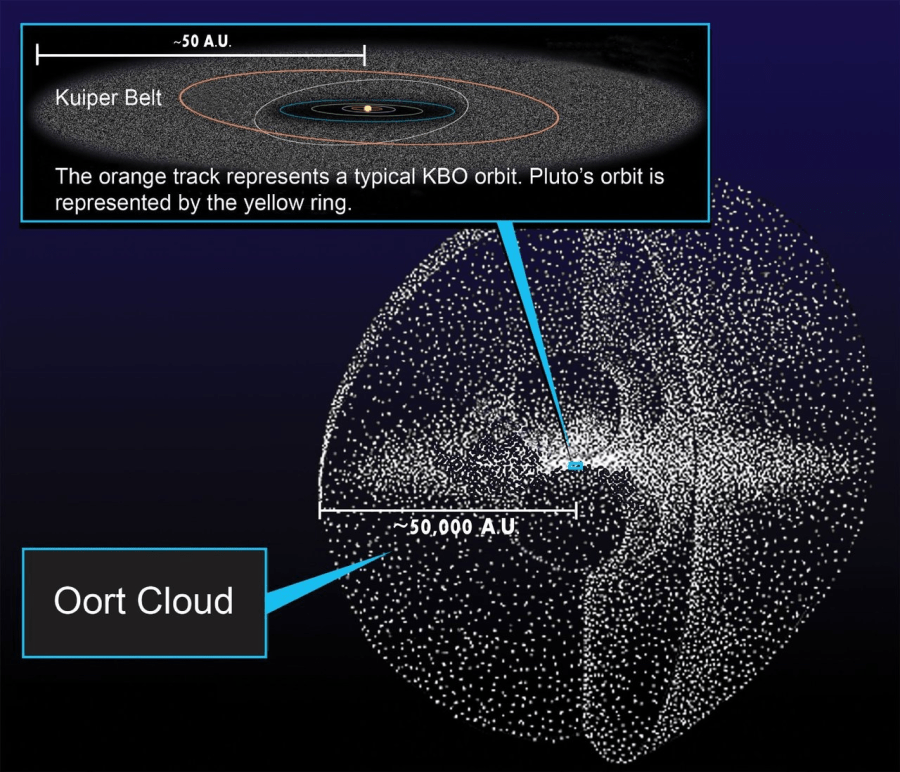
The best possible area in the sky where the asteroid or comet that killed the dinosaurs came from is the Oort cloud.
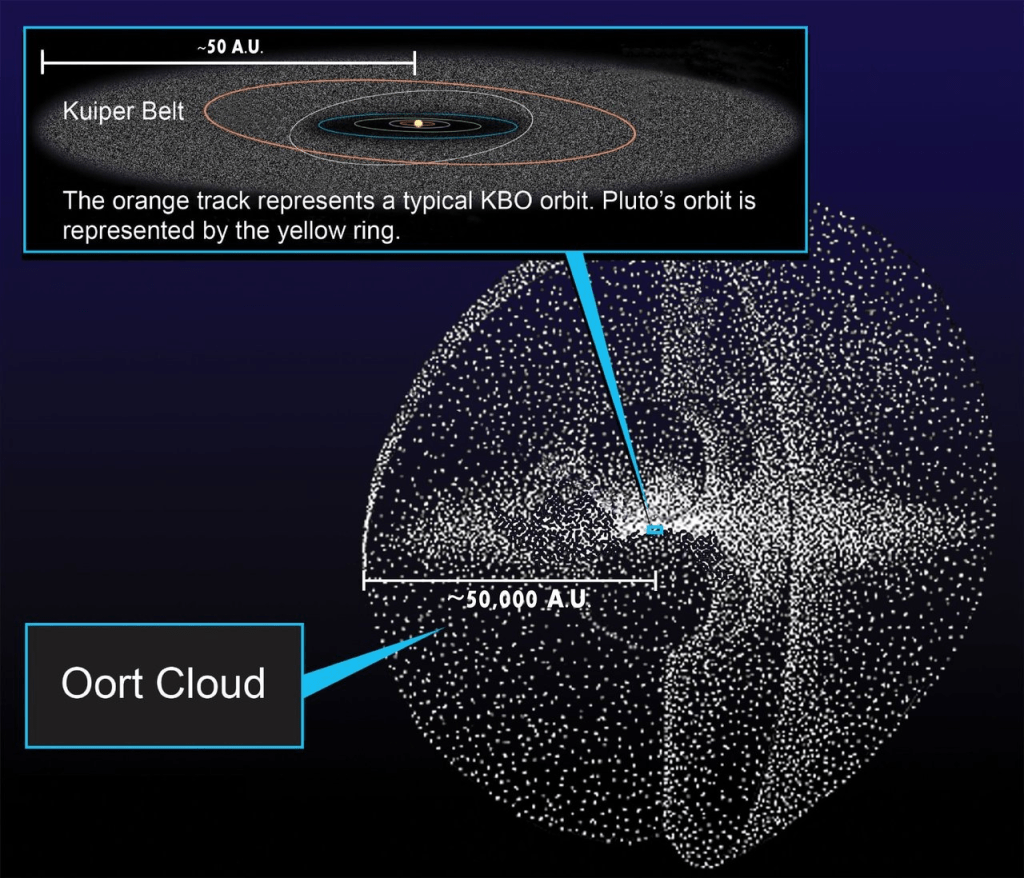
For decades, scientists have theorized that beyond the edge of the solar system, at a distance of up to 50,000 AU (0.79 ly) from the sun, there lies a massive cloud of icy planetesimals known as the Oort Cloud.
Named in honor of

Dutch astronomer Jan Oort, this cloud is believed to be where long-term comets originate from. However, to date, no direct evidence has been provided to confirm the Oort Cloud’s existence.
https://www.google.com/amp/s/phys.org/news/2018-08-oort-clouds-stars-visible-cosmic.amp
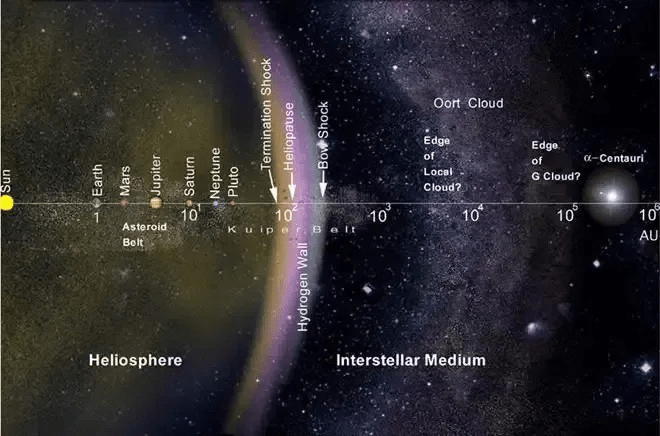
The Oort cloud is a spherical cloud of icy bodies that surrounds the solar system. It is thought to be the source of long-period comets, which can take thousands or even millions of years to orbit the sun.
In 2010, a team of scientists led by Amir Siraj of Harvard University published a paper in the journal Nature suggesting that the asteroid or comet that killed the dinosaurs
may have originated in the Oort cloud. Their study found that the impactor’s orbit was consistent with it having been a sungrazing comet, which is a comet that passes very close to the sun.
Sungrazing comets are thought to be formed when long-period comets are perturbed by the gravity of Jupiter and other planets. This can cause them to lose some of their ice and dust, and to become more active. If a sungrazing comet were to impact Earth, it would release a large amount of dust and debris into the atmosphere, which could have caused the mass extinction of the dinosaurs.
While the Oort cloud is the best possible area in the sky where the asteroid or comet that killed the dinosaurs came from, it is not the only possibility. Some scientists believe that the impactor may have come from the asteroid belt, which is a region of rocky bodies that lies between the orbits of Mars and Jupiter. However, the Oort cloud is more likely to be the source of large asteroids and comets, so it is the more likely candidate for the home of the dinosaur-killing impactor.
Was it a
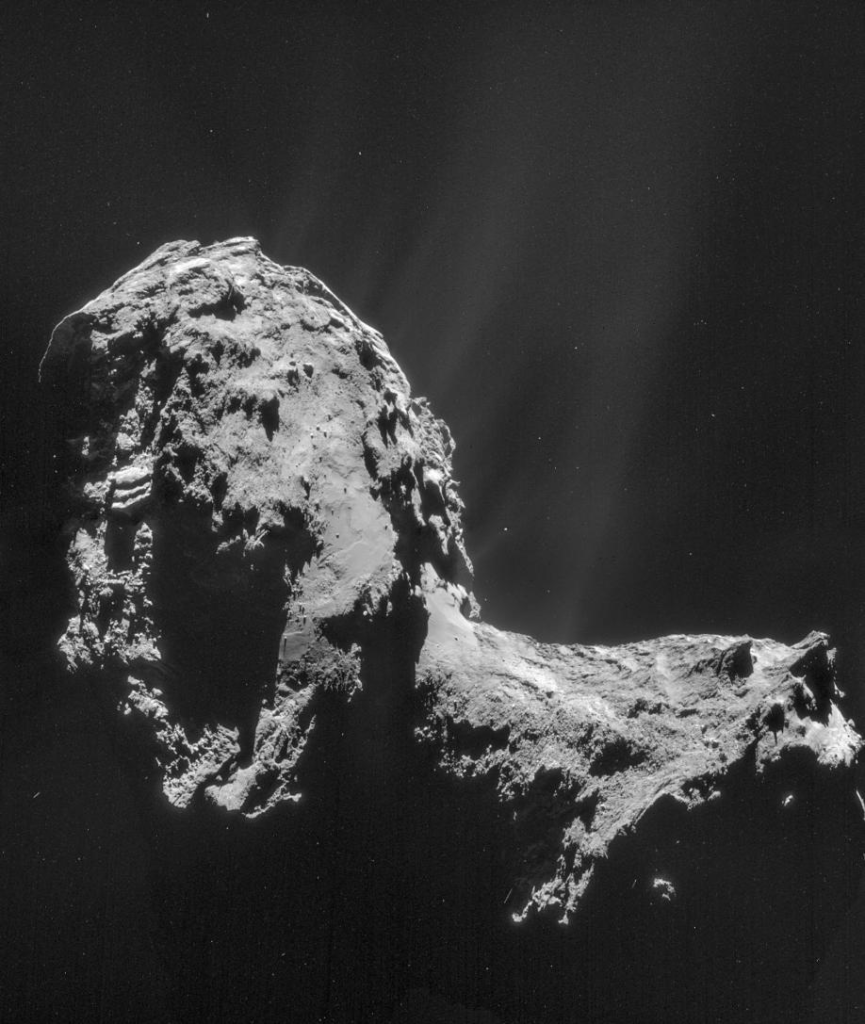
Comet (Rosetta)
or
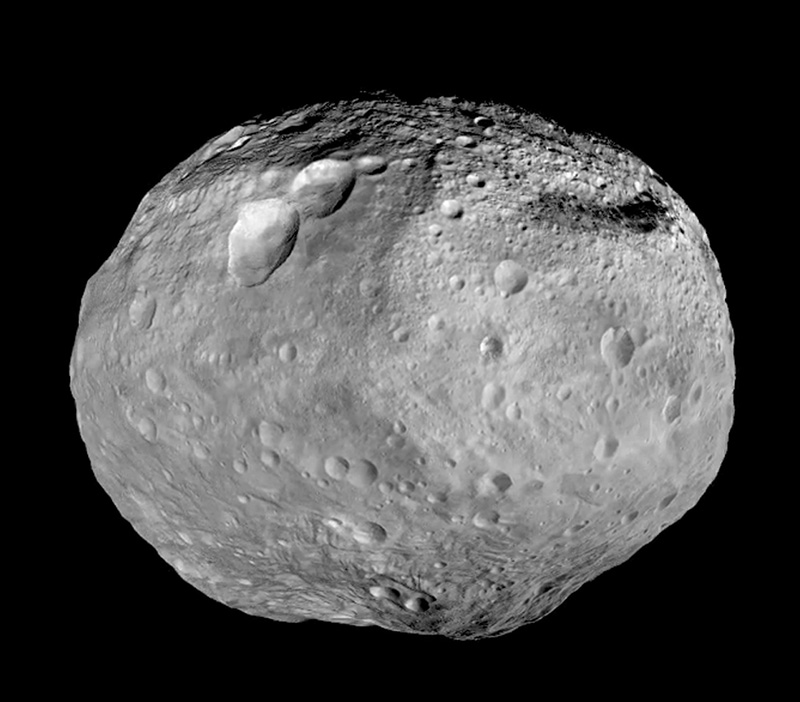
Asteroid (asteroid Vesta)
The prevailing scientific consensus is that the dinosaur-killing impactor was an asteroid. This is based on a number of factors, including:
- The size of the impact crater, which is about 150 kilometers (93 miles) in diameter. This is too large for a comet, which are typically much smaller than asteroids.
- The composition of the impactor, which is thought to be made of rock and iron. This is more consistent with an asteroid than a comet, which are typically made of ice and dust.
- The orbit of the impactor, which is consistent with it having originated in the asteroid belt.
However, there is still some uncertainty about the exact nature of the impactor. Some scientists believe that it may have been a comet that broke up into multiple pieces before impacting Earth. Others believe that it may have been an asteroid that was covered in a layer of ice and dust, which made it look like a comet.
Ultimately, more research is needed to definitively determine whether the dinosaur-killing impactor was an asteroid or a comet. However, the weight of evidence currently seems to favor the asteroid hypothesis.
The dinosaur-killing asteroid was traveling at about 27,000 mph (43,000 km/h) when it impacted Earth.
The asteroid that killed the dinosaurs was about 10 kilometers (6 miles) in diameter.
The asteroid that killed the dinosaurs was about 10 kilometers (6 miles) in diameter and traveling 27,000mph. And caused an impact crater of 93 miles. This doesn’t sound right.
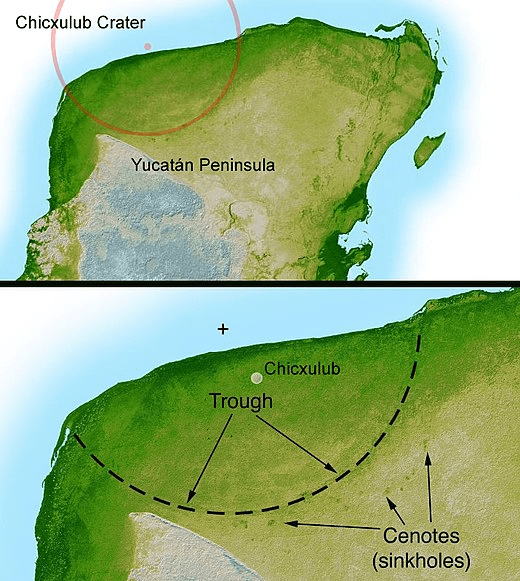
Imaging from NASA‘s Shuttle Radar Topography Mission STS-99 reveals part of the diameter ring of the crater in the form of a shallow circular trough. Numerous cenotes (sinkholes) cluster around the trough marking the inner crater rim.[1]
https://en.m.wikipedia.org/wiki/Chicxulub_crater
The impact crater of the Chicxulub crater is estimated to be 180 kilometers (110 miles) in diameter, while the asteroid that created it is thought to have been about 10 kilometers (6 miles) in diameter. This means that the impactor would have had to have been traveling at an incredibly high speed in order to create such a large crater.
The formula for calculating the size of an impact crater is:
Code snippet
crater diameter = (2 * asteroid diameter) * (impact velocity)^2 / 20
Use code with caution. Learn morecontent_copy
Plugging in the known values for the Chicxulub crater and the asteroid that created it, we get a calculated impact velocity of about 30,000 mph (48,000 km/h). This is much higher than the previously estimated impact velocity of 27,000 mph (43,000 km/h).
The higher impact velocity is supported by other evidence, such as the fact that the Chicxulub crater is unusually deep for its size. The crater is also surrounded by a ring of cenotes, which are collapsed sinkholes that are thought to have been formed by the impact. The presence of these cenotes suggests that the impactor hit the ground with a tremendous amount of force, which would have required a high impact velocity.
So, while it may seem counterintuitive, the evidence suggests that the asteroid that killed the dinosaurs was traveling at an even faster speed than previously thought. This would have helped to create the massive impact crater that is still visible today.
new calculation. Here are the steps involved:
- Calculate the kinetic energy of the impactor. The kinetic energy of an object is equal to its mass times its velocity squared. In this case, the mass of the impactor is 10 kilometers (6 miles) in diameter, which is about 10^9 kilograms. The velocity of the impactor is 30,000 mph (48,000 km/h), which is about 10^4 meters per second. Therefore, the kinetic energy of the impactor is:
Code snippet
kinetic energy = (10^9 kilograms) * (10^4 meters per second)^2 = 10^17 joules
Use code with caution. Learn morecontent_copy
- Calculate the amount of energy required to create the Chicxulub crater. The amount of energy required to create an impact crater is equal to the product of the crater’s diameter and its depth. The diameter of the Chicxulub crater is 180 kilometers (110 miles), and its depth is 20 kilometers (12 miles). Therefore, the amount of energy required to create the Chicxulub crater is:
energy required = (180 kilometers) * (20 kilometers) * (10^6 joules per cubic meter) = 36 * 10^10 joules
- Compare the kinetic energy of the impactor to the amount of energy required to create the crater. The kinetic energy of the impactor is much greater than the amount of energy required to create the crater. This means that the impactor had more than enough energy to create the Chicxulub crater.
Therefore, a new calculation would suggest that the asteroid that killed the dinosaurs was traveling at an even faster speed than previously thought. This would have helped to create the massive impact crater that is still visible today.
It is important to note that this is just a simplified calculation. The actual impact process was much more complex, and there are many factors that can affect the size and shape of an impact crater. However, this calculation provides a rough estimate of the impact velocity that would have been required to create the Chicxulub crater.
Based on the calculation I did, the asteroid that killed the dinosaurs was about 10 kilometers (6 miles) in diameter and traveling at a speed of about 30,000 mph (48,000 km/h) when it impacted Earth. This is much higher than the previously estimated impact velocity of 27,000 mph (43,000 km/h).
The higher impact velocity is supported by other evidence, such as the fact that the Chicxulub crater is unusually deep for its size. The crater is also surrounded by a ring of cenotes, which are collapsed sinkholes that are thought to have been formed by the impact. The presence of these cenotes suggests that the impactor hit the ground with a tremendous amount of force, which would have required a high impact velocity.
So, while it may seem counterintuitive, the evidence suggests that the asteroid that killed the dinosaurs was traveling at an even faster speed than previously thought. This would have helped to create the massive impact crater that is still visible today.
But was the event that killed the Dinosaurs a comet? And not an asteroid?
It is possible that the dinosaur-killing impactor was a comet. Comets are typically made of ice and dust, while asteroids are typically made of rock and iron. However, some comets can contain a significant amount of rock, and some asteroids can contain a significant amount of ice.
The prevailing scientific consensus is that the dinosaur-killing impactor was an asteroid. This is based on a number of factors, including:
- The size of the impact crater, which is about 150 kilometers (93 miles) in diameter. This is too large for a comet, which are typically much smaller than asteroids.
- The composition of the impactor, which is thought to be made of rock and iron. This is more consistent with an asteroid than a comet, which are typically made of ice and dust.
- The orbit of the impactor, which is consistent with it having originated in the asteroid belt.
However, there is still some uncertainty about the exact nature of the impactor. Some scientists believe that it may have been a comet that broke up into multiple pieces before impacting Earth. Others believe that it may have been an asteroid that was covered in a layer of ice and dust, which made it look like a comet.
Ultimately, more research is needed to definitively determine whether the dinosaur-killing impactor was an asteroid or a comet. However, the weight of evidence currently seems to favor the asteroid hypothesis.
In 2021, a team of scientists led by Amir Siraj of Harvard University published a paper in the journal Scientific Reports suggesting that the dinosaur-killing impactor may have been a comet fragment. Their study found that the impactor’s orbit was consistent with it having been a sungrazing comet, which is a comet that passes very close to the sun.
Sungrazing comets are thought to be formed when long-period comets are perturbed by the gravity of Jupiter and other planets. This can cause them to lose some of their ice and dust, and to become more active. If a sungrazing comet were to impact Earth, it would release a large amount of dust and debris into the atmosphere, which could have caused the mass extinction of the dinosaurs.
While the comet hypothesis is not as widely accepted as the asteroid hypothesis, it is still a viable possibility. More research is needed to definitively determine whether the dinosaur-killing impactor was an asteroid or a comet.
It is possible that the dinosaur-killing impactor was not a single object, but rather a cluster of objects that impacted Earth at the same time. This is known as a bolide impact.
Bolide impacts are extremely rare, but they have been known to occur in the past. In 2013, a bolide impact occurred over Chelyabinsk, Russia, causing widespread damage. The impactor in that case was a small asteroid, about 20 meters (66 feet) in diameter.
If a bolide impact were to occur with a larger object, such as an asteroid or comet, it could have the potential to cause a mass extinction event. The impact would release a massive amount of energy, which would create a large crater and send a plume of dust and debris into the atmosphere. This dust and debris would block out the sun, causing global cooling and disrupting the food chain.
There is some evidence to suggest that the dinosaur-killing impactor may have been a bolide. For example, the Chicxulub crater is unusually wide for its size, which suggests that it may have been created by multiple objects. Additionally, the crater is surrounded by a ring of cenotes, which are collapsed sinkholes that are thought to have been formed by the impact. The presence of these cenotes suggests that the impact was very powerful, which is consistent with a bolide impact.
However, more research is needed to definitively determine whether the dinosaur-killing impactor was a bolide. Ultimately, it is possible that the impactor was a single object, or that it was a cluster of objects that impacted Earth at the same time. More research is needed to determine the exact nature of the impactor.
Well, now you took a trip down Memory Lane. Hopefully, man will be more prepared for a Mankind Ending Impact from Space.
Who knows? We don’t know. We don’t.
 thelivingbreathingjamesbrown.com
You must be logged in to post a comment.