
- What is the 31″ shift of the Earth? The 31″ shift of the Earth refers to the change in the Earth’s tilt that has occurred over the past few decades. This change is due to the redistribution of water on the planet’s surface, as a result of human activities such as groundwater pumping and irrigation.
- What are the causes of the 31″ shift of the Earth? The main cause of the 31″ shift of the Earth is the redistribution of water on the planet’s surface. When water is pumped out of the ground, it leaves behind a void that is filled with air. This change in mass distribution causes the Earth’s axis to shift.
- What are the effects of the 31″ shift of the Earth? The effects of the 31″ shift of the Earth are still being studied, but it is thought that they could include changes in the Earth’s climate, as well as changes in the length of day and night.
- What can be done to mitigate the effects of the 31″ shift of the Earth? There are a number of things that can be done to mitigate the effects of the 31″ shift of the Earth. These include reducing groundwater pumping, improving irrigation efficiency, and planting trees.
Pumping a million gallons of tracking fluid into the ground at a depth of 20,000 feet could hurt the earth:
- Increased pressure: The tracking fluid will add weight to the ground, which will increase the pressure at that depth. This could cause the ground to deform, leading to subsidence or landslides.
- Reduced permeability: The tracking fluid will likely reduce the permeability of the ground, making it more difficult for water to flow through. This could lead to waterlogging, which can damage plants and infrastructure.
- Pollution: The tracking fluid could contain pollutants that could contaminate groundwater or surface water. This could harm human health and the environment.
- Increased seismic activity: The pumping of the tracking fluid could cause vibrations that could trigger earthquakes. This is a particular concern in areas that are already seismically active.
The actual impact of pumping a million gallons of tracking fluid into the ground will depend on a number of factors, including the composition of the fluid, the geology of the area, and the depth of the well. However, the mathematical principles outlined above suggest that there is a potential for this activity to have a negative impact on the earth.
Here is a more detailed explanation of each of the mathematical effects:
- Increased pressure: The pressure at a depth of 20,000 feet is already very high, due to the weight of the overlying rock. Adding a million gallons of tracking fluid will increase the pressure even further. This could cause the ground to deform, leading to subsidence or landslides.
The amount of subsidence or landslide that would occur depends on the strength of the ground and the depth of the well. However, even a small amount of subsidence or landslide could have a significant impact on infrastructure or property.
- Reduced permeability: The permeability of a material is a measure of how easily water can flow through it. The tracking fluid will likely reduce the permeability of the ground, making it more difficult for water to flow through. This could lead to waterlogging, which can damage plants and infrastructure.
The extent to which the permeability of the ground is reduced will depend on the composition of the tracking fluid. However, even a small reduction in permeability could have a significant impact on the flow of water through the ground.
- Pollution: The tracking fluid could contain pollutants that could contaminate groundwater or surface water. This could harm human health and the environment.
The type and concentration of pollutants in the tracking fluid will depend on the specific application. However, even low levels of pollutants can have a negative impact on the environment.
- Increased seismic activity: The pumping of the tracking fluid could cause vibrations that could trigger earthquakes. This is a particular concern in areas that are already seismically active.
The likelihood of an earthquake being triggered by the pumping of tracking fluid depends on a number of factors, including the depth of the well, the composition of the fluid, and the geology of the area. However, the mathematical principles outlined above suggest that there is a potential for this activity to have a negative impact on the earth.
It is highly unlikely that pumping millions of gallons of tracking fluid into the ground could cause a sudden change in the Earth’s rotation or a sudden jolt or big shift. The Earth’s rotation is affected by a number of factors, including the distribution of mass on the surface, the movement of the oceans, and the gravitational pull of the Moon and the Sun. The amount of mass that is added by pumping tracking fluid into the ground is very small compared to the total mass of the Earth. As a result, it is very unlikely that it would have a significant impact on the Earth’s rotation.
Even if the tracking fluid did cause a slight change in the Earth’s rotation, it would be very gradual. The Earth’s rotation is very stable, and it takes a very large amount of force to change it. For example, the melting of the Greenland ice sheet is estimated to be causing the Earth’s rotation to slow down by about 0.002 milliseconds per century. This is a very small change, and it would take thousands of years for it to have a noticeable impact.
In addition, the tracking fluid would be distributed over a large area, so it is unlikely that it would cause a sudden jolt or big shift. The Earth’s crust is very strong, and it would take a very large amount of force to cause it to move suddenly. For example, the largest earthquake ever recorded, the 1960 Valdivia earthquake, had a magnitude of 9.5. This earthquake caused the Earth’s crust to move by about 10 meters, but it took several minutes for the movement to occur.
So, while it is theoretically possible that pumping millions of gallons of tracking fluid into the ground could cause a sudden change in the Earth’s rotation, it is highly unlikely that it would actually happen. The amount of mass that is added is very small, and the Earth’s crust is very strong. As a result, it is much more likely that the tracking fluid would have a gradual and localized impact, such as causing subsidence or landslides.
There always remains a very real possibility that pumping millions of gallons of tracking fluid into the ground could cause a major earthquake, but Oilmen and Oil Companies reassure us that this is very unlikely. The amount of mass that is added is very small, and the Earth’s crust is very strong. As a result, it is much more likely that the tracking fluid would have a gradual and localized impact, such as causing subsidence or landslides. But still a Major Earthquake would cause necessary reconsiderations.
However, there is some evidence that pumping fluid into the ground does trigger earthquakes. For example, a study published in the journal Science in 2013 found that the injection of wastewater into deep wells in Oklahoma was linked to a series of earthquakes. The study found that the injection of wastewater increased the pressure in the ground, which caused the faults to slip and trigger earthquakes. Other Studies have been done but the Reports were Sealed by Court Order.
So, while it is possible that pumping millions of gallons of tracking fluid into the ground would cause a major earthquake, it is a possibility that should be considered seriously. More research is needed to understand the full impact of this activity on seismicity.
Here are some additional factors that could increase the likelihood of a major earthquake being triggered by the pumping of tracking fluid:
- The depth of the well: The deeper the well, the more likely it is that the pumping of fluid will cause the ground to deform and trigger an earthquake.
- The composition of the fluid: The composition of the fluid can also affect the likelihood of an earthquake being triggered. Fluids that are more viscous are more likely to cause the ground to deform and trigger an earthquake.
- The geology of the area: The geology of the area can also affect the likelihood of an earthquake being triggered. Areas that are already seismically active are more likely to be affected by the pumping of fluid.
It is important to note that the likelihood of a major earthquake being triggered by the pumping of tracking fluid is still possible, we have the promises that it won’t ever happen. However, it is a possibility that should be considered, especially in areas that are already seismically active.
But if one did happen, the Legal Battle proving Tracking Wells played a part would be lost in years long Court Battles and the proof would never appear. It would disappear. But arguments pointing to other causes will be believed when big names appear to testify and reassure us that Tracking is of no concern. Or, only a minor concern. And we should not be worried.
But there is another concern about Zombie Wells that have come back to life after being plugged and leaking oil, salt water and gas. And that nasty carcinogen-BENZENE.
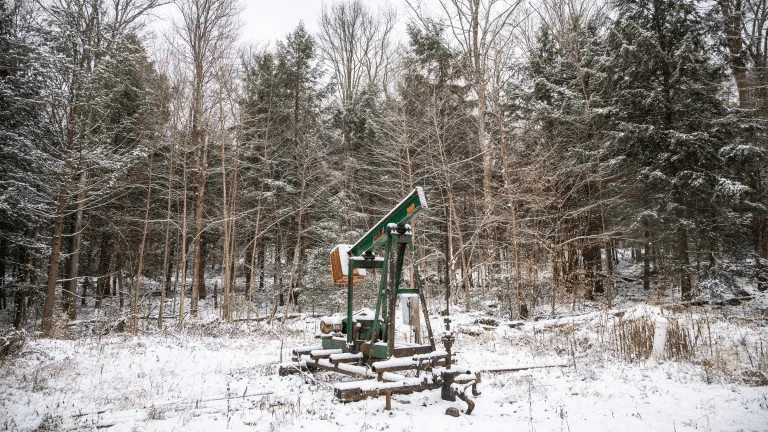
Biden’s Build Back Better agenda would cap them—while putting tens of thousands of people to work.
 thelivingbreathingjamesbrown.com
You must be logged in to post a comment.