
Boy Howdy, if you’ve never been introduced to the great and beloved Detective from Honolulu, then you are in for a TREAT. CHARLE CHAN is your Man! Or He was your parents or Grandparents or great-grandparents Man. Why? Because a long time ago before you were born and on Saturday Matinees, the Charlie Chan Franchise enjoyed a very good run in Hollywood solving murders all over the World. These aren’t Hard and super mind absorbing. But they are fun to watch. Very fun. And after a few, you’re gonna be hooked into watching them all.
They say past spirits come visit all of us all the time. So when you watch one, a past relative might come and watch them with you. Pause. Think about it. We don’t have all of the answers. But please pop some popcorn and come along for a good time-
https://en.m.wikipedia.org/wiki/Charlie_Chan
Charlie Chan is a fictional Honolulu police detective created by author Earl Derr Biggers for a series of mystery novels. Biggers loosely based Chan on Hawaiian detective Chang Apana. The benevolent and heroic Chan was conceived as an alternative to Yellow Peril stereotypes and villains like Fu Manchu.
Chan first appeared in Biggers’ novels and then was featured in a number of media. Over four dozen films featuring Charlie Chan were made, beginning in 1926. The character, featured only as a supporting character, was first portrayed by East Asian actors, and the films met with little success. In 1931, for the first film centering on Chan, Charlie Chan Carries On, the Fox Film Corporation cast Swedish actor Warner Oland; the film became popular, and Fox went on to produce 15 more Chan films with Oland in the title role. After Oland’s death, American actor Sidney Toler was cast as Chan; Toler made 22 Chan films, first for Fox and then for Monogram Studios. After Toler’s death, six films were made, starring Roland Winters.
Readers and moviegoers of America greeted Chan warmly. Chan was seen as an attractive character, portrayed as intelligent, heroic, benevolent, and honorable; this contrasted the common depiction of Asians as evil or conniving which dominated Hollywood and national media in the early 20th century. However, in later decades critics increasingly took a more ambivalent view of the character. Despite his good qualities, Chan was also perceived as reinforcing condescending Asian stereotypes such as an alleged incapacity to speak idiomatic English and a tradition-bound and subservient nature. No Charlie Chan film has been produced since 1981.
The character has also been featured in several radio programs, two television shows, and comics.
| First appearance | The House Without a Key |
|---|---|
| Last appearance | Keeper of the Keys |
| Created by | Earl Derr Biggers |
| Portrayed by | George KuwaKamiyama SojinE.L. ParkWarner OlandManuel ArbóSidney TolerRoland WintersRoss MartinPeter Ustinov |
| Voiced by | Keye Luke |
| In-universe information | |
| Gender | Male |
| Occupation | Detective |
| Children | 14 |
| Religion | Buddhist |
| Nationality | American–Chinese |
Films
The first film featuring Charlie Chan, as a supporting character, was The House Without a Key (1926), a ten-chapter serial produced by Pathé Studios, starring George Kuwa, a Japanese actor, as Chan.[12] A year later Universal Pictures followed with The Chinese Parrot, starring Japanese actor Kamiyama Sojin as Chan, again as a supporting character.[12] In both productions, Charlie Chan’s role was minimized.[13] Contemporary reviews were unfavorable; in the words of one reviewer, speaking of The Chinese Parrot, Sojin plays “the Chink sleuth as a Lon Chaney cook-waiter … because Chaney can’t stoop that low.”[14]
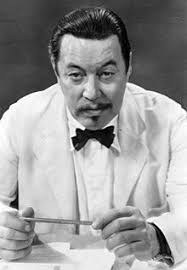
For the first film to center mainly on the character of Chan, Warner Oland, a white actor, was cast in the title role in 1931’s Charlie Chan Carries On, and it was this film that gained popular success.[15] Oland, a Swedish actor, had also played Fu Manchu in an earlier film. Oland, who claimed some Mongolian ancestry,[16] played the character as more gentle and self-effacing than he had been in the books, perhaps in “a deliberate attempt by the studio to downplay an uppity attitude in a Chinese detective.”[17] Oland starred in sixteen Chan films for Fox, often with Keye Luke, who played Chan’s “Number One Son”, Lee Chan. Oland’s “warmth and gentle humor”[18] helped make the character and films popular; the Oland Chan films were among Fox’s most successful.[19] By attracting “major audiences and box-office grosses on a par with A’s”[20] they “kept Fox afloat” during the Great Depression.[21]
_-_Sidney_Toler_1.jpg)
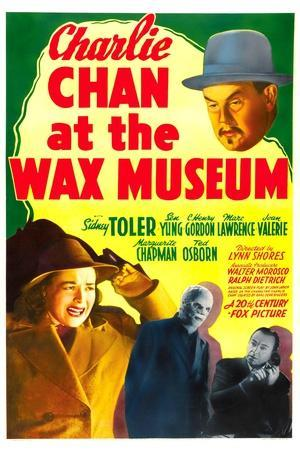
Oland died in 1938, and the Chan film Charlie Chan at the Ringside was rewritten with additional footage as Mr. Moto’s Gamble, an entry in the Mr. Moto series, another contemporary series featuring an East Asian protagonist; Luke appeared as Lee Chan, not only in already shot footage but also in scenes with Moto actor Peter Lorre. Fox hired another white actor, Sidney Toler, to play Charlie Chan, and produced eleven Chan films through 1942.[22] Toler’s Chan was less mild-mannered than Oland’s, a “switch in attitude that added some of the vigor of the original books to the films.”[17] He is frequently accompanied, and irritated, by his Number Two Son, Jimmy Chan, played by Victor Sen Yung,[23] who later portrayed “Hop Sing” in the long-running Western television series Bonanza.
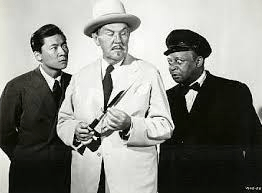
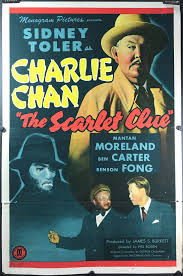
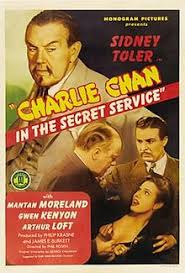
When Fox decided to produce no further Chan films, Sidney Toler purchased the film rights.[22] Producers Philip N. Krasne and James S. Burkett of Monogram Pictures produced and released further Chan films starring Toler. The budget for these films was reduced from Fox’s average of $200,000 to $75,000.[22] For the first time, Chan was portrayed on occasion as “openly contemptuous of suspects and superiors.”[24] African-American comedic actor Mantan Moreland played chauffeur Birmingham Brown in 13 films (1944–1949) which led to criticism of the Monogram films in the forties and since;[24][25] some call his performances “brilliant comic turns”,[26] while others describe Moreland’s roles as an offensive and embarrassing stereotype.[25] Toler died in 1947 and was succeeded by Roland Winters for six films.[27] Keye Luke, missing from the series after 1938’s Mr. Moto rework, returned as Charlie’s son in the last two entries
 thelivingbreathingjamesbrown.com
You must be logged in to post a comment.