
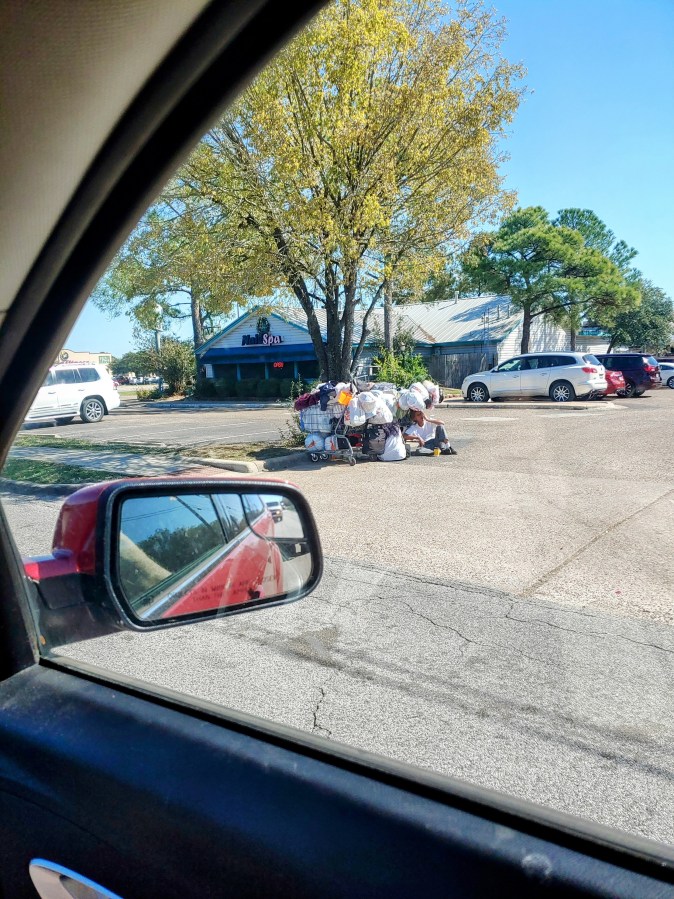
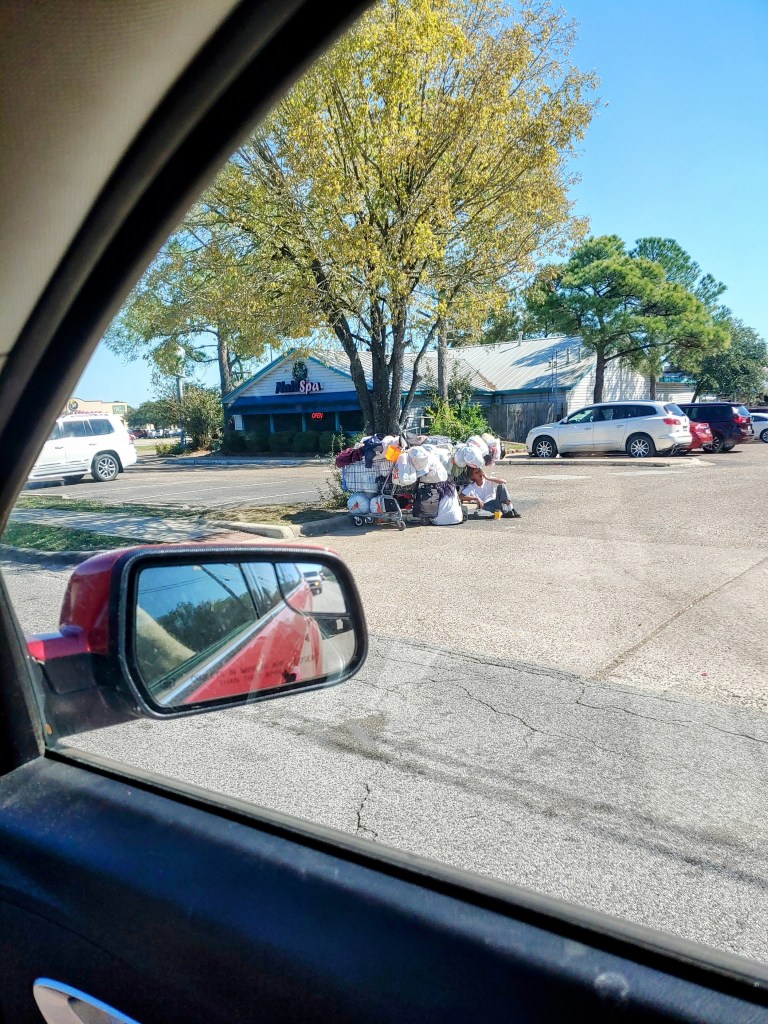
Look closely at just one Homeless man in the Brazos County in College Station,Texas where the Texas A&M University is located..
How often do any of us ever think about Homelessness? In the World, your Country, or your Hometown? But more importantly, do We Care? I’m not talking about sending a few Dollars to a local Food Pantry. I’m talking about gut rot stinking Homelessness. People living in their Cars. Under a Freeway? In a drainage ditch. Anywhere you don’t think to LOOK. And the Homeless are 11 times more often to be ARRESTED. Most are penniless. Zero Money. No Money, No Food, No water to drink.
Homelessness and hopelessness often go hand in hand. Homelessness can be a very isolating and dehumanizing experience. It can be difficult to maintain hope when you are living on the streets, struggling to meet basic needs such as food and shelter.
There are a number of reasons why homelessness can lead to hopelessness. First, homelessness can be a very stressful experience. It can be difficult to cope with the day-to-day challenges of living on the streets, such as finding a safe place to sleep, getting food and finding water yes water, and staying warm or getting out of the scorching Heat of Summer. This stress can take a toll on mental and emotional health, making it difficult to maintain hope for the future.
Second, homelessness can lead to social isolation. When you are homeless, you may lose contact with friends and family. You may also feel isolated from society as a whole. This social isolation can make it difficult to feel connected to others and to believe that there is hope for the future.
Third, homelessness can make it difficult to get back on your feet. When you are homeless, it can be difficult to find a job, get an education, or access healthcare. These challenges can make it seem like there is no way out of homelessness, which can lead to hopelessness.
There are a number of things that can be done to help people who are homeless find hope. One important step is to provide them with safe and stable housing. This can help to reduce stress and isolation, and it can give people a foundation to rebuild themselves out of being in homelessness. I believe many want to help abut are afraid of what the Homeless person might be like. They fear this. Or might. Or fear a disease? Or getting killed in their Sleep?
Another important step is to provide people with support services, such as job training, mental health counseling, and substance abuse treatment. These services can help people to overcome the challenges of homelessness and to build a better future for themselves.
It is important to remember that homelessness is not a personal failing. It is a complex problem that has many causes. By providing people with the support they need, we can help them to find hope and to rebuild their lives.tuneshareGoogle itmore_vertadd_circle
Homelessness is a global problem that affects millions of people. The United Nations estimates that 1.6 billion people live in inadequate housing, and more than 100 million people have no housing at all.
The causes of homelessness are complex and vary from country to country. Some of the most common causes include:
- Poverty: People who are poor are more likely to be homeless because they cannot afford housing.
- Mental illness: People with mental illness are more likely to be homeless because they may have difficulty finding and keeping a job, or they may not be able to afford housing.
- Substance abuse: People who abuse substances are more likely to be homeless because they may lose their job or their housing due to their addiction.
- Domestic violence: People who experience domestic violence are more likely to be homeless because they may flee their home to escape abuse.
- Natural disasters: People who are displaced by natural disasters, such as floods or earthquakes, may become homeless.
- War and conflict: People who are displaced by war or conflict may become homeless.
- The effects of homelessness can be devastating, both for individuals and for society as a whole. Homeless people are more likely to experience health problems, mental health problems, and addiction. They are also more likely to be victims of crime. Homelessness can also have a negative impact on children, who may have difficulty attending school and forming healthy relationships.
- There are a number of things that can be done to address homelessness. These include:
- Increasing the availability of affordable housing
- Providing support services for people with mental illness and substance abuse problems
- Offering job training and placement programs
- Providing legal assistance to people who are homeless due to domestic violence or eviction
- Providing disaster relief to people who are displaced by natural disasters
- Working to resolve conflicts that lead to war and displacement
- There are many organizations that are working to address homelessness. Some of these organizations provide direct services to homeless people, such as food, shelter, and clothing. Other organizations work to advocate for policies that will help to prevent homelessness.
- Here are some resources where you can learn more about homelessness:
- The Institute of Global Homelessness: https://ighomelessness.org/
- The National Alliance to End Homelessness: https://endhomelessness.org/
- The National Coalition for the Homeless: https://nationalhomeless.org/
- The Homeless World Cup: https://www.homelessworldcup.org/
Here are the top 10 states with the highest homeless populations in the United States, as of January 2023:
- California: 161,548
- New York: 91,271
- Florida: 27,487
- Texas: 287,229
- Washington: 22,923
- Massachusetts: 17,975
- Oregon: 14,655
- Pennsylvania: 13,375
- Arizona: 10,979
- Ohio: 10,655
- Georgia: 10,576
The states with the lowest homeless populations are:
- North Dakota: 541
- Wyoming: 612
- Mississippi: 625
- West Virginia: 644
- South Dakota: 650
- Nebraska: 667
- Iowa: 709
- Idaho: 719
- Maine: 725
- Vermont: 733
- Alaska: 744
Texas has highest homelessness rate in the nation, with an estimated 287,229 people experiencing homelessness on a single night in January 2023. There are a number of factors that contribute to homelessness in Texas, including:
- High housing costs: Texas has some of the highest housing costs in the country, making it difficult for people to afford housing. The median rent for a two-bedroom apartment in Austin, Texas is $3,100 per month, and the median home price is $450,000.
- Lack of affordable housing: There is a shortage of affordable housing in Texas, making it difficult for people to find a place to live that they can afford. The state has a housing affordability crisis, with nearly half of renters spending more than 60% of their income on rent.
- Poverty: Texas has a very high poverty rate, with nearly 1 in 3 Texans are living below the poverty line. People who are poor are more likely to become homeless because they cannot afford housing.
- Mental illness: People with mental illness are more likely to become homeless because they may have difficulty finding and keeping a job, or they may not be able to afford housing. Texas has a large population of people with tons of Texans experiencing mental illness, and many of them do not have access to the care they need.
- Substance abuse: People who abuse substances are more likely to become homeless because they may lose their job or their housing due to their addiction. Texas has a very high rate of substance abuse, and many people who are homeless struggle with addiction.
- Domestic violence: People who experience domestic violence are more likely to become homeless because they may flee their home to escape abuse. Texas has a very high rate of domestic violence, and many people who are homeless have experienced it.
- Natural disasters: People who are displaced by natural disasters, such as hurricanes or wildfires, may become homeless. Texas is a state that is prone to natural disasters, and many people who are homeless have been displaced by these events.
The state of Texas has taken some steps to address homelessness, but more needs to be done. Texans seem not to care as much as other states. The state has increased funding by 1% for homeless services, and it has not passed laws to make it easier for people to get back on their feet. However, there is still a long way to go to end homelessness in Texas if more Texans cared.
Here are some of the things that Texas can do to address homelessness:
- Increase funding for homeless services: The state needs to increase funding for homeless services, such as shelters, food banks, and job training programs.
- Build more affordable housing: The state needs to build more affordable housing to meet the needs of low-income Texans.
- Expand access to mental health and substance abuse treatment: The state needs to expand access to mental health and substance abuse treatment for people who are homeless.
- Provide legal assistance to people who are homeless: The state needs to provide legal assistance to people who are homeless, so that they can get back on their feet.
- Work to resolve conflicts that lead to homelessness: The state needs to work to resolve conflicts that lead to homelessness, such as domestic violence and poverty.
By taking these steps, Texas can make progress in ending homelessness.tuneshareGoogle itmore_vertadd_circle
It is true that an estimated 3,500,000 Texans are living out of their vehicle, but are not counted as homeless in Texas. This is because the state’s definition of homelessness does not include people who are living in their vehicles.
The number 3,500,000 Texans living out of their vehicle may have come from a study by the Texas Homeless Network, which estimated that there were 3.5 million Texans who were “housing insecure” in 2020. This includes people who were living in their vehicles, couchsurfing, or staying in motels or hotels. However, this number does not mean that all of these people were homeless. Some of them may have had a place to stay, but they were struggling to afford it.
The state’s definition of homelessness is based on the federal definition, which defines homelessness as “a lack of fixed, regular, and adequate nighttime residence.” This means that people who are living in their vehicles are not considered homeless because they have a nighttime residence, even if it is not a permanent one.
There are a number of reasons why the state’s definition of homelessness does not include people who are living in their vehicles. One reason is that the state does not want to discourage people from seeking help. If people know that they will not be counted as homeless if they are living in their vehicles, they may be less likely to seek help from homeless services.
Another reason is that the state does not want to take away the resources that are available to people who are homeless. If people who are living in their vehicles are counted as homeless, they may be eligible for the same resources as people who are living in shelters or on the streets. This could put a strain on the resources that are available to homeless people.
However, there are also a number of reasons why it is important to count people who are living in their vehicles as homeless. One reason is that it would give us a more accurate picture of the extent of homelessness in Texas. Another reason is that it would help us to better understand the needs of people who are living in their vehicles. Finally, it would help us to develop more effective policies and programs to address homelessness.
There are a number of things that can be done to address the issue of people who are living in their vehicles. One thing that can be done is to change the state’s definition of homelessness to include people who are living in their vehicles. This would allow people who are living in their vehicles to access the same resources as people who are homeless.
Another thing that can be done is to provide more affordable housing options for people who are struggling to afford housing. This would help to reduce the number of people who are forced to live in their vehicles.
Finally, it is important to provide support services to people who are living in their vehicles. These services could include job training, mental health services, and substance abuse treatment. By providing these services, we can help people who are living in their vehicles to get back on their feet and find permanent housing.
Would Free housing help?
Whether or not more free housing should be available for the homeless is a question with no easy answer. There are a number of factors to consider, including the cost of housing, the availability of affordable housing, the needs of the homeless population, and the potential benefits and drawbacks of providing free housing.
Free Housing for the Homeless would be suicide for a politician’s career.
On the one hand, providing free housing to the homeless can help to address the immediate need for shelter and can provide a safe and stable place for people to live. It can also help to improve the health and well-being of the homeless population. Studies have shown that providing free housing can reduce the risk of homelessness-related health problems, such as mental illness and substance abuse. It can also help to improve people’s physical health and their ability to find and keep a job.
On the other hand, providing free housing can be expensive. The cost of building and maintaining housing can be high, and there is no guarantee that the homeless population will use the housing responsibly. There is also the potential for free housing to create a disincentive for people to work or to seek other forms of assistance.
Ultimately, the decision of whether or not to provide more free housing for the homeless is a political one. There are strong arguments to be made on both sides of the issue. However, it is important to weigh the costs and benefits carefully before making a decision.
Here are some of the arguments in favor of providing more free housing for the homeless:
- It is the right thing to do: Everyone deserves a safe and stable place to live, regardless of their circumstances.
- It can help to improve the health and well-being of the homeless population.
- It can help to reduce crime and social disorder.
- It can save money in the long run by reducing the need for emergency services and healthcare.
Here are some of the arguments against providing more free housing for the homeless:
- It is too expensive: The cost of building and maintaining housing can be high.
- There is no guarantee that the homeless population will use the housing responsibly.
- It can create a disincentive for people to work or to seek other forms of assistance.
- It can lead to gentrification and displacement of low-income residents.
The decision of whether or not to provide more free housing for the homeless is a complex one. There are strong arguments to be made on both sides of the issue. Ultimately, the decision is a political one that must be made by elected officials.circle
Houston, TX, USA
It is possible that supporting free housing for the homeless could be political suicide for a politician. There are a number of reasons why this might be the case.
First, the issue of homelessness is often seen as an unthinkable and intractable problem. There is no easy solution, and any attempt to address the issue is likely to be met with resistance from some quarters. Politicians who support free housing for the homeless may be seen as naive or unrealistic, and they may be accused of wasting taxpayer money.
Second, the issue of homelessness can be emotional and divisive. Some people may feel that homeless people are lazy or irresponsible, and they may not be sympathetic to their plight. Politicians who support free housing for the homeless may be seen as being soft on crime or as being out of touch with the concerns of their constituents.
Third, the cost of providing free housing for the homeless could be a major obstacle. The cost of building and maintaining housing can be high, and there is no guarantee that the homeless population will use the housing responsibly. Politicians who support free housing for the homeless may be accused of being irresponsible with taxpayer money.
Finally, the issue of free housing for the homeless may not be a top priority for voters. In many cases, voters are more concerned with issues such as the economy, healthcare, and education. Politicians who support free housing for the homeless may be seen as being out of touch with the priorities of their constituents.
Of course, there are also reasons why supporting free housing for the homeless could be a popular move for a politician. Some people believe that it is the right thing to do to provide a safe and stable place to live for everyone, regardless of their circumstances. Politicians who support free housing for the homeless may be seen as compassionate and caring.
Ultimately, the decision of whether or not to support free housing for the homeless is a political one. There are strong arguments to be made on both sides of the issue. However, it is important to weigh the costs and benefits carefully before making a decision.
Houston, TX, USA •
But, do we really care? Afraid if we help that we’ll get Jinxed and become homeless too? Are you Jinxable?
 thelivingbreathingjamesbrown.com
You must be logged in to post a comment.