
James Webb Telescope has it’s Diaper replaced with Pull-Ups? Lol. What a silly thing to say. But what an amazing piece of scientific gathering instruments the James Webb Telescope has already proven to be. It’s remarkable and it is teaching us so much it’s not even funny. No, it’s fantastic. Here is its Birthday Photo and amazing Videos listed below-
https://www.nasa.gov/feature/goddard/2023/webb-celebrates-first-year-of-science-with-new-image
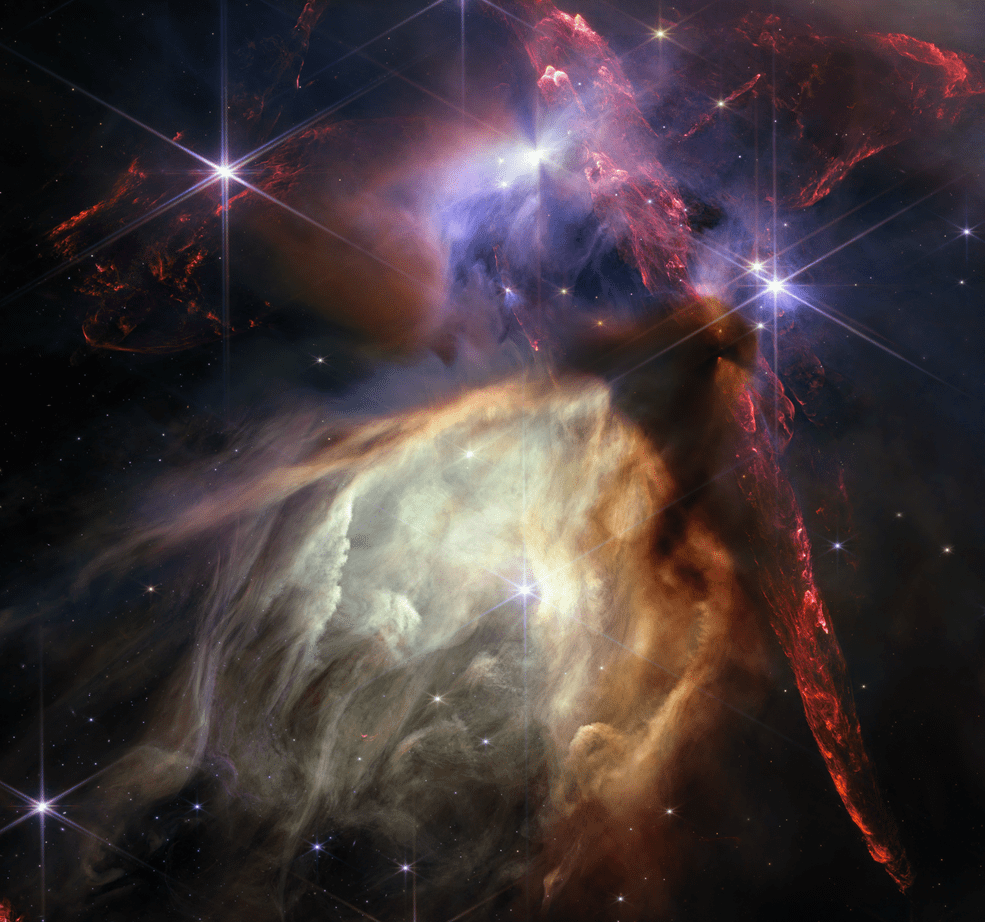
The first anniversary image from NASA’s James Webb Space Telescope displays star birth like it’s never been seen before, full of detailed, impressionistic texture. The subject is the Rho Ophiuchi cloud complex, the closest star-forming region to Earth. It is a relatively small, quiet stellar nursery, but you’d never know it from Webb’s chaotic close-up. Jets bursting from young stars crisscross the image, impacting the surrounding interstellar gas and lighting up molecular hydrogen, shown in red. Some stars display the telltale shadow of a circumstellar disk, the makings of future planetary systems.
Credits: NASA, ESA, CSA, STScI, Klaus Pontoppidan (STScI)
Here is a High Resolution pic-
https://webbtelescope.org/contents/media/videos/2023/128/01H4YM4EH20F6ZX6M7EWDE9RSN
Caption
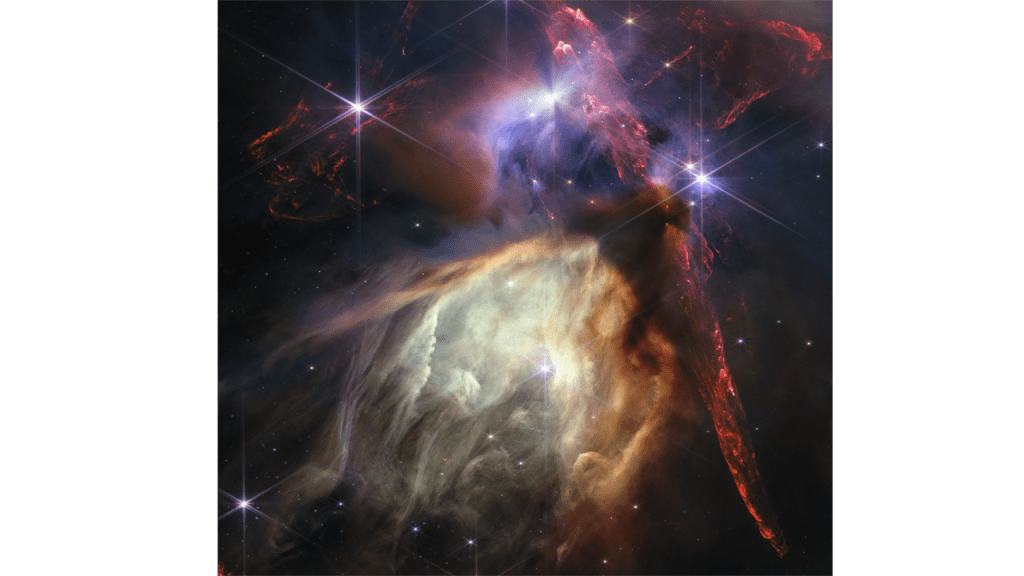
This video ABOVE tours a portion of the Rho Ophiuchi cloud complex, the closest star-forming region to Earth. The image was taken to celebrate the first anniversary of the start of science operations for NASA’s James Webb Space Telescope.
Jets bursting from young stars crisscross the image, impacting the surrounding interstellar gas and lighting up molecular hydrogen, shown in red. Some stars display the telltale shadow of a circumstellar disk, the makings of future planetary systems. Once our entire solar system, encompassing the entire history of life as we know it, would have appeared something like this if seen from a distance.
At bottom, a glowing cave of dust dominates the image. It was carved out by the star S1, at the center of the cavity – the only star in the image that is significantly more massive than our Sun.
Credits
Video
NASA, ESA, CSA, Greg Bacon (STScI)
https://webbtelescope.org/contents/media/videos/2023/126/01H4NSM0PHW800KW15FCQ1TBZV
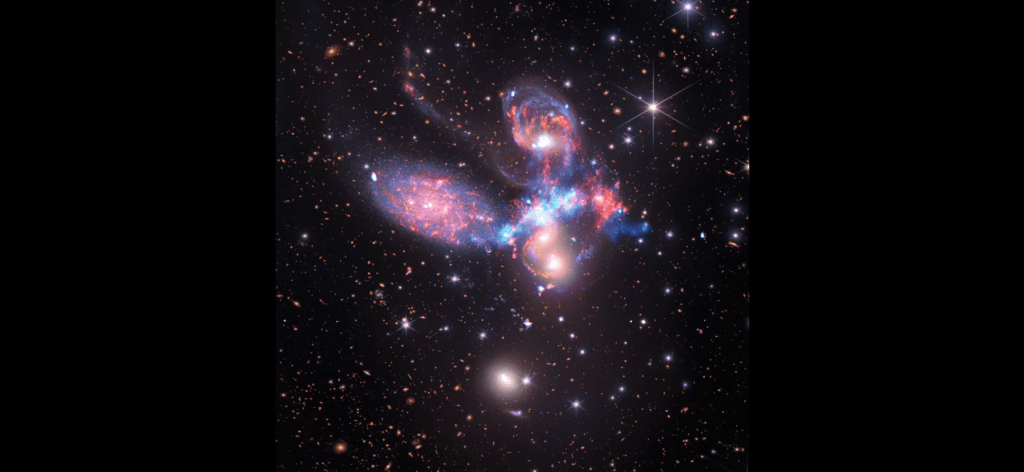
https://webbtelescope.org/contents/media/videos/01H2DM77S7FP07KW546QD5HS5M
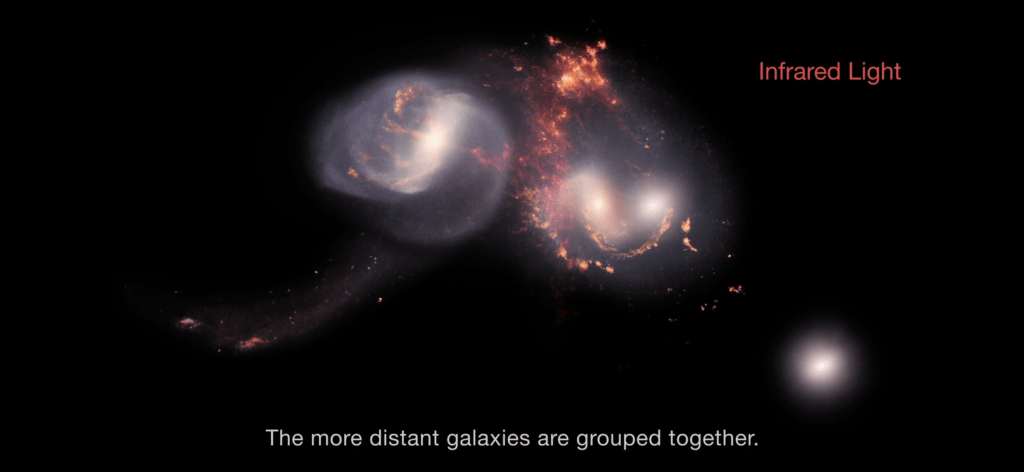
https://webbtelescope.org/contents/media/videos/01H2GBFZFD41KSYSJ506VPTMVH
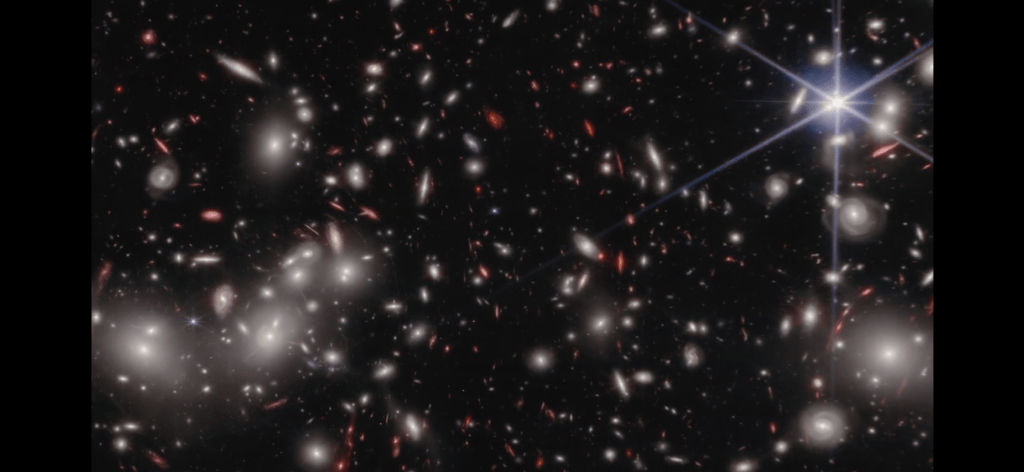
https://webbtelescope.org/contents/media/videos/2023/107/01GS5SCDZKWA0Q1MYJ3PHVY3TQ
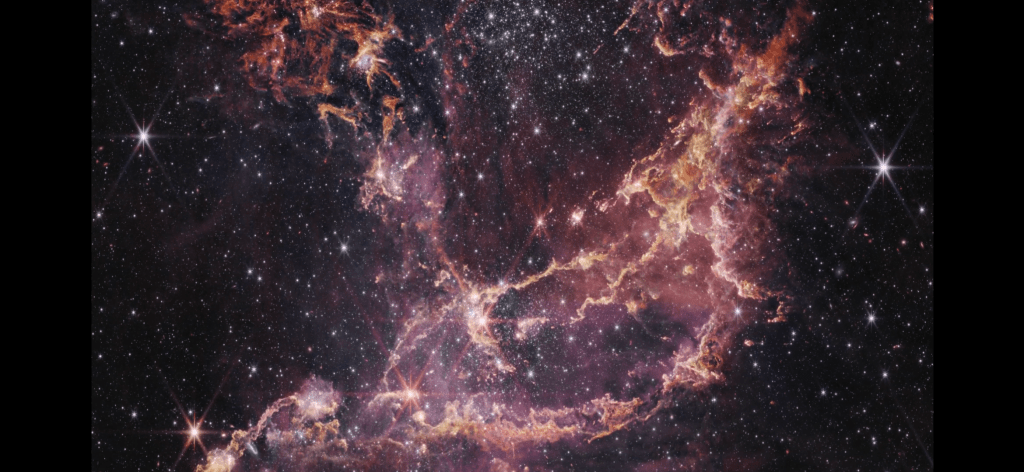
https://webbtelescope.org/contents/media/videos/2023/101/01GPE5R51DYCE6AKVAN1TXT4WS
 thelivingbreathingjamesbrown.com
You must be logged in to post a comment.