
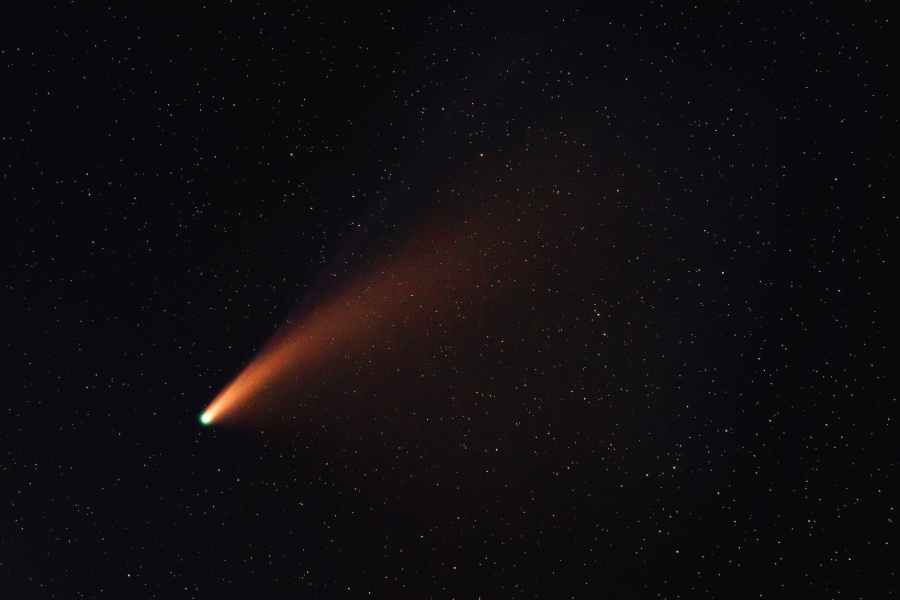
Mankind is so far behind in technology that only an accidental crash would ever bring a Space Traveler to stop on Earth. Some think mankind is Brilliant. It’s a valid perspective to consider that advanced space travelers might be cautious about interacting with a species facing challenges in environmental stewardship and biodiversity conservation. Earth’s environmental issues, including climate disruptions caused by human activities, could be perceived as indicators of a civilization that hasn’t fully mastered sustainable coexistence with its environment. However, it’s essential to recognize that such judgments are speculative, and any potential interaction would depend on the values and intentions of these hypothetical space travelers.
Extraterrestrial Concealment Strategies: Mimicking Celestial Bodies for Covert Observation
This paper explores the hypothetical scenario of advanced alien travelers employing camouflage techniques by disguising themselves as asteroids or meteorites when approaching less technologically advanced planets, such as Earth. The underlying assumption is that these extraterrestrial beings perceive Earth and its inhabitants as inferior due to the current state of human technological development.
In the vast expanse of the cosmos, the possibility of advanced extraterrestrial civilizations visiting planets with primitive technological capabilities prompts speculation about their strategies for concealment. This paper delves into the concept of alien travelers disguising themselves as celestial bodies, specifically asteroids or meteorites, to remain undetected while observing less advanced planets like Earth.
Camouflage Strategies:
- Asteroid-Mimicking Technology:
Extraterrestrial beings may possess advanced technology enabling them to mimic the appearance and composition of asteroids. This could involve sophisticated cloaking mechanisms, advanced materials that replicate the surface of celestial bodies, or even the manipulation of gravitational fields to emulate the trajectory of natural space objects. - Stealthy Arrival and Departure:
Aliens employing this camouflage strategy would likely approach the target planet covertly, navigating space in a manner consistent with typical asteroid or meteorite trajectories. Similarly, their departure would be carefully orchestrated to mimic the natural egress of celestial bodies, avoiding suspicion from planetary observers. - Invisibility to Primitive Sensors:
Advanced alien civilizations might possess the capability to render themselves invisible to the rudimentary sensing technologies of less developed planets. By adapting their energy emissions and signature, they could elude detection by Earth’s telescopes and radars.
Implications for Earth:
- Unnoticed Observation:
The use of asteroid camouflage would allow extraterrestrial beings to clandestinely observe Earth and its inhabitants, gaining valuable insights without triggering alarm or interference. - Technological Evaluation:
The decision to disguise themselves as asteroids suggests a perceived technological inferiority of Earth. This prompts considerations about the criteria these advanced beings use for evaluating the technological maturity of planets and civilizations. - Ethical Considerations:
The intentional concealment raises ethical questions regarding the right to privacy for less advanced civilizations. Exploring the motivations and moral implications of such covert observation becomes crucial in understanding the dynamics between advanced and developing societies.
The concept of advanced alien travelers disguising themselves as asteroids or meteorites presents an intriguing scenario for speculation and discussion. While purely hypothetical, exploring such ideas fosters contemplation about the potential encounters between extraterrestrial civilizations and our own, shedding light on the nuances of interstellar interactions and the preservation of cosmic secrecy.
 thelivingbreathingjamesbrown.com