
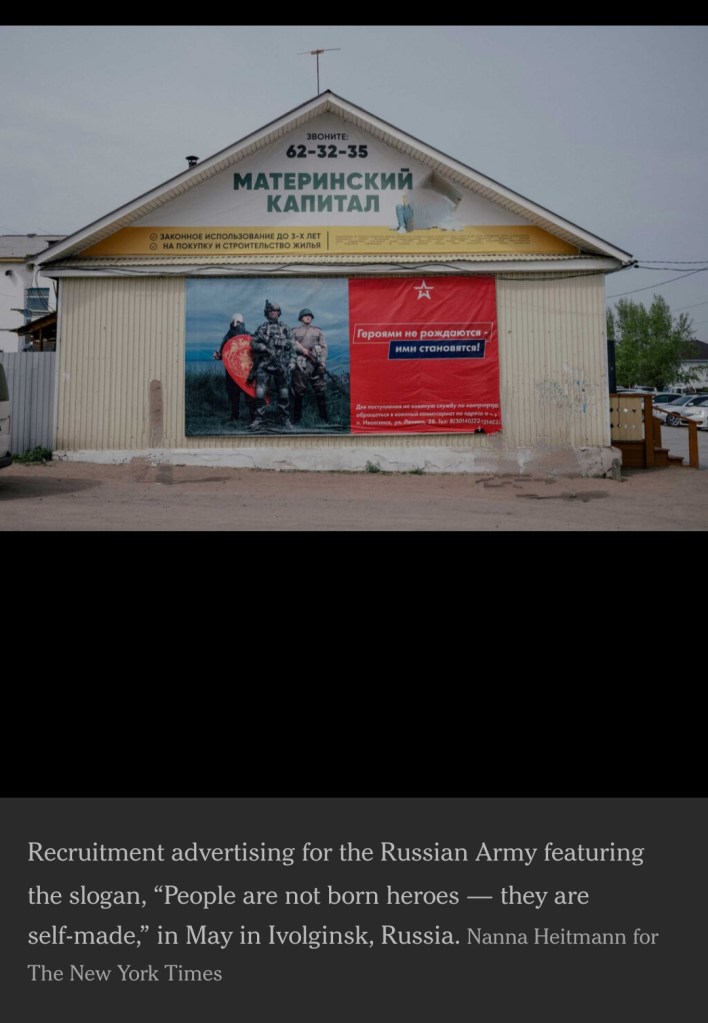
Russian Ideology is absolutely so different from that of most of the World. It is so reminiscent of VIKINGS MENTALITY. Pick a for? and send out your Army. Isn’t that what Putin has done?
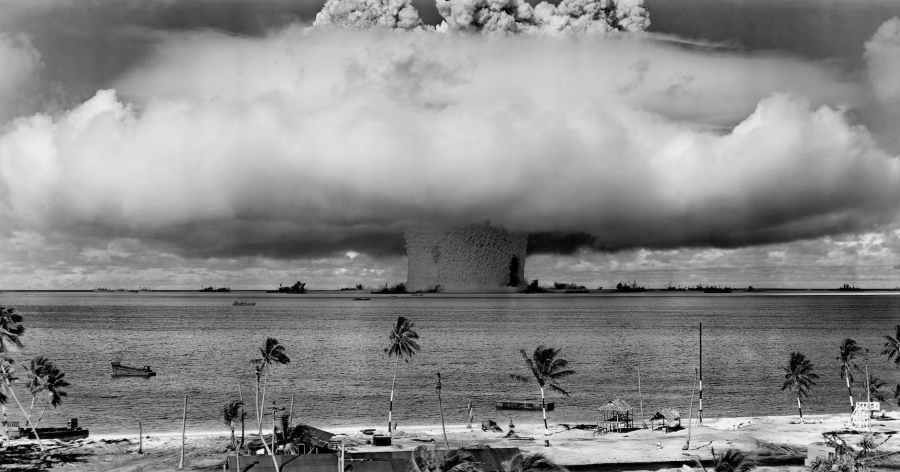
Russian Propaganda Recruiting in the pictures proves what I say. And the Russian People worship the Nuclear Bomb. For them, they truly believe that only a Nuclear Bomb can ever save them by using them. Make no mistake, the Russians are ready and capable of using Nuclear Weapons on any Country in the World and the West and NATO has been pipe fitted into their minds as their mortal Enemies. Yes, the Nuclear Bomb is their Savior.
And a Cease Fire and a withdraw in 🇺🇦 is absolutely unacceptable. Either shows Mercy and Mercy is not in the Russian Vocabulary. Just look at Syria and Putin’s destruction of most of Syria by Carpet Bombing all of Syria. No Mercy to keep Assad in Power and under Russian Control.
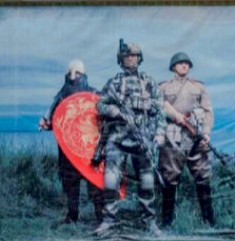
A society based upon the Noble Notion that Russians are a Noble Race of Gladiators and Warriors. And this belief is constantly channeled into them and thus mother’s and father’s willingly give up their children to the Meat Grinder in Ukraine is wholly acceptable. Or any Meat Grinder anywhere. To them, their Children are dying a Noble Death for a Noble Cause created by a whack job Leader who knows how to pull out the Imperialist Attitude lying deep within the Russian Citizen.
But wait! Early in 2022, many young Russian Men tucked tail and ran away from Russia, turning their backs on a War Cause that they do not wish to engage in while many have friends and family in Ukraine. Ukraine a Noble War Cry or another continual molding of a Warring Russian Mindset that History only shares in this maskerade.

The Gladiatorial Legacy: How Russia Forged Warrior Myths and Nuclear Faith
In the vast tapestry of Russia’s national identity, two threads stand out prominently: the warrior ethos and the nuclear shield. These intertwined concepts have shaped the Russian self-image for centuries, casting the nation as a perpetual gladiator, locked in an eternal struggle against existential threats. To understand this potent narrative, we must delve into the historical and cultural forces that forged it.
From Kievan Rus’ to the Red Army: A Legacy of Conflict
Russia’s martial spirit finds its roots in the early days of Kievan Rus’, where Viking princes carved out a kingdom amidst constant warfare. The Mongol yoke further cemented this image, painting Russians as hardened survivors in a hostile world. The rise of Muscovy and the Tsars only amplified this narrative, with Ivan the Terrible and Peter the Great establishing Russia as a formidable military power.
The Soviet era, with its emphasis on revolutionary struggle and World War II heroism, further solidified the warrior myth. The “Great Patriotic War” became a defining moment, casting Russians as stoic defenders against Nazi barbarity. The Red Army, with its immense sacrifices and ultimate victory, became a symbol of national pride and resilience.
Nuclear Supremacy: The Sword of Damocles
Following the devastation of World War II, the Soviet Union emerged as a nuclear superpower. This newfound arsenal, capable of obliterating entire nations, was quickly incorporated into the national narrative. The atomic bomb became a shield, deterring aggression and guaranteeing the nation’s survival. The Cold War, with its constant nuclear brinkmanship, only exacerbated this perception.
Nuclear weapons were not just military tools; they became potent symbols of national strength and defiance. Soviet propaganda extolled the virtues of the “nuclear shield,” portraying it as the ultimate protector against the West’s perceived aggression. This nuclear faith permeated Soviet society, creating a sense of security and pride even as it lurked beneath the constant threat of annihilation.
From Historical Echoes to Modern Propaganda
The fall of the Soviet Union did not diminish the warrior myth or the nuclear faith. Modern Russia, under President Putin, has consciously revived these narratives, invoking historical battles and figures to solidify a sense of national identity. Recruitment posters depict soldiers from across Russian history, from Kievan Rus’ to the Red Army, their stern gazes urging young men to follow in their footsteps.
This historical revisionism aims to create a sense of continuity, linking contemporary Russia to a glorious past of martial valor. It paints the current conflict in Ukraine as a continuation of this struggle, with Russia cast as the defender against Western encroachment. The nuclear arsenal remains a central element of this narrative, constantly invoked as a deterrent and a source of national pride.
The Perils of the Gladiatorial Mindset
While the warrior ethos and nuclear faith may resonate with many Russians, they come with inherent dangers. The constant portrayal of Russia as a beleaguered fortress can foster a siege mentality, breeding suspicion and hostility towards outsiders. The emphasis on military might can overshadow other aspects of national identity, stifling intellectual discourse and artistic expression.
Even more concerning is the nuclear dimension. The glorification of atomic weapons as a “saving grace” risks normalizing their use and increasing the potential for catastrophic miscalculation. The obsession with nuclear deterrence can create a self-fulfilling prophecy, where perceived threats breed more defensive measures, escalating tensions and inching closer to the brink.
Conclusion: Beyond the Gladiator Complex
Russia’s self-image as a warrior nation and its faith in the nuclear shield are complex phenomena, deeply rooted in history and shaped by political forces. While these narratives provide a sense of unity and resilience, they also harbor potential dangers. Moving forward, Russia must find a way to balance its proud martial legacy with a commitment to peace and international cooperation. The world stands to benefit from a Russia that sheds its gladiator complex and embraces its full potential as a nation capable of contributing to a brighter future for all.
It is important to note that this paper presents a critical analysis of Russia’s national identity and its historical and cultural underpinnings. It is not intended to endorse or promote any particular political ideology or viewpoint. The aim is to provide a nuanced understanding of a complex issue and to encourage open and informed discussion about the future of Russia and its place in the world.
 thelivingbreathingjamesbrown.com
You must be logged in to post a comment.