
Migración en masa es aqui! La migración masiva está llegando a Estados Unidos y ustedes, los estadounidenses, no pueden detenerla.
Translation?
Mass Migration is coming to America and You Americans cannot Stop it
An exert-
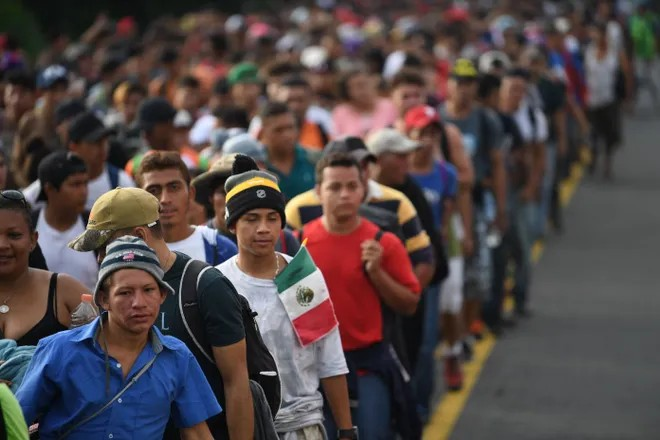
Migrant caravans refer to groups of people, often from Central America, who travel together in large numbers to reach a specific destination, typically the United States. These journeys are driven by various factors, including economic hardship, violence, and the search for better opportunities. Caravans provide safety in numbers during the perilous journey, and participants hope to increase their chances of successfully reaching their destination and seeking asylum or improving their living conditions. The phenomenon has sparked debates over immigration policies, border security, and humanitarian concerns. And for whatever reason, Americans have been taught to Fear Migrant Caravans.
An estimated 8-15,000 Immigrants are headed to America in another Caravan. And BAM! What can you do about it? Answer?
Mostly Nothing!
Why are Venezuelan migrants coming to the US?
Why one family from Venezuela joins historic migration to U.S. Millions of Venezuelans have migrated to escape authoritarian rule and their country’s worst economic crisis. For the first time, they’re the largest group detained for entering the U.S. irregularly.Oct 31, 2023
The two types of immigration patterns are anticipatory and acute. Anticipatory refugees are refugees who left Cuba in anticipation and fear of future political changes. The first wave of immigrants left Cuba, and came to the U.S. in anticipation of economic restrictions, agrarian reform laws, and Cuban nationalism.
Approximately 60% of Argentinians now living in the United States arrived after 1990. This influx in immigrants was especially dramatic between the years 2000 and 2005, with many hoping to escape financial loss in their home country. This new immigrant group had an educational level lower than earlier immigrants.
Why are people leaving Mexico for the US?
Recent economic opportunities and advantages with international treaties, harassment, and threatening insecurity have induced even some affluent persons to leave the country. Many Mexicans envision this new ideology of living in a world that could give more economic opportunities.
There are significant communities found in Queens in New York City; Northern New Jersey; Miami, Florida; and Nassau County, New York. After the 1960s, Chileans began to immigrate more for economic or academic rather than political reasons, and that continues into the modern day.
Almost all migrant caravans were halted at the Guatemalan border after 2021, as a result of the COVID-19 pandemic. The Guatemalan and Mexican governments pointed to the pandemic as a critical justification for prohibiting more migrants from further movement, and Guatemalan police used force to break up the caravans in some instances. Those arrested were sent back to their countries of origin after medical examinations due to health-related concerns. Nevertheless, according to interviews conducted at the scene, migrants who were arrested and detained stated that they had not given up their plans to continue their northward journey.[6]
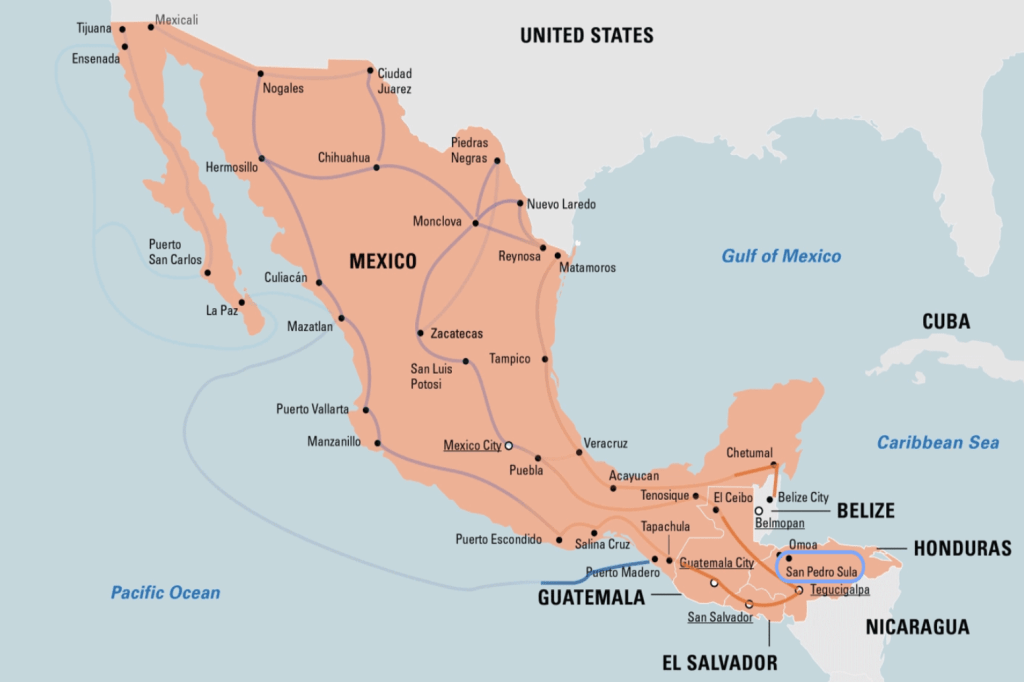
Thirty migrant caravans were detected from 2017 through December 2022. Of these 30 caravans, one started in 2017, one in 2018, three formed in 2019, three in 2020, eight in 2021, and 14 formed in 2022. Most of them set off from San Pedro Sula, Honduras, and others began their journeys from cities in Mexico.
Most Mexican transnational criminal organizations (TCOs) began as drug trafficking organizations (DTOs) but they have since evolved, controlling almost everything that arrives in Mexico — including migrants, money, drugs, chemicals, and weapons.
The combined economic power of the TCOs in Mexico is formidable, and could represent a future threat to the national security and sovereignty of both the U.S. and Mexico.
…most migrants paying on average of $4,000 for simply being placed on U.S. soil.
It’s important to acknowledge that not all Americans fear migrant caravans, and there is a broad range of opinions on the issue. However, it’s true that a significant portion of the population does express concern about their arrival.
The reasons for this fear are complex and multifaceted, but some prominent contributors include:
Political Rhetoric: The portrayal of migrant caravans as dangerous and threatening by certain politicians and media outlets has undoubtedly played a significant role in shaping public perception. Framing the caravans as “invasions” or associating them with crime and terrorism can evoke feelings of fear and insecurity, even if these narratives are not supported by accurate data.
Economic Concerns: Some Americans worry that migrants will take jobs away from citizens or strain social services. These concerns are often rooted in anxieties about economic stability and competition, especially in times of economic uncertainty. While research suggests that immigration often has a net positive impact on the economy, these concerns can still be powerful motivators for fear.
Cultural Anxiety: The arrival of large groups of people from different cultures can raise concerns about national identity and assimilation. Some Americans worry that immigration will lead to a loss of traditional values or a dilution of American culture. These anxieties can be intensified by misinformation and stereotypes about migrants.
Historical Context: The United States has a long history of both welcoming and restricting immigration. Periods of high immigration have often been accompanied by anxieties about the impact on the nation, and these historical narratives can sometimes resurface in contemporary debates about immigration.
It’s important to note that these factors interact and reinforce each other, creating a complex web of motivations for fear. It’s also crucial to distinguish between legitimate concerns about the challenges of managing immigration and the broader, fear-based narratives that often dominate public discourse.
Ultimately, understanding the reasons why some Americans fear migrant caravans requires a nuanced consideration of various factors, including political rhetoric, economic anxieties, cultural concerns, and historical context. Do you fear them? Or Is this a fear created by what? What put that Fear in you?
And actually, how much have you come into contact with A Migrant?
https://wng.org/articles/whos-funding-the-migrant-caravans-1617298710
An exert-
Border Patrol agents report that when they apprehend these people at the border, the kids look malnourished and the adults look haggard, as though they’ve survived famine and war. Many need immediate medical attention.
Why are people migrating to Russia?
The majority of migrant workers in Russia are irregular migrants who are particularly vulnerable to modern slavery. The collapse of the Soviet Union has led many people from the Central Asian Republics to move to Russia in search of opportunities and employment. Every year about 10-12 million workers enter Russia. And that’s a whole buttload of folks…
 thelivingbreathingjamesbrown.com
You must be logged in to post a comment.