

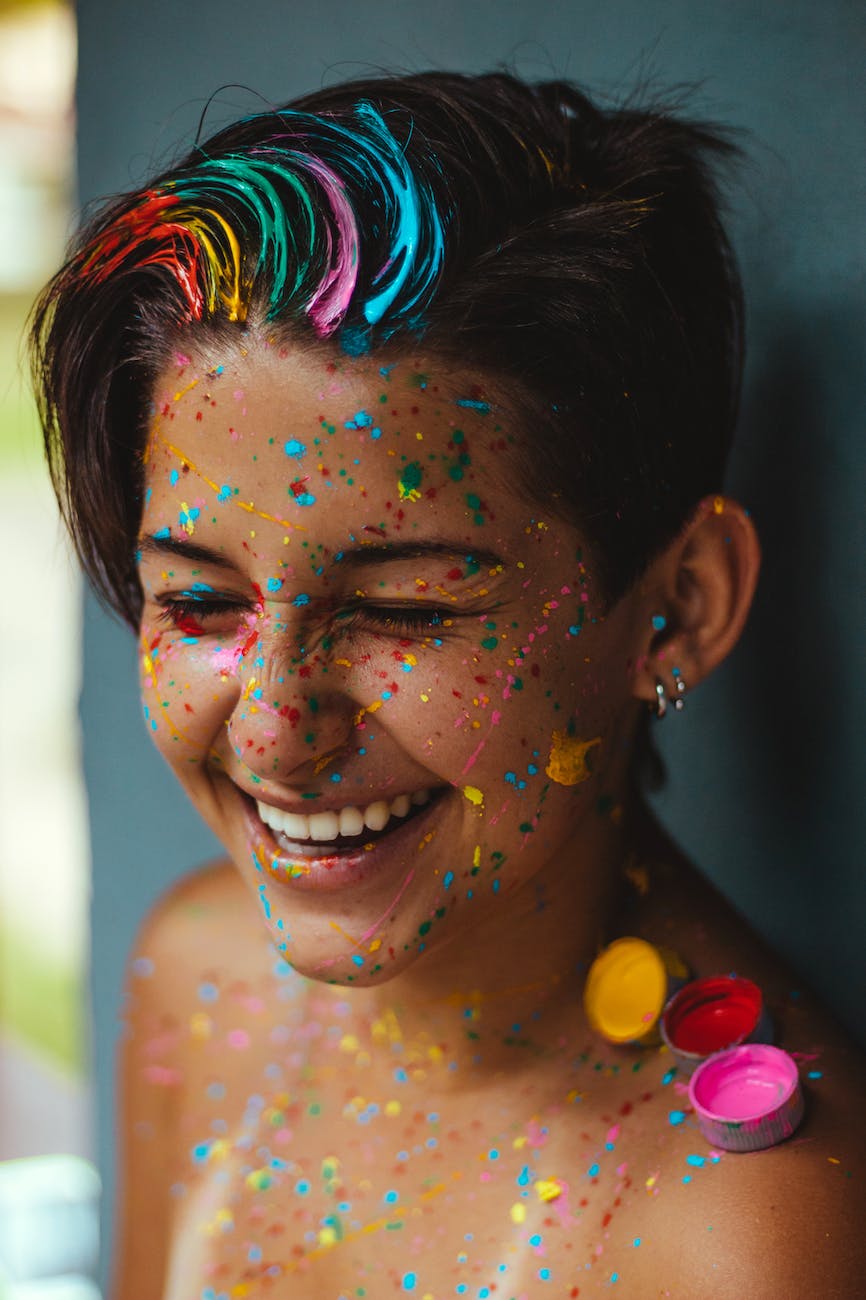
Oh my, the Histrionics of it all…Even the Whitest of White People cannot explain who is and who isn’t White. So, what gives? Has a delusional Bowl of an Alternate 🌎, an Alternate Reality been feed into the minds of those who believe that they and only they are the one True White People of the 🌎?
Does that grab your ATTENTION? Good, you need to be fully awake for this-
Beyond the Pale: Deconstructing Whiteness and its Shifting Sands






Above you read my opening paragraph which throws us into the heart of a complex and heated topic: “the contested territory of “whiteness.” It rightly captures the absurdity of a singular, definitive definition, highlighting the performativity and internal contradictions at play. Goodly so, Let’s now delve deeper into this murky terrain, unpacking the historical, social, and personal constructs that shape how we understand and experience whiteness. And are you White?
The Myth of “Pure” Whiteness:
Firstly, it’s crucial to debunk the myth of a homogenous, pristine whiteness. Whiteness is not a biological reality; it’s a social construct, a constantly evolving and contested category shaped by power dynamics and historical context. Government use it, certain people use it, and many keep teaching an absurdity of Whiteness to White Claiming Peoples. Throughout history, the criteria for being “white” have shifted like desert sands, driven by economic anxieties, political agendas, and evolving notions of racial superiority. Irish, Italians, and Eastern Europeans were once excluded from the white fold, only to be gradually assimilated as their labor became economically desirable. Conversely, groups like Black Americans and Indigenous peoples have persistently been denied full access to white privilege despite centuries of cultural erasure and forced assimilation. But if you look for White People based on Skin, then go to the Beaches of Spain where you will find the Whitest White Skinned Folks in the World. But also you have to look at the Japanese Beaches and South Korea and they are White too. So, who is White? What is White Peoples?

The Performance of Whiteness:
Beyond the shifting boundaries, whiteness functions as a performance, a set of cultural markers and behaviors associated with social and economic dominance. It’s about adopting the dominant language, cultural norms, and unspoken codes of conduct that grant access to unearned privileges like financial security, educational opportunities, and legal protections. This performance can be conscious or unconscious, but it ultimately reinforces the power dynamics that uphold racial hierarchies.

The Spectrum of Whiteness:
However, to paint all white people with the same brush would be both inaccurate and unhelpful. Whiteness is not a monolith; it exists on a spectrum with varying degrees of awareness, engagement, and complicity in perpetuating racial inequities. Some white individuals actively challenge the status quo, utilizing their privilege to dismantle systemic racism and advocate for marginalized communities. Others remain oblivious to their own racial advantages, perpetuating harmful stereotypes and maintaining the existing power structures through implicit bias and inaction.

Beyond the Binary:
Ultimately, the conversation about whiteness cannot be confined to a simple binary of “good” and “bad.” It’s about confronting the historical and ongoing processes that have created and sustained racial hierarchies, understanding our own individual roles within these structures, and actively working towards dismantling them. This requires continuous self-reflection, critical engagement with the complexities of race and identity, and a commitment to building a more just and equitable society where whiteness is not a barrier to opportunity, but simply one facet of a diverse and interconnected human tapestry.
By moving beyond the histrionics and simplistic classifications, we can engage in a nuanced and productive dialogue about race. This dialogue demands acknowledging the fluidity and constructed nature of whiteness, recognizing the spectrum of experiences within that category, and focusing on collective action towards a future where racial identity does not dictate one’s access to basic human dignity and societal belonging.
Remember, this is just a starting point for a much deeper and complex conversation. It’s important to approach this topic with respect, open-mindedness, and a willingness to learn. Together, we can navigate the shifting sands of whiteness and build a more inclusive and equitable future for all.










Many KARENS seem to be White Peoples, but they are EVERYONE. At one time or another, all of us have been KARENS. And hateful we were, weren’t we?

The Absurdity of One-drop-ism: Reframing Whiteness with a Mirror
The “one-drop rule” stands as a potent symbol of racial injustice, historically used to solidify racial hierarchies and deny people of color their rightful place in society. But what if we turned this flawed logic on its head, applying it to the very concept it sought to uphold: whiteness? Would the absurdity become so glaring that we finally see the fallacy of these rigid classifications?
Imagine a world where a single drop of “white blood” instantly grants full access to the coveted halls of whiteness. Picture someone with ancestral roots spanning continents, their skin a mosaic of cultural heritage, suddenly classified as white solely due to a distant European lineage. The ridiculousness is palpable, highlighting the arbitrary nature of racial categories and the absurdity of defining an entire identity based on a single drop of ancestry.

This thought experiment exposes the core flaw of the “one-drop rule”: it reduces human beings to a simplistic binary, ignoring the rich tapestry of individual experiences and cultural intersections that shape who we are. It erases the lived realities of those excluded from whiteness, homogenizing diverse populations into a monolithic “other.”
In truth, whiteness is not a biological reality, but a social construct, constantly shifting and reshaped throughout history. The criteria for being “white” have adapted along with political agendas and economic anxieties, with groups like Irish, Italians, and Eastern Europeans once excluded from the fold eventually assimilated as their labor became valuable. Yet, Black Americans and Indigenous peoples, despite generations of cultural erasure and forced assimilation, continue to face the denial of full access to white privilege.
By applying the one-drop logic to whiteness, we expose the hypocrisy at its core. Suddenly, the arbitrary boundaries crumble, revealing the fluidity and constructed nature of this category. We see how easily someone who is readily categorized as “other” based on their appearance or cultural background can, simply by virtue of a distant ancestor, be deemed “one of us.” This cognitive dissonance exposes the absurdity of defining someone’s entire identity based on a drop of blood, a single strand in the complex web of their ancestry.

This thought exercise is not meant to trivialize the challenges faced by people of color or minimize the very real consequences of racial discrimination. Instead, it aims to be a satirical mirror, reflecting the inherent contradictions and injustices embedded within the concept of racial categorization. It challenges us to move beyond simplistic labels and binary classifications, instead embracing the rich tapestry of human identities and experiences that transcend the artificial boundaries of race.
Ultimately, the goal is not to create new hierarchies or exclude others, but to dismantle the very frameworks that perpetuate racial inequities. We must move towards a future where individuals are celebrated for their unique narratives and cultural contributions, rather than judged by the arbitrary measure of a single drop. The path towards a more just and equitable society lies not in reinforcing racial categories, but in dismantling them altogether, fostering understanding and appreciation for the beauty and richness of human diversity.






So let us laugh at the absurdity of one-drop-ism, not in mockery, but in recognition of its inherent flaws. Let this laughter be a catalyst for change, a reminder that human identities are far too complex and nuanced to be confined by simplistic labels. Together, we can build a world where the color of our skin or the drops of blood from various other ethnic groups in our blood holds no sway over our dreams, our opportunities, or our inherent worth.


 thelivingbreathingjamesbrown.com
You must be logged in to post a comment.