
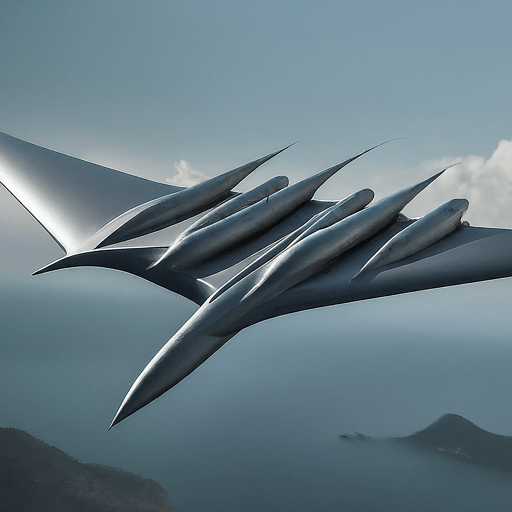
AI-flown fighter jets represent a significant leap in speed and maneuverability possibilities. With AI at the helm, these aircraft can execute maneuvers beyond human limitations, exploiting every aspect of physics to achieve unparalleled agility. From instantaneous response times to predictive algorithms, AI enables fighters to perform split-second decisions and precise maneuvers, outmaneuvering opponents with unmatched speed and efficiency. Advanced sensors, coupled with AI, allow for real-time analysis of the environment, enabling the aircraft to adapt instantly to changing conditions, making them formidable adversaries in air combat scenarios. Moreover, AI can optimize flight trajectories and control surfaces to push the limits of what’s physically achievable, resulting in maneuvers that were previously deemed impossible. Overall, AI-flown fighter jets open up a new era of speed and maneuverability, revolutionizing aerial warfare capabilities.
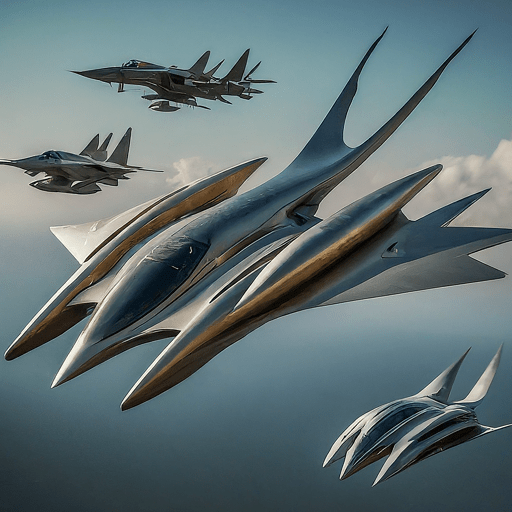
While the concept of AI-flown jets is intriguing, it’s important to understand the current state of technology. As of today, no fighter jet is flown solely by AI.
However, there have been significant advancements in AI piloting for fighter jets. In December 2022, the X-62A Vista, an experimental aircraft based on the F-16, successfully completed a series of test flights where AI algorithms controlled the jet for a total of 17 hours across 12 flights. These flights included dogfighting simulations and basic maneuvers, but crucially, human safety pilots were present throughout.
Hypothetically, AI-controlled jets could potentially achieve higher speeds and more precise maneuvers than human pilots due to several factors:
- Faster reaction times: AI can react to situations and make decisions much faster than humans, potentially allowing for quicker and more precise maneuvers during combat.
- G-force tolerance: Humans can experience physical limitations due to G-forces encountered during high-speed maneuvers. AI wouldn’t have such limitations, allowing for potentially more aggressive maneuvering.
- 24/7 operation: AI wouldn’t tire or need breaks, unlike human pilots, potentially enabling longer mission durations and continuous operation.
However, there are also significant challenges to consider:
- Limited decision-making capabilities: AI currently struggles with complex, nuanced decision-making, which is crucial in real-world combat scenarios where ethical considerations and unforeseen situations arise.
- Vulnerability to cyberattacks: AI systems are susceptible to hacking, which could potentially compromise the control of the aircraft and lead to disastrous consequences.
- Ethical concerns: The use of AI in warfare raises ethical concerns around autonomous weapons and the potential for unintended consequences.
Therefore, it’s important to remember that AI-controlled jets are still in their early stages of development. While they hold the potential for increased speed and maneuverability, significant technical, ethical, and safety hurdles need to be addressed before they become a reality.

 thelivingbreathingjamesbrown.com
You must be logged in to post a comment.