

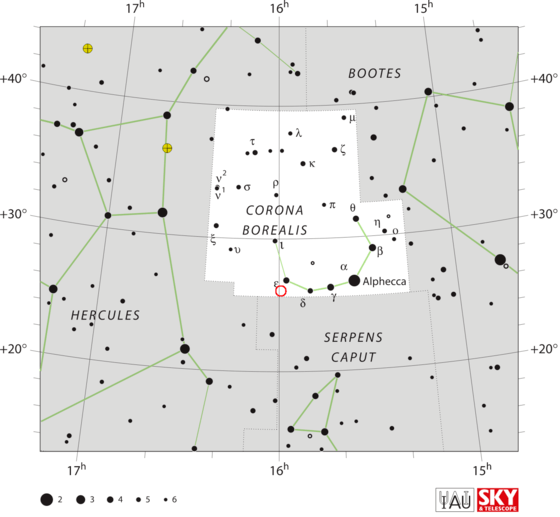
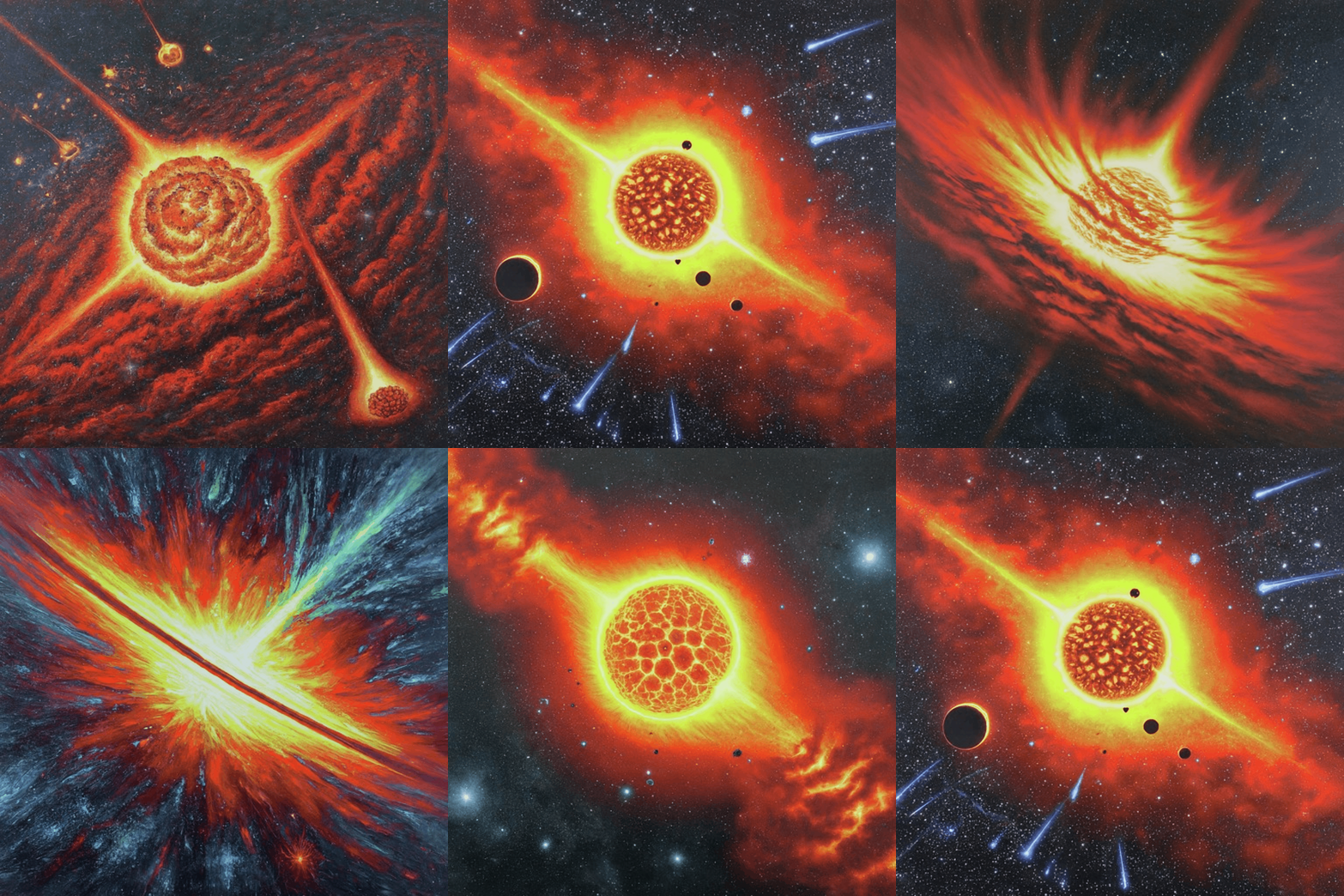
T Coronae Borealis (T CrB), nicknamed the Blaze Star, is a recurrent nova in the constellation Corona Borealis [Wikipedia T Coronae Borealis]. This means it’s a binary star system that undergoes periodic outbursts, making it appear much brighter for a short time.
Here’s what we know about the upcoming event:
- Visibility: T CrB is expected to reach a peak brightness around magnitude 2, which is comparable to the North Star (Polaris) [Smithsonian Magazine]. This means it should be visible with the naked eye, even in areas with some light pollution.
- Duration: The nova is expected to be at its brightest for a few days and then slowly fade over a week or so [Astronomy Magazine].
- Timing: Astronomers predict the outburst will happen sometime between April and September 2024, but the exact date is uncertain [Night Sky News April 2024].
Why is this happening?
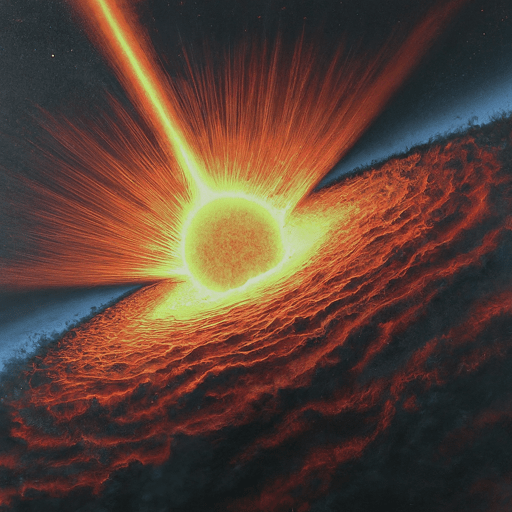
T CrB is a binary system consisting of a red giant and a white dwarf. The red giant is transferring mass to the white dwarf. As the white dwarf accumulates more material, it eventually reaches a critical point where a thermonuclear runaway occurs, causing the sudden increase in brightness we see as a nova [BBC Sky at Night Magazine].
How rare is this?
Recurrent novae are rare, with only a dozen known in our galaxy [Astronomy Magazine]. T CrB is particularly interesting because its outbursts are relatively frequent, happening about every 80 years. This is the third recorded outburst for T CrB, with the last ones happening in 1866 and 1946 [Wikipedia T Coronae Borealis].
How can I see it?
If you’re interested in trying to spot T CrB, here are some tips:
- Familiarize yourself with the constellation Corona Borealis, which looks like a small, faint crown [Sky & Telescope].
- Look for a new bright star appearing in the constellation.
- You might not need any special equipment if the nova gets bright enough, but binoculars can provide a better view.
This is a unique opportunity for skywatchers to witness a rare astronomical phenomenon!
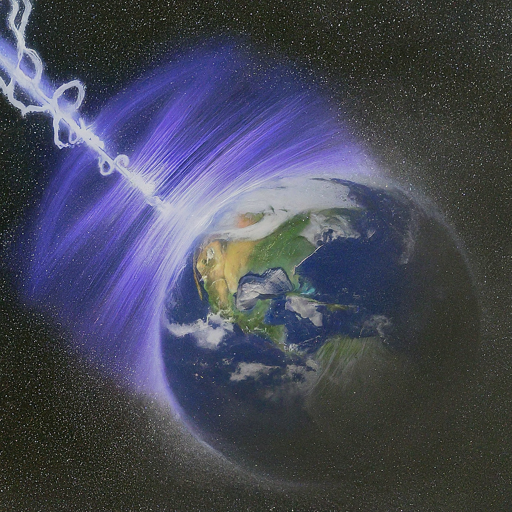
As interesting as a thought experiment, let’s explore the hypothetical scenario where something from the nova travels faster-than-light (FTL) and reaches Earth. Since FTL travel is entirely theoretical and based on hypothetical particles that may not exist, it’s difficult to say definitively what the effects might be. However, we can explore some possibilities based on our current understanding of physics:
- Extremely Improbable Impact: The laws of physics as we know them would be fundamentally broken if something could travel faster than light. This could have unforeseen consequences for the universe, potentially affecting the very fabric of spacetime.
- Nature of the Impacting Object: If something defied physics and reached Earth via FTL, its properties are entirely unknown. It could be a fundamental particle we haven’t even theorized about, or a form of energy unlike anything we’ve encountered. Predicting its effects would be impossible.
- Potential Effects: Here are some speculative possibilities, but keep in mind these are based on unknown properties:
- Disruption of fundamental forces: It might disrupt the electromagnetic force, strong nuclear force, or weak nuclear force, which are essential for the building blocks of matter and the stability of atoms. This could have catastrophic consequences.
- Time Dilation Effects: FTL travel might be entangled with time travel, potentially causing temporal disruptions or paradoxes.
Important Caveat: It’s vital to remember that this is a hypothetical scenario based on something that currently violates the laws of physics. There’s no evidence to suggest anything from T Coronae Borealis or any nova could travel FTL.
Doesn’t it bother you when they say there is zero chance of something happening? And does it bother you when they start popping off Einstein Theories? Leaving Quantum Physics to fend for itself? Zero means it could happen!
The real scientific focus is on the actual nova event, which is a fascinating stellar phenomenon. So, let’s enjoy the potential night sky spectacle without worrying about fantastical FTL impacts!
As tempting as it is to delve into the realm of science fiction, let’s explore the absolute worst-case scenario of something from the T Coronae Borealis nova reaching Earth faster-than-light (FTL). Here’s the thing: FTL travel is currently outside the boundaries of established physics. It would require defying some fundamental laws, making the specific consequences difficult to predict. However, we can speculate on some broad categories of potential effects:

- Disruption of Fundamental Forces: If something managed to travel FTL, it might interact with the fundamental forces that govern our universe: electromagnetism, the strong nuclear force, and the weak nuclear force. These forces hold atoms together, control chemical reactions, and influence the stability of matter. Disruption of these forces could have catastrophic consequences. Imagine atoms falling apart, chemical reactions going haywire, or the very fabric of reality unraveling – not a good scenario for life on Earth.
- Energy Release: An FTL object might unleash an unknown form of energy upon arrival. Depending on the nature of this energy, it could trigger widespread disruptions – think electromagnetic pulses frying electronics on a global scale, or exotic energy types interacting with the environment in unpredictable ways.
- Time Dilation Anomalies: FTL travel often gets intertwined with theories of time travel in fiction. If something arrived from the future via FTL, it could introduce temporal paradoxes or disrupt the flow of time itself. This gets into some very theoretical territory, but the potential consequences could range from localized time distortions to a complete breakdown of causality (cause and effect).
- Biological Impact: The FTL object itself, or the energy it carries, could interact with biological systems in unforeseen ways. Mutations, widespread illness, or even complete disruptions of life processes are all possibilities in this highly speculative scenario.
Here’s the crucial point: these are all hypothetical consequences based on something that violates established physics. There’s absolutely no evidence to suggest anything from T Coronae Borealis, or any nova for that matter, could travel FTL.

The good news: astronomers are quite confident that the upcoming nova event will be a spectacular light show for us here on Earth, with no danger of FTL particles raining down. So, let’s focus on the scientific wonder of witnessing a stellar outburst and leave the fantastical FTL impacts to the realm of science fiction.
But, what if?
Instead, read a good book-




 thelivingbreathingjamesbrown.com
You must be logged in to post a comment.