
Opps! Are we ignoring Our Dead Relatives when there is Brain Activity Going on?


When a thought races thru our Brains and you think that thought, it’s Normal. It’s what Brains do. But what happens if a Brain takes 30 minutes or 60 minutes to complete a thought after that Brain is buried and in the Grave, in a graveyard? Still working? So, maybe, we should not race to Cremation and not have our Body Drained of any fluids and no Embalming Fluid Added? Or did tgey know a long time ago that Brains are still working in the Graveyards. In those Coffins? And What Exactly are they Thinking? Maybe there is more to the Dr. Frankenstein and his created Monster Man than we thought?
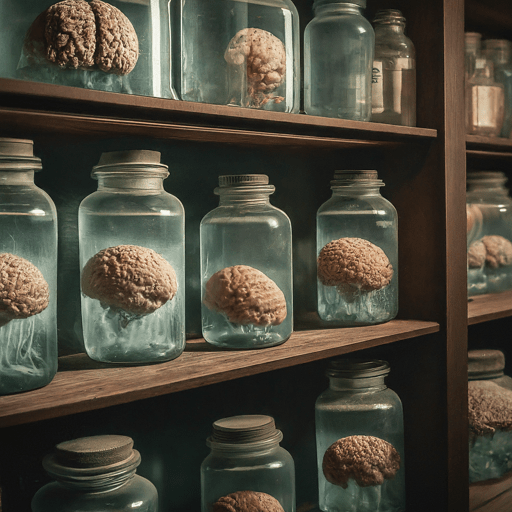
Well, look like I’m Dead now. Still Alive, buried six feet down in the ground and in this damn Box. How much did they pay for my Coffin? Crap! Crap! Crap!
Post-Mortem Cognitive Residuality: A Tapestry of Science, Ethics, and the Echoing Mind
Abstract: The revelation from the World Scientists’ groundbreaking research on post-mortem cognitive residuality (PMCR) has shaken the very foundations of our understanding of death. This paper delves into the study’s implications, the ethical quandaries it presents, and the ongoing efforts to decipher the lingering consciousness, or Brains (Vestige Residual Activity in Neural Systems), as some have dubbed it, of those who have passed. The possibility of accessing the thoughts and potential brilliance of these Brains ignites both scientific curiosity and philosophical anxieties.
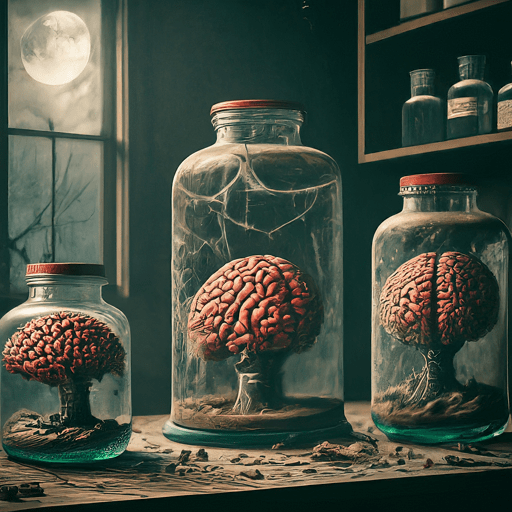
Methodology and Key Findings: The World Scientists employed a rigorous, multidisciplinary approach. Utilizing advanced neuroimaging techniques, bioelectrical measurements, and theoretical modeling, they meticulously studied a diverse group of subjects. Their findings, while preliminary, suggest that under specific conditions, the human brain exhibits residual electrical activity and a limited capacity for information processing for up to a decade after biological death. This “echoing consciousness” is theorized to be a faint imprint of the individual’s cognitive processes persisting within the neural network.
The Brain Project: Decoding the Echoing Mind Fueled by the PMCR discovery, a new scientific frontier has emerged – the Brain Project. Renowned neuroscientists and engineers are collaborating to develop methods for interfacing with these Brains. The goal is to establish a communication bridge, a delicate interaction that could potentially unlock a treasure trove of information. Imagine accessing the lingering thoughts of a departed mathematician, the final insights of a historical figure, or the unfulfilled creative spark of an artist. The possibilities are both exhilarating and ethically fraught.
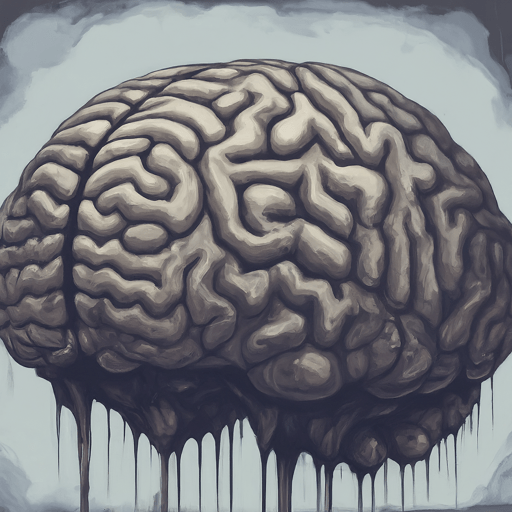
Ethical Considerations and the Quest for Informed Consent: The prospect of interacting with Brains raises a multitude of ethical concerns. Can informed consent be obtained from the deceased? How do we ensure the respectful treatment of these residual echoes of consciousness? Furthermore, the potential for exploitation looms large. Unethical actors might seek to manipulate or extract information from vulnerable Brains for personal gain. Legal frameworks and international collaborations are essential to navigate these ethical complexities.

Philosophical Repercussions: Redefining Life and Death The PMCR discovery challenges our very definition of death. Does the presence of residual brain activity constitute “life”? If we can interact with Brains, are they simply patients in a persistent vegetative state, or something entirely new? The traditional binary of life and death blurs, prompting a reevaluation of our understanding of consciousness and the afterlife.

The Persistence of Greatness? A particularly intriguing question is whether these Brains retain the intellectual prowess of their former selves. Can we expect the lingering thoughts of a Nobel laureate to be brimming with groundbreaking ideas? While the Brains might be in a fragmentary state, the potential to access their accumulated knowledge and experiences is undeniably alluring.

Anecdotal Evidence and the Power of the Human Connection: Since the publication of the PMCR research, anecdotal reports have emerged describing encounters with deceased loved ones. While subjective and requiring scientific scrutiny, these experiences lend credence to the possibility of a lingering connection between the living and the Brains. The human desire for connection transcends the physical realm, and the PMCR discovery might offer a new lens through which to understand these phenomena.

Conclusion: A Tapestry of Promise and Peril The PMCR discovery has woven a complex tapestry of scientific promise, ethical perils, and profound philosophical questions. As we embark on this uncharted journey, a collaborative effort encompassing science, philosophy, law, and ethics is critical. Navigating the delicate interface with Brains requires not only technological advancements but also a deep respect for the sanctity of life, both in its corporeal form and its potential echoes beyond. The Brain Project presents an opportunity to not only expand the boundaries of human knowledge but also to redefine our relationship with those who have passed, fostering a deeper understanding of consciousness, death, and the enduring Human Spirit
 thelivingbreathingjamesbrown.com
You must be logged in to post a comment.