

Man must not ever stop in his Quest for Exploration and his ability to Wonder! Elon Musk is a great man of Wonder and therefore a greater man of Exploration. With such Modern Pioneers as Elon Musk, we discover the Vastness of our expanding minds and our expanding Universe.

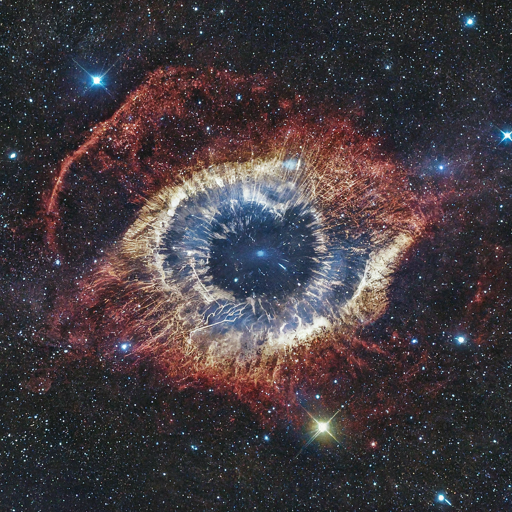
Man vs Universe?
The vast scale of the Universe and its countless galaxies serves as a humbling reminder of the smallness of humanity in the cosmic scheme. To put things in perspective, consider the following:
- Scale of the Universe:
The observable Universe spans billions of light-years in all directions, containing an estimated 2 trillion galaxies, each with billions to trillions of stars. Our Milky Way galaxy is just one amongst this vast cosmic tapestry, and within it, our solar system is a mere speck. The distances between galaxies are immense, with galaxies separated by millions or even billions of light-years. In this grand cosmic landscape, Earth is but a tiny pale blue dot orbiting an average-sized star in an unassuming corner of the Milky Way - Human Scale:
On a more personal level, the size of an average human being is minuscule compared to astronomical scales. Standing at just a few feet tall, humans occupy a tiny fraction of the space around them. Looking up at the night sky, with its myriad stars and galaxies, reinforces the sense of insignificance in the face of the vastness of the cosmos. The cosmic perspective reminds us of our place in the Universe – a small yet remarkable species on a pale blue dot that orbits a nondescript star in an unimaginably vast Universe. - Exploration and Wonder:
While the scale of the Universe can be daunting, it also inspires awe, curiosity, and a sense of wonder. The very fact that humans have ventured beyond their home planet, explored the Moon, sent spacecraft to the outer reaches of the solar system, and peered deep into the cosmos through powerful telescopes is a testament to our insatiable curiosity and boundless ambition. The search for understanding, the quest for knowledge, and the exploration of the unknown propel us forward, bridging the gap between our smallness and the grandeur of the cosmos.
In contemplating the vastness of the Universe and our relative smallness within it, we are reminded of the interconnectedness of all things, the beauty of existence, and the enduring human spirit that seeks to unravel the mysteries of the cosmos. Though we may be small in the grand cosmic scales, our capacity for exploration, discovery, and wonder knows no bounds, echoing the infinite curiosity that drives us to reach for the stars and glimpse the mysteries of the Universe.

The Enduring Enigma: Dark Energy and its Cosmic Implications
Dark energy, the mysterious force driving the accelerated expansion of the Universe, stands as one of the most perplexing concepts in modern cosmology. Despite its dominance, estimated to comprise roughly 70% of the Universe’s energy content, its fundamental nature remains a captivating enigma. Unraveling this mystery holds the key to unlocking the secrets of the cosmos and deciphering the ultimate fate of all that exists.
1. The Nature of Dark Energy: A Labyrinth of Theories
The leading contender for explaining dark energy is the cosmological constant, a fixed energy density inherent to the fabric of spacetime. However, the concept faces challenges in explaining the origin and magnitude of this energy. Alternative theories have emerged, each offering a unique perspective on this cosmic force:
- Quintessence: This theory proposes dark energy as a dynamic field, akin to a fluid with varying density across space and time. Unlike the cosmological constant, quintessence could evolve over time, potentially influencing the Universe’s expansion history in a more nuanced way.
- Phantom Energy: An even more exotic proposition, phantom energy suggests a repulsive force that strengthens with the expansion of the Universe. This scenario could lead to a runaway expansion, ultimately ripping apart the very fabric of spacetime in a hypothetical “Big Rip” event.
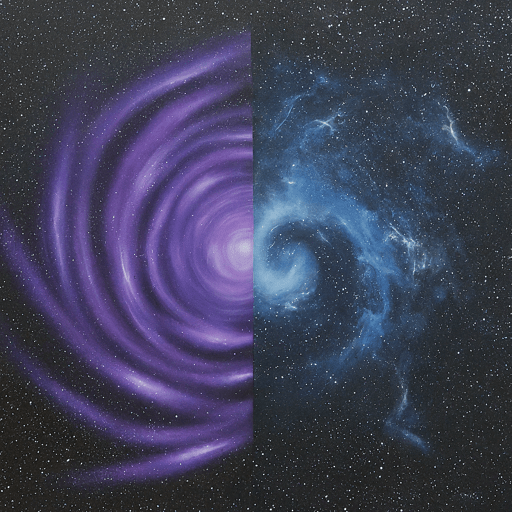
Split image: Left side shows a universe with a uniform blue glow representing the constant energy density of the cosmological constant. Right side depicts a universe with a swirling blue and purple cloud representing the varying density of the quintessence field.

A large bouncy ball labeled “Universe” sits in space. An arrow labeled “Gravity” (from normal matter and radiation) points inwards at the ball. On the left side, a hand with a constantly pumping bicycle pump labeled “Cosmological Constant” pushes air into the ball. On the right side, a hand with a squeeze bulb labeled “Quintessence” is variably inflating the ball.
Distinguishing between these theories remains a challenge. Future observations of distant supernovae, coupled with advancements in data analysis techniques and the development of next-generation telescopes, might provide the key to differentiating these contenders. Additionally, delving into the concept of vacuum energy, the energy inherent in empty space due to quantum fluctuations, might offer clues. Could this be the source of dark energy, or is there a deeper connection yet to be discovered?
2. Cosmic Mysteries: Unveiling the Blueprint
The presence of dark energy not only challenges our understanding of the Universe’s composition but also throws into question how large-scale structures like galaxies and clusters form and evolve. Does dark energy hinder or promote structure formation at different scales? How does its influence interplay with gravity, the dominant force on smaller scales?
Understanding these intricate relationships is crucial for unveiling the cosmic blueprint. A stronger dark energy influence could potentially inhibit the growth of structures, leading to a more homogenous distribution of matter in the Universe. Conversely, a weaker influence might allow for the continued formation of galaxies and clusters even at vast distances. Ultimately, the properties of dark energy will determine the fate of these cosmic structures and potentially dictate the overall appearance of the future Universe.
Furthermore, the nature of dark energy dictates the ultimate fate of the cosmos itself. A strong, ever-increasing dark energy could lead to the aforementioned “Big Rip” scenario. Alternatively, a more constant form of dark energy might result in a slow, endless expansion, with stars eventually burning out and the Universe descending into a perpetual darkness – the “Big Freeze” scenario.

A robotic rover exploring the dusty plains of Mars, its wheels leaving tracks in the red soil.
3 Observational Challenges: Overcoming the Hurdles
One of the primary hurdles in studying dark energy is the limited observational data available. Scientists rely on indirect methods to probe its properties. Observations of distant supernovae, the fading embers of massive stars, provide crucial insights into the expansion history of the Universe. Additionally, studying the cosmic microwave background radiation, a faint echo of the Big Bang, offers valuable clues. However, uncertainties and limitations in these observations necessitate further refinement.
Gravitational lensing, a phenomenon where massive objects warp the fabric of spacetime, bending the light of objects behind them, offers an indirect way to map the distribution of dark matter. By studying the distortion of light from distant galaxies, scientists can infer the presence and distribution of dark matter, which can in turn shed light on the influence of dark energy.

Large-scale galaxy surveys, like the ongoing Dark Energy Spectroscopic Instrument (DESI) project, aim to collect vast amounts of data on distant objects. By analyzing the positions and redshifts (a measure of how stretched out the light of an object is due to the expansion of the Universe) of millions of galaxies, scientists can build a more comprehensive picture of the Universe’s large-scale structure and constrain the properties of dark energy.
4. Future Prospects: Beyond the Horizon
The quest to unravel the enigma of dark energy is fueled by continuous advancements in technology. Future telescopes like the Thirty Meter Telescope (TMT) and the European Extremely Large Telescope (E-ELT) promise even more precise measurements of distant objects, allowing for a deeper understanding of the expansion history of the Universe and the influence of dark energy.

Additionally, the burgeoning field of gravitational wave astronomy holds immense potential. Gravitational waves, ripples in the fabric of spacetime caused by cataclysmic events like the collision of black holes, offer a unique window into the Universe’s expansion history. By studying these waves, scientists might be able to constrain dark energy models and unveil new information about the early Universe.
- Implications for Inflationary Cosmology:
The concept of dark energy also intersects with the theory of cosmic inflation, which posits a rapid exponential expansion of the Universe in its earliest moments. Understanding the role of dark energy during inflation and its potential connection to the generation of primordial fluctuations is a key area of investigation. By studying the imprint of inflation on the cosmic microwave background radiation and the distribution of galaxies, scientists strive to uncover the link between dark energy, inflation, and the large-scale structure of the Universe. - Multiverse Hypothesis and Dark Energy:
The enigmatic nature of dark energy has led some theorists to explore exotic concepts like the multiverse hypothesis. In a multiverse scenario, our Universe exists alongside countless other universes, each with its own unique properties. Dark energy could play a crucial role in determining the environmental conditions of these parallel universes, influencing the emergence of diverse physical laws and constants. Exploring the implications of dark energy for multiverse models offers a tantalizing glimpse into the vast cosmic landscape beyond our observable Universe.
Sources:
- “Cosmological Inflation and Large Scale Structure” – Andrew R. Liddle and David H. Lyth.
- “Multiverse Models and Dark Energy” – Andrei Linde.
- “Gravitational Waves and Dark Energy” – Dragan Huterer and Tanja Hinderer.
- “The Physics of the Universe” – Richard Harter.
- “Dark Energy and Cosmology” – Luca Amendola and Shinji Tsujikawa.
As we delve deeper into the enduring enigma of dark energy and its cosmic implications, the convergence of theoretical frameworks, observational data, and technological advancements promises to pave the way for a more comprehensive understanding of the Universe’s most enigmatic force. By standing at the forefront of this cosmic mystery, we embark on a journey that challenges our preconceptions, reshapes our cosmic worldview, and ultimately uncovers the profound mysteries that lie at the heart of the cosmos.
In conclusion, dark energy’s perplexing nature serves as a catalyst for scientific exploration, pushing the boundaries of man’s curiosity.

For those of us who get lost in heavy thinking kinds of reads like scientific sorts, here is a simpler explanation for you and I:
Dark energy is like a mysterious force in space that is making the Universe expand really fast. The Nobel Prize in Physics was awarded in 2011 to three scientists – Saul Perlmutter, Brian P. Schmidt, and Adam G. Riess – for their groundbreaking discoveries regarding the accelerated expansion of the Universe. Their work provided strong evidence for the existence of dark energy, the mysterious force driving this cosmic expansion. By studying distant supernovae, these scientists revealed that the Universe’s expansion is not slowing down as previously thought but rather speeding up, a remarkable and unexpected finding that led to a paradigm shift in our understanding of the cosmos. This Nobel Prize recognition highlighted the significance of their contributions to cosmology and shed light on the perplexing nature of dark energy. blowing up a balloon, but instead of stopping, it keeps getting bigger and bigger. Scientists are trying to figure out what this mysterious force is and how it affects everything in the Universe.
One idea is that dark energy is like a special kind of energy that never changes and is everywhere in space. Another idea is that it could be a type of energy that changes over time, like a magic liquid that flows differently in different places.
Scientists are also curious about how dark energy influences the way stars and galaxies are formed in space. They want to know if dark energy helps things come together or if it keeps them apart. Understanding dark energy can also help us predict what will happen to the Universe in the far future – whether it will keep expanding forever or if something else might happen.
To learn more about dark energy, scientists use special tools like powerful telescopes and study things like exploding stars and the light left over from the Big Bang. It’s a big mystery, but scientists are working hard to solve it and unlock the secrets of the Universe.

While dark energy remains the leading candidate for the mysterious force driving the accelerated expansion of the Universe, scientists continue to explore alternative explanations. This quest delves into the possibility that another unknown force or tweak to our understanding of physics might be responsible. Some theoretical models propose modifications to Einstein’s theory of gravity, known as General Relativity. These theories, such as MOND (Modified Newtonian Dynamics) or TeVeS (Tensor-Vector-Scalar gravity), suggest that gravity’s influence might behave differently on very large, cosmic scales compared to its behavior on smaller scales. Unlike General Relativity, which predicts a constant attractive force of gravity, MOND and TeVeS propose a weakening or modified gravitational attraction on cosmic scales. This could potentially explain the observed acceleration without invoking dark energy. However, these modified gravity theories face challenges. They need to be consistent with existing observations across different scales and avoid violating established physical laws. Additionally, some modifications might struggle to explain all aspects of cosmic expansion, particularly the growth of structure formation over time.

Another intriguing avenue of exploration involves the interplay between dark energy and dark matter, the invisible substance that makes up about 27% of the Universe’s energy content. While dark energy appears to be pushing the Universe apart in an accelerating fashion, dark matter exerts a gravitational pull, influencing the formation of galaxies and large-scale structures. Some theories propose a connection between these mysterious components. Perhaps dark energy and dark matter are two aspects of a single, unified phenomenon, or maybe they interact with each other in subtle ways that influence the expansion rate. Unraveling this potential connection could provide a deeper understanding of both dark energy and dark matter.

The compelling nature of dark energy as an explanation underscores the ongoing quest to unravel the mysteries of the cosmos. Through theoretical exploration, observational studies like large-scale galaxy surveys, and even future space missions designed to measure dark energy’s properties with greater precision, the scientific community continues to push the boundaries of knowledge. The search for answers extends beyond dark energy itself. Understanding how dark energy interacts with dark matter, or if a modified theory of gravity can explain everything, could lead to a more comprehensive understanding of the fundamental forces and dynamics shaping the Universe’s evolution.
 thelivingbreathingjamesbrown.com
You must be logged in to post a comment.