
Time Travel-the ever weaving mystery that fills inspiring minds. And fills Dreams with dancing fairies. Lol.
“Time-Past, Present, Future at one moment” conveys the idea of all temporal dimensions – the past, present, and future – existing simultaneously or being considered together in a singular moment. This concept challenges conventional linear perceptions of time and suggests a unified perspective where all points in time coexist or converge within a single frame of reference. It reflects philosophical and metaphysical considerations about the nature of time, consciousness, and the human experience of temporality.

And Scientists work all over the World in the quest to Unmask the Un-maskable? But can it finally be solved?
Here is a simple mathematical representation of time dilation, a phenomenon predicted by Einstein’s theory of relativity:
[ \Delta t’ = \frac{\Delta t}{\sqrt{1 – \frac{v^2}{c^2}}} ]
In this equation:
- ( \Delta t’ ) represents the time interval experienced in a moving reference frame (time dilation).
- ( \Delta t ) represents the time interval in a stationary reference frame.
- ( v ) represents the velocity of the moving frame.
- ( c ) represents the speed of light in a vacuum.
This equation illustrates how time intervals can vary between observers moving at different velocities relative to each other, highlighting the effects of time dilation as predicted by special relativity.
Here’s a more elaborate mathematical representation involving spacetime curvature and the theoretical concept of closed timelike curves (CTCs):
[ G_{\mu\nu} + \Lambda g_{\mu\nu} = \frac{8\pi G}{c^4} T_{\mu\nu} ]
This equation is the Einstein field equations with a cosmological constant (( \Lambda )) included. It describes the fundamental relationship between spacetime curvature (represented by the Einstein tensor ( G_{\mu\nu} )), the cosmological constant, the metric tensor of spacetime (( g_{\mu\nu} )), the gravitational constant (( G )), the speed of light in a vacuum (( c )), and the energy-momentum tensor (( T_{\mu\nu} )) which accounts for the distribution of matter and energy in spacetime.

In the context of time travel, solutions to these equations in certain spacetime geometries could potentially allow for the existence of closed timelike curves, which are paths through spacetime that loop back on themselves, theoretically enabling time loop configurations that permit time travel to the past. These complex equations embody the intricate interplay between gravity, spacetime curvature, and the dynamics of matter and energy that underlie the theoretical foundations of time travel in the context of general relativity.
Here is a highly advanced mathematical representation involving quantum field theory and spacetime geometry:
[ \hat{H} \Psi(t) = i\hbar \frac{\partial}{\partial t} \Psi(t) ]
In this equation:
- ( \hat{H} ) is the Hamiltonian operator, which represents the total energy of a quantum system.
- ( \Psi(t) ) is the wave function of the quantum system, which describes its quantum state.
- ( i ) is the imaginary unit.
- ( \hbar ) is the reduced Planck’s constant.
- ( \frac{\partial}{\partial t} ) represents the partial derivative with respect to time.
This Schrödinger equation is a fundamental equation in quantum mechanics that describes how the quantum state of a physical system changes over time. In the context of time travel, advanced theories combining quantum mechanics and general relativity might yield insights into the behavior of spacetime at the quantum level and the potential for manipulating time-related phenomena.

This equation represents a foundational concept in quantum mechanics, and its applications to spacetime dynamics and quantum gravity could offer new perspectives on the nature of time and the possibilities of time travel within the framework of modern theoretical physics.
Here are 25 theories and concepts related to time travel proposed by scientists:
- Special and General Relativity by Albert Einstein
- Wormholes
- Closed Timelike Curves (CTCs)
- Quantum Theory and Entanglement
- Cosmic Strings and Time Travel
- Parallel Universes and Many Worlds Theory
- Hawking Radiation and Black Holes
- Chronology Protection Conjecture
- Quantum Computing and Time Travel Simulations
- Temporal Causality and Bootstrap Paradox
- Time Crystals
- Tachyons
- Quantum Entanglement and Retrocausality
- Time Travel Paradoxes
- Exotic Matter and Negative Energy
- Multiverse Theory
- Quantum Tunneling and Time Travel
- Retrocausal Models
- Time Dilation Near Black Holes
- Causality Violation and Temporal Loops
- Time Travel and Black Hole Mirrors
- Quantum Field Theory in Curved Spacetime
- Cosmic Strings and Spacetime Warping
- Time Travel and Information Theory
- Quantum Supremacy and Time Simulation
Here are some of the most prominent theories proposed by scientists on time travel:
Each of these theories and concepts contributes to the complex and fascinating discussion surrounding the possibility and implications of time travel in the scientific community.
If you’d like more detailed information on any specific theory or have further questions, feel free to ask!
- Special and General Relativity by Albert Einstein: Einstein’s theories of relativity suggest that time dilation can occur, where time can be experienced differently for objects in motion or under the influence of gravity.
- Wormholes: Proposed by physicists like Kip Thorne, wormholes are theoretical passages through spacetime that could allow for shortcuts between two points in space and time.
- Closed Timelike Curves (CTCs): Studied by scientists like Frank Tipler, CTCs are paths through spacetime that loop back on themselves, theoretically allowing for time loops and potential time travel to the past.
- Quantum Theory and Entanglement: Some quantum theories propose that entangled particles could influence each other instantaneously regardless of distance, leading to discussions on time travel and causality.
- Cosmic Strings and Time Travel: Theoretical physicist J. Richard Gott has explored the idea that cosmic strings – hypothetical one-dimensional defects in spacetime – could be used to create time loops.
- Parallel Universes and Many Worlds Theory: Physicists like Hugh Everett and Bryce DeWitt have suggested that every possible outcome of a quantum event exists in a separate universe, leading to the idea that time travel could create parallel timelines or universes.
- Hawking Radiation and Black Holes: Stephen Hawking’s work on black hole evaporation has led to discussions on the potential information loss paradox and the idea that black holes could be used as time machines.
- Chronology Protection Conjecture: Proposed by Stephen Hawking, this conjecture suggests that the laws of physics prevent time travel into the past to avoid paradoxes, such as the famous grandfather paradox.
- Quantum Computing and Time Travel Simulations: Some researchers are investigating the possibility of simulating time travel scenarios using quantum computers to better understand the implications and constraints of time travel.
- Temporal Causality and Bootstrap Paradox: The bootstrap paradox raises questions about the origin of information or objects that exist in a perpetual loop without a clear starting point, challenging our notions of causality.

- Time Crystals: Time crystals are theoretical systems that maintain a repeating pattern across time, analogous to the regular structure of space crystals in three dimensions. Some researchers have discussed the potential connection between time crystals and time travel possibilities.
- Tachyons: Tachyons are hypothetical particles that travel faster than the speed of light. Some scientists have explored the idea that tachyons could be used to travel backward in time, although the existence of tachyons is still speculative.
- Quantum Entanglement and Retrocausality: Quantum entanglement, the phenomenon where particles become interconnected regardless of distance, has led to discussions on retrocausality, suggesting that future events could influence past ones, potentially allowing for time travel-like effects.
- Time Travel Paradoxes: Paradoxes such as the grandfather paradox (where one could potentially prevent their own existence by traveling back in time) and the information paradox (related to the conservation of information across time) are important considerations in discussions about time travel.
- Exotic Matter and Negative Energy: Some theories propose that exotic matter with negative energy densities could be used to create wormholes or manipulate spacetime for time travel purposes, although the existence of such matter remains purely theoretical.

- Multiverse Theory: Some versions of the multiverse theory suggest the existence of a vast ensemble of universes with different physical constants and laws of physics. In some of these universes, time travel may be possible due to variations in spacetime structure.
- Quantum Tunneling and Time Travel: Quantum tunneling is a phenomenon where particles can pass through energy barriers that would be insurmountable in classical physics. Some researchers have speculated about the potential for quantum tunneling to enable time travel events.
- Retrocausal Models: Retrocausal models of quantum mechanics propose that future events could influence past ones through non-local or retrocausal connections, leading to intriguing implications for the nature of time and causality.
- Time Dilation Near Black Holes: According to general relativity, intense gravitational fields near black holes can cause significant time dilation effects. Observers near black holes may experience time passing at different rates compared to those in less extreme gravitational environments.
- Causality Violation and Temporal Loops: The study of causality violation in the context of time travel often delves into the potential creation of closed timelike curves and temporal loops, where cause and effect relationships become muddled or paradoxical.
- Time Travel and Black Hole Mirrors: Some theoretical physicists have proposed the concept of black hole mirrors, hypothetical structures that could reflect past light cones and create closed timelike curves, potentially enabling time travel-like phenomena near black holes.
- Quantum Field Theory in Curved Spacetime: The intersection of quantum field theory and general relativity has led to discussions about the behavior of particles in curved spacetime and the implications for time travel scenarios involving exotic spacetime geometries.
- Cosmic Strings and Spacetime Warping: Cosmic strings are long, narrow strands of energy that may have formed in the early universe. The presence of cosmic strings could create significant spacetime warping effects, potentially opening avenues for time manipulation.
- Time Travel and Information Theory: Information theory principles have been applied to the study of time travel, exploring concepts like the preservation of information across different time frames and the implications for communication across temporal boundaries.
- Quantum Supremacy and Time Simulation: The advancement of quantum computing and the quest for achieving quantum supremacy have sparked discussions on using quantum systems to simulate and study complex time travel scenarios and their ramifications.
The idea of all temporal dimensions (past, present, and future) existing simultaneously or being interconnected has been explored in various contexts, including philosophical, scientific, and literary works.
In physics, theories such as the block universe or eternalism propose a view of time where past, present, and future all coexist as equally real parts of a static four-dimensional spacetime. This perspective suggests that time is not linear but rather an unchanging block in which all moments – past, present, and future – already exist.
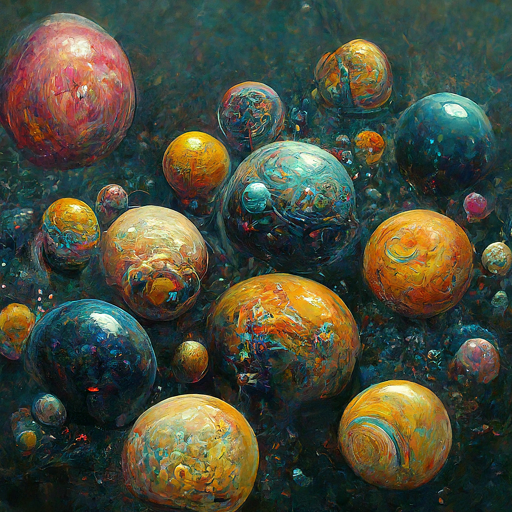
Philosophers, mystics, and writers have also contemplated the notion of time as a unified whole, where all moments are interconnected or accessible simultaneously. Concepts like timelessness, the eternal now, or the interconnectedness of all events have been recurrent themes in various philosophical traditions and spiritual beliefs.
While these ideas are theoretical or metaphysical in nature and have not been empirically proven in a scientific sense, they continue to stimulate thought and discussion regarding the nature of time, consciousness, and existence.

Here are a few specific examples from different fields that explore the concept of all temporal dimensions existing simultaneously or being interconnected:
- Block Universe Theory: Within the framework of certain interpretations of general relativity, the block universe theory suggests that all past, present, and future events coexist as equally real parts of a four-dimensional spacetime block. This view challenges the conventional linear flow of time and implies that time is static, with all events already existing.
- Eternalism in Philosophy: Eternalism is a philosophical approach that posits that all moments in time are equally real and exist simultaneously. Philosophers such as J.M.E. McTaggart have debated the nature of time and the idea that past, present, and future are all equally real, rather than existing sequentially.
- Mystical Experiences: Some spiritual or mystical traditions suggest experiences where individuals perceive timelessness or a sense of all-encompassing presence that transcends past, present, and future. These experiences are often described as moments of heightened awareness or interconnectedness with the universe.
- Literary Works: Several literary works have explored the theme of time in non-linear or interconnected ways. Authors like Kurt Vonnegut in “Slaughterhouse-Five” or David Mitchell in “Cloud Atlas” present narratives that intertwine past, present, and future, challenging traditional notions of chronological storytelling.
- Artistic Expression: Artists and creatives often depict concepts of time in unconventional ways, visually representing the interconnectedness of temporal dimensions. Art installations, films, and performances may experiment with non-linear storytelling or visual metaphors to convey the idea of all moments coexisting.
These examples offer different perspectives on the notion of time as a unified whole, where past, present, and future are interconnected or perceived simultaneously. Each field approaches this concept in its own unique way, contributing to a rich tapestry of ideas surrounding time and existence.

Well, now it’s time for all you young at heart Time Travelers to start Your Travel. Good Luck! Aim High! Very, very High!
 thelivingbreathingjamesbrown.com
You must be logged in to post a comment.