
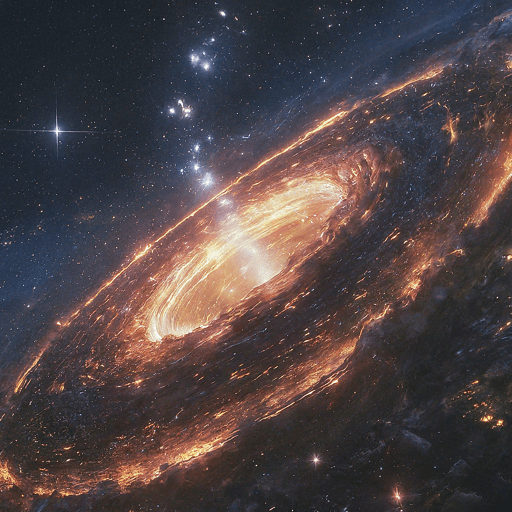

The concept of wormholes in physics involves theoretical solutions to the equations of general relativity. Mathematically, wormholes are described by the Einstein field equations. These equations govern the curvature of spacetime in the presence of matter and energy.
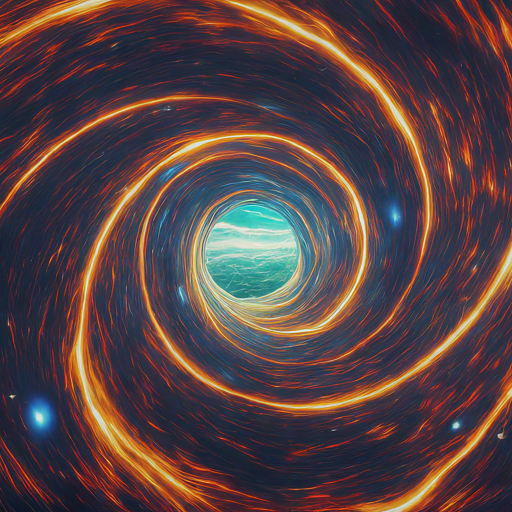
The equation for a simple wormhole can be written as:
[ ds^2 = -dt^2 + dx^2 + dy^2 + dz^2 ]
Where ( ds^2 ) is the spacetime interval, ( dt ) is the time coordinate, and ( dx, dy, dz ) are the spatial coordinates. This equation represents flat spacetime.
In a more complex scenario involving a wormhole, the spacetime metric can be described using the Morris-Thorne metric, which is a solution to the Einstein field equations. This metric involves a wormhole throat, which connects two separate regions of spacetime by means of a shortcut through higher-dimensional space.

In essence, wormholes are fascinating hypothetical structures that offer potential shortcuts through spacetime, allowing for travel between distant parts of the universe or even different universes. However, they remain purely speculative at this point and have not been observed in nature.

One of the key mathematical concepts that underpins the theoretical physics of wormholes is the Einstein field equations. These equations are a set of ten interrelated differential equations that describe the fundamental interaction of gravitation as a result of spacetime being curved by mass and energy.
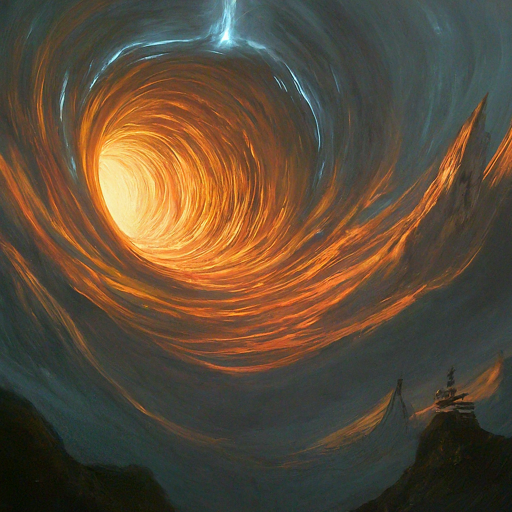
The general form of the Einstein field equations is given by:
[ G_{\mu\nu} + \Lambda g_{\mu\nu} = \kappa T_{\mu\nu} ]
Where:
- ( G_{\mu\nu} ) is the Einstein tensor, which encodes the curvature of spacetime,
- ( \Lambda ) is the cosmological constant,
- ( g_{\mu\nu} ) is the metric tensor, which describes the geometry of spacetime,
- ( \kappa ) is the Einstein gravitational constant,
- ( T_{\mu\nu} ) is the stress-energy tensor, which describes the distribution of mass-energy in spacetime.
When considering the possibility of wormholes, solutions to these field equations may involve intricate geometries that allow for shortcuts in spacetime. For example, the Morris-Thorne wormhole metric involves more complex mathematical expressions that describe the curvature of spacetime around the wormhole throat.
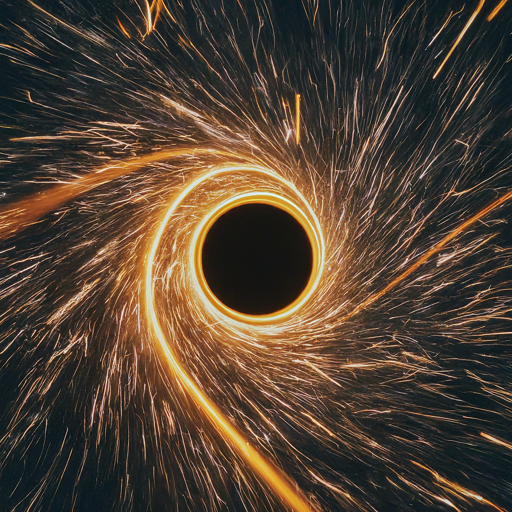
Mathematically describing wormholes involves advanced concepts in differential geometry, tensor calculus, and general relativity. It’s a fascinating area of theoretical physics that pushes the boundaries of our understanding of the universe.
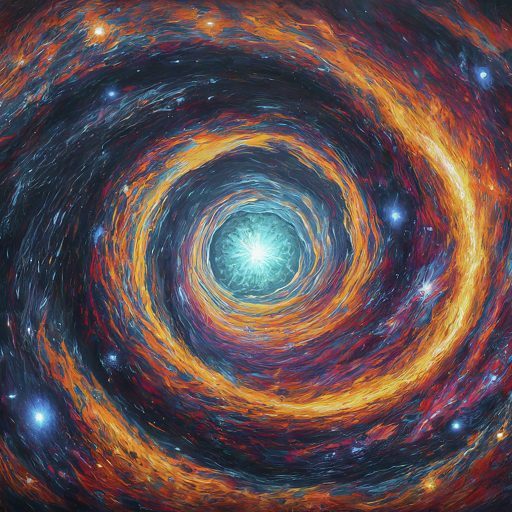
The theoretical concept of a wormhole is intriguing and often featured in science fiction as a means of near-instantaneous travel between two distant points in spacetime. If we were to entertain the idea of traveling through a wormhole, several scenarios could be hypothesized based on current theoretical understanding:
- Spaghettification: One possibility is that you might undergo a process known as spaghettification. This phenomenon occurs in the vicinity of extremely strong gravitational fields, such as those near black holes or potentially within a wormhole. In spaghettification, the gravitational forces are so intense that they stretch and elongate objects into long, thin shapes due to the difference in gravitational pull on different parts of the object.
- Traversable Wormholes: In some hypothetical scenarios, traversable wormholes are considered. These types of wormholes could potentially allow matter and information to pass through without being destroyed. If such wormholes were stable and could be navigated, one could emerge at a different point in spacetime almost instantaneously, effectively creating a shortcut across vast cosmic distances.
- Time Dilation: Wormholes, if they were to exist, might also involve significant time dilation effects. Traveling through a wormhole could result in significant differences in the passage of time between the two ends of the wormhole, potentially leading to time travel-like scenarios where someone exiting the other end could find themselves in a different time relative to their starting point.
It’s important to note that the concept of wormholes is purely theoretical at this point, and no observational evidence has yet confirmed their existence. The study of wormholes remains a fascinating area of theoretical physics and cosmology, pushing the boundaries of our understanding of spacetime and the fundamental forces of the universe.
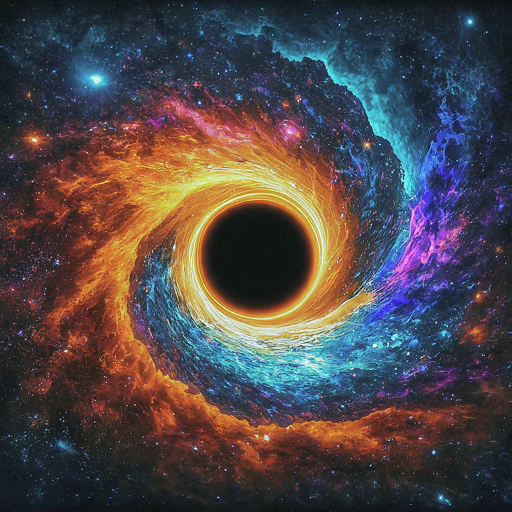
One of the most advanced mathematical frameworks used to study wormholes in theoretical physics is the field of differential geometry applied to general relativity. Within this framework, several complex mathematical concepts and equations come into play when exploring the properties and behavior of wormholes. Here are some key advanced mathematical aspects related to wormholes:
- Einstein Field Equations: The Einstein field equations form the core of general relativity and describe how matter and energy curve spacetime. When considering wormholes, these equations are essential for understanding the gravitational effects and spacetime curvature near and within a wormhole.
- Morris-Thorne Metric: The Morris-Thorne metric provides a mathematical solution to the Einstein field equations that describes a traversable wormhole. This metric involves intricate mathematical expressions that define the geometry of spacetime around the wormhole throat and its connection to different regions of spacetime.
- Topological Analysis: Advanced mathematical tools from differential geometry and algebraic topology are used to study the topology of spacetime in the context of wormholes. Topological properties play a crucial role in understanding the connectivity and potential shortcuts offered by wormholes in the fabric of spacetime.
- Quantum Field Theory in Curved Spacetime: Combining quantum theory with general relativity is a major challenge in theoretical physics, especially in the context of wormholes. Advanced mathematical techniques from quantum field theory in curved spacetime are employed to study the quantum effects near wormholes and their implications for the structure of spacetime.
- Higher-Dimensional Geometry: Some theoretical models of wormholes consider higher-dimensional spacetime geometries beyond the familiar four dimensions of spacetime. Advanced mathematical concepts related to multidimensional manifolds, brane theory, and string theory may be used to explore these higher-dimensional aspects of wormholes.
Overall, the mathematical study of wormholes involves cutting-edge interdisciplinary research at the intersection of differential geometry, general relativity, quantum field theory, and theoretical physics. These advanced mathematical tools allow scientists to explore the fascinating possibilities and implications of wormholes within the framework of modern theoretical physics.
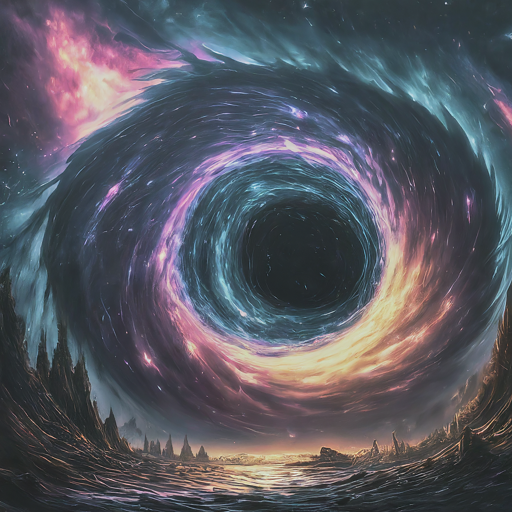
Here’s a simplified and hypothetical mathematical expression to represent a basic wormhole geometry using a Morris-Thorne-like metric approach:
Consider a Morris-Thorne-type wormhole defined by the following metric:
[ ds^2 = -e^{2\Phi(r)} dt^2 + \frac{dr^2}{1 – b(r)/r} + r^2 d\Omega^2 ]
Where:
- ( ds^2 ) is the spacetime interval,
- ( \Phi(r) ) is the gravitational potential function,
- ( t ) is the time coordinate,
- ( r ) is the radial coordinate,
- ( b(r) ) is a shape function determined by the matter-energy content near the wormhole throat,
- ( d\Omega^2 ) is the line element on a unit sphere.
In this simplified metric, the function ( \Phi(r) ) characterizes the gravitational effects of the wormhole, while the shape function ( b(r) ) influences the structure of the wormhole throat. The spatial part of the metric describes the geometry of a spherical 2-surface at each radial point ( r ) along the wormhole.
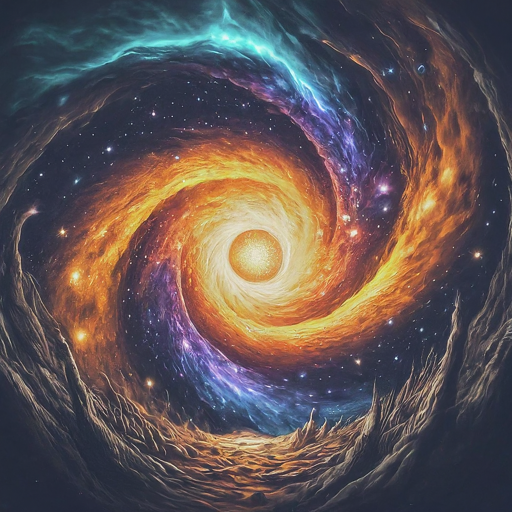
This equation provides a basic representation of how spacetime might be locally curved in the vicinity of a Morris-Thorne wormhole. Advanced mathematical analysis and more intricate models would involve additional terms, constraints, and considerations to fully describe the complex geometry and physical properties of a traversable wormhole.

It’s important to note that this equation is a highly simplified and speculative illustration meant to capture some aspects of wormhole geometry. Real-world wormholes, if they exist, would likely involve significantly more complex mathematical formulations and physical considerations.
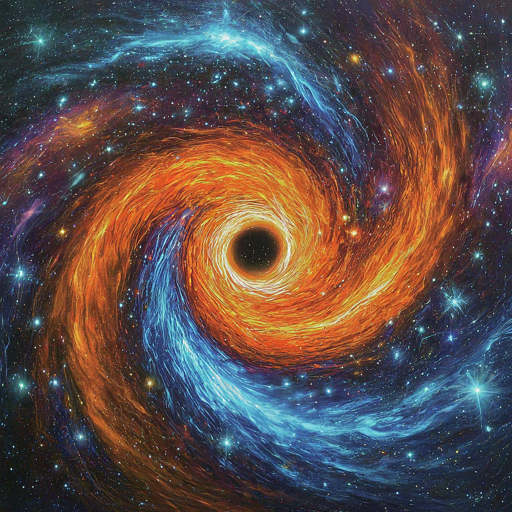
Creating a mathematically accurate model for a working wormhole involves highly complex equations and considerations that go beyond the capabilities of a simple text-based response. However, I can provide a general idea of the types of equations and concepts that would be involved in a more advanced and realistic mathematical representation of a traversable wormhole:
- Throat Geometry: A realistic wormhole model would need to accurately describe the geometry of the wormhole throat where spacetime is highly curved. This would involve specifying the shape of the throat, the transition region surrounding it, and the conditions for traversability.
- Einstein Field Equations: The full set of Einstein field equations, which are nonlinear partial differential equations, would need to be solved to determine the exact spacetime curvature created by the wormhole. This involves complex tensor calculus and differential geometry.
- Energy Conditions: Wormholes are subject to various energy conditions that restrict the type of matter and energy distributions allowed in their vicinity to keep the wormhole stable and traversable. These conditions would need to be satisfied in the model.
- Traversable Wormhole Solutions: Mathematical solutions to the field equations that allow for traversable wormholes, such as the Morris-Thorne solution, would need to be considered. These solutions involve intricate mathematical expressions that describe the spacetime around the wormhole.
- Quantum Effects: Quantum field theory effects and considerations would also need to be incorporated, especially at the quantum foam scale, to understand the stability and behavior of the wormhole at the smallest distances.
- Casimir Effect: The Casimir effect, a quantum mechanical phenomenon, might play a role in stabilizing the wormhole throat to prevent it from collapsing.
Constructing a complete and accurate mathematical model for a working wormhole that adheres to the laws of physics and general relativity requires advanced mathematical techniques, computational simulations, and expertise in theoretical physics. Such models are the subject of ongoing research in theoretical physics and cosmology but remain speculative until observational evidence can confirm the existence of wormholes.
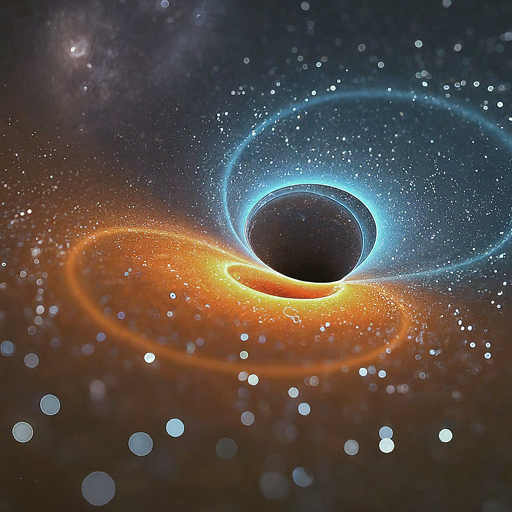
Large particle accelerators, such as the Large Hadron Collider (LHC), are powerful scientific instruments designed to study fundamental particles and interactions in particle physics. While particle accelerators like the LHC can reach extremely high energies and probe the nature of the universe at microscopic scales, they are not capable of creating traversable wormholes or manipulating spacetime in ways that would lead to the formation of wormholes.
The energies involved in particle collisions within accelerators like the LHC are orders of magnitude below what would be required to generate the spacetime curvature needed to create a wormhole. Wormholes, if they exist, are hypothetical structures that are governed by the complex interplay of gravity and spacetime curvature on cosmological scales, far beyond the reach of current particle accelerators.
Furthermore, the creation and manipulation of wormholes would involve not only incredibly high energies but also exotic forms of matter and energy that have not been observed in nature. Theoretical studies on wormholes suggest that conditions such as negative energy densities and huge stresses on spacetime may be necessary to create and stabilize a traversable wormhole, requirements far beyond the capabilities of particle accelerators.
In summary, while particle accelerators like the LHC are invaluable tools for scientific research and discovery in particle physics, they are not capable of creating wormholes or altering spacetime in the way that would be required to generate these hypothetical structures. Wormholes remain a fascinating topic of theoretical physics and cosmology that continue to be explored through advanced mathematical models and theoretical studies.
As far as our current understanding of physics based on the theories of special relativity proposed by Albert Einstein, it is not possible for any material object with mass to travel faster than the speed of light ((c) in a vacuum, approximately (299,792,458) meters per second).
The equation that governs the relationship between an object’s speed, its mass, and energy in special relativity is the famous equation:
[ E = \frac{mc^2}{\sqrt{1 – \frac{v^2}{c^2}}} ]
Where:
- ( E ) is the total energy of an object,
- ( m ) is the rest mass of the object,
- ( v ) is the velocity of the object,
- ( c ) is the speed of light in a vacuum.
This equation describes how the energy of an object increases as its speed approaches the speed of light. As the object’s velocity gets closer to the speed of light, its energy requirement to accelerate further increases drastically. The equation also reveals that as the object’s speed approaches the speed of light, its mass effectively becomes infinite, making it impossible to accelerate to or beyond this speed.
And a Wormhole Fairytale-
Therefore, according to our current understanding of the laws of physics, any physical object with mass cannot exceed the speed of light. Objects that do not have mass, such as photons, always travel at the speed of light in a vacuum. The concept of faster-than-light travel remains speculative and primarily confined to the realm of science fiction at present.
Once upon a time, in the year 2030-2045, a monumental mission was underway as three American astronauts set out on a historic journey to the moon. Their mission was routine – to explore, conduct research, and pave the way for future human exploration beyond Earth. Excitement filled the air as the spacecraft made its way towards the lunar surface.
As the astronauts neared the moon, a sense of wonder and anticipation enveloped them. The Earth slowly receded in the rearview, replaced by the vast expanse of space and the serene beauty of the moon hanging in the distance.
However, as they ventured to the dark side of the moon, a region known for its mysterious silence, something inexplicable occurred. A shimmering anomaly materialized before their eyes – a swirling vortex of light and shadow that defied all known laws of physics. Before they could react, the wormhole engulfed their spacecraft, enveloping them in a surreal passage through spacetime.
Simultaneously, a similar event unfolded with a crew of Chinese astronauts who found themselves drawn into the same enigmatic wormhole. The two missions, separated by nationality and language, now shared a common fate – vanished without a trace into the enigmatic depths of the cosmos.
Sixty-five years passed in the blink of an eye. The year was now 2100, and without warning, the wormhole spat out the lost astronauts as abruptly as they had vanished. Emerging from the celestial anomaly, both the American and Chinese crews found themselves inexplicably unaged, unchanged by the passage of time.
Confusion and disbelief gripped the returnees as they gazed upon a world unrecognizable from the one they had left behind. Contact was established with Earth, and the authorities instructed them simply to return home, leaving the mystery of their disappearance and reappearance unsolved, shrouded in a veil of cosmic enigma.
Like phantoms returned from the depths of the unknown, the lost astronauts embarked on their journey back to Earth, forever marked by an otherworldly experience that transcended the boundaries of human understanding. And as they sailed through the void of space once more, the riddle of the vanishing astronauts remained an enduring enigma – a tale of cosmic intrigue destined to be whispered in the annals of history for generations to come.
 thelivingbreathingjamesbrown.com
You must be logged in to post a comment.