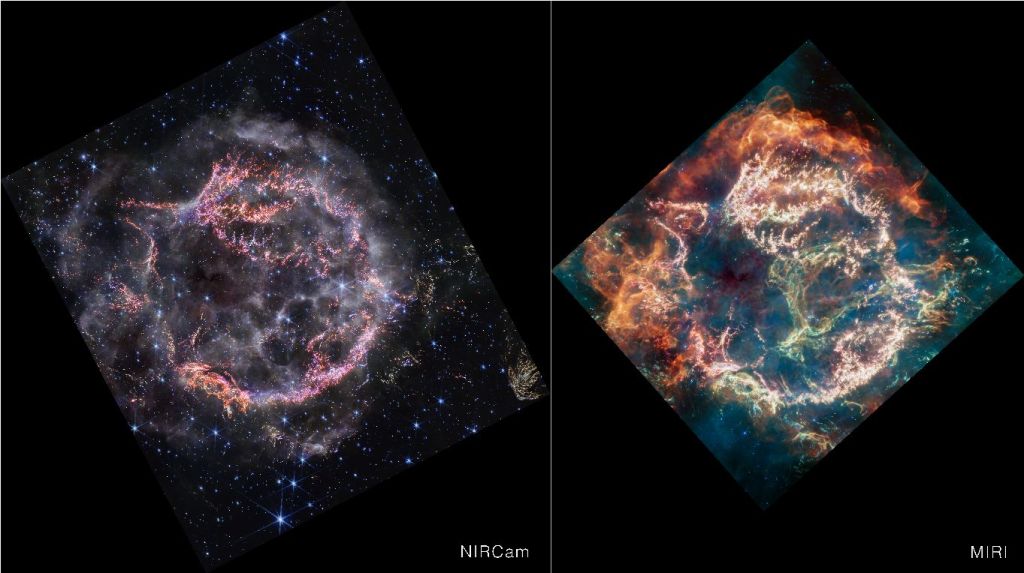
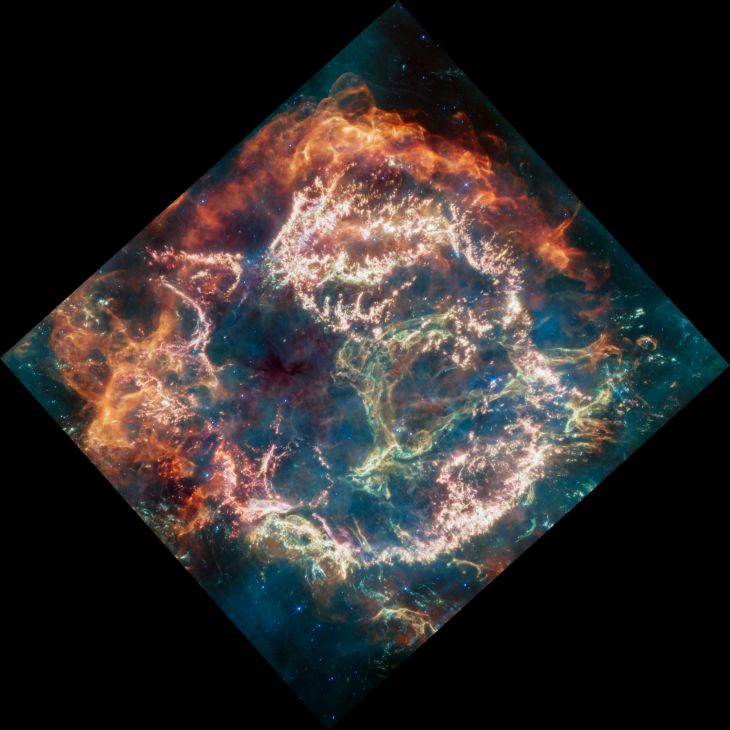
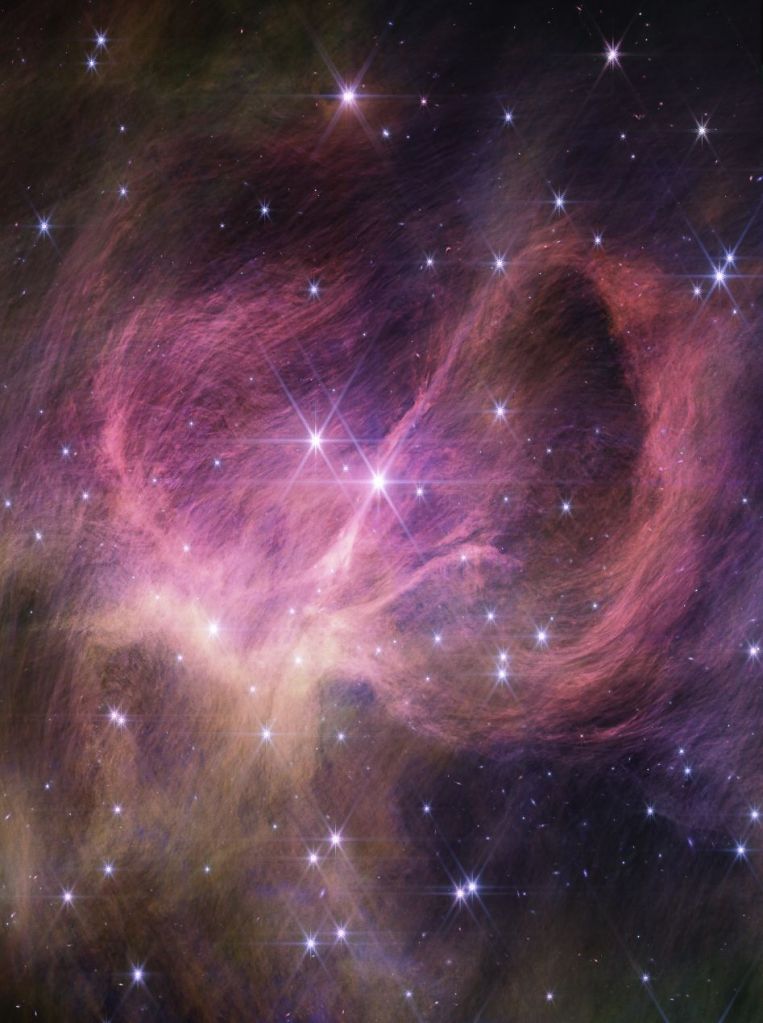
Meet Emissaries from the Universe via Mr. Webb Telescope and Mr. Hubble. And special Cameras on Webb like Mr. And Mrs. Infrared.
It’s completely normal to feel small and insignificant when contemplating the vastness of our universe and the mysteries of space. The Hubble Telescope and the Webb Telescope allow us to explore the cosmos and gain a better understanding of our place in it. While it’s easy to feel overwhelmed by the scale of the universe and the conflicts on Earth, it’s important to remember that human beings also have the capacity for compassion, creativity, and cooperation. Our presence on Earth can be seen as an opportunity to learn, grow, and make a positive impact in our world.
It’s incredibly important to have astronomers dedicated to observing the cosmos nightly and daily. Their work not only expands our knowledge of the universe but also inspires wonder and curiosity in all of us. Institutions like Texas A&M University play a crucial role in cultivating the next generation of astronomers, fostering a passion for exploring the stars and galaxies. By sparking an interest in astronomy and providing essential resources and education, universities like Texas A&M empower future astronomers to continue unraveling the mysteries of the cosmos and sharing their discoveries with the world.
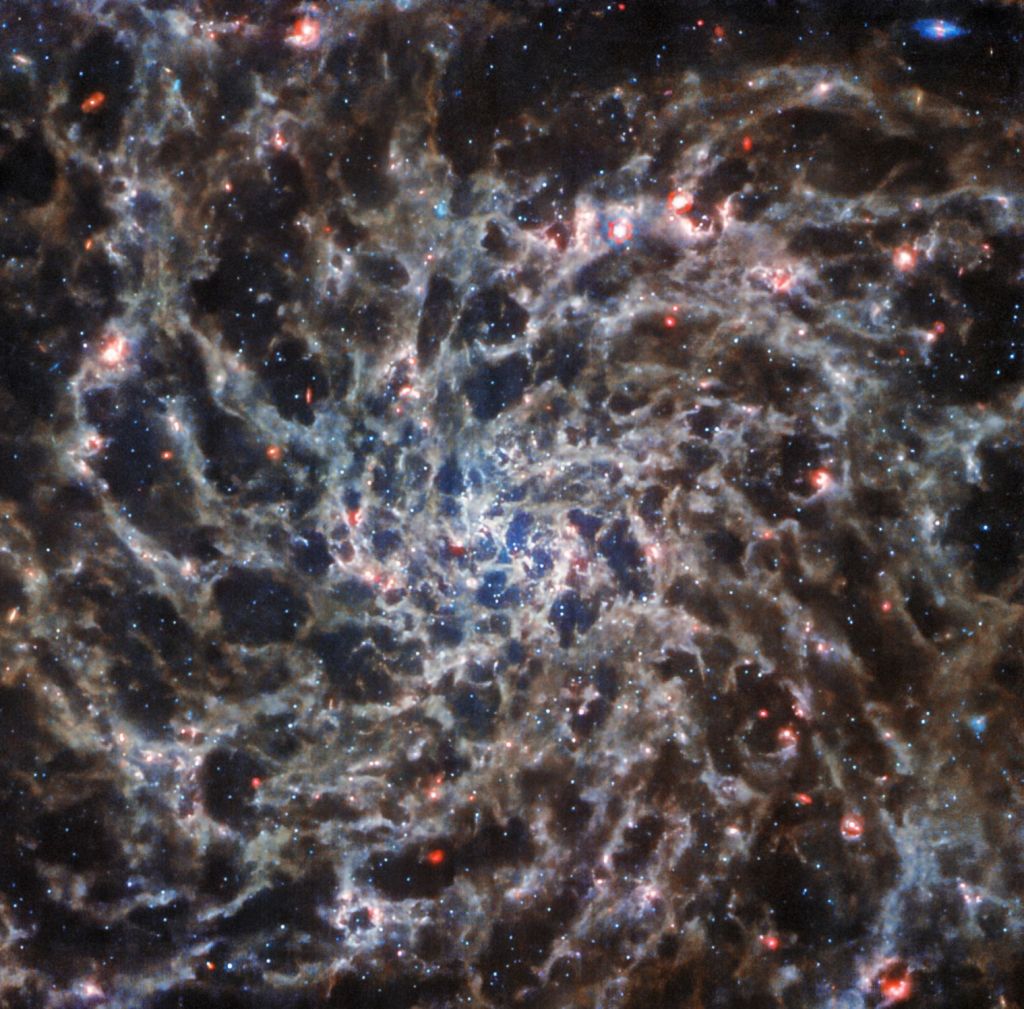
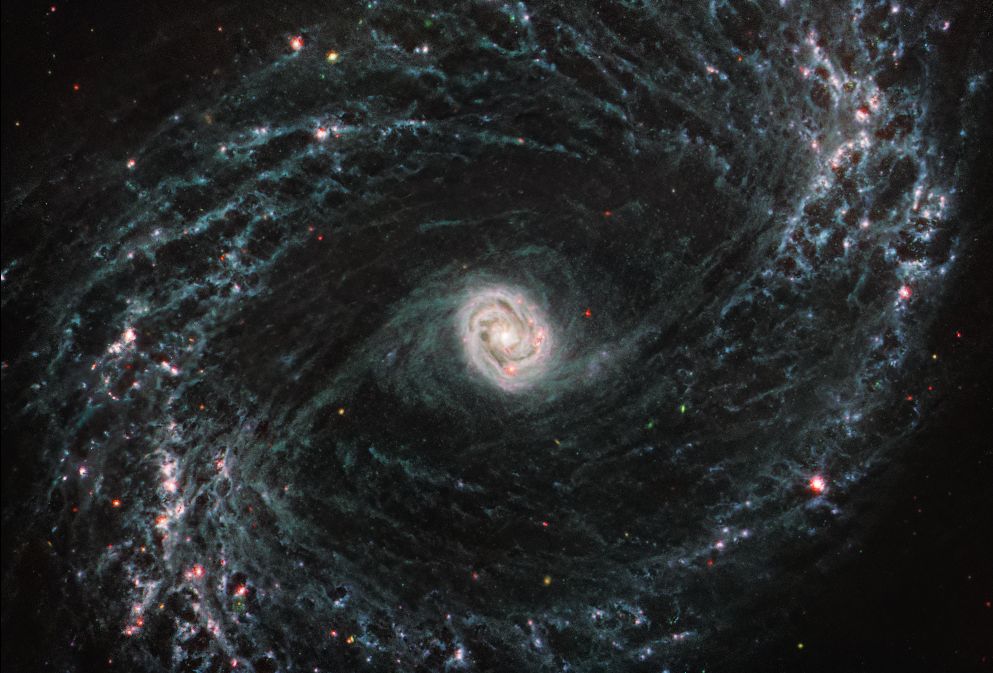
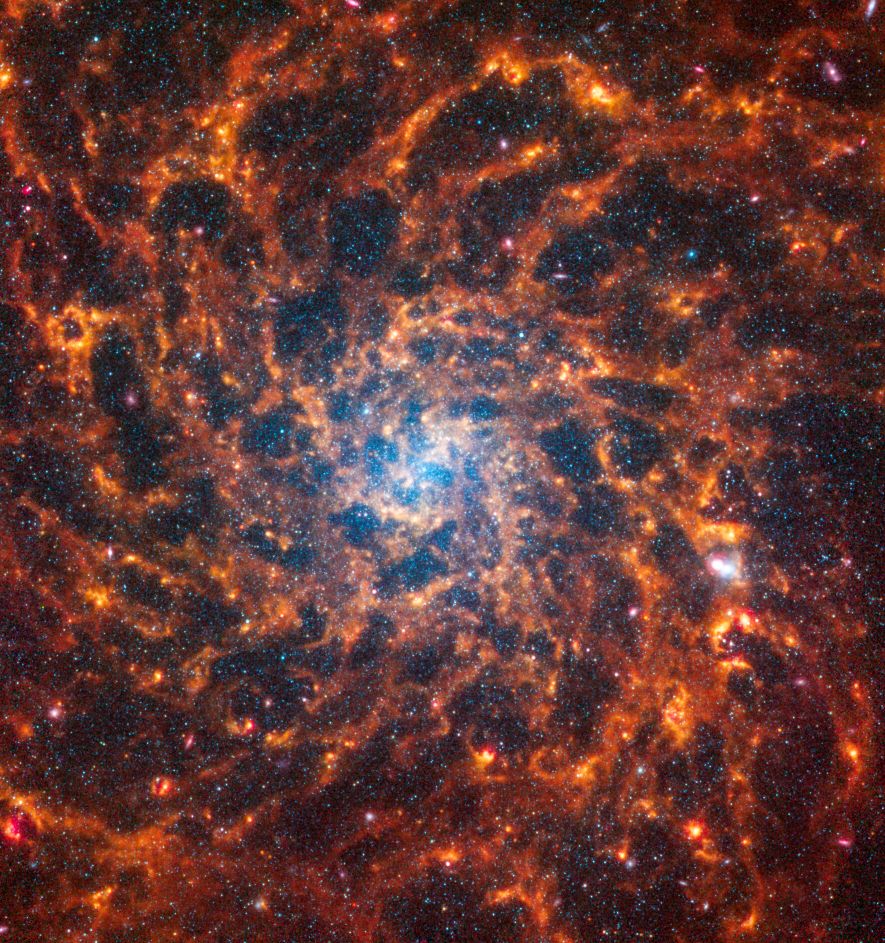
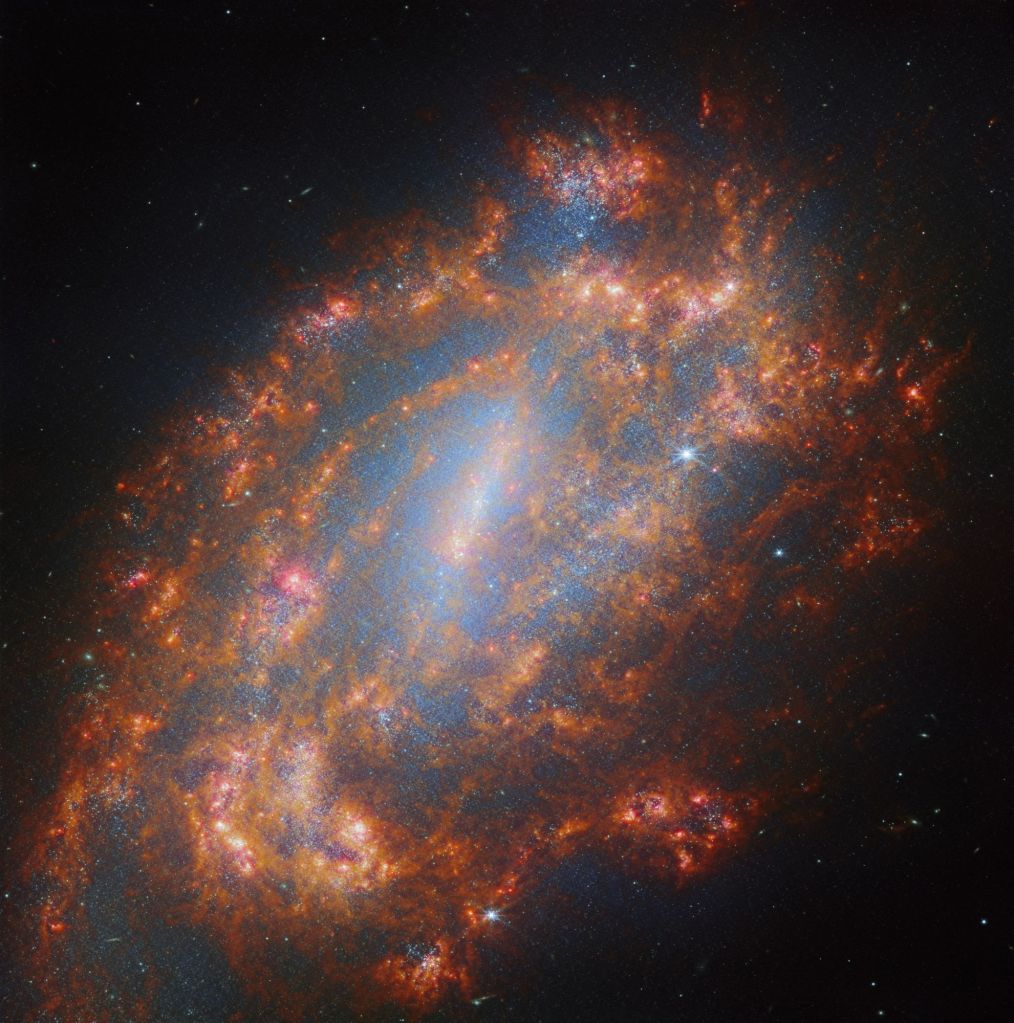
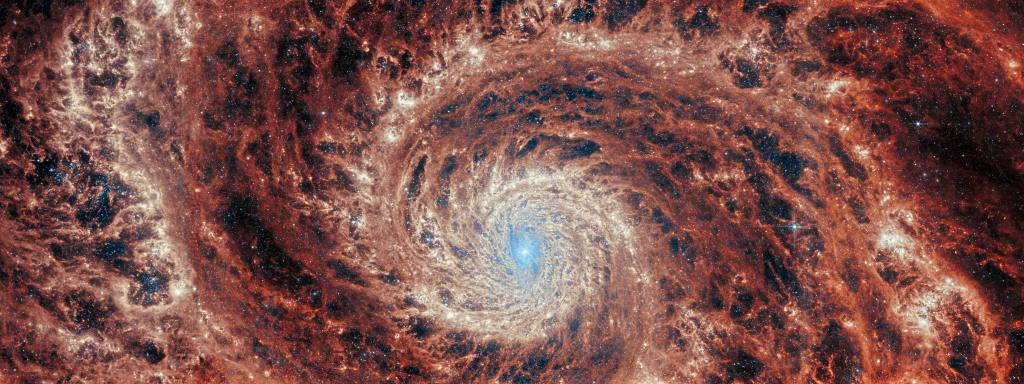
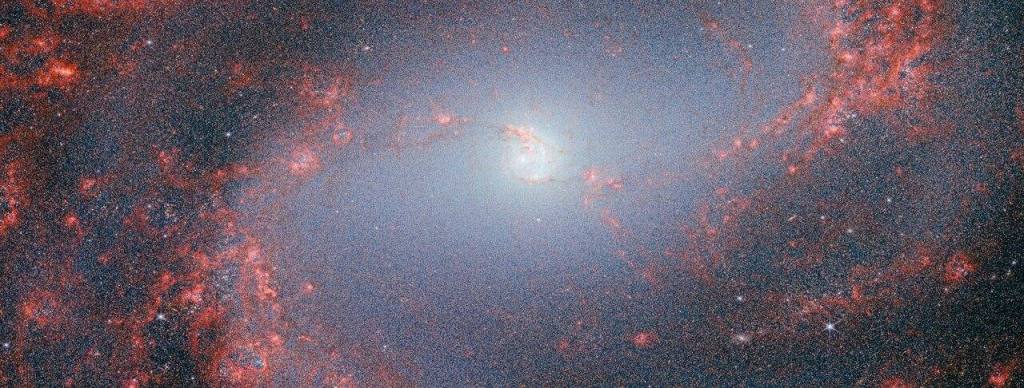
This image of the spiral galaxy IC 5332, taken by the NASA/ESA/CSA James Webb Space Telescope with its MIRI instrument, has been scaled and cropped to match the NASA/ESA Hubble Space Telescope???s view of the same galaxy.
How small we truly are and how small Earth truly is when laid amongst the colossal of all that surrounds us from all Directions.
Contemplating the scale of the universe and our place within it can be a profound and humbling experience. When we look up at the night sky and consider the billions of galaxies, each containing billions of stars, it’s hard not to feel a sense of awe at the sheer vastness of it all. In the grand cosmic tapestry, Earth appears as just a tiny speck, a precious oasis in the midst of incomprehensible expanses of space. This perspective can inspire wonder, curiosity, and a deep appreciation for the beauty and complexity of the universe we are a part of. It serves as a reminder of the mystery and majesty that lies beyond our everyday lives, inviting us to explore, learn, and marvel at the wonders of the cosmos.
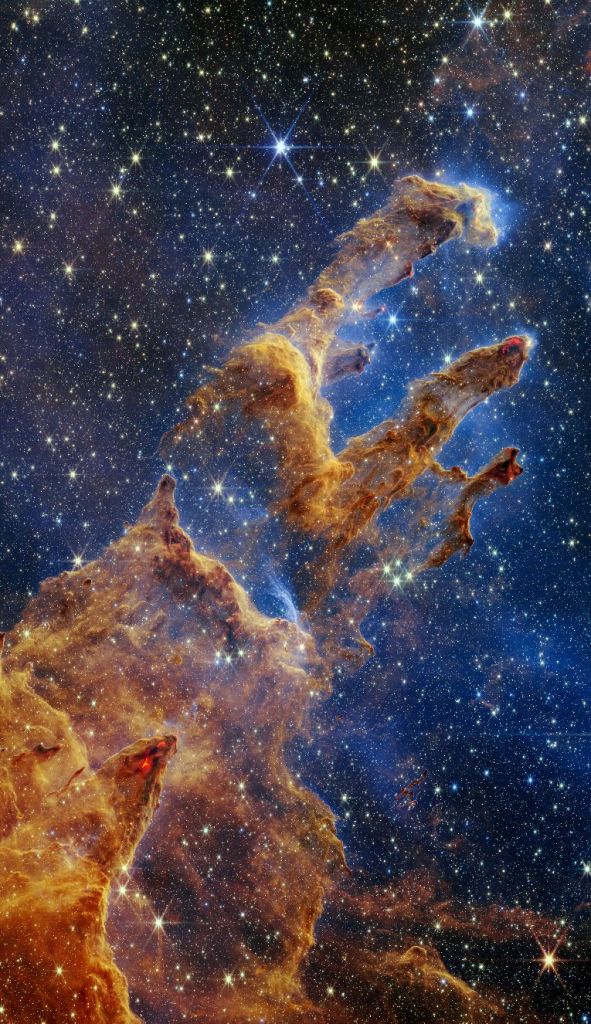
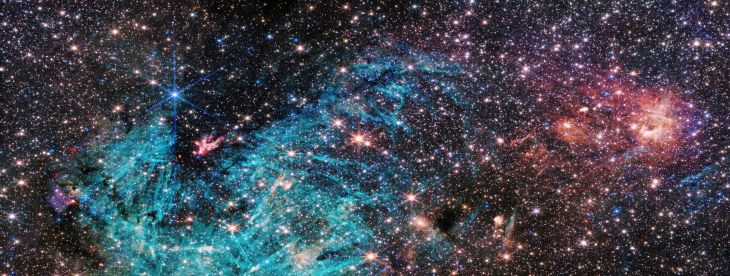
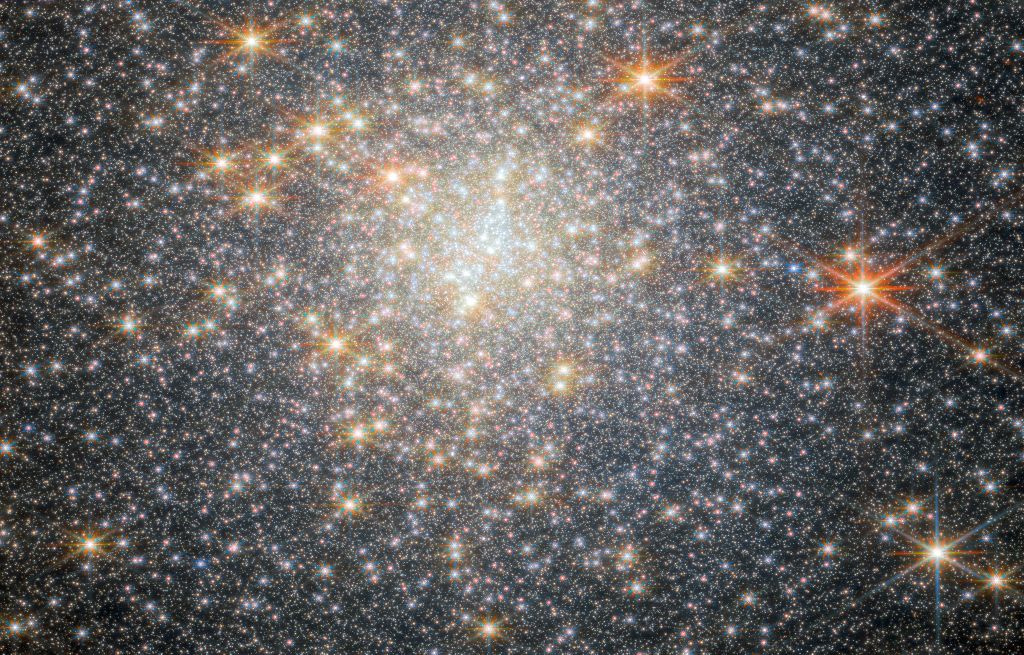
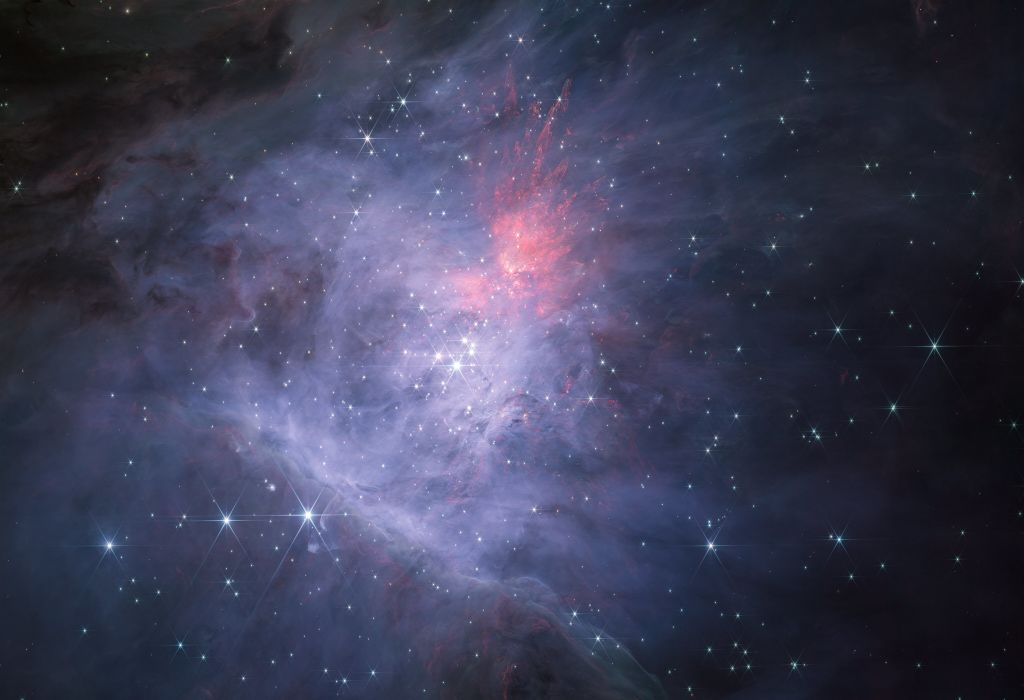
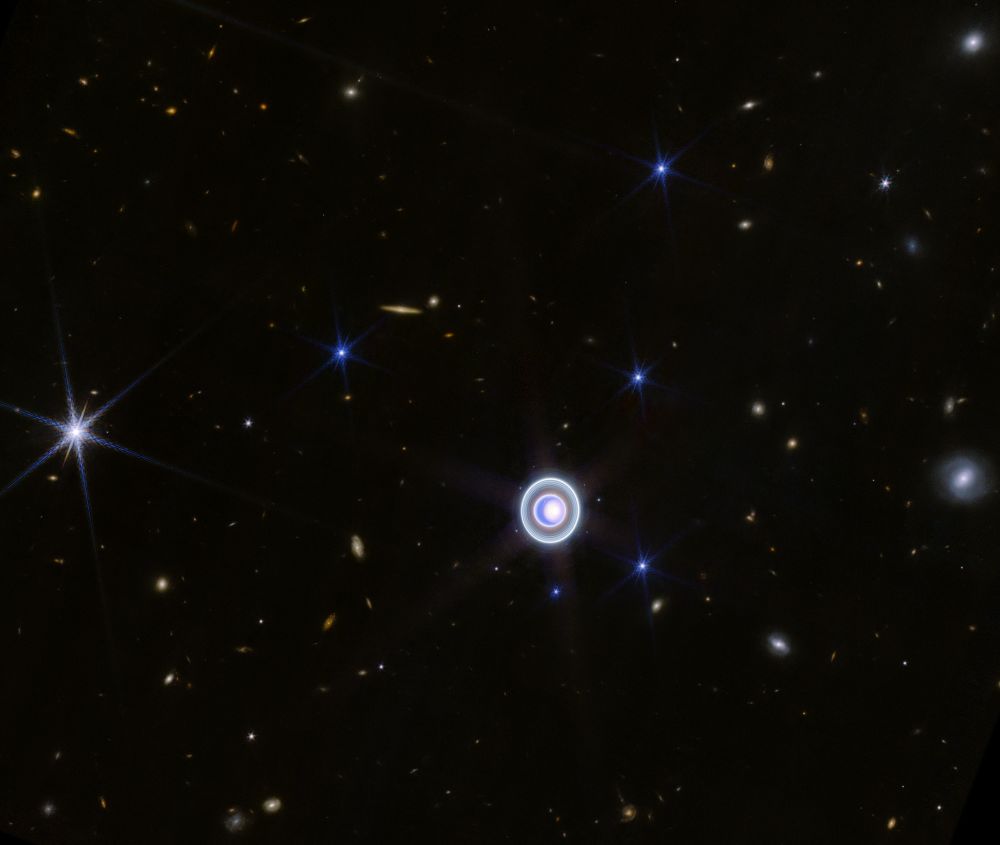
Below picture-Stars two light years away from earth
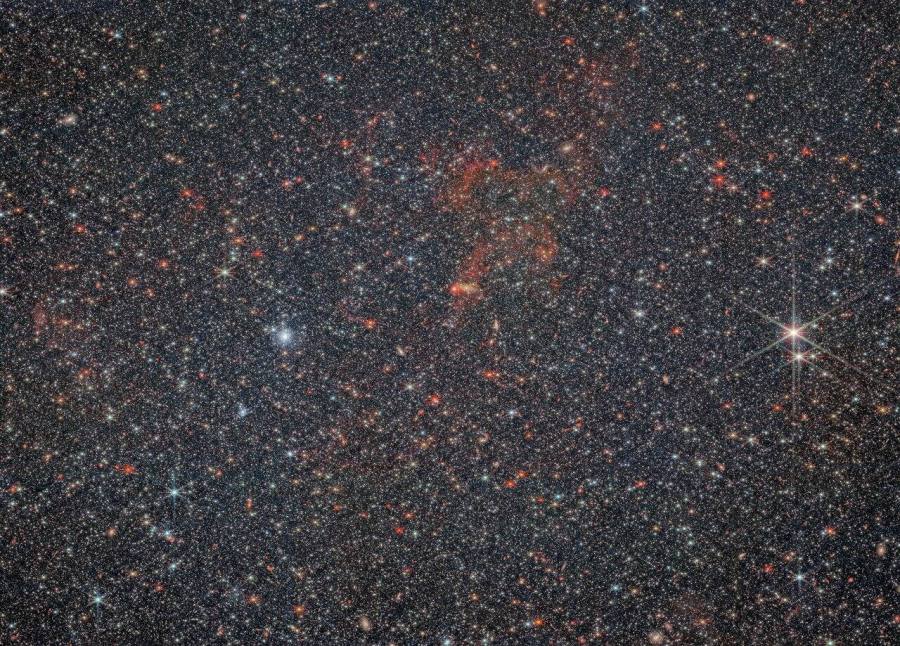
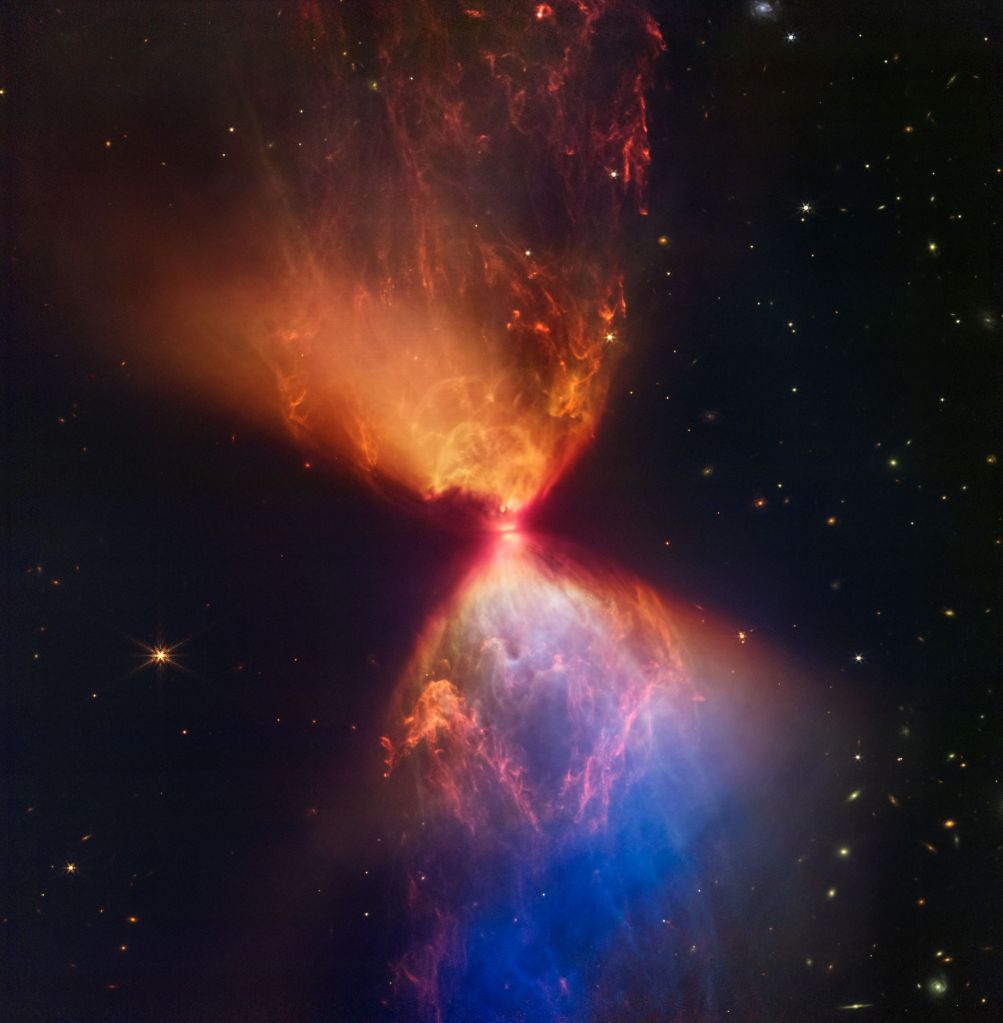
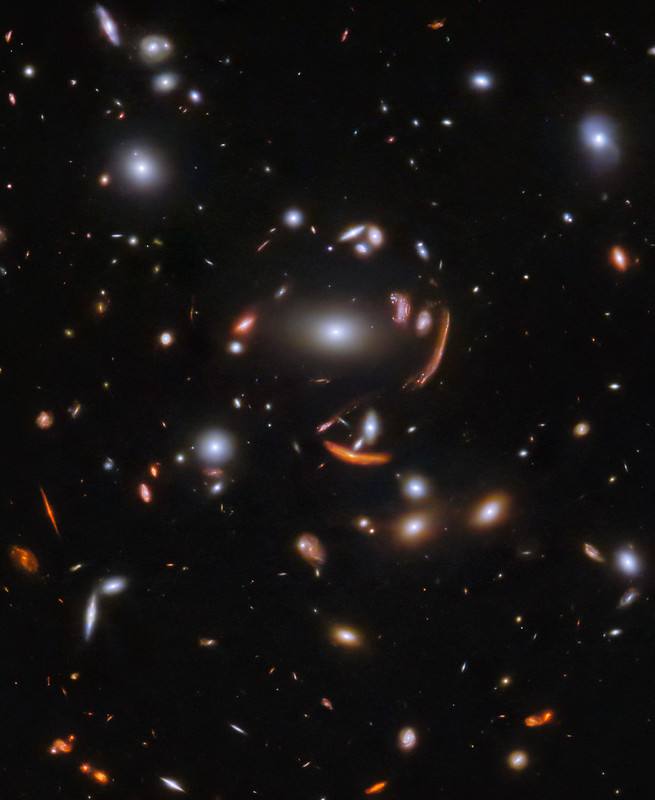
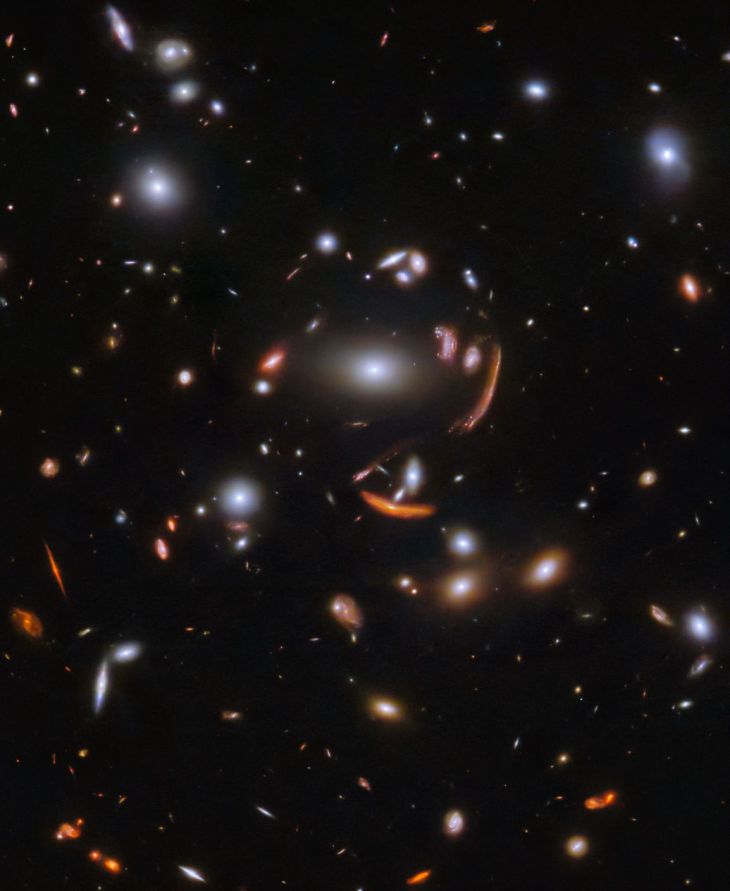
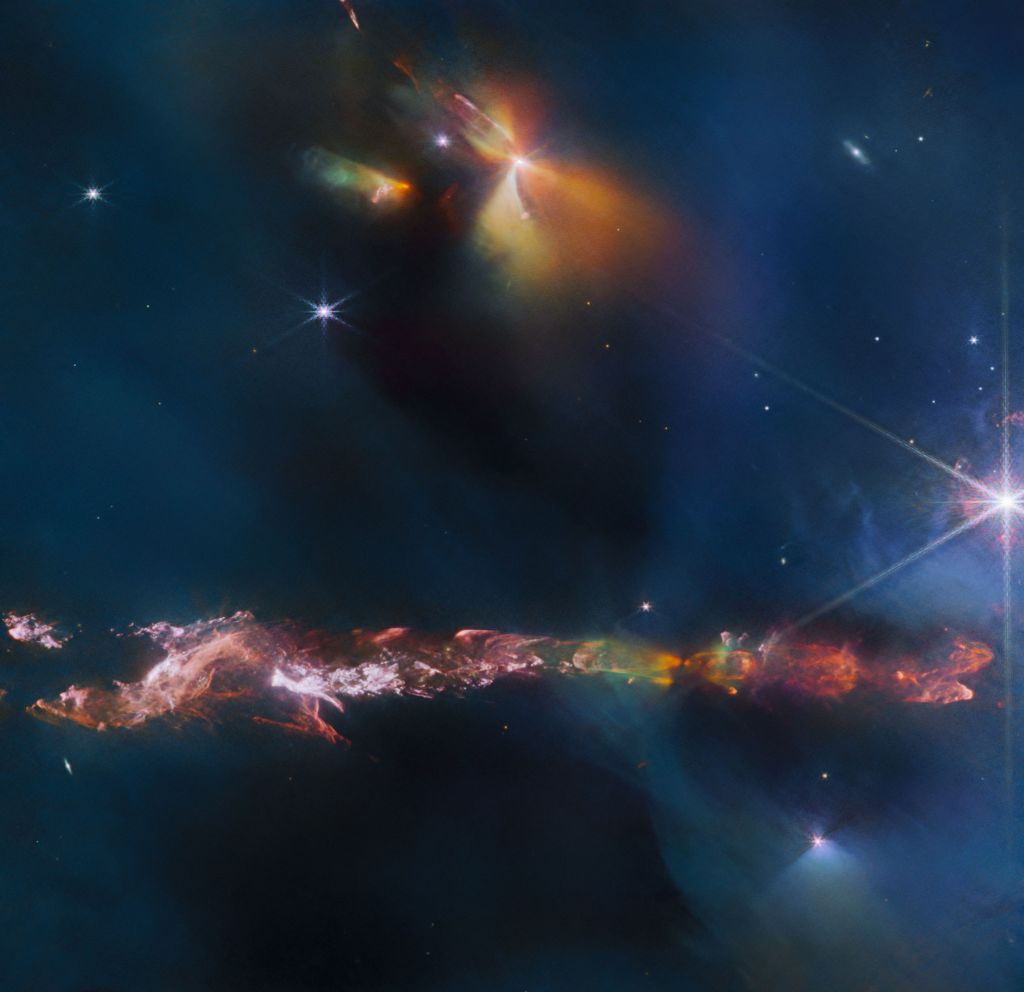
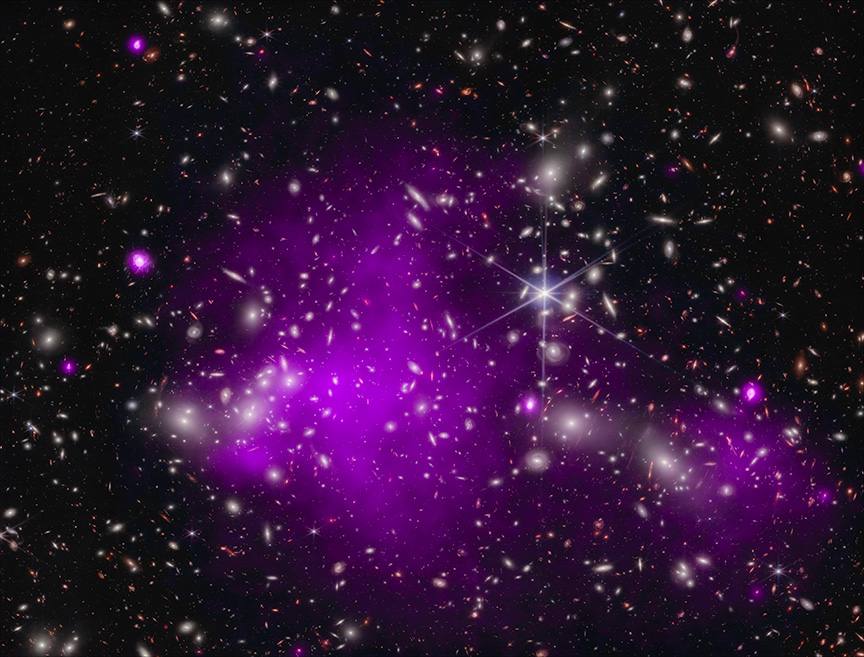
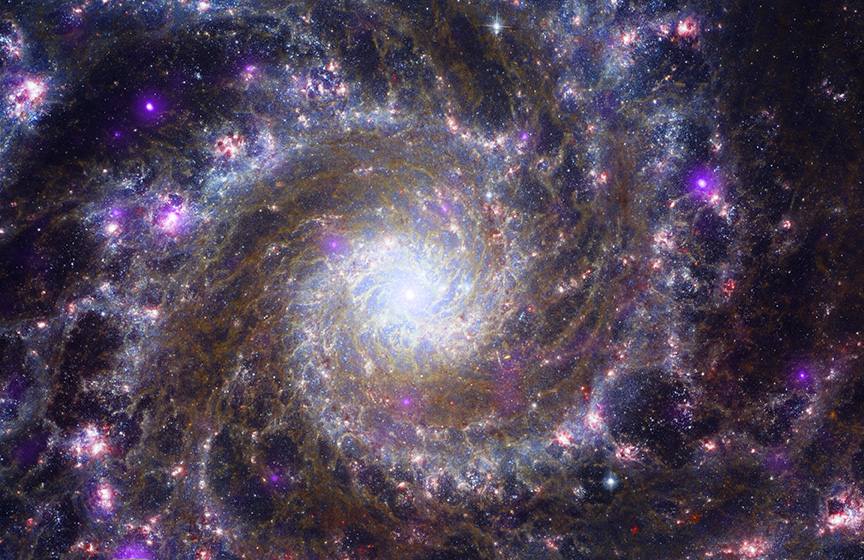
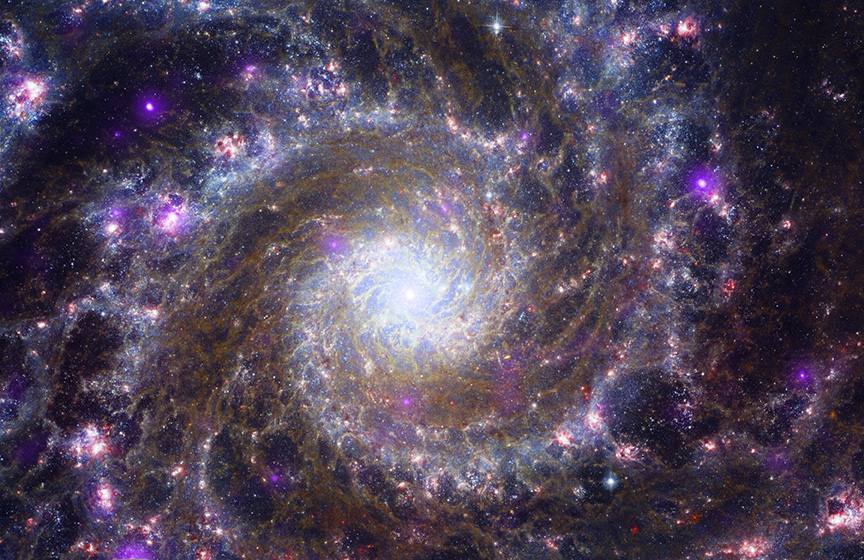
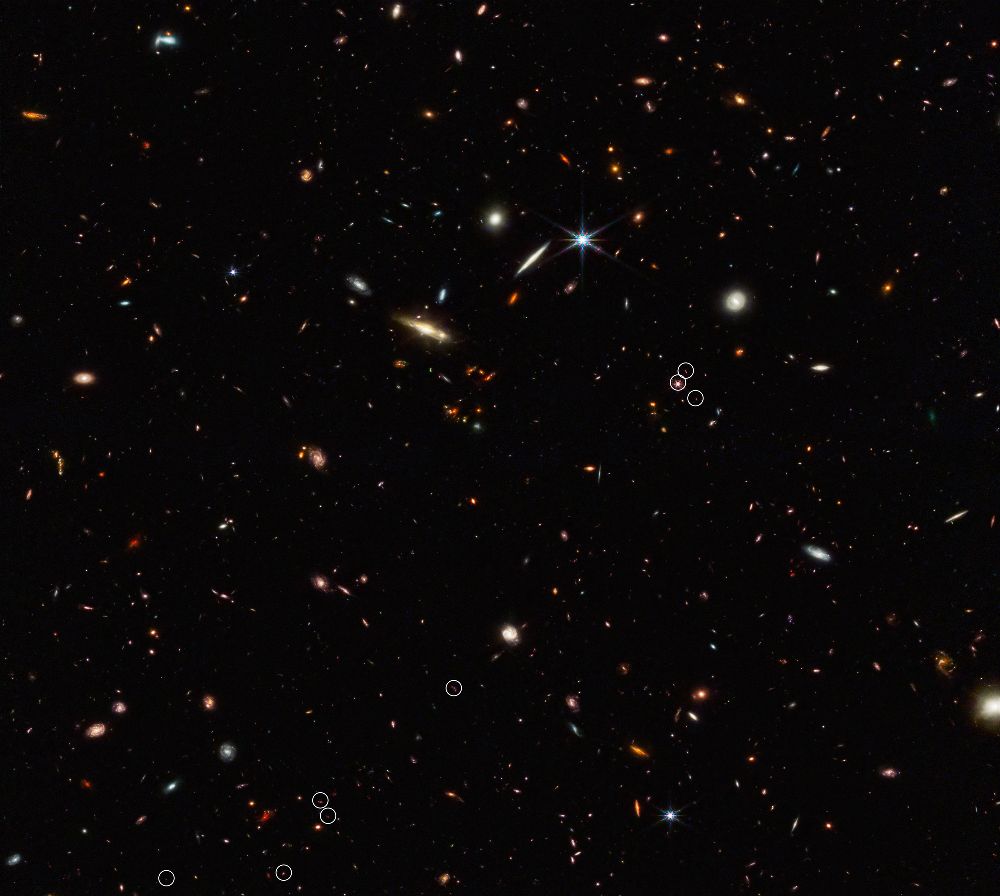
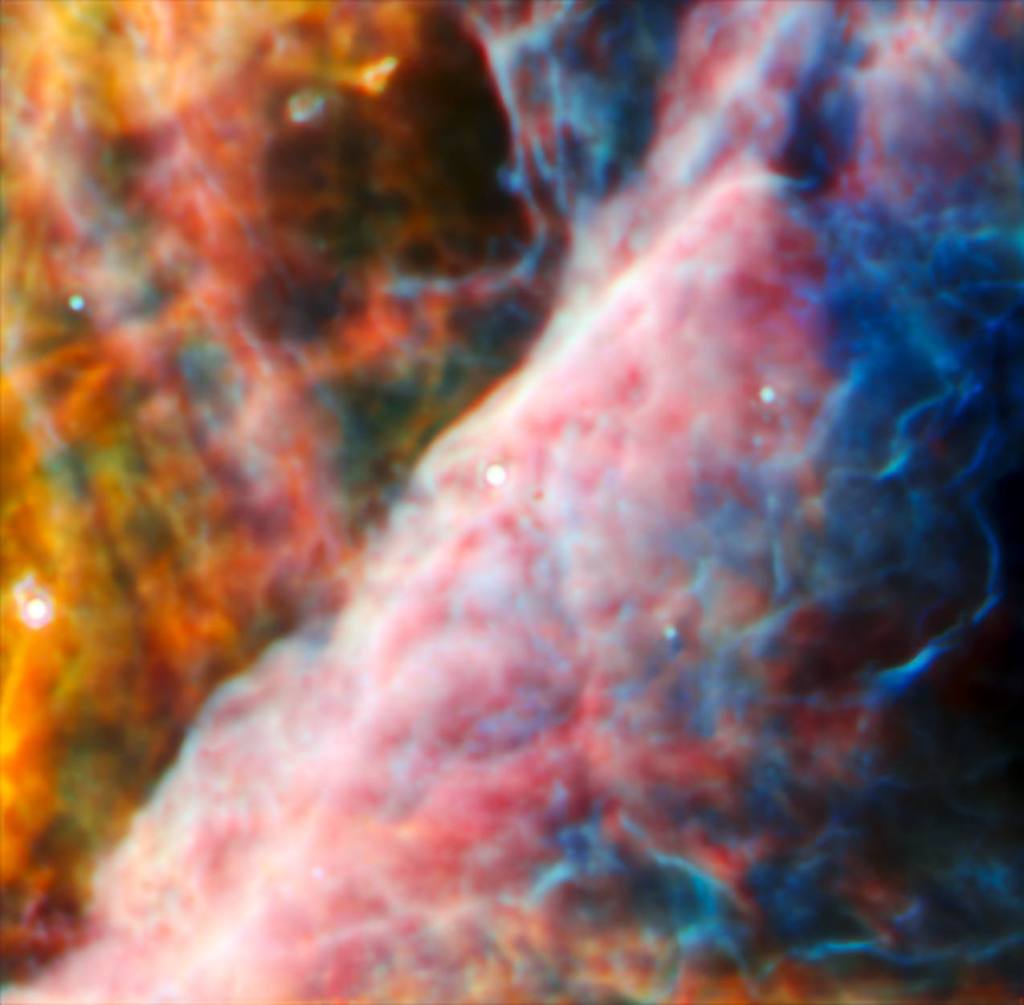
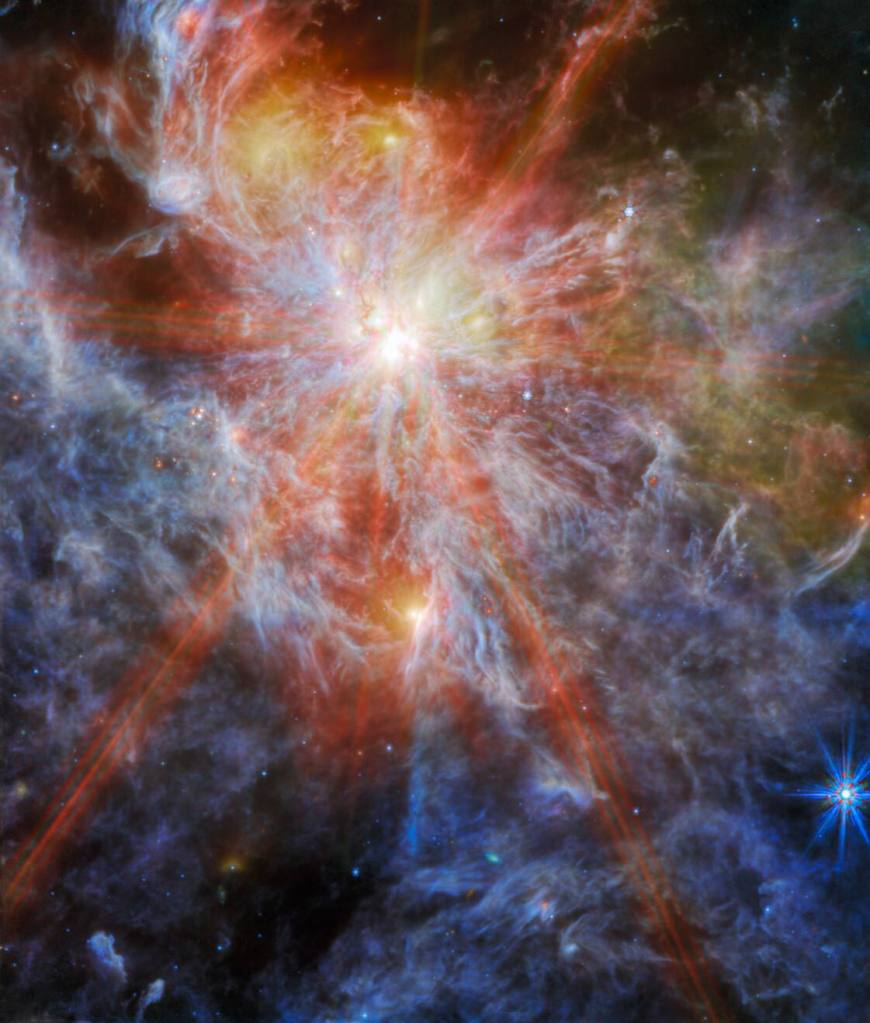
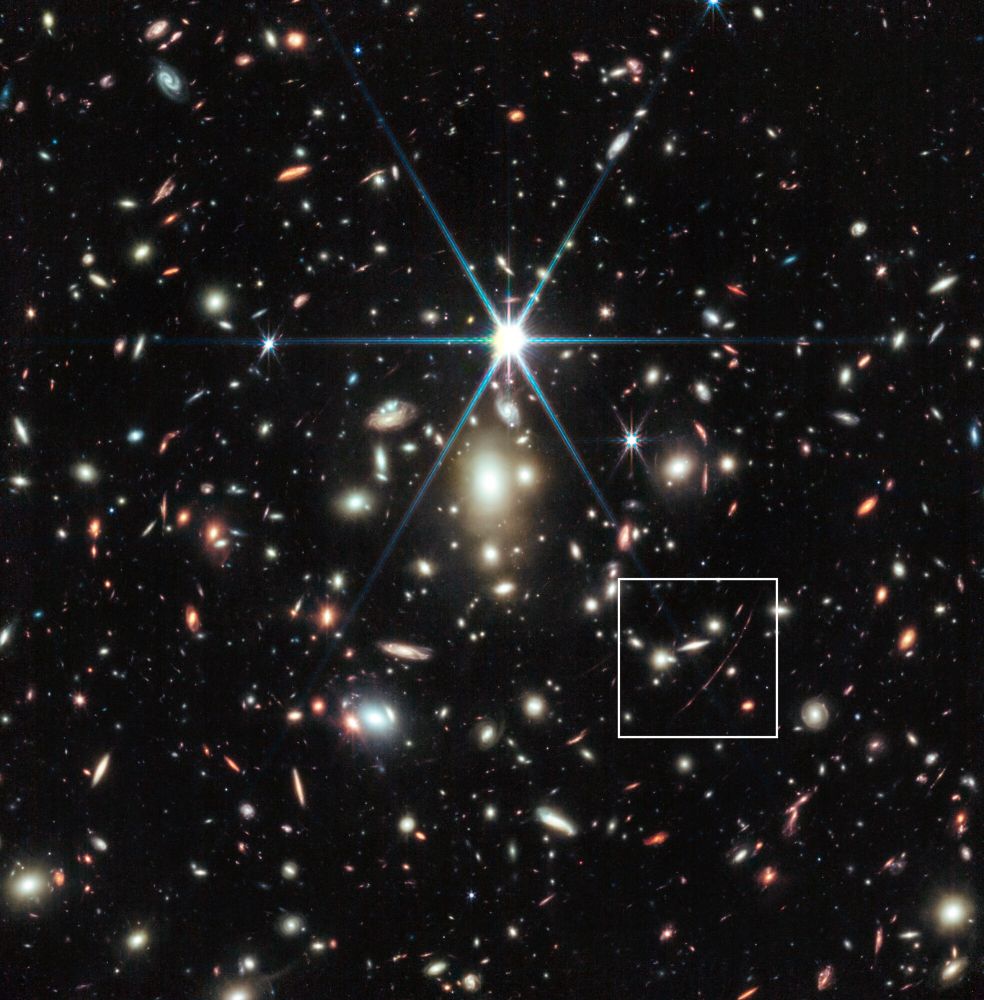
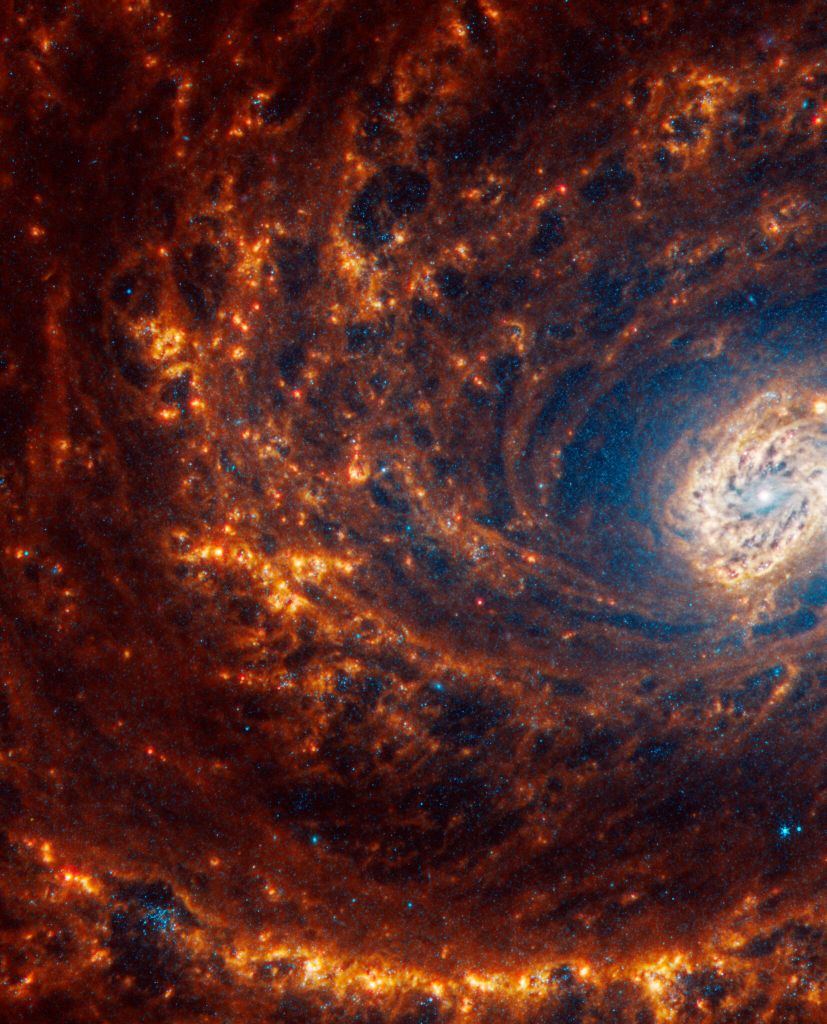
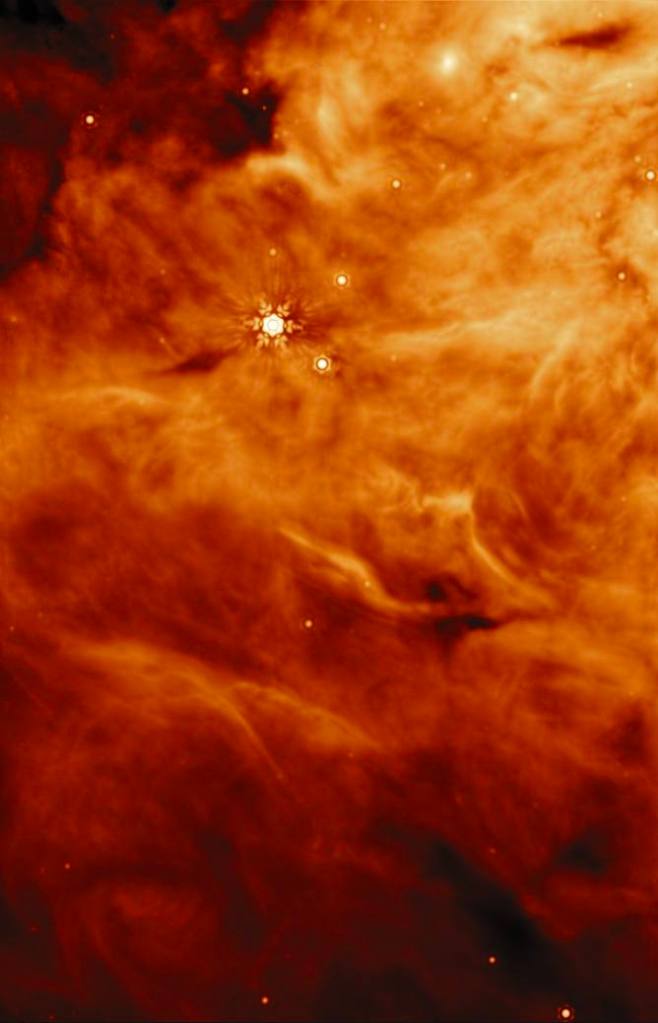
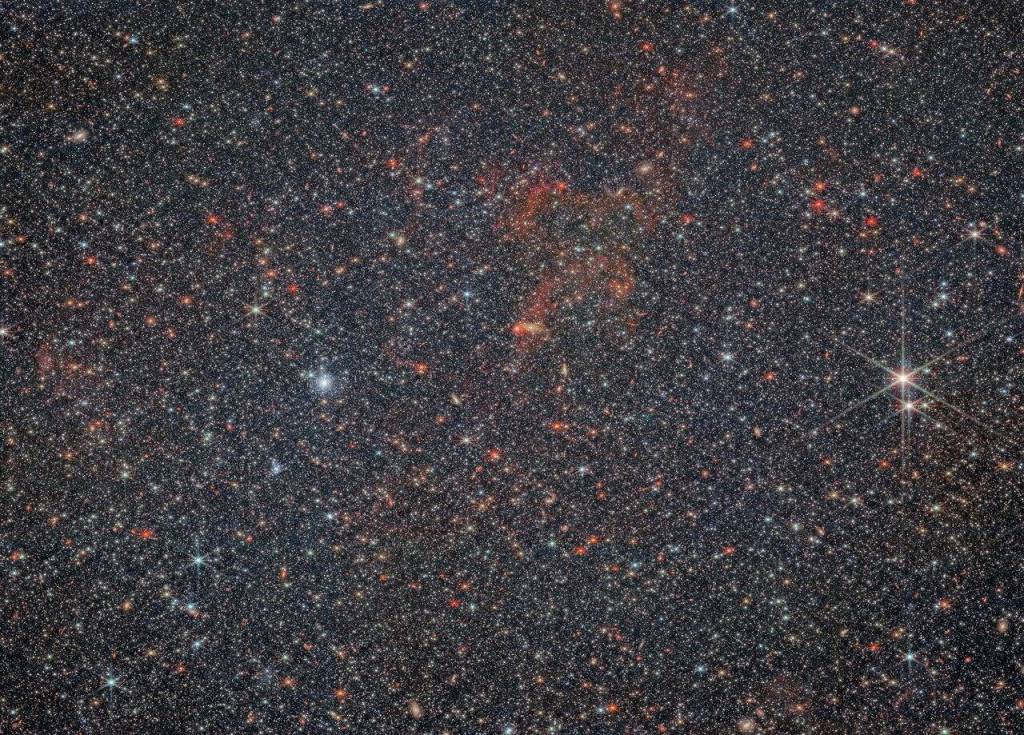
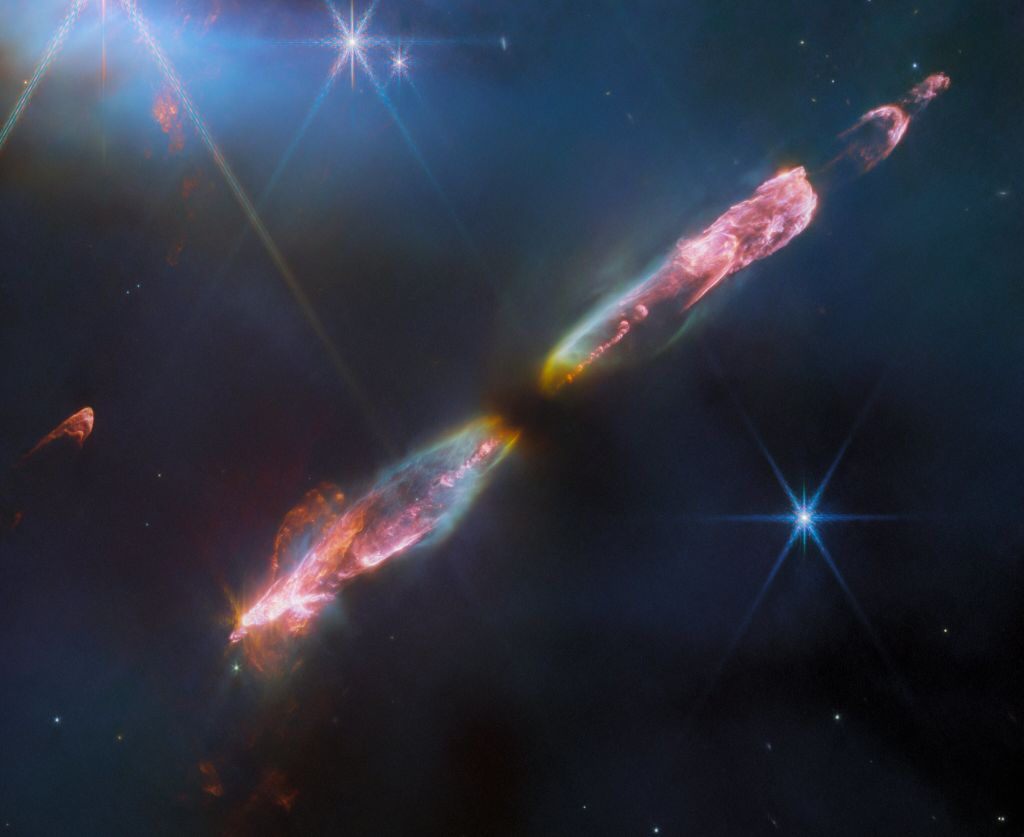
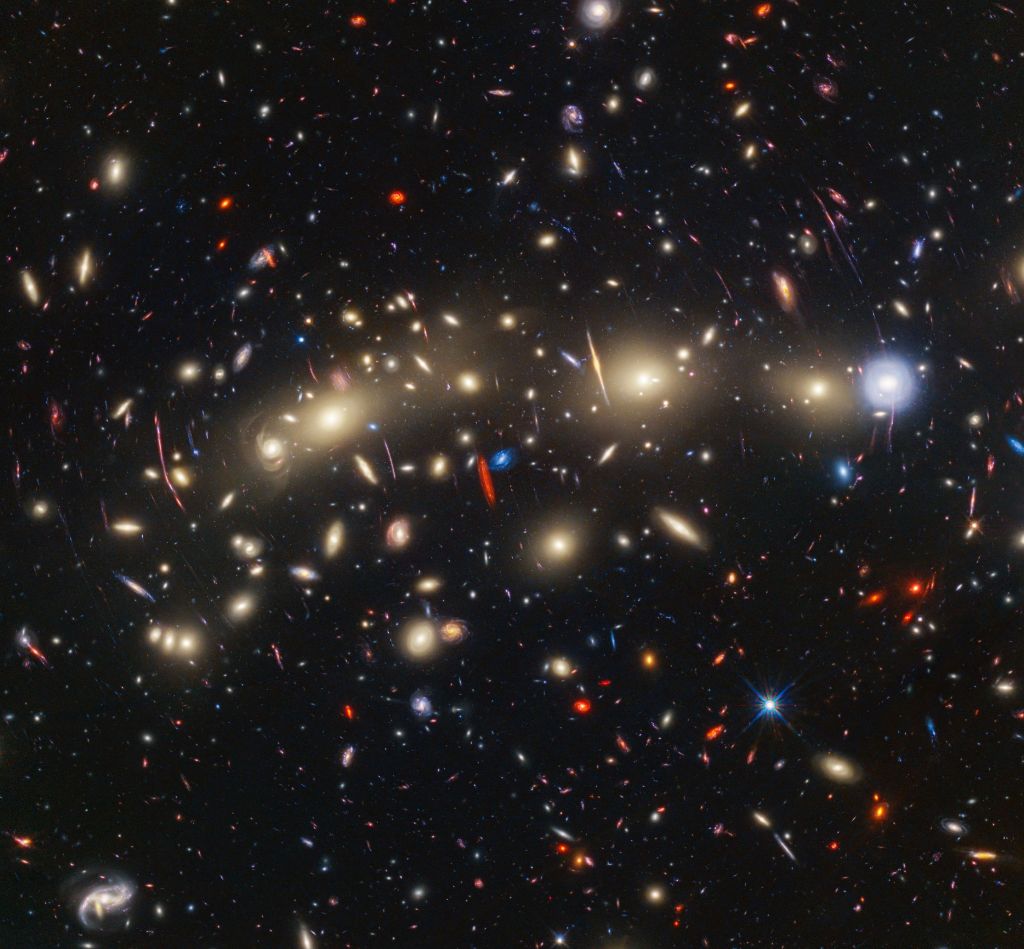
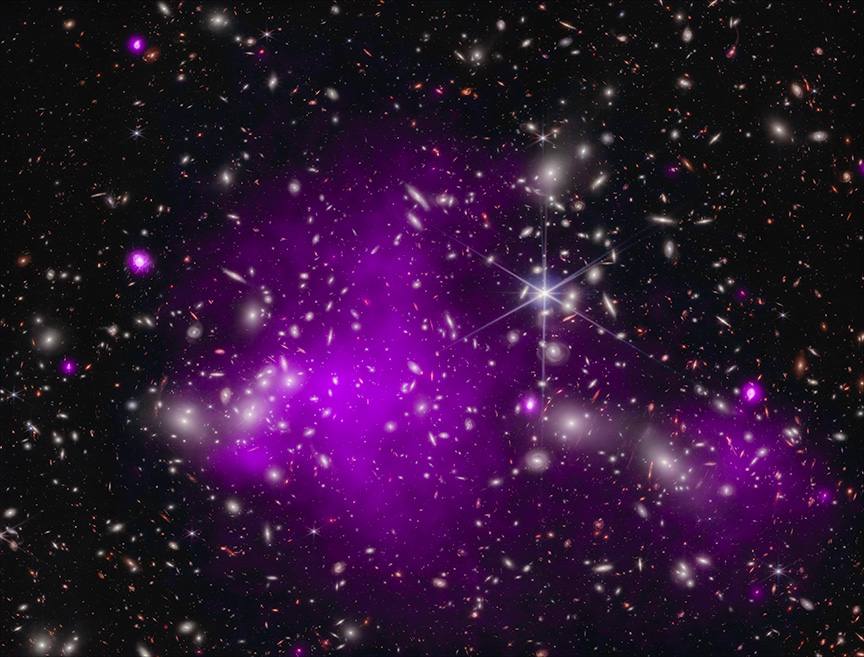
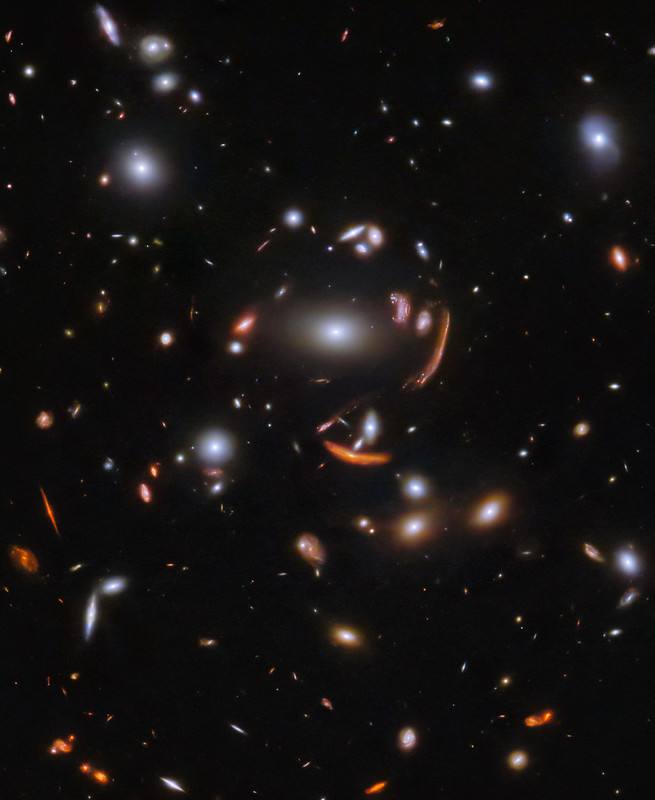
The vast galaxy cluster SDSS J1226+2152 in the constellation Coma Berenices is distorting the images of distant background galaxies into streaks and smears of light in this image from the NASA/ESA/CSA James Webb Space Telescope. This is a spectacular example of gravitational lensing, a phenomenon which occurs when a massive celestial object such as a galaxy cluster deforms spacetime and causes the path of light from more distant galaxies to be deflected, almost as if a monumental lens was redirecting it. This image is from a set of early science observations with Webb. One of the most notable lensed galaxies in this rich field is named SGAS J12265.3+215220. In this image, it’s the innermost lensed galaxy, just above and to the right of the central galaxy. This lies far beyond the foreground cluster in distance, giving us a view into the galaxy roughly two billion years after the big bang. Astronomers are now using this eagerly-awaited hoard of bright, gravitationally-lensed galaxies from Webb to explore star formation in distant galaxies. Just like their optical namesakes, gravitational lenses can magnify as well as distort distant galaxies. This allows astronomers to observe the finer details of galaxies that would usually be too distant to clearly resolve. In the case of SGAS J122651.3+215220, the combination of gravitational lensing and Webb???s unprecedented observational capabilities will allow astronomers to measure where, and how fast, stars are forming and also to gain an insight into the environments which support star formation in lensed galaxies. Amid this spectacular display of gravitational lensing, a menagerie of spiral and elliptical galaxies in all shapes and sizes surround the galaxy cluster. Webb???s sensitive infrared instruments have proven prodigious in picking out distant galaxies from the darkness of space. None of the tiny pinpricks in the patch of sky captured here is a star: each one is a galaxy. The variety of colours of the small, dim galaxies gives us hints at what we are seeing: many of the paler white galaxies will date back to the period of intense star formation known as cosmic noon, some two to three billion years after the big bang, while the few small orange and red systems are probably from even earlier in the Universe’s history. [Image Description: A cluster of galaxies. Most of the visible galaxies are oval-shaped and smooth. A few have spiral arms in various orientations. The largest galaxy is directly in the centre, and close by it are several images of background galaxies, stretched and warped into long arcs by gravitational lensing. The background is black and contains many very small galaxies, but no stars.]Links Pan of galaxy cluster SDSS J1226+2152This new Picture of the Month from the NASA/ESA/CSA James Webb Space Telescope reveals intricate details of the Herbig Haro object 797 (HH 797). Herbig-Haro objects are luminous regions surrounding newborn stars (known as protostars), and are formed when stellar winds or jets of gas spewing from these newborn stars form shockwaves colliding with nearby gas and dust at high speeds. HH 797, which dominates the lower half of this image, is located close to the young open star cluster IC 348, which is located near the eastern edge of the Perseus dark cloud complex. The bright infrared objects in the upper portion of the image are thought to host two further protostars. This image was captured with Webb???s Near-InfraRed Camera (NIRCam). Infrared imaging is powerful in studying newborn stars and their outflows, because the youngest stars are invariably still embedded within the gas and dust from which they are formed. The infrared emission of the star???s outflows penetrates the obscuring gas and dust, making Herbig-Haro objects ideal for observation with Webb???s sensitive infrared instruments. Molecules excited by the turbulent conditions, including molecular hydrogen and carbon monoxide, emit infrared light that Webb can collect to visualise the structure of the outflows. NIRCam is particularly good at observing the hot (thousands of degree Celsius) molecules that are excited as a result of shocks. Using ground-based observations, researchers have previously found that for cold molecular gas associated with HH 797, most of the red-shifted gas (moving away from us) is found to the south (bottom right), while the blue-shifted gas (moving towards us) is to the north (bottom left). A gradient was also found across the outflow, such that at a given distance from the young central star, the velocity of the gas near the eastern edge of the jet is more red-shifted than that of the gas on the western edge. Astronomers in the past thought this was due to the outflow???s rotation. In this higher resolution Webb image, however, we can see that what was thought to be one outflow is in fact made up of two almost parallel outflows with their own separate series of shocks (which explains the velocity asymmetries). The source, located in the small dark region (bottom right of centre), and already known from previous observations, is therefore not a single but a double star. Each star is producing its own dramatic outflow. Other outflows are also seen in this image, including one from the protostar in the top right of centre along with its illuminated cavity walls. HH 797 resides directly north of HH 211 (separated by approximately 30 arcseconds), which was the feature of a Webb image release in September 2023. [Image Description: In the lower half of the image is a narrow, horizontal nebula that stretches from edge to edge. It is brightly coloured with more variety on its right side. In the upper half there is a glowing point with multi-coloured light radiating from it in all directions. A bright star with long diffraction spikes lies along the right edge, and a few smaller stars are spread around. The background is covered in a thin haze.] Links Video:??Pan of HH 797Streaks of light and bright arcs betray the presence of a vast gravitational lens in this image from the NASA/ESA/CSA James Webb Space Telescope. A galaxy cluster in the foreground has magnified distant galaxies, warping their shapes and creating the bright smears of light spread throughout this image. This effect, referred to by astronomers as gravitational lensing, occurs when a massive celestial object such as a galaxy cluster causes a sufficient curvature of spacetime for light to be visibly bent around it, as if by a gargantuan lens. One of the consequential effects of gravitational lensing is that it can magnify distant astronomical objects,??letting astronomers study objects that would otherwise be too faint or far away. This useful quirk of gravitational lensing has also been used to reveal some of the most distant galaxies humanity has ever encountered. The long, bright, and distorted arc spreading out near the core is one such example. A distant galaxy known as the Cosmic Seahorse, its brightness is greatly magnified by the gravitational lens, which has enabled astronomers to study star formation there. This image was captured by NIRCam, Webb???s primary near-infrared camera, and contains the lensing galaxy cluster SDSS J1226+2149. It lies at a distance of around 6.3 billion light-years from Earth, in the constellation Coma Berenices. By combining Webb???s sensitivity with the magnifying effect of gravitational lensing, astronomers were able to use this gravitational lens to explore the earliest stages of star formation in distant galaxies. To do so, they relied on earlier studies by the NASA/ESA Hubble Space Telescope, which provided the ???prescription??? for this gravitational lens.?? This image shows only one observation from a programme designed to probe star formation in distant galaxies. As well as revealing how quickly stars form and characterising the environments in these galaxies that gave rise to new stars, these observations will demonstrate the capabilities of Webb and provide richly detailed datasets to the astronomical community. Astronomers expect Webb???s crystal-clear vision and cutting-edge instruments to provide new insights into star formation in distant, gravitationally lensed galaxies. [Image description: Many small galaxies are scattered on a black background: mainly, white, oval-shaped and red, spiral galaxies. To the lower right is a galaxy cluster, with a very large and bright elliptical galaxy at its centre. Thin, reddish, stretched-out arcs surround it. One arc is thick and much brighter. Another red galaxy is large and warped, just next to the cluster core.] Links Pan of the cosmic seahorse Zoom into the cosmic seahorseThis image from the NASA/ESA/CSA James Webb Space Telescope features an H II region in the Large Magellanic Cloud (LMC), a satellite galaxy of our Milky Way. This nebula, known as N79, is a region of interstellar atomic hydrogen that is ionised, captured here by Webb???s Mid-InfraRed Instrument (MIRI). N79 is a massive star-forming complex spanning roughly 1630 light-years in the generally unexplored southwest region of the LMC. N79 is typically regarded as a younger version of 30 Doradus (also known as the Tarantula Nebula), another of Webb???s recent targets. Research suggests that N79 has a star formation efficiency exceeding that of 30 Doradus by a factor of two over the past 500??000 years.?? This particular image centres on one of the three giant molecular cloud complexes, dubbed N79 South (S1 for short). The distinct ???starburst??? pattern surrounding this bright object is a series of diffraction spikes. All telescopes which use a mirror to collect light, as Webb does, have this form of artifact which arises from the design of the telescope. In Webb’s case, the six largest starburst spikes appear because of the hexagonal symmetry of Webb’s 18 primary mirror segments. Patterns like these are only noticeable around very bright, compact objects, where all the light comes from the same place. Most galaxies, even though they appear very small to our eyes, are darker and more spread out than a single star, and therefore do not show this pattern. At the longer wavelengths of light captured by MIRI, Webb???s view of N79 showcases the region???s glowing gas and dust. This is because mid-infrared light is able to reveal what is happening deeper inside the clouds (while shorter wavelengths of light would be absorbed or scattered by dust grains in the nebula). Some still-embedded protostars also appear in this field. Star-forming regions such as this are of interest to astronomers because their chemical composition is similar to that of the gigantic star-forming regions observed when the Universe was only a few billion years old and star formation was at its peak. Star-forming regions in our Milky Way galaxy are not producing stars at the same furious rate as N79, and have a different chemical composition. Webb is now providing astronomers the opportunity to compare and contrast observations of star formation in N79 with the telescope???s deep observations of distant galaxies in the early Universe. These observations of N79 are part of a Webb programme that is studying the evolution of the circumstellar discs and envelopes of forming stars over a wide range in mass and at different evolutionary stages. Webb???s sensitivity will enable scientists to detect for the first time the planet-forming dust discs around stars of similar mass to that of our Sun at the distance of the LMC. This image includes 7.7-micron light shown in blue, 10 microns in cyan, 15 microns in yellow, and 21 microns in red (770W, 1000W, 1500W, and 2100W filters, respectively). [Image description: A bright young star within a colourful nebula. The star is identifiable as the brightest spot in the image, surrounded by six large spokes of light that cross the image. A number of other bright spots can also be seen in the clouds, which are shown in great detail as layers of colourful wisps.] Links S1 LMC N79 (cropped) Pan video?? Image on ESA websiteThis image features the barred spiral galaxy galaxy NGC 1559 as seen by the NASA/ESA/CSA James Webb Space Telescope. The galaxy hosts a visible central region with a distinct open pattern in the loosely-wound spiral arms. NGC 1559 resides approximately 35 million light-years away in the little-observed southern constellation Reticulum (The Reticule). The data featured in this portrait make use of two of Webb???s instruments: the Mid-InfraRed Instrument (MIRI) and Near-InfraRed Camera (NIRCam). Here MIRI captures the glow of interstellar dust grains, which trace out the interstellar medium, the fuel for future star formation. NIRCam shows the light from stars, even young stars hidden behind prodigious amounts of dust. NIRCam also captures emission from ionised nebulae around young stars. The data were collected by the PHANGS team as part of an observing programme in which Webb will observe 55 galaxies that have also been mapped by the Atacama Large Millimeter/submillimeter Array (ALMA) radio telescope, the NASA/ESA Hubble Space Telescope and more. By combining Webb???s unprecedented view of the dust and stars with data from these other facilities, the team aims to obtain a new, highly detailed view of how stars are born, live, and die in galaxies across the Universe. This is also a Treasury programme, which means that the data will have no exclusive access period and so the scientific community (and others, including the general public) can access the data immediately. This has the advantage that more research can be done with the data more quickly. NGC 1559 has massive spiral arms that abound with star formation, and it is receding from us at a speed of about 1300 kilometres per second. Although NGC 1559 appears to sit near one of our nearest neighbours in the sky ??? the Large Magellanic Cloud (LMC) – this is just a trick of perspective. In reality, NGC 1559 is physically nowhere near the LMC in space; in fact it truly is a loner, lacking the company of any nearby galaxies or membership of any galaxy cluster. NGC 1559 may be alone in space, but with Webb we are admiring from far away. [Image Description: A barred spiral galaxy on a dark, nearly empty background. The whole galaxy glows with a pale light, particularly along the galaxy???s bar which runs from top to bottom through the galactic core. It???s speckled with tiny stars. The centre is surrounded by rich clouds of hot gas and dust along the arms. The arms are loosely wound and a bit ragged, and contain a few star-forming regions that shine brightly.]Links Pan video of NGC 1559This image shows the irregular galaxy NGC 6822, as observed by the Near-InfraRed Camera (NIRCam) mounted on the NASA/ESA/CSA James Webb Space Telescope. NIRCam probes the near-infrared, which in this case makes it suitable for observing the densely packed star field. Webb???s near-infrared NIRCam image shows the galaxy???s countless stars in incredible detail. Here, the dust and gas that pervade the galaxy are reduced to translucent red wisps, laying the stars bare for astronomical study. The power of Webb???s ice-cold infrared instruments and the incredible resolution of its primary mirror is necessary to examine stars hidden in dusty environments, and the results as shown here are spectacular. The brightest stars appear in pale blue and cyan colours in this image, colours which are assigned to the shortest wavelengths of light that NIRCam can detect: red and nearest infrared. The amount of light emitted by any star decreases at longer and longer wavelengths, towards the mid-infrared, so the stars that are more faint to NIRCam also appear more warmly coloured here. A bright blue orb to the lower left of the gas is particularly prominent: this is a globular cluster, packed with stars. A composite image of NGC 6822 featuring data from both NIRCam and Webb???s Mid-InfraRed Instrument (MIRI) was published for the ESA/Webb Picture of the Month series in July 2023. [Image Description: A huge, dense field completely filled with tiny stars. A few of the star images are a bit larger than the rest, with visible diffraction spikes; two foreground stars are large and bright on the right side. Many small galaxies within various shapes and sizes can be seen hiding behind the stars. In the centre some faint, wispy, dark red gas appears.] or [Image Description: A huge, dense field completely filled with stars. A few of the star images are a bit larger than the rest, with visible diffraction spikes; two foreground stars are bright on the right side. Many galaxies with various shapes and sizes can be seen hiding behind the stars. In the centre some faint, wispy, dark red gas appears.] Links Composite NIRCam and MIRI image of NGC 6822 (July 2023 Picture of the Month) MIRI image of NGC 6822 (July 2023 Picture of the Month) Science paper (L. Lenki?? et al.)This image, which truly is a visual treat, was captured by Webb???s NIRCam, or Near-InfraRed Camera. NIRCam makes observations in the near-infrared, which spans wavelengths of light that are just longer than optical wavelengths. Like MIRI, it is equipped with a range of filters that cover its wavelength range of 0.6 to 5 micrometres, including 29 filters specifically intended for imaging. Data collected through eight of those filters were used to complete this impressive image, which picks out light emitted from the wealth of stars that might be obscured by dust at other wavelengths. Even though stars do not emit the majority of their light in the infrared, optical light is much more vulnerable to being scattered by dust than infrared light is, and so infrared instruments like Webb can provide the best opportunities to study stars in regions (like galaxies) that might also contain large amounts of dust.?? In this image, the bright red-pink spots correspond to regions rich in ionised hydrogen, which is due to the presence of newly formed stars. The diffuse gradient of blue light around the central region shows the distribution of older stars. The compact light blue regions within the red, ionised gas, mostly concentrated in the spiral arms, show the distribution of young star clusters. [Image Description: A close-up view of a spiral galaxy. The core glows very brightly from the multitude of stars there, which are so dense they appear like noise or static. Near the edges of the image, the density of the stars notably follows the galaxy???s spiral arms. The two arms are highlighted by patchy red gas, connecting in the galactic centre. The gas is very thread-like in the centre and thicker further out along the arms.] Links M83 (MIRI image) Slider tool (MIRI and NIRCam images) Video: Pan of M83 (MIRI image) Video: Pan of M83 (NIRCam image) Video: M83 (MIRI and NIRCam images)This month, Webb presents a spectacular treat??? for the eyes. The barred spiral galaxy M83 is revealed in detail by the NASA/ESA/CSA James Webb Space Telescope. M83, which is also known as NGC 5236, was observed by Webb as part of a series of observations collectively titled Feedback in Emerging extrAgalactic Star clusTers, or FEAST. Another target of the FEAST observations, M51, was the subject of a previous Webb Picture of the Month. As with all six galaxies that comprise the FEAST sample, M83 and M51 were observed with both NIRCam and MIRI, two of the four instruments that are mounted on Webb. MIRI, or the Mid-InfraRed Instrument, makes observations in the mid-infrared, which spans wavelengths of light very different from optical wavelengths. Optical wavelengths in astronomy roughly correspond to the range of light waves that human eyes are sensitive to, and extend from about 0.38 to 0.75 micrometres (a micrometre, or micron, is one thousandth of a millimetre). By contrast, MIRI detects light from 5 to 28 micrometres ??? however, when it makes observations, it does not typically observe across this entire wavelength range all at once. Instead, MIRI has a set of ten filters that allow very specific regions of light through. For example, one of MIRI???s filters (dubbed F770W), allows light with wavelengths of 6.581 to 8.687 micrometres to pass through it.?? This image was compiled using data collected through just two of MIRI???s ten filters, near the short end of the instrument???s wavelength range. The result is this extraordinarily detailed image, with its creeping tendrils of gas, dust and stars. In this image, the bright blue shows the distribution of stars across the central part of the galaxy. The bright yellow regions that weave through the spiral arms indicate concentrations of active stellar nurseries, where new stars are forming. The orange-red areas indicate the distribution of a type of carbon-based compound known as polycyclic aromatic hydrocarbons (or PAHs) ??? the F770W filter, one of the two used here, is particularly suited to imaging these important molecules. [Image Description: A close-up view of a barred spiral galaxy. Two spiral arms reach horizontally away from the core in the centre, merging into a broad network of gas and dust which fills the image. This material glows brightest orange along the path of the arms, and is darker red across the rest of the galaxy. Through many gaps in the dust, countless tiny stars can be seen, most densely around the core.] Links M83 (NIRCam image) Slider tool (MIRI and NIRCam images) Video: Pan of M83 (MIRI image) Video: Pan of M83 (NIRCam image) Video: M83 (MIRI and NIRCam images)This new Picture of the Month from the NASA/ESA/CSA James Webb Space Telescope reveals intricate details of the Herbig Haro object 797 (HH 797). Herbig-Haro objects are luminous regions surrounding newborn stars (known as protostars), and are formed when stellar winds or jets of gas spewing from these newborn stars form shockwaves colliding with nearby gas and dust at high speeds. HH 797, which dominates the lower half of this image, is located close to the young open star cluster IC 348, which is located near the eastern edge of the Perseus dark cloud complex. The bright infrared objects in the upper portion of the image are thought to host two further protostars. This image was captured with Webb???s Near-InfraRed Camera (NIRCam). Infrared imaging is powerful in studying newborn stars and their outflows, because the youngest stars are invariably still embedded within the gas and dust from which they are formed. The infrared emission of the star???s outflows penetrates the obscuring gas and dust, making Herbig-Haro objects ideal for observation with Webb???s sensitive infrared instruments. Molecules excited by the turbulent conditions, including molecular hydrogen and carbon monoxide, emit infrared light that Webb can collect to visualise the structure of the outflows. NIRCam is particularly good at observing the hot (thousands of degree Celsius) molecules that are excited as a result of shocks. Using ground-based observations, researchers have previously found that for cold molecular gas associated with HH 797, most of the red-shifted gas (moving away from us) is found to the south (bottom right), while the blue-shifted gas (moving towards us) is to the north (bottom left). A gradient was also found across the outflow, such that at a given distance from the young central star, the velocity of the gas near the eastern edge of the jet is more red-shifted than that of the gas on the western edge. Astronomers in the past thought this was due to the outflow???s rotation. In this higher resolution Webb image, however, we can see that what was thought to be one outflow is in fact made up of two almost parallel outflows with their own separate series of shocks (which explains the velocity asymmetries). The source, located in the small dark region (bottom right of centre), and already known from previous observations, is therefore not a single but a double star. Each star is producing its own dramatic outflow. Other outflows are also seen in this image, including one from the protostar in the top right of centre along with its illuminated cavity walls. HH 797 resides directly north of HH 211 (separated by approximately 30 arcseconds), which was the feature of a Webb image release in September 2023. [Image Description: In the lower half of the image is a narrow, horizontal nebula that stretches from edge to edge. It is brightly coloured with more variety on its right side. In the upper half there is a glowing point with multi-coloured light radiating from it in all directions. A bright star with long diffraction spikes lies along the right edge, and a few smaller stars are spread around. The background is covered in a thin haze.] Links Video:??Pan of HH 797The vast galaxy cluster SDSS J1226+2152 in the constellation Coma Berenices is distorting the images of distant background galaxies into streaks and smears of light in this image from the NASA/ESA/CSA James Webb Space Telescope. This is a spectacular example of gravitational lensing, a phenomenon which occurs when a massive celestial object such as a galaxy cluster deforms spacetime and causes the path of light from more distant galaxies to be deflected, almost as if a monumental lens was redirecting it. This image is from a set of early science observations with Webb. One of the most notable lensed galaxies in this rich field is named SGAS J12265.3+215220. In this image, it’s the innermost lensed galaxy, just above and to the right of the central galaxy. This lies far beyond the foreground cluster in distance, giving us a view into the galaxy roughly two billion years after the big bang. Astronomers are now using this eagerly-awaited hoard of bright, gravitationally-lensed galaxies from Webb to explore star formation in distant galaxies. Just like their optical namesakes, gravitational lenses can magnify as well as distort distant galaxies. This allows astronomers to observe the finer details of galaxies that would usually be too distant to clearly resolve. In the case of SGAS J122651.3+215220, the combination of gravitational lensing and Webb???s unprecedented observational capabilities will allow astronomers to measure where, and how fast, stars are forming and also to gain an insight into the environments which support star formation in lensed galaxies. Amid this spectacular display of gravitational lensing, a menagerie of spiral and elliptical galaxies in all shapes and sizes surround the galaxy cluster. Webb???s sensitive infrared instruments have proven prodigious in picking out distant galaxies from the darkness of space. None of the tiny pinpricks in the patch of sky captured here is a star: each one is a galaxy. The variety of colours of the small, dim galaxies gives us hints at what we are seeing: many of the paler white galaxies will date back to the period of intense star formation known as cosmic noon, some two to three billion years after the big bang, while the few small orange and red systems are probably from even earlier in the Universe’s history. [Image Description: A cluster of galaxies. Most of the visible galaxies are oval-shaped and smooth. A few have spiral arms in various orientations. The largest galaxy is directly in the centre, and close by it are several images of background galaxies, stretched and warped into long arcs by gravitational lensing. The background is black and contains many very small galaxies, but no stars.]Links Pan of galaxy cluster SDSS J1226+2152
Don’t Stop Here! Your curiosity just got started! Below is a Link for so much inspiration, you simply cannot ignore it.


























 thelivingbreathingjamesbrown.com
You must be logged in to post a comment.