
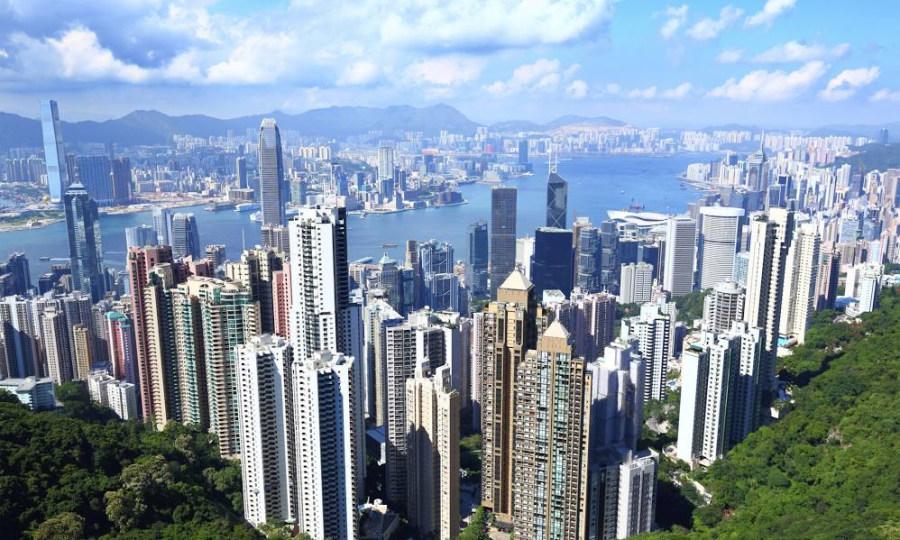

SAR? Hong Kong is a special administrative region (SAR) that exists as part of the People’s Republic of China under the “One Country, Two Systems” doctrine, negotiated in the Sino-British Joint Declaration, negotiated and signed in 1984, but taking effect in 1997. Does a SAR work?
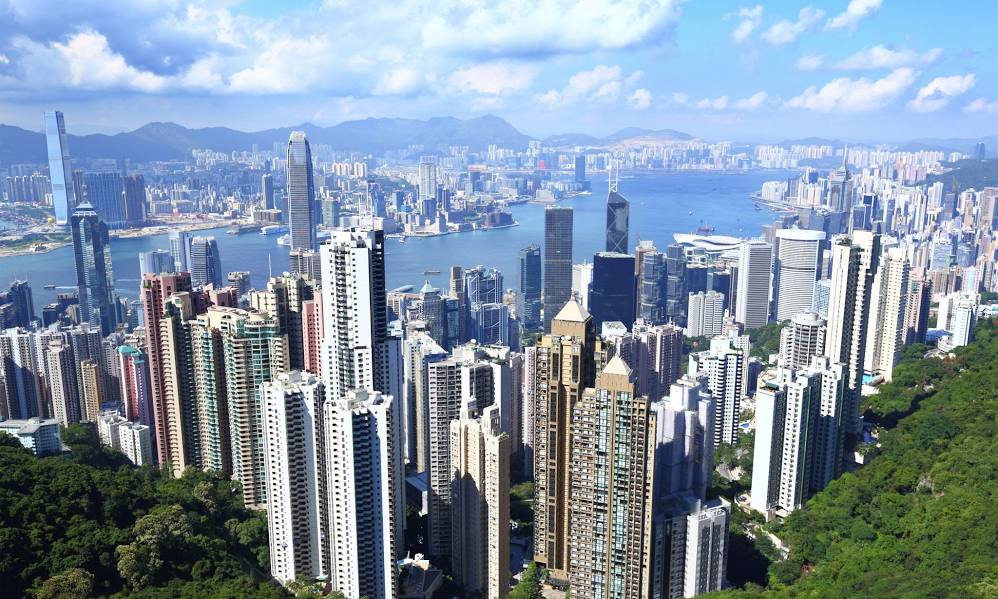
Hong Kong is a SAR and remains so until 2047.
https://www.investopedia.com/terms/h/hong-kong-sar-china.asp
The “One Country, Two Systems” doctrine stipulated that the People’s Republic of China’s socialist system would not be practiced in Hong Kong, and Hong Kong would maintain its political and economic quasi-independence for 50 years after the transfer of sovereignty, until 2047.1
What happens to Hong Kong property after 2047?
The Extension of Government Leases Bill would take effect via government gazette notices on Friday, allowing commercial, residential and industrial land leases to be automatically extended for another 50 years upon expiry on June 30, 2047. It is very possible Hint Kings SAR Status will remain in tact for another 50 years Thru simple Agreement.
Hong Long is the most heavily densefied Region in the World. Population: 7.346 million (2022) Official languages: Chinese, English.
Hong Kong’s history is a lengthy and complex one, but I can provide a brief overview for you. It’s only a brief history you now read-
Hong Kong’s history dates back to ancient times when it was inhabited by the indigenous people of the region. In the early 19th century, Hong Kong was a sparsely populated area of the Qing Empire.
In 1842, after the First Opium War, the Treaty of Nanking was signed, ceding Hong Kong Island to the British Empire. Later in the 19th century, under the Convention of Peking in 1898, the New Territories and 235 outlying islands were leased to Britain for 99 years. This marked the beginning of British colonial rule in Hong Kong.
During the British colonial period, Hong Kong experienced rapid urbanization, economic growth, and social development. After World War II, Hong Kong emerged as a key financial and trading hub in Asia.
It’s somewhat interesting to see how Taiwan and Hong Kong reached separate paths-
Taiwan’s history includes centuries of indigenous tribes living on the island, as well as control by various empires and governments:
- Before 1600sTaiwan was self-governing but lacked a central authority. Portuguese explorers named the island Formosa, and the Spanish and Dutch established settlements in the north and south, respectively. Many Chinese also moved to Taiwan for work after the Dutch arrived.
- 1626–1688The Spanish established a trading base in 1626, and the Dutch expelled them in 1642 to establish their own settlements.
- 1683–1684The Qing dynasty of China annexed Taiwan and made it part of Fujian province.
- 1895After China lost the first Sino-Japanese war, Japan took control of Taiwan.
- 1912The Republic of China (ROC) overthrew the Qing dynasty.
- 1945After Japan lost World War II, China regained control of Taiwan, but the ROC central government fled to Taiwan in 1949 due to the Chinese Civil War. The ROC’s jurisdiction has since been limited to Taiwan, Penghu, and smaller islands.
- 1952Japan renounced sovereignty over Taiwan.
- 1980sTaiwan’s government became more democratic, allowing different political parties to compete.
- 2000Some argue that Taiwan has finally determined its own destiny since 2000. In 2003, Taiwan’s parliament approved a bill that would allow a referendum on declaring independence if China attacked
In 1997, the United Kingdom handed sovereignty of Hong Kong back to China under the principle of “one country, two systems.” This arrangement granted Hong Kong a high degree of autonomy, including its own legal system and freedoms not enjoyed in mainland China.
However, in recent years, there have been concerns about the erosion of Hong Kong’s autonomy and freedoms, leading to widespread protests and unrest. The situation remains a complex and evolving one, with Hong Kong’s future direction currently uncertain.
https://www.britannica.com/place/Hong-Kong/Settlement-patterns
Here’s an exert-
With its limited natural resources, Hong Kong depends on imports for virtually all of its requirements, including raw materials, food and other consumer goods, capital goods, and fuel. Under its unique status as an international free port, entrepôt trade, mainly with China, flourished until 1951, when a United Nations embargo on trade with China and North Korea drastically curtailed it. This situation, combined with the need to export and with the availability of cheap labour, led to the establishment of competitive light industries and a transformation of the economy in the early 1960s. The market economy and the laissez-faire policy of the British colonial government provided flexibility for further industrialization and the incentive and freedom, from the late 1960s, to attract foreign investment and financial transactions. In succeeding years, with China adopting a more open foreign policy, entrepôt trade rapidly revived, while Hong Kong–China trade surged. Hong Kong developed not only in manufacturing, trade, and shipping but also as a regional financial centre and as an agent in China’s pursuit of modernization. The tertiary (services) sector of the economy now makes up some four-fifths of the gross domestic product (GDP). Only 6 percent of Hong Kong’s land area is arable, and another 2 percent is under fishponds. Since the 1950s about one-third of the agricultural land has been lost to other uses. The growing season is year-round, however, and several crops per year are possible. Paddy rice cultivation once dominated agricultural land use, but it has practically disappeared, having been surpassed by vegetable and pond fish farming. Other minor uses include the production of fruits, flowers, and crops such as sweet potatoes, taro, yams, and sugarcane. There also is some livestock farming, mainly of chickens and pigs.
Hong Kong must import all of the fossil fuel it consumes. It produces most of its electric-power needs at thermal generating plants. The rest of its power requirements are imported from Guangdong province. A great amount of water comes from the Guangdong province.
But Hong Kong is a World Financial Hub. It can easily pave all of the streets in six feet deep Gold.
 thelivingbreathingjamesbrown.com
You must be logged in to post a comment.