

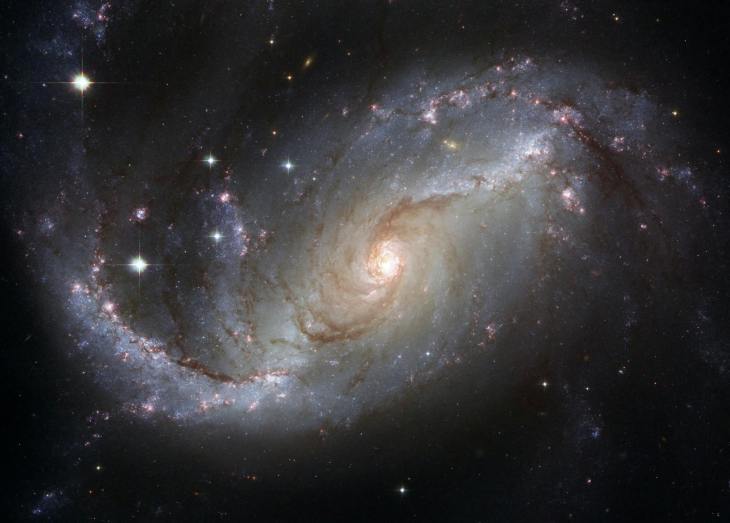
The Ephemeral Nature of Cosmic Imagery: Understanding the 40%-57% Anomaly in the Webb Telescope’s Observations
The Webb Telescope, a state-of-the-art astronomical observatory, has captured countless images of celestial bodies and phenomena across the universe. However, recent analyses suggest a startling proposition: 40%-57% of the images captured by the Webb Telescope may depict cosmic objects that no longer exist. This essay explores the rational underpinnings of this claim, addressing the nature of light travel time, cosmic evolution, and observational limitations.
Light Travel Time and the Cosmic Perspective
One of the fundamental principles of astronomy is that light from distant celestial objects takes significant time to reach Earth. For instance, a star located 4.37 light-years away, such as Proxima Centauri, emits light that takes over four years to reach us. Consequently, the images captured by the Webb Telescope are not merely snapshots of the present, but rather representations of the past. Given the vastness of the universe, many of the objects we observe may have changed or ceased to exist by the time their light reaches us.
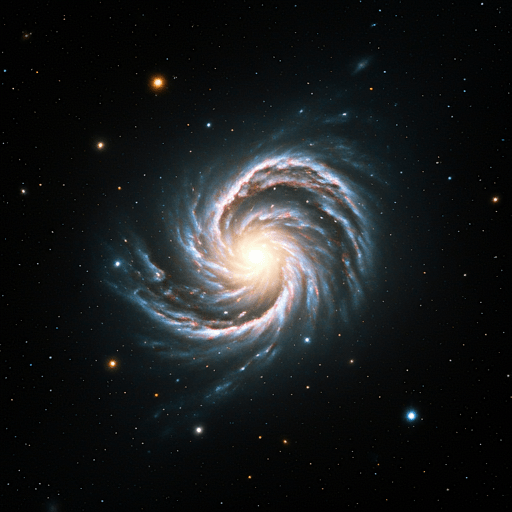
Above is a known region and Below is the same region with 40% less Stars
We live for so little time, we see very little, we understand even less.
For instance, a supernova explosion may momentarily brighten a star’s visibility, allowing it to be captured in an image. However, if that supernova occurred tens of thousands of light-years away, by the time the light from that explosion reaches our eyes, the progenitor star may have already collapsed into a black hole or dissipated entirely. Thus, it is reasonable to posit that a significant percentage of the celestial phenomena captured by the Webb Telescope might no longer represent existing objects at the time of observation.
The Dynamic Nature of the Universe
The universe is in a constant state of flux, with stars being born, evolving, and dying in a relatively short cosmological timescale. This dynamic nature fundamentally alters the landscape of the universe over time. In modern astrophysics, it is well-established that massive stars have relatively short lifespans of a few million years before going supernova, while smaller stars can endure for billions of years. As a result, the probability of observing a stellar object that is no longer present increases as we look deeper into the universe’s history.
Considering a hypothetical observation from the Wenn Telescope of a distant galaxy located billions of light-years away, the light we see today offers a glimpse into a galaxy millions, if not billions, of years old. The turnover of stellar life cycles suggests that a significant number of the stars we observe in that image may have already undergone changes or even death, leading to the conclusion that these images represent a reality that has since changed drastically.
Limits of Observation and Interpretation
Despite the incredible advancements in technology, including sophisticated imaging techniques and powerful detectors, the limitations of astronomical observation should not be overlooked. Instrumental noise, cosmic background radiation, and the challenges posed by interstellar dust can obscure or alter images captured by telescopes. Furthermore, the finely-tuned algorithms and data interpretation methods used in image processing are not infallible. These factors can contribute to misidentification of celestial bodies or misinterpretation of their state.
In this context, the assertion that 40%-57% of the objects observed may no longer exist can also stem from the complexities of cosmic observations. An image may reveal an object previously classified as an active star or galaxy, but subsequent analysis may reveal it as a mere artifact of data processing or noise, leading to inflated estimates of stability and permanence in cosmic imagery.
Conclusion
In summary, the claim that approximately 40%-57% of the images captured by the Webb Telescope depict celestial objects that no longer exist is supported by rational arguments rooted in the principles of light travel time, the dynamic evolution of the universe, and the inherent limits of astronomical observation. As humanity continues to explore the cosmos, embracing this understanding provides a more accurate and profound appreciation of the ephemeral nature of our universe. While our gaze is fixed on the stars, we must always remember that we are witnessing the ghosts of a cosmos in perpetual transformation.
Read a Book-




 thelivingbreathingjamesbrown.com
You must be logged in to post a comment.