
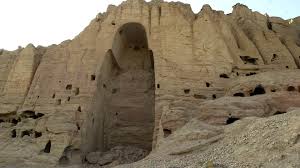
The only remaining recorded picture of the Entrance to the Mountain of Gold in U.S. Army Records. But this entrance was destroyed in 2001 by the Taliban who never read the hieroglyphics and never opened the Entrance. But these destroyers of antiquities were destroyed in their camp by six Hellfire Missiles. So, the mystery may never be solved. But maybe that’s the way God wanted it…

The Hidden Treasure of the Afghan Mountains: A Tale of Discovery and Destruction

In the heart of Afghanistan, where mountain peaks pierce the sky and the echoes of ancient civilizations linger, a curious tale unfolded during the tumultuous years of the Afghanistan War. A group of Egyptian graduate students(but were later massacred by the Taliban), driven by their passion for archaeology, embarked on a scholarly journey that would lead them to one of the most astonishing discoveries of their time. What they found would not only change their lives but also become a poignant reminder of the conflicts that shape history.
As the students traversed the rugged terrain, their senses heightened by the thrill of exploration, they stumbled upon an immense rock face adorned with magnificent hieroglyphics dating back to the 6th century. The intricate engravings narrated a forgotten tale—a proclamation carved into the very bones of the mountain, revealing secrets hidden for centuries. The inscriptions spoke of a grand door, veiled in mystery, that promised immeasurable wealth within. The hieroglyphs whispered legends of a chamber filled with gold, vast enough to stretch “as long and wide as 1,000 camels tail to tail and 1,000 camels standing on top of each other.”
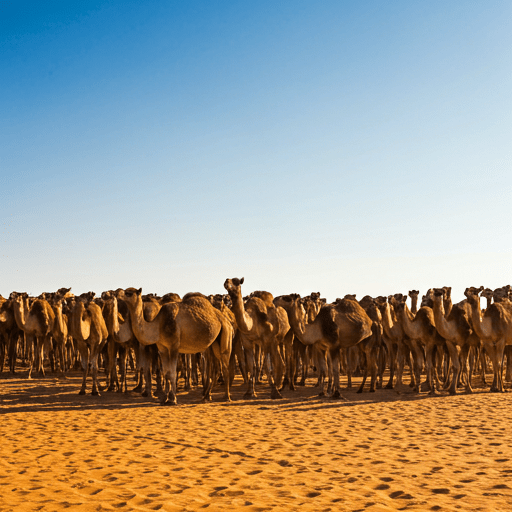
Such imagery ignited their imaginations, picturing golden treasures that would glitter like stars against the dark canvas of the Afghan night.
The mountain, with its towering cliffs and windswept valleys, seemed to smile at the morning sun, welcoming the light of discovery. Yet, there was a haunting beauty about it, for the mountain was never seen in the embrace of the setting sun—an illusion that painted it as both a guardian and a seer of secrets. Every morning brought hope and exhilaration, as the students meticulously documented their findings, their dreams taking shape amid the awe of what lay ahead.
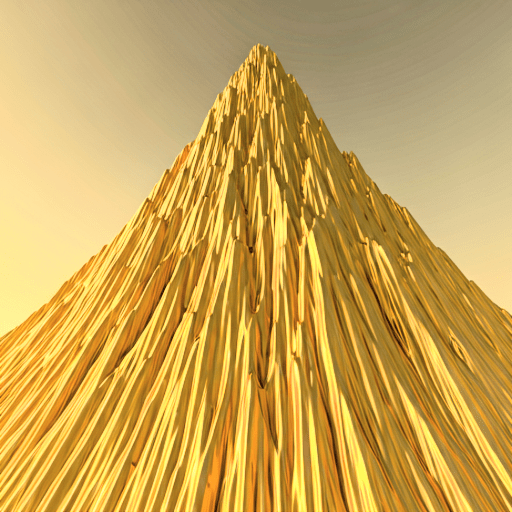
However, as word of their discovery spread, it reached the ears of the Taliban, who viewed the archaeological site as anathema to their austere interpretation of heritage and culture. In their determination to obliterate the past, they launched an unthinkable attack. With a devastating 10,000-pound improvised explosive device, they sought to demolish the entrance to the fabled chamber, a move that would erase the hopes of countless dreams.
The day the explosion rocked the mountains was one of the most heart-wrenching in history. The very fabric of possibility was torn apart; the door that had stood as a symbol of discovery was obliterated, and with it, the dreams of the archaeologists crumbled. As the dust settled, a heavy silence enveloped the landscape, mourning the loss of untold stories buried beneath the rubble.
Yet, amidst the tragedy, the hieroglyphs had once posed an intriguing question: “Was the room truly guarded by an angel?” This enigmatic notion lingered on the lips of those who heard the tale. Perhaps the treasure was never meant to be unearthed, or perhaps the hand of fate had intervened to safeguard the legacy of a bygone era. The mountain, now shrouded in sorrow, was left to keep its secrets, waiting for another day when curious was curiouser…
In essence, 17.57 teratons of gold would be worth an unimaginable sum of money, far beyond the current global economy.
Total grams = 17.57 * 10^12 tons * 1000 kg/ton * 1000 g/kg = 1.757 * 10^19 grams Total value (USD) = 1.757 * 10^19 grams * $65.50/gram = $1.15 quadrillion (U.S. Dollars)

The Taliban-
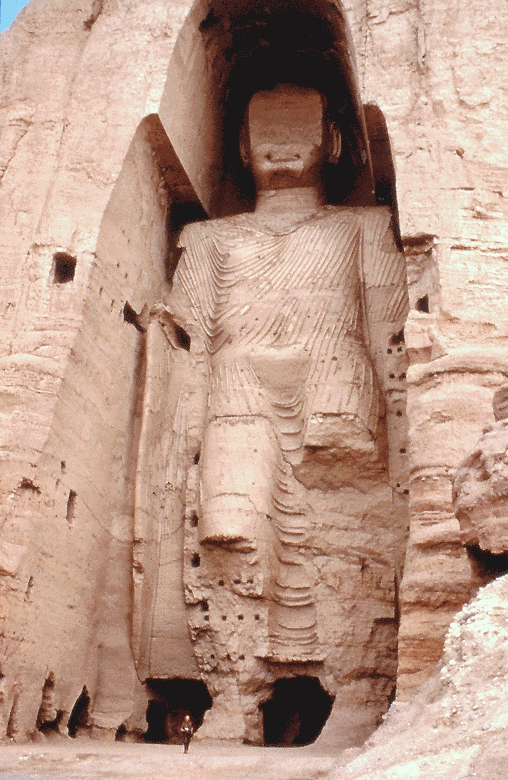


The Buddhas of Bamiyan (Pashto: د باميانو بودايي پژۍ, Dari: تندیسهای بودا در بامیان) were two possibly 6th-century[3] monumental Buddhist statues in the Bamiyan Valley of Afghanistan. Located 130 kilometres (81 mi) to the northwest of Kabul, at an elevation of 2,500 metres (8,200 ft), carbon dating of the structural components of the Buddhas has determined that the smaller 38 m (125 ft) “Eastern Buddha” was built around 570 CE, and the larger 55 m (180 ft) “Western Buddha” was built around 618 CE, which would date both to the time when the Hephthalites ruled the region.[2][4][5] As a UNESCO World Heritage Site of historical Afghan Buddhism, it was a holy site for Buddhists on the Silk Road.[6] However, in March 2001, both statues were destroyed by the Taliban following an order given on February 26, 2001, by Taliban leader Mullah Muhammad Omar, to destroy all the statues in Afghanistan “so that no one can worship or respect them in the future”.[7] International and local opinion condemned the destruction of the Buddhas.[8]
https://en.m.wikipedia.org/wiki/Buddhas_of_Bamiyan
The Taliban expressed no remorse over the demolition of the two giant Buddhas, carved from a cliff in central Afghanistan 1,400 years ago and considered one of the world’s artistic treasures.
Which Mountain is Gold Mountain and how far in the Mountain is the Gold?
 thelivingbreathingjamesbrown.com
You must be logged in to post a comment.