
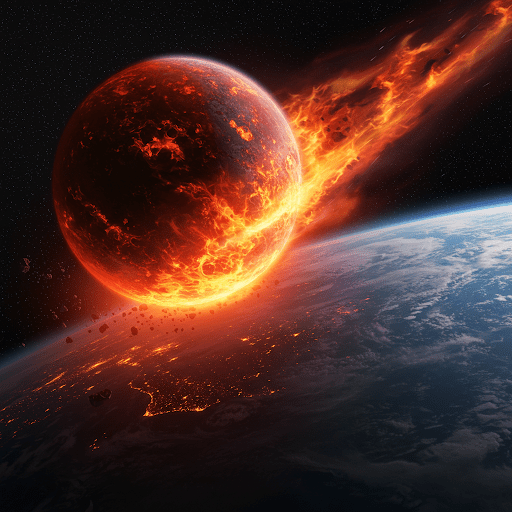

“Can you say-Oh Shit!”
This is the End: The Dwindling Fade of Civilization
The eternal cycle of the rise and fall of civilizations reflects a dark truth: empires are fleeting, and the specter of oblivion looms larger with every passing generation. As we stand on the precipice of the future, we must reflect on the calamities that have befallen previous societies, their catastrophic endings whispering dire warnings to us today. From the fall of the Roman Empire, a colossal empire with vast territories that crumbled due to internal strife and external pressures, to the sudden collapse of the Mayans, whose sophisticated systems of agriculture were rendered futile under the eviscerating grip of starvation, history presents a chilling tableau of what will come if humanity fails to heed the eerie echo of past mistakes.

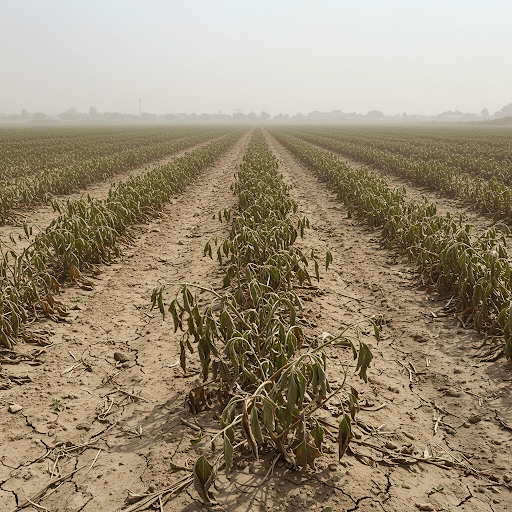
Consider the haunting refrain of the song “This is the End,” an anthem that has resonated through centuries, voicing mankind’s dread of doom. The lyrics remind us that in the face of a cataclysm, hope shrinks, and desperation grows: “And I see the world crumble.” As we look to the present era, signs of impending disorder abound. Climate change, an insistent specter hovering over humanity like a storm cloud, threatens to devastate our crops, rendering vast agricultural regions barren and inciting starvation on an unprecedented scale. A study published in Nature posited that if global temperatures rise above 2°C, food production in major grain-producing countries will plummet, leading to civil unrest and societal collapse (Lobell et al., 2011). The echoes of history resound here; the Ancestral Puebloans of the Southwest United States abandoned their settlements due to prolonged drought, a grim parallel to our potential fate.
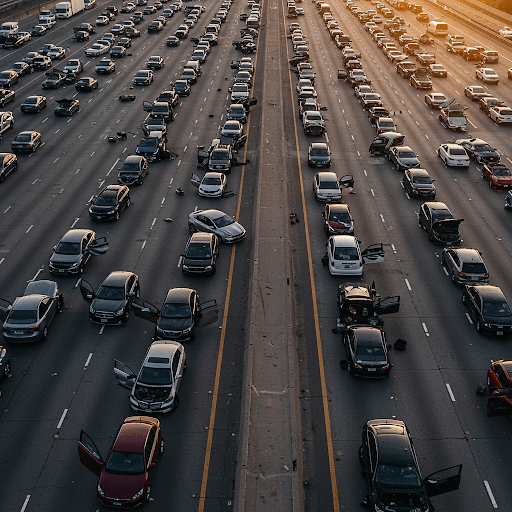
Then, there are the apocalyptic visions sparked by deadly diseases, which have wiped out whole civilizations with swift and cruel efficiency. The Black Death decimated Europe in the 14th century, killing an estimated 25 million people in mere years. Today’s world, with its dense populations and rapid global travel, is far more vulnerable to the spread of new pathogens. Imagine a scenario where a novel virus erupts, exponentially infecting billions, exacerbated by antibiotic resistance and flawed healthcare systems. Such a catastrophic epidemiological episode is not merely conjectural; it is a specter that has lingered in our collective consciousness since the advent of infectious disease.

Astronomical anomalies, too, could bring about our end. The universe is a volatile place, teeming with threats that we can scarcely comprehend. Consider the possibility of a rogue asteroid hurtling toward Earth, a scenario all too reminiscent of the cataclysm that wiped out the dinosaurs 66 million years ago. If a massive cosmic object were to enter our atmosphere, disintegrating in a fiery plume, the resultant climatic upheaval could devastate ecosystems and obliterate life as we know it. The resultant “nuclear winter” could plunge us into a darkness where photosynthesis ceases and hunger spreads, leaving the remnants of humanity scrambling for mere survival. History’s warning signs are visible in the archaeological layers that tell tales of catastrophes that humanity barely survived.
Additionally, spiritual beliefs flirt with apocalyptic notions that can be just as chilling. The biblical notion of Gabriel blowing his Horn heralding the End Times paints an image of chaos, where the fabric of reality unravels in an anguished cacophony. The Book of Revelation describes a world engulfed in fire and brimstone, a dogma that chillingly reflects how people throughout ages have feared the wrath of an insatiable deity. As William James wisely noted, “We are like islands in the sea, separate on the surface but connected in the deep.” In times of imminent disaster, these age-old fears of divine wrath echo through the annals of philosophy, resurfacing as we grapple with the uncertainty of survival.

Yet, in the face of such terror, we must confront one undeniable truth: humanity is overdue for a reckoning. Our privilege of existence sprawls atop numerous fragile structures, teetering at the brink of chaos. As we delve into the annals of human experience, we find that only 1 to 3 percent have typically survived the cataclysms that have shaped our past. The fall of the Indus Valley Civilization is but one case illustrating how overwhelming environmental shifts can spawn unimaginable suffering.

We, the descendants of a fragmented civilization, tread the path to our oblivion, where the songs and stories of finality have cycled through generations, tyrannizing our subconscious. Our civilization is a paradox, a shining beacon of advancement, yet constantly flirting with its own destruction. As the philosopher Albert Camus once stated, “The struggle itself towards the heights is enough to fill a man’s heart. One must imagine Sisyphus happy.” Yet, we cannot ignore the stone that we continuously push uphill may one day roll back, burying us beneath its weight.
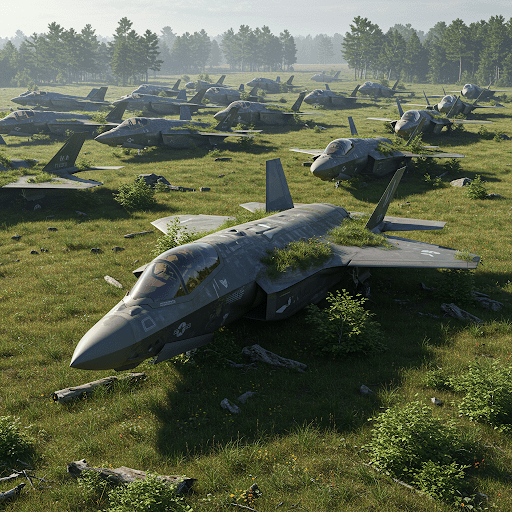
As we contemplate the past and the signs of the future, we find ourselves left with an unsettling conclusion: civilization, much like a candle’s flickering flame, dances precariously on the edge of extinction. The echoes of previous civilizations serve as a haunting reminder that the end is not merely inevitable; it is a door that creaks open with every reckless decision we make in our age of hubris. The shadows of the impending end loom closer, and it may soon become a reality that beckons with terrifying familiarity. It is essential to acknowledge, as we forge ahead, that the frail thread of survival hangs in the balance, with humanity’s fate just a breath away from the darkness.

References
- Lobell, D. B., Schlenker, W., & Costa-Roberts, J. (2011). Climate Trends and Global Crop Production Since 1980. Nature, 479(7374), 384-387.
- McNeill, J. R. (2010). Plagues and Peoples. Anchor Books.
- Diamond, J. (2005). Collapse: How Societies Choose to Fail or Succeed. Viking.
- Tainter, J. A. (1988). The Collapse of Complex Societies. Cambridge University Press.
- Post, D. (1994). The Cities of the Indus Valley: Geological and Environmental Factors. World Archaeology, 26(3), 364-388.
- Fagan, B. M. (2000). The Little Ice Age: How Climate Made History 1300-1850. Basic Books.
- Tye, L. (2018). The Resilience of Civilizations. Harvard University Press.
- Ruddiman, W. F. (2005). Plows, Plagues, and Petroleum: How Humans Took Control of Climate. Princeton University Press.
- James, W. (1902). The Varieties of Religious Experience. Longmans, Green, and Co.
- Camus, A. (1942). The Myth of Sisyphus. Gallimard.
 thelivingbreathingjamesbrown.com
You must be logged in to post a comment.