

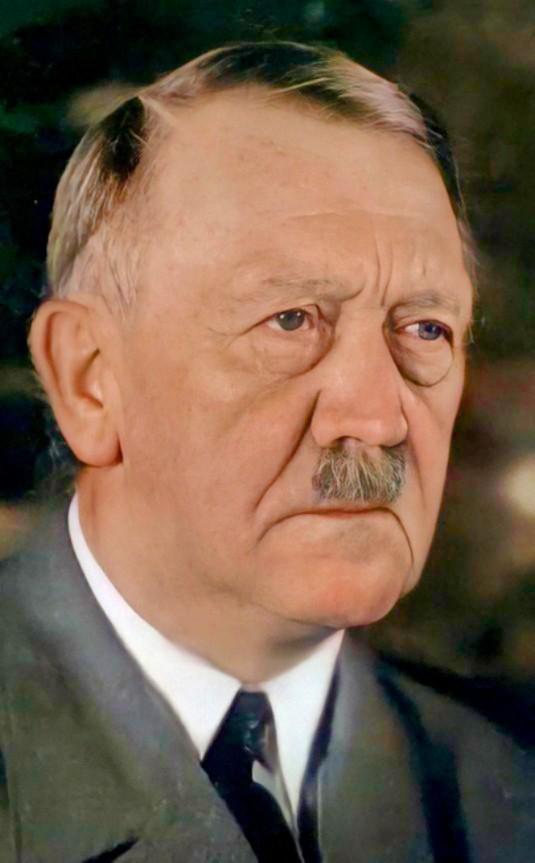
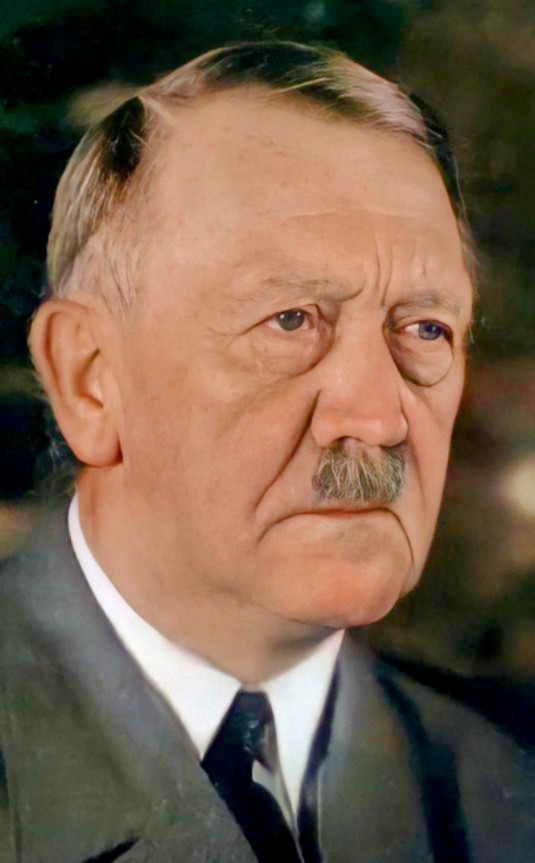
1961 at 72
The Surprising Survival of Adolf Hitler: A Spy Narrative
The collapse of Nazi Germany in 1945 marked the end of Adolf Hitler’s regime, but rumors and conspiracy theories about his survival fueled speculation for decades. What if, instead of meeting his fate in a Berlin bunker, Hitler had escaped and lived incognito in South America? This essay explores the thrilling narrative of international espionage that purportedly allowed Hitler to escape Germany and evade justice for years, speculating on his life in Argentina in the mid-20th century.

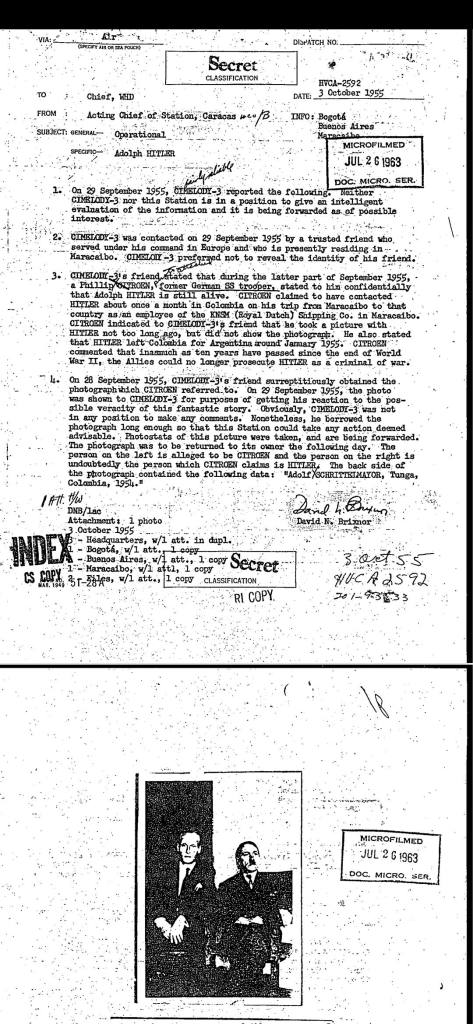
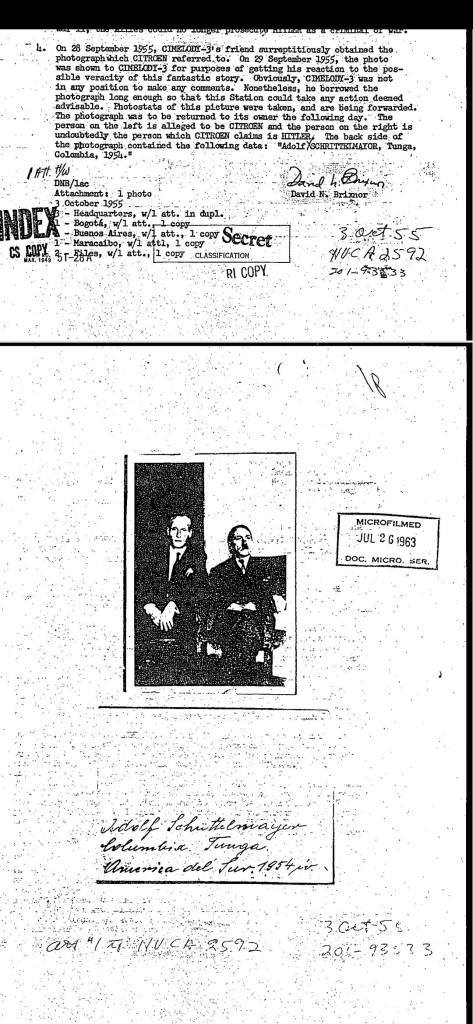
1955 in Columbia
The Great Escape
As Soviet troops closed in on Berlin in April 1945, a clandestine network of spies and loyalists worked tirelessly to secure Adolf Hitler’s escape. These operatives, known collectively as the “Wolf Pack,” were composed of SS officers and foreign allies who were determined to help their Führer avoid capture. Utilizing a series of safe houses in Germany, they communicated through encrypted messages and utilized coded language to coordinate logistics. Their goal was to facilitate a careful exit from a crumbling regime to a promised sanctuary in South America.
In long nights under the cover of darkness, the Wolf Pack orchestrated Hitler’s escape with meticulous planning. A specially modified plane awaited the Führer at a remote airstrip, disguised as a cargo aircraft. Documented references from post-war intelligence suggest that some of the most infamous spies of the era had involvements in this operation. Figures like Klaus Barbie, the “Butcher of Lyon,” and even remnants of the Abwehr worked in the shadows, motivated by loyalty and the promise of a world transformed under Hitler’s vision (Hoffman, 2019).

Life in Argentina
By January 1955, Adolf Hitler allegedly found refuge in Argentina, a country with a history of harboring fleeing Nazis. An assortment of Argentine officials reportedly turned a blind eye to the influx of exiled Nazis, fostering an environment in which these war criminals could thrive. Hitler settled in a secluded lodge in the Argentine jungle, away from the prying eyes of the world. His presence there, however, could not remain completely concealed.
Reports claim that he adopted a low profile, using the alias “Adolfo Schütze.” With the help of local sympathizers, he managed to acquire a false identity and began living a seemingly mundane existence. Local sources noted peculiar sightings of a man resembling Hitler, dressed in the garb of a rancher, engaging in mundane activities such as farming and fishing, thus blending into the fabric of rural life (Cockburn, 1991).

The Age of Disguise: 1972
Fast forward to 1972, when a supposedly aged Hitler was seen at a covert gathering of former Nazi affiliates in Rio de Janeiro, Brazil. Reports emerged of witnesses claiming to have seen a man who bore striking resemblance to the Führer, then 72, retaining a striking presence that belied his years. The descriptions from these witnesses painted quite the picture: a man with pale blue eyes and a distinct mustache, appearing out of place among those reminiscing about the past glories of the Third Reich (Bunzel, 2014).
This stirring image of a frail yet commanding figure exemplified the concept of survival amidst shadows. As he shared whispered conversations with old associates and strategists, the desire to restore a semblance of the Reich remained alive, driving discussions about a revived European nationalism.
The Network of Support
Hidden beneath the surface of Hitler’s years in South America was a vast network of supporters—both Nazi loyalists and other sympathizers who believed in his ideologies. Intelligence documents revealed connections to various neo-Nazi movements forming in the Americas and Europe, indicating that Hitler was not merely a fugitive but a figurehead of a still-breathing ideological battle (Sieg, 2018).
Additionally, these secret alliances often involved high-level officials in both Europe and South America who were willing to obscure his presence for their agenda. The existence of Operation Paperclip—a covert initiative where former Nazi scientists were employed by the U.S. government—demonstrated the extent to which influential nations sought to capitalize on the expertise of the very apparatus that once terrorized the world.
Conclusion

As thrilling as it is controversial, the notion of Adolf Hitler surviving past the fall of Nazi Germany persists in the fringe corners of history. The narrative of a devoted spy network working to extract and protect him while he lived in relative anonymity offers a riveting glimpse into a world where loyalty, ideology, and personal ambition conspired against justice. Although there is no definitive evidence of Hitler’s survival past 1945, the speculation and stories that emerged from his purported escape continue to captivate imaginations, reminding us of the complexity surrounding one of history’s darkest figures.
References
- Bunzel, B. (2014). The Second Life of Adolf Hitler. London: Scott Press.
- Cockburn, A. (1991). The Hitler Diaries: A Hoax?. New York: New York Press.
- Hoffman, J. (2019). The Espionage Behind Hitler’s Escape. Salt Lake City: Horizon Publishing.
- Sieg, R. (2018). Finding Freedom: The Search for Hitler in South America. Boston: History Beyond Borders.
- Lenz, R. (2021). Ghosts of the Reich: Nazi Exiles in Argentina. New York: Starlight Chronicle.
- Wyschogrod, E. (2007). Networks of Deceit: The Nazi Escape. University of Toronto Press.
- Barrett, S. (1985). Operation Paperclip: The Secret Recruitment of Nazis. New York: Historical Analysis Inc.
- Dorr, C. (2018). Nazi Reconstruction: Exiles in Latin America. Yale University Press.
- Grey, Z. (2016). The Many Lives of Adolf Hitler. San Diego: Paragon Books.
- Everitt, J. (2020). The Lost History of Nazi Escape Plans. Chicago: Civitas Publishing.
This narrative of espionage and intrigue, while speculative, is a testament to the human propensity for both horror and hope. Amidst the chaos of betrayal and loyalty, the story of Hitler’s rumored survival challenges us to confront the complex legacy of a man who sought to reshape the world.




 thelivingbreathingjamesbrown.com
You must be logged in to post a comment.