
The Gold Plated Crown: The Unlikely Rise of King Alexander I of America
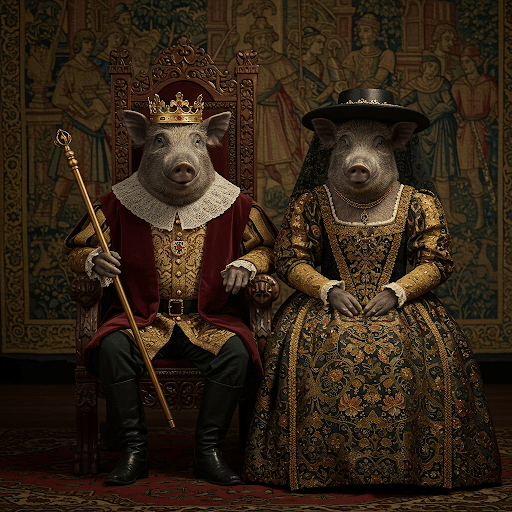
On a seemingly ordinary day in March 2025, the American political landscape was rocked by the audacious declaration of Alexander Devereux, a billionaire mogul known for his portfolio of tech ventures and philanthropic endeavors, as he proclaimed himself King of America. His wife, Celeste Devereux, a celebrated fashion designer and socialite, was inducted as Queen. Sporting a golden crown embellished with rubies and diamonds, Alexander delivered a speech that blended billionaire bravado with an unsettling sense of legitimacy, appealing to the very fabric of American society.
“Fellow citizens, it is time for a radical transformation!” he began, the words echoing through the marble halls of his newly purchased, multi-billion-dollar estate, now dubbed the Royal Palace of Devereux. The estate was previously a historical landmark, but in Alexander’s eyes, it was nothing less than a castle worthy of royalty. The billionaire went on to declare that the era of conventional politics was over and that the “Devereux Dynasty” was ready to usher in a new age of prosperity and innovation.
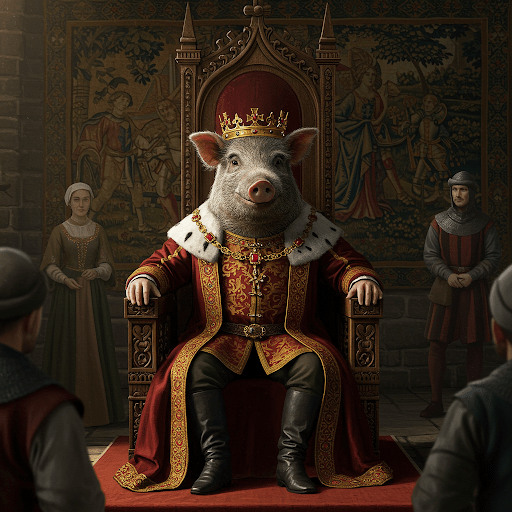
“We, the ultra-wealthy, have the resources and the vision to lead this great nation into an unprecedented age of wealth and happiness,” he proclaimed, shunning the historical average of elected officials in favor of a non-traditional monarchy that, in his eyes, could eliminate bureaucratic inefficiencies. He sauntered through the crowd as if surveying his kingdom, every inch of him glowing with confidence and an air of entitlement that only a billionaire could possess.
In the days following his proclamation, Alexander leveraged his vast resources to forge alliances with key political leaders. The asking price? A luxurious, bespoke yacht or a sprawling, fully-furnished estate in the Hamptons. “Politics is simple,” he asserted in a luxurious boardroom meeting filled with Congress members. “You want results? I want influence. Let’s make a deal.” Congress, facing a wave of uncertainty and public approval ratings in free fall, found itself swayed by Alexander’s lavish gestures. The promise of opulence and influence was irresistible; one Congressman was heard exclaiming, “Who wouldn’t want to be on the right side of a king?”
Eagerly, Congress began drafting bills that would grant him sweeping, albeit unofficial, powers. In whispers behind closed doors, the phrase “benevolent monarchy” began to resonate among the powerbrokers of Washington D.C. At a pivotal press conference, the Speaker of the House declared, “If King Alexander can bring jobs, economic growth, and stability to this nation, who are we to deny such progress?”
Dissenting voices began to sound muffled as Alexander embarked on a grand tour of the nation. City halls displayed portraits of their king, adorned with stately banners that read: “Long live King Alexander I!” The new monarchy offered things that traditional governments could not—instant solutions to pressing issues, financed by the king’s bottomless wallet. The Devereux Foundation pledged to eradicate homelessness within five years, a goal that dazzled the media and the public alike.
However, the audacity didn’t stop there. Alexander asked prominent corporate CEOs to support his vision, promising tax breaks in return for their allegiance. “The American Dream is best achieved with a royal touch,” became his catchphrase. The media, initially skeptical, began to turn in his favor as news outlets showcased his ‘grand initiatives’ that revitalized several major cities within months.
Amid the splashy headlines and never-ending parties, doubts simmered in the shadows. Critics whispered of a “Kleptocratic Monarchy” as corporate interests became deeply entwined with government, but the Devereux’s star power overshadowed the murmurs. Celeste, never one to be outshined, hosted glamorous galas in her crown, attracting influencers who, en masse, pledged their support for a royal lifestyle, claiming they were redefining what it meant to be an American.
“Why toil in the grind of democracy when wealth can create bliss?” echoed their ethos. The royal couple made philanthropy an art form, hosting high-profile events where each ticket sold brought in millions, all while subtly reminding attendees of their royal status. “You can solve worldly problems and revel in grandeur simultaneously,” King Alexander would affirm, raising a glass filled with the finest champagne.

Unprecedented approval ratings fueled their reign, emboldening Alexander to declare, “This is not just a monarchy; this is a revolution.” Rooted in a mix of admiration, fear, and sheer disbelief, the nation stood on the cusp of a new era. As American flags flapped proudly beneath the crown-topped spires of Caelum Palace, citizens pondered whether they were witnessing the rise of utopia or the onset of tyranny, all cloaked under the gilded promise of prosperity.
Thus was the curious case of King Alexander I and Queen Celeste: a testament to the age where wealth and power could blur boundaries and transform the very essence of America, shaping it into a kingdom that was once the stuff of dreams but now tantalizingly close to reality.
 thelivingbreathingjamesbrown.com
You must be logged in to post a comment.