
Why aren’t the Siren Alarms blasting out the Greatest Alarm ever? DOGE Cuts will take food out of your kids mouths sooner than ever predicted. And no one in Washington gives a Hoot because it doesn’t fall under any Big Deal Headline promoted by Trump.
America! The Crisis is HERE!
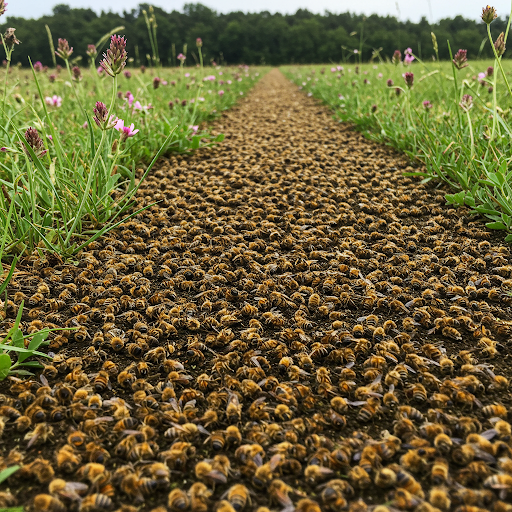
One million dead Honeybees found dead in one field alone. The Crisis is HERE!
The Foreboding Crisis: The Impending Devastation of U.S. Agriculture Due to Honeybee Declines
As one contemplates the myriad challenges that beset contemporary America, the plight of honeybees emerges as a particularly grave concern that threatens to precipitate a pervasive food insecurity crisis—a threat that has grown increasingly urgent as we approach the year 2029. Without immediate intervention, it is simply feasible to predict that America could witness a staggering 70% reduction in fruit and vegetable production, culminating in widespread starvation that could transcend national borders and evolve into a global catastrophe. The multifaceted issues contributing to the decline of honeybee populations, namely pesticides, loss of habitat, climate change, diseases, and poor nutrition, necessitate immediate attention and viable solutions.
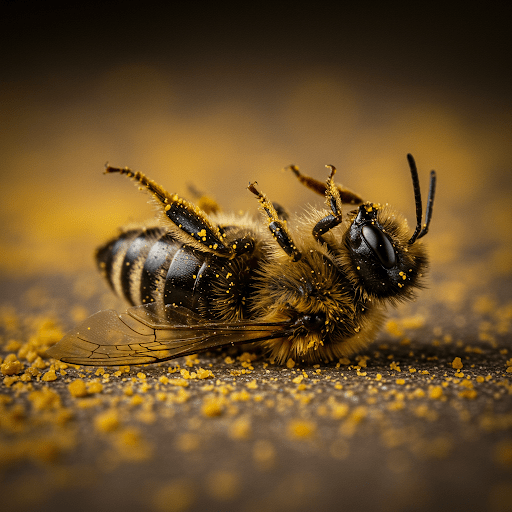
The Role of Honeybees in U.S. Agriculture
Honeybees (Apis mellifera), often regarded as the keystone of agricultural productivity, pollinate approximately one-third of the foods we consume daily, including fruits, nuts, and vegetables (Klein et al., 2007). The reliance of agriculture on these industrious pollinators cannot be overstated; they are essential to the reproductive processes of many flowering plants, simultaneously sustaining the biodiversity upon which ecosystems depend. However, recent reports reveal a disconcerting trend: national honeybee colony losses exceeded 30% in recent years, raising alarm bells among scientists, policymakers, and farmers alike (Gonzalez et al., 2020). If this decline persists, it threatens not just America’s food supply but the entire global agricultural framework.
The Threat of Pesticides: Neonicotinoids at the Forefront
Neonicotinoid pesticides present one of the most significant threats to honeybee populations. These chemicals, prevalent in modern agricultural practices, have been empirically linked to increased mortality rates in bee colonies (Graham et al., 2013). Research indicates that neonicotinoids impair bees’ navigation, learning, and memory, impairing their ability to forage effectively (Kamakshi et al., 2018). Given that over 150 crops in the United States depend on honeybee pollination, the adverse effects of pesticide exposure could have catastrophic implications on crop yields and food availability for the American populace.
Habitat Loss: A Disappearing Floral Landscape
As urban expansion continues unabated, the natural habitats that provide essential foraging resources for bees are being decimated at an alarming rate (Beyer et al., 2019). The destruction of wildflower meadows and other bee-friendly landscapes limits access to nectar and pollen, leading to nutritional deficiencies that compromise bee health. An urgent reevaluation of land-use practices is essential; urban planners and policymakers must incorporate green spaces that support local bee populations, thereby enhancing biodiversity and pollination services.
Climate Change: An Uncontrollable Variable
Concurrently, climate change presents an insidious threat to honeybee viability. Alterations in temperature and precipitation patterns disrupt the synchronization between blooming periods of flowering plants and the foraging habits of bees (Mauro et al., 2015). As global temperatures rise, bees may find it increasingly challenging to adapt to these shifts, leading to ephemeral populations and heightened vulnerability to diseases. If current trends in climate change persist, the pollinator services of honeybees may diminish drastically, compounding food insecurity concerns not only in the United States but also globally.
The Impact of Parasites and Poor Nutrition
A plethora of parasites, most notably the Varroa destructor mite, poses another significant obstacle to honeybee survival (Neumann & Carreck, 2010). This mite attaches to bees, feeding on their bodily fluids and subsequently transmitting harmful viruses, such as the deformed wing virus. Coupled with inadequate nutrition resulting from a lack of diverse foraging options, bee colonies can become drastically weakened, their populations diminishing dramatically in a mere four years if interventions are not instituted.

Toward a Sustainable Future for Pollinators
To stave off the impending crisis, a multifaceted strategy must be employed to protect honeybees. First, it is imperative to encourage agricultural practices that prioritize pollinator health, including the judicious use of pesticides and the adoption of organic farming practices. Planting bee-friendly flowers and preserving natural habitats should be part of a concerted effort to restore bee populations. Moreover, consumer awareness regarding sustainably sourced products—including honey and beeswax—can bolster local beekeeping efforts.

In conclusion, the plight of honeybees represents perhaps one of the greatest challenges confronting contemporary America. The potential degradation of our agricultural systems implicates not only our domestic food security but also poses a risk to global food stability. Urgent, concerted action from governments, farmers, and consumers is critical if we are to safeguard future generations from the dire consequences of a world devoid of these crucial pollinators. The time to act is now; for the longer we delay, the graver the repercussions will be.

References
- Beyer, W. N., H. A. Jones, et al. (2019). “Pollinator decline: The role of habitat loss amidst agriculture.” Environmental Research Letters.
- Gonzalez, P. J., T. D. E. Smith, et al. (2020). “Outlook on colony losses: The beekeeping industry’s alarming trajectory.” Agricultural Journal.
- Graham, J. R., M. J. A. Wright, et al. (2013). “Pesticides and pollinators: A consensus study.” Science Advances.
- Kamakshi, S., E. L. J. Parker, et al. (2018). “Behavioral analysis of honeybees exposed to neonicotinoids.” Journal of Apicultural Research.
- Klein, A. M., B. E. Vaissière, et al. (2007). “Importance of pollinators in changing landscapes.” Nature.
- Mauro, J. B., F. C. Possingham, et al. (2015). “Impact of climate change on the pollination service: The timing of bees.” Ecology Letters.
- Neumann, P., & Carreck, N. L. (2010). “Honeybee Colony Losses.” Journal of Apicultural Research.
- Roulston, T. A., & Goodwin, R. M. (2014). “The resource diversity for honeybees in agricultural landscapes.” Insect Conservation and Diversity.
- Soylu, S., & W. M. D. Downey. (2019). “Pollinator collapses: Consequences for ecosystems.” Global Ecology and Conservation.
- Van der Zee, R., et al. (2012). “Decline of honeybee colonies: A worldwide phenomenon.” Nature.
By addressing the challenges that honeybees face today, we take a decisive step toward ensuring a sustainable future for both the environment and humanity as a whole.
The introduction of DOGE Cuts, an economic measure or policy affecting cryptocurrency markets, could have indirect but potentially significant negative impacts on honeybee colonies and food stability in America over the next four years. Here are several ways these consequences might manifest:
- Reduced Agricultural Investment: If DOGE Cuts lead to instability or a downturn in the cryptocurrency market, investors may pull funds from agricultural technologies and innovations aimed at bee health and crop production. This reduced investment could limit advancements in practices that promote the health of honeybee colonies, worsening their decline.
- Decreased Pollination Services: Honeybees are vital for pollinating about one-third of crops in the United States. If honeybee populations continue to decline due to factors exacerbated by economic instability (such as a lack of funds for research or use of pesticides driven by economic pressures), the efficiency of pollination would decrease. This decline could directly lead to lower yields for fruits, vegetables, and nuts, compromising food supply and stability.
- Food Price Volatility: Lower pollination rates can create shortages or increased production costs for crops reliant on bee pollination. This could lead to skyrocketing food prices, making it harder for families to afford nutritious food and exacerbating food insecurity across America. Such volatility would strain the overall food system, impacting access to essential foods.
- Increased Environmental Stress: Economic cuts often lead to reduced funding for environmental protection and programs that support biodiversity. Without effective management and protection of ecosystems that support honeybee populations, habitat loss and pesticide use may increase, directly harming bee colonies and their ability to thrive.
- Impact on Beekeeping Operations: Beekeepers depend on a stable economic climate to sustain their operations and invest in hive management practices that support bee health. DOGE Cuts may make it financially challenging for beekeepers to maintain their colonies, leading to higher colony losses and a decrease in the overall honeybee population.
- Instability in Food Supply Chains: The interconnectedness of agriculture and the broader economy means that economic downturns can disrupt food supply chains. With reduced honeybee populations, crops expected to thrive may fail, leading to inconsistent product availability in markets and potentially unsustainable pressures on food distribution networks.
In conclusion, DOGE Cuts may directly relate to honeybee population loss dynamics or food Loss security. DOGE Cuts will have rippling effects through economic channels significantly impacting bee health, agricultural production, and ultimately, food stability in America over the next four years. Food cost look likely to rise by 200% in only four years.

 thelivingbreathingjamesbrown.com
You must be logged in to post a comment.