
The history of secret handshakes is a fascinating journey through time, revealing how gestures have been used to signify belonging, trust, and shared purpose across various groups and societies. Let’s explore some key moments:
Early Origins
While the exact origin of handshakes is debated, some historians trace them back to ancient times. A common theory suggests that extending an empty hand was a way to show peaceful intentions, proving that no weapon was being held.
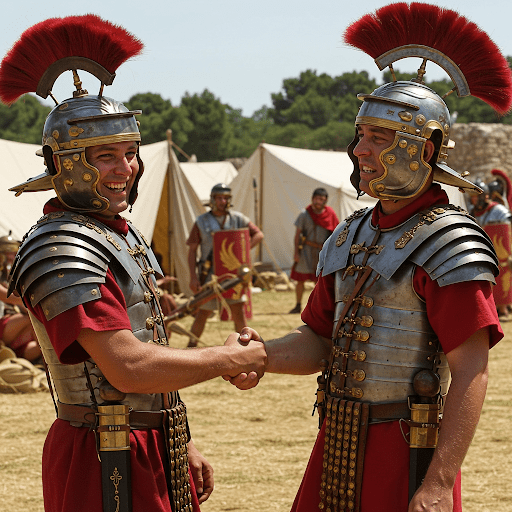
You can share my tent anytime…
An early example of a ritualized greeting comes from the Roman mystery religion Mithraism, which flourished in the Roman Empire from the 1st to the 4th century CE. Initiates used a handshake, and members were known as “syndexioi,” meaning “united by the handshake.” This handshake was likely a symbol of brotherhood and recognition within the cult.
Medieval Europe
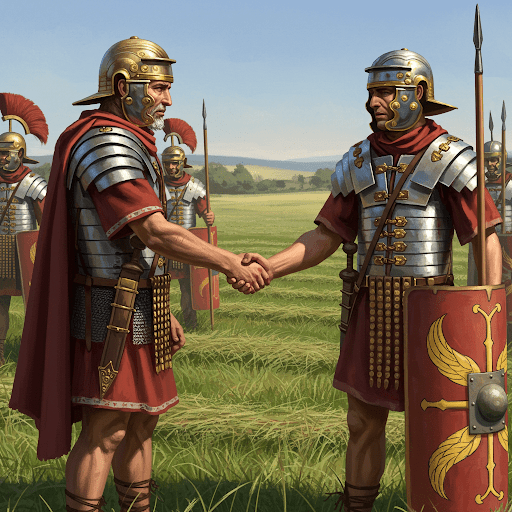
During the Middle Ages, handshakes may have evolved further. Some accounts suggest that knights would shake hands vigorously to dislodge any hidden weapons, such as daggers concealed in sleeves. This practical purpose could have gradually taken on symbolic meanings of trust and good faith.
The Knights Templar
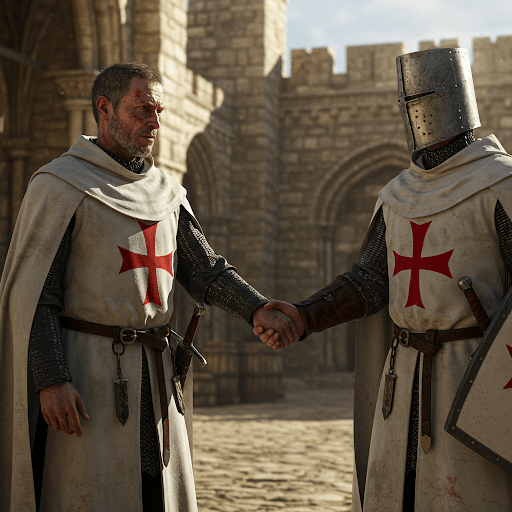
The Knights Templar, a medieval Catholic military order founded in the 12th century, have been the subject of much speculation regarding secret rituals. While concrete evidence about specific handshakes is limited, it’s plausible that they had ways to identify fellow members, especially given their need for recognition during travels and battles. Some historians and authors have proposed that the Templars used secret signs and grips, possibly influenced by earlier traditions or adapted for their unique circumstances. However, these claims are often intertwined with legend and conjecture.
Freemasonry
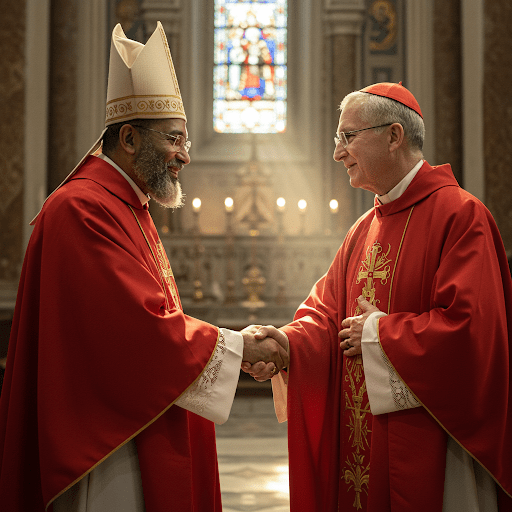
One of the most well-known users of secret handshakes is Freemasonry. Masonic handshakes, or “grips,” are a fundamental part of their tradition, used to recognize members of different degrees within the fraternity.
- The origins of Masonic handshakes can be traced back to the medieval stonemasons guilds in Europe. These guilds had systems for identifying qualified craftsmen who traveled to work on various projects.
- As Freemasonry evolved into a fraternal organization, it retained many of the symbols and practices of the stonemasons, including handshakes.
- Today, Freemasonry has several distinct handshakes, each corresponding to a specific degree or office within the order. These handshakes serve as a way for Masons to identify each other and acknowledge their level of membership.
Other Groups and Societies
Secret handshakes have been used by various other groups throughout history and continue to be used today:
- Fraternities and Sororities: Many college fraternities and sororities in the United States have unique handshakes that are passed down through generations. These handshakes foster a sense of belonging and exclusivity.
- Other Fraternal Orders: Numerous other fraternal organizations, such as the Independent Order of Odd Fellows or the Knights of Pythias, have incorporated secret handshakes into their rituals.
- Modern Usage: Even today, variations of secret handshakes are seen among friends, colleagues, and sports teams, serving as a way to express camaraderie and shared identity.

 thelivingbreathingjamesbrown.com
You must be logged in to post a comment.