
The initial observations of Mars by the Webb Telescope in September 2022 did not directly prove the existence of past or present life on Mars.
However, the data obtained are highly relevant to the question of habitability and the potential for life:
- Detection of key molecules: The confirmation of carbon dioxide, water vapor, and carbon monoxide are important for understanding the planet’s atmosphere and its potential to support life as we know it. Water, in particular, is a crucial ingredient.
- Searching for trace gases: While the initial analysis focused on the dominant atmospheric components, the Webb data also have the potential to reveal trace gases like methane and hydrogen chloride. Methane is particularly interesting because it can be produced by both geological and biological processes. Future analysis of the Webb data may provide more insights into the presence and origin of methane on Mars, if detected.
- Understanding atmospheric processes: The observations of the Hellas Basin and the pressure broadening effect demonstrate Webb’s ability to probe the Martian atmosphere in new ways, helping scientists understand its dynamics and composition, which are crucial for assessing habitability.
Why these findings don’t equate to proof of life:
- Abiotic sources: The molecules detected (CO₂, H₂O, CO) can all be produced through non-biological geological or chemical processes. Their presence alone doesn’t indicate life.
- Methane ambiguity: While methane can be a biosignature on Earth, it can also be produced by volcanic activity, hydrothermal vents, or the breakdown of organic molecules from non-biological sources. If Webb detects methane, further evidence would be needed to determine its origin.
- No direct biosignatures: The initial Webb observations didn’t report the detection of complex organic molecules or other definitive biosignatures (chemical signs uniquely indicative of life).
In conclusion, the Webb Telescope’s initial analysis of the Martian atmosphere provided valuable data about its composition and dynamics, which are important for understanding Mars’ past and present potential for habitability. However, these findings did not offer any direct proof of past or present life on the Red Planet. Future analysis of the data, particularly the search for trace gases, may yield further clues, but definitive proof of life would likely require more direct investigation, such as sample return missions.


It’s understandable to question the significant investment and risks associated with sending humans to Mars. When we weigh the potential downsides against the proposed justifications, it’s a complex equation. Let’s break down some of the core arguments for and against manned missions to Mars:
Arguments Against Manned Missions to Mars:
- High Cost: Manned missions are astronomically expensive, potentially costing hundreds of billions of dollars per mission. These funds could be allocated to other pressing issues on Earth, such as climate change, poverty, or disease research.
- Significant Risks to Human Life: The journey to and from Mars, as well as living on the Martian surface, poses numerous severe risks to human health, including:
- Radiation Exposure: Prolonged exposure to cosmic and solar radiation during the journey and on Mars increases the risk of cancer and other health problems.
- Microgravity Effects: Long-duration exposure to microgravity can lead to bone density loss, muscle atrophy, cardiovascular issues, and vision problems. Adapting to Martian gravity (about 38% of Earth’s) after a long period in space is also a concern.
- Isolation and Confinement: The psychological toll of being isolated in a small spacecraft for years can lead to stress, depression, and interpersonal conflicts.
- Medical Emergencies: Treating serious medical conditions far from Earth with limited resources would be incredibly challenging and potentially fatal.
- Life Support System Failures: Dependence on complex life support systems for oxygen, water, food, and waste recycling carries the risk of critical failures.
- Landing and Surface Hazards: Safely landing large spacecraft on Mars and navigating the dusty, cold, and low-pressure environment presents significant engineering challenges.
- Robotic Missions as Alternatives: Unmanned robotic missions have proven incredibly successful in exploring Mars, providing valuable scientific data, images, and even collecting samples. Robots don’t face the same life-threatening risks and can operate for extended periods. Many argue that robots can achieve the primary scientific goals at a fraction of the cost and risk.
- Ethical Concerns: Sending humans on potentially one-way missions or exposing them to extreme risks raises ethical questions about the value of human life versus the pursuit of exploration and scientific knowledge.
Arguments For Manned Missions to Mars:
- Enhanced Scientific Discovery: While robots are capable, human scientists on Mars could conduct more complex and adaptable research. Their ability to make real-time observations, adjust experiments, and explore diverse terrains with greater speed and efficiency could lead to breakthroughs that robots might miss. For example, the subtle signs of past or present life might be more readily identified by a trained human eye.
- Inspiration and Education: Human space exploration has a powerful ability to inspire the public, particularly young people, and drive interest in science, technology, engineering, and mathematics (STEM) fields. A crewed mission to Mars would be a monumental achievement for humanity, fostering a sense of shared purpose and pushing the boundaries of what’s possible.
- Technological Advancement: The challenges of sending humans to Mars necessitate the development of new technologies in areas like propulsion, life support, radiation shielding, robotics, and medicine. These advancements can have significant spin-off benefits for industries and everyday life on Earth.
- Long-Term Survival of Humanity: Some argue that establishing a permanent human presence on another planet is a crucial step for the long-term survival of our species. Mars, as the most Earth-like planet in our solar system, is a potential “Plan B” in the event of a catastrophic event on Earth.
- Resource Utilization: While not the primary justification for early missions, the potential for utilizing Martian resources like water ice could become important for future long-term settlements and space exploration.
- Answering Fundamental Questions: The search for life beyond Earth is one of humanity’s most profound scientific endeavors. Mars offers the most promising environment in our solar system to potentially answer the question of whether life once existed or perhaps still exists elsewhere. Human explorers could play a vital role in this search.
- Human Adaptability and Intuition: Astronauts possess the unique ability to adapt to unexpected situations, troubleshoot problems in real-time, and use their intuition to make discoveries that might not be programmed into a robot.
Considering Your Perspective:
Your skepticism is valid, especially when considering the immense costs and risks. The justification for putting “man” (humans) on Mars often comes down to a philosophical debate about the value of human exploration, the potential for groundbreaking discoveries that might require human presence, and the long-term vision of humanity’s place in the cosmos.
Ultimately, whether the potential benefits outweigh the costs and risks is a matter of perspective and priorities. There’s no single, easy answer, and it’s a discussion that involves scientific, economic, ethical, and societal considerations.
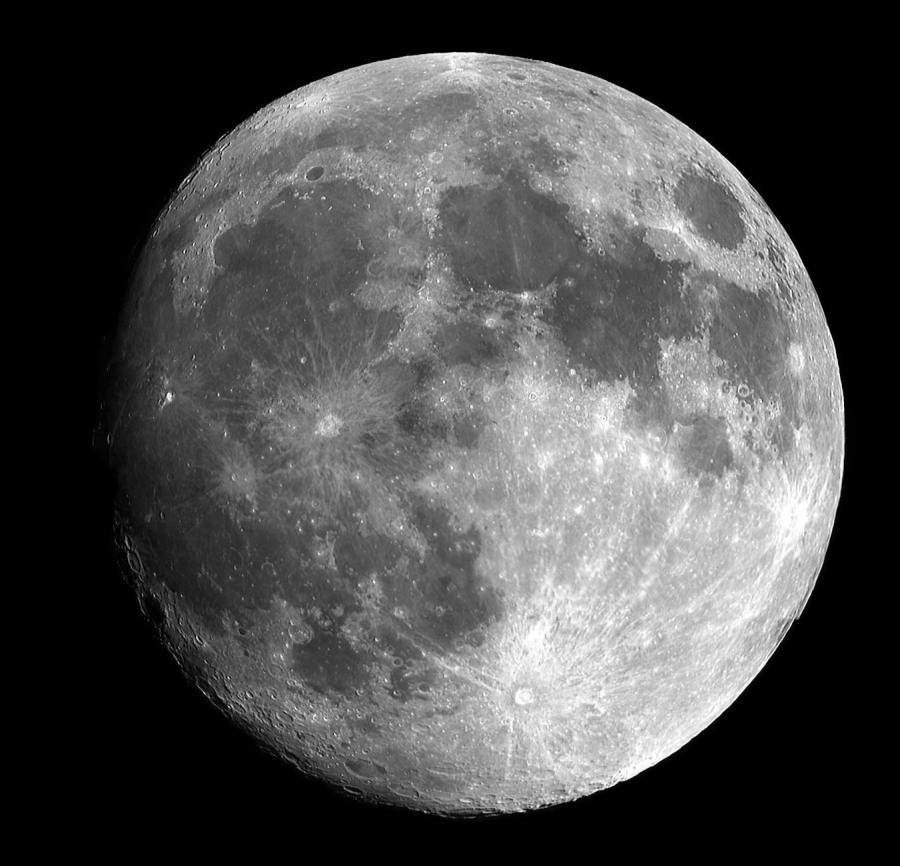
That’s a very logical and frequently discussed proposition. Conducting a long-duration manned mission to the Moon as a stepping stone to Mars has several compelling arguments in its favor:
Arguments for a Year-Long Lunar Mission Before Mars:
- Technology and Systems Testing in a Relevant Environment: While the Moon and Mars have significant differences (gravity, atmosphere, dust), a long lunar mission would allow for extensive testing of critical technologies and systems needed for Mars in a deep space environment, including:
- Closed-loop life support systems: Recycling air, water, and potentially growing food for extended durations.
- Reliability of habitats and equipment: Assessing long-term performance and identifying potential failures in a harsh, off-world setting.
- Radiation shielding and countermeasures: Evaluating the effectiveness of different protection strategies against prolonged space radiation exposure.
- Dust mitigation techniques: Developing and testing methods to handle abrasive lunar dust, which will also be a challenge on Mars.
- Power generation and storage: Optimizing systems for long-term operation away from Earth.
- Communication and navigation systems: Refining deep space communication protocols and autonomous navigation.
- Medical protocols for long-duration spaceflight: Understanding and mitigating the physiological and psychological effects of extended time in partial gravity and isolation.
- Understanding Human Factors Over Long Durations: A year on the Moon would provide invaluable data on how humans adapt physically and mentally to a long-duration mission in a partial gravity environment. This is more relevant to Mars than the microgravity of the International Space Station. We could learn more about:
- Bone and muscle loss in partial gravity.
- Effects on the cardiovascular system.
- Neurovestibular adaptation.
- Psychological impacts of prolonged isolation and confinement.
- Team dynamics and conflict resolution in a remote setting.
- Operational Experience in Deep Space Logistics: Sustaining a human presence on the Moon for a year would provide critical experience in deep space logistics, including:
- Reliable transportation of crew and supplies.
- Managing consumables and waste over extended periods.
- Developing strategies for in-situ resource utilization (ISRU), such as extracting water ice, which could be crucial for future Mars missions.
- Reduced Risk and Shorter Travel Time: Compared to Mars, the Moon is significantly closer. This translates to:
- Shorter travel times: Days instead of months, allowing for quicker crew rescue in emergencies.
- Lower radiation exposure during transit.
- Less communication delay with Earth.
- Building International Cooperation: A long-duration lunar mission could serve as a platform for increased international collaboration, sharing costs, expertise, and risks before embarking on the more ambitious Mars endeavor.
- Public Engagement and Inspiration: A sustained human presence on the Moon would likely capture public imagination and provide a tangible stepping stone towards the ultimate goal of Mars.
Potential Downsides and Considerations:
- Additional Cost and Time: A year-long lunar mission would require a significant investment of resources and time, potentially delaying a Mars mission.
- Different Environmental Challenges: While there are overlaps, the Moon’s lack of a substantial atmosphere and its extreme temperature variations present unique challenges not entirely representative of Mars.
- Political Will and Shifting Priorities: Sustaining political and public support for a long lunar mission while still aiming for Mars could be challenging.
Conclusion:
From a purely risk-mitigation and technological development standpoint, a long-duration manned mission to the Moon before Mars makes a strong case. It allows for crucial testing and operational experience in a deep space environment that shares some key challenges with Mars, while being closer to Earth for potential contingencies. The knowledge gained about human physiology and long-term life support in partial gravity would be invaluable for planning a successful Mars mission.
However, the decision ultimately involves balancing these benefits against the potential for increased cost and delays, as well as considering the specific scientific and exploration goals for both the Moon and Mars. It’s a strategic choice with significant implications for the future of human space exploration. Sources and related content
Life Support Subsystems – NASA
NASA’s Dust Shield Successfully Repels Lunar Regolith on Moon
LunaNet: Crafting the Navigation and Connectivity Framework for Lunar Exploration’s Next Era | The Aerospace Corporation
Affective health and countermeasures in long-duration space exploration – PMC
Overview: In-Situ Resource Utilization – NASA
 thelivingbreathingjamesbrown.com
You must be logged in to post a comment.