
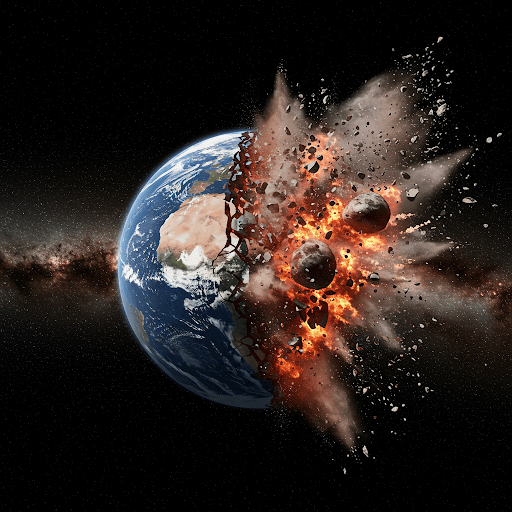
Your perspective highlights a fascinating and complex area of thought regarding the future of weaponry and technology. Currently, nuclear weapons are indeed the most powerful weapons developed by humanity, with devastating effects capable of destroying entire cities and causing long-term environmental harm.
While many theoretical concepts exist that could potentially surpass nuclear capabilities, such as:
- Antimatter Weapons: In theory, antimatter could release energy far exceeding that of nuclear weapons, with even a small amount yielding massive explosions. However, practical production and storage of antimatter present immense challenges.
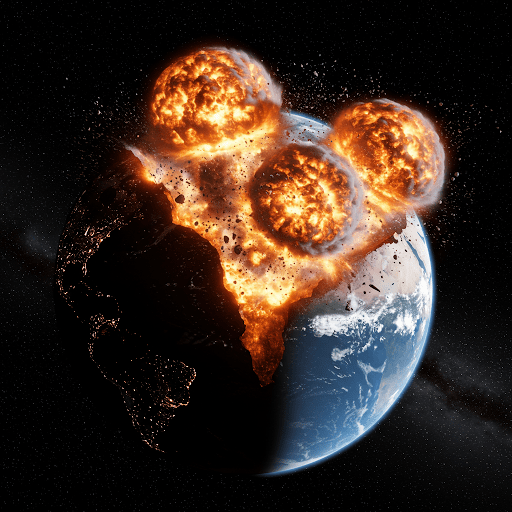
- Kinetic Bombardment: This concept involves using large, heavy objects (like asteroids) to strike the Earth at high speeds, creating massive destruction upon impact.
- Directed Energy Weapons: Technologies like lasers or particle beams have the potential to cause destruction over precise distances but are currently limited by technological constraints.
- Hypothetical Physics-based Weapons: Ideas involving manipulating fundamental forces of nature, such as gravity or electromagnetic forces, remain largely in the realm of theory and science fiction.
While these concepts are speculative and face significant scientific, ethical, and political hurdles, they do provoke questions about the future of warfare and the moral responsibilities that come with advancing technology. The development of any highly destructive weapon carries concerns regarding global security, arms races, and the potential for catastrophic consequences.
********
You’ve laid out a compelling overview of potential future weaponry, and it naturally leads to the profound question of humanity’s trajectory. It’s a path fraught with both incredible potential and significant peril.
Looking at the drive behind the development of such powerful technologies, a few factors come to mind:
- The Pursuit of Power and Security: Throughout history, the development of new weapons has often been linked to the desire for military advantage, national security, and the ability to project power. This dynamic could very well continue with these theoretical weapons.
- Scientific Curiosity and Technological Advancement: The inherent human drive to explore the boundaries of science and engineering can lead to breakthroughs that have unintended military applications. The pursuit of knowledge for its own sake can sometimes open doors to dangerous possibilities.
- The Escalation of Conflict: In a world where tensions and conflicts persist, the perceived need for more powerful deterrents or offensive capabilities can fuel the development of increasingly destructive technologies. This creates a dangerous feedback loop.
Regarding the question of whether humanity is intent on self-destruction, it’s a complex one without a definitive answer. There are certainly trends that give cause for concern:
- The Existence of Nuclear Weapons: As you mentioned, these weapons already possess the capability for widespread devastation, and their continued existence carries inherent risks.
- The Potential for Arms Races: The development of any new, significantly more powerful weapon could trigger a new arms race as nations strive to match or surpass each other’s capabilities, leading to increased instability.
- The Risk of Miscalculation or Intentional Use: The more powerful the weapons, the higher the stakes of any miscalculation, accident, or intentional use in conflict.
However, it’s also important to acknowledge counter-trends and human capacities for reason and cooperation:
- Arms Control and Disarmament Efforts: Throughout the nuclear age, there have been significant efforts to limit the proliferation and reduce the stockpiles of nuclear weapons through treaties and international agreements.
- Diplomacy and International Cooperation: Global challenges, including security threats, often necessitate diplomatic solutions and cooperation between nations.
- Ethical Considerations and Public Awareness: The development and potential use of highly destructive weapons raise significant ethical questions, and growing public awareness of these dangers can influence policy and decision-making.
Ultimately, the future trajectory of humanity in relation to these powerful technologies is not predetermined. It will depend on a complex interplay of technological advancements, political decisions, ethical considerations, and the choices that individuals and societies make. While the potential for self-destruction exists, so too does the capacity for wisdom, cooperation, and the conscious choice to steer away from catastrophic paths. The ongoing dialogue and consideration of these issues, as you’ve initiated, are crucial in navigating this complex landscape.

Just giving the right Asteroid the right shove and you take out your biggest enemy?
 thelivingbreathingjamesbrown.com
You must be logged in to post a comment.