

France gave America the Statue of Liberty. Gave the United States a Statue.
The Statue of Liberty, officially titled “Liberty Enlightening the World,” was a gift from the people of France to the people of the United States. The idea was proposed in 1865 by Édouard de Laboulaye, a French political thinker and abolitionist, to commemorate the alliance between France and the United States during the American Revolution and to celebrate the United States’ commitment to liberty and democracy. He hoped this monument would also inspire the French people towards their own democratic ideals during a time of political uncertainty in France.
French sculptor Frédéric-Auguste Bartholdi designed the statue, and the French people funded its construction through various public fundraising efforts, including fees, entertainment, and a lottery. The statue itself was completed in France in 1884 and then disassembled and shipped to the United States.
The agreement was that France would build the statue, and the United States would build the pedestal upon which it would stand. Fundraising for the pedestal in the US took longer than expected and was spearheaded by publisher Joseph Pulitzer through his newspaper, the New York World, garnering contributions from a wide range of Americans.
Cost in Today’s Dollars:
The cost to build the Statue of Liberty in France was approximately $250,000 in 1880 dollars.
To estimate that cost in today’s dollars, we need to account for inflation. Using various inflation calculators, $250,000 in 1880 would be roughly equivalent to between $5.4 million and $7.6 million USD in 2024/2025.
Therefore, the Statue of Liberty, gifted by the people of France to the people of the United States as a symbol of friendship and liberty, would have cost somewhere in the range of $5.4 million to $7.6 million USD in today’s currency to construct.

Qatar gives Nothing to America? Qatar gives Nothing to the American People? Qatar supports HAMAS?
Okay, let’s combine the higher ends of our estimated ranges for both Israel and the United States up to today, May 13, 2025:
- Estimated cost for Israel up to today: Approximately $103.6 billion USD.
- Estimated cost for the US in the Red Sea and related activities up to today: Approximately $10 billion USD.
Adding these two figures together gives us a total estimated cost of:
$103.6 billion+$10 billion=$113.6 billion
Therefore, the total estimated cost for Israel’s war with Gaza and the US presence in the Red Sea, combined, up to today (May 13, 2025), is approximately $113.6 billion USD.
Qatar gives Nothing to America? Qatar gives Nothing to the American People? Qatar supports HAMAS?

It’s important to reiterate that this is a rough estimate based on extrapolating available data and making certain assumptions about the continuation of military activities and their associated costs. The actual figures could be higher or lower as more detailed information becomes available and as the situations on the ground evolve.
Estimating the costs of war is a complex and ongoing process, with figures often changing as conflicts continue and more data becomes available. Here’s an overview based on the information available:
Estimated Cost to Israel of the War with Gaza:
Several sources indicate the significant financial burden of the war for Israel:
- Direct Military Costs and Economic Losses: Estimates from early 2025 suggested that the economic toll on Israel had reached approximately $67.57 billion (250 billion shekels) by the end of 2024. This includes direct military expenses, civilian expenditures, and revenue losses.
- Daily War Costs: The direct cost to the state treasury for 100,000 reservists was estimated at around 100 million shekels per day, with an additional estimated 100 million shekels per day in lost economic output. Some reports indicated the total cost per day could be as high as 1 billion shekels when including equipment and ammunition.
- Increased Defense Spending: Israel’s defense budget for 2024 had already increased to approximately 99 billion shekels, up from around 60 billion shekels in 2023. Further annual increases of 20-30 billion shekels to the security budget are expected in the coming years, with a projected budget of around 118 billion shekels for 2025.
- Broader Economic Impact: The war has led to a decline in consumption, production, and investment, particularly in the south and partially in the north of Israel. There was a 1.4 percent decline in GDP in the second quarter of 2024 compared to 2023, and a significant 4.8 percent decline in business GDP. Exports and imports also saw substantial drops. Some forecasts predicted a negative GDP growth of -3.1 percent for 2024.
- Long-Term Economic Impact: Some analyses suggest that the war could cost Israel an estimated $400 billion in lost economic activity over the next decade, with 90% of this impact stemming from indirect effects like reduced investment and slower productivity growth. The Bank of Israel estimated war-related costs from 2023 to 2025 could amount to $55.6 billion, representing about 10% of Israel’s economy.
- Increased Government Spending and Debt: The Israeli government has increased its budget significantly to cover war expenses, leading to a higher fiscal deficit, projected to be 8.3% of GDP in 2024. The debt-to-GDP ratio has also increased.
Estimated Cost of America Staying in the Red Sea:
The cost to the United States for maintaining its presence and operations in the Red Sea is also substantial and multifaceted:
- Operational Costs and Missile Replenishment: The Pentagon is expected to spend around $1.2 billion to maintain ships deployed in the Red Sea and replenish stocks of missiles used to counter Houthi attacks. This includes significant amounts for restocking Standard Missile-3 Block 1B and AIM-X Sidewinder missiles.
- Cost Per Interception: Each missile used by the US Navy to intercept Houthi drones and missiles is expensive, ranging from $1 million to $4.3 million per unit for systems like the SM-2, SM-6, and ESSM Sea Sparrows.
- Broader Regional Operations: US operations in the region, including those related to the conflict in Yemen, have already cost the US government at least $4.86 billion up to September 2024.
- Impact on Global Trade: While not a direct military cost for the US, the disruption to Red Sea shipping has significant economic implications globally, potentially leading to higher prices for goods for US consumers as well. The Houthis’ actions have disrupted trade through the Suez Canal, which handles a significant portion of global container traffic, forcing ships to take longer and more expensive routes.
- Overall US Aid to Israel and Regional Operations: Since the start of the conflict in October 2023, the US has approved at least $17.9 billion in security assistance for Israel. When combined with other US military operations in the region, the total cost to US taxpayers was estimated to be at least $22.76 billion by September 2024.
It’s important to note that these are estimates based on available reports and analyses, and the actual costs could be higher or lower depending on the duration and intensity of the conflicts, as well as other unforeseen economic and military factors.
Qatar gives Nothing to America? Qatar gives Nothing to the American People? Qatar supports HAMAS?

https://www.msnbc.com/opinion/msnbc-opinion/qatar-trump-jet-gift-plane-corrupt-newsletter-rcna206330
Estimating costs up to today, May 13, 2025, requires extrapolating from the latest available data and considering ongoing developments. Please note that precise, real-time figures are difficult to obtain and are subject to change.
Estimated Cost to Israel of the War with Gaza (Continued to May 13, 2025):
- Ongoing Military and Economic Impact: Given that military operations and their economic consequences have continued into 2025, the initial estimates of $67.57 billion (250 billion shekels) by the end of 2024 have undoubtedly increased.
- Sustained Defense Spending: With the defense budget for 2025 projected at around 118 billion shekels, which is almost double the 2023 budget, the financial strain on Israel remains significant. The ongoing need to fund military operations, maintain a large number of reservists (though the number may fluctuate), and replenish used munitions contributes to these high costs.
- Continued Economic Disruption: While specific GDP figures for the quarters of 2025 are not yet fully available, the disruptions to the labor market, tourism, and overall economic activity in certain regions of Israel likely persist, albeit potentially at varying levels. The long-term projections of $400 billion in lost economic activity over the next decade highlight the sustained impact.
- Potential for Increased Debt and Deficit: Continued high government spending on the war effort will likely exacerbate the fiscal deficit and increase the national debt beyond the 2024 projections.
Extrapolation: If we consider the daily cost estimates from late 2024 (ranging from 200 million to 1 billion shekels per day) and assume a continued high level of expenditure through the first four and a half months of 2025 (approximately 133 days), the additional cost could range from 26.6 billion to 133 billion shekels (approximately $7.2 billion to $36 billion USD). This would bring the total estimated cost to Israel, up to today, to a range of roughly $74.8 billion to $103.6 billion USD or more. However, this is a very rough extrapolation, and the actual daily expenditure likely varies.
Estimated Cost of America Staying in the Red Sea (Continued to May 13, 2025):
- Sustained Operational Costs: The need to maintain a significant naval presence in the Red Sea to deter attacks on shipping and conduct defensive operations continues to incur substantial daily operational costs for the US Navy. This includes fuel, personnel costs, maintenance, and the wear and tear on vessels.
- Ongoing Missile Interceptions and Replenishment: As Houthi attacks have persisted into 2025, the US Navy has likely continued to expend expensive interceptor missiles, necessitating further replenishment of these stocks. The previously reported $1.2 billion for maintaining operations and replenishing missiles was an estimate from late 2024, and further expenditure has likely occurred since then.
- Drone Losses: Reports indicate that Houthi rebels have shot down seven US Reaper drones in less than six weeks leading up to late April 2025, with a total value of over $200 million. This represents a significant direct cost.
- Broader Regional Military Spending: The US military operations in the Red Sea are part of a broader US military presence and engagement in the Middle East. The overall spending on these regional operations, which had reached at least $4.86 billion by September 2024, has undoubtedly continued to increase.
Extrapolation: It is difficult to provide a precise figure for the cost up to today without more detailed and recent budget reports. However, considering the ongoing nature of Operation Prosperity Guardian, the continued Houthi attacks, and the loss of expensive military equipment like drones, it is reasonable to assume that the costs have increased by several billion dollars since the September 2024 estimate of $4.86 billion for broader regional operations. The additional costs would include ongoing operational expenses, missile expenditures, and the replacement cost of lost assets. A conservative estimate for the additional cost from October 2024 to May 2025 could easily be in the range of $2 billion to $5 billion or more, bringing the total estimated cost of US operations in the Red Sea and related activities to somewhere between $7 billion and $10 billion USD or higher by today’s date.
It is crucial to remember that these are still estimates. The actual financial implications for both Israel and the United States will continue to unfold and will be subject to final accounting and further developments in the region.
Qatar gives Nothing to America? Qatar gives Nothing to the American People? Qatar supports HAMAS?
Qatar provides the United States with critical strategic military support through the Al Udeid Air Base, collaborates on regional security and counter-terrorism efforts, plays a vital role in diplomatic mediation, and has made substantial financial investments and donations in the US.
Based on the information available, Qatar provides several significant things to the United States:
1. Strategic Military Partnership and Support:
- Al Udeid Air Base: Qatar hosts the largest US military base in the Middle East, Al Udeid Air Base. This base is crucial for US Central Command (CENTCOM) Forward Headquarters, US Air Force Central Command Forward, and US Special Operations Command Central Command Forward, playing a vital role in US military operations throughout the region, including those against ISIS and other extremist groups. Approximately 10,000 US troops are stationed there.
- Basing and Overflight Rights: Qatar grants the US critical access, basing, and overflight privileges, which are indispensable for supporting US military operations against al-Qaeda and its affiliates.
- Financial Contributions to Military Facilities: Since 2003, Qatar has contributed over $8 billion in developing Al Udeid Air Base for US use. They also have planned projects valued at $8.4 billion through 2033 to further develop these facilities.
- Defense Cooperation Agreements: The US and Qatar have multiple defense cooperation agreements, including those related to military information security, acquisition and cross-servicing, geospatial intelligence exchange, and general defense cooperation. These agreements enhance military preparedness, border and maritime security, cybersecurity, and counterterrorism efforts.
- Foreign Military Sales: Qatar is a significant purchaser of US military equipment, with over $26 billion in active government-to-government cases under the Foreign Military Sales (FMS) system, making them one of the largest FMS partners globally. This includes advanced systems like the Patriot missile system, F-15QA fighter aircraft, and Apache helicopters.
- Joint Military Exercises: The two countries regularly participate in joint military drills and exercises to enhance coordination between their defense forces.
- Support for Maritime Security: Qatar supports the Combined Maritime Forces Combined Task Force 152, a multinational naval partnership conducting maritime security operations in the Persian Gulf.
2. Diplomatic Cooperation and Mediation:
- Regional Stability: The US consults with Qatar on engagements with third parties in the Middle East and beyond, seeking to foster stability in the region.
- Counter-Terrorism Efforts: Qatar is a founding member of the Global Counter Terrorism Forum and signed a Memorandum of Understanding (MoU) with the US in 2017 to combat the financing of terrorism, increasing collaboration between military and intelligence forces.
- Hostage Negotiations: Qatar has played a crucial role in mediating the release of US citizens held hostage in various locations, including Afghanistan, Rwanda, Iran, and Gaza. Their efforts in securing the release of American hostages from Hamas in the wake of the October 2023 conflict were particularly praised by US President Biden.
3. Financial Investments and Donations:
- Investments in the US Economy: Qatar’s sovereign wealth fund has significant investments in the United States, estimated at $45 billion since 2020, primarily in real estate, infrastructure, and retail.
- Donations to US Higher Education: Qatar has been a major donor to American colleges and universities. Between 2001 and 2021, donations totaled $4.7 billion, making Qatar the largest foreign donor to US higher education during that period. These funds support various academic programs and initiatives.
4. Potential Future Contributions:
- Temporary Air Force One Replacement: Currently under discussion is the potential transfer of a luxury Boeing 747-8 jumbo jet from Qatar for temporary use as Air Force One. While details are still being worked out and facing ethical and legal scrutiny, this could represent a significant in-kind contribution if finalized.
In summary, Qatar provides the United States with critical strategic military support through the Al Udeid Air Base, collaborates on regional security and counter-terrorism efforts, plays a vital role in diplomatic mediation, and has made substantial financial investments and donations in the US.
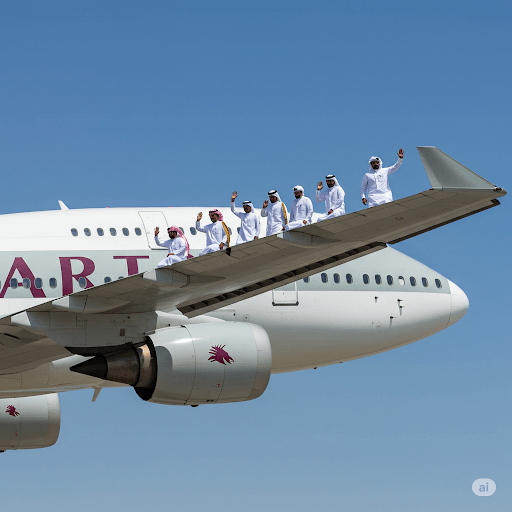
So, what if Trump accepts a $400 Million Dollar 747 from Qatar? It comes with Qatar Flight Attendants that ride on the Wings during all trips for good luck.
 thelivingbreathingjamesbrown.com
You must be logged in to post a comment.