
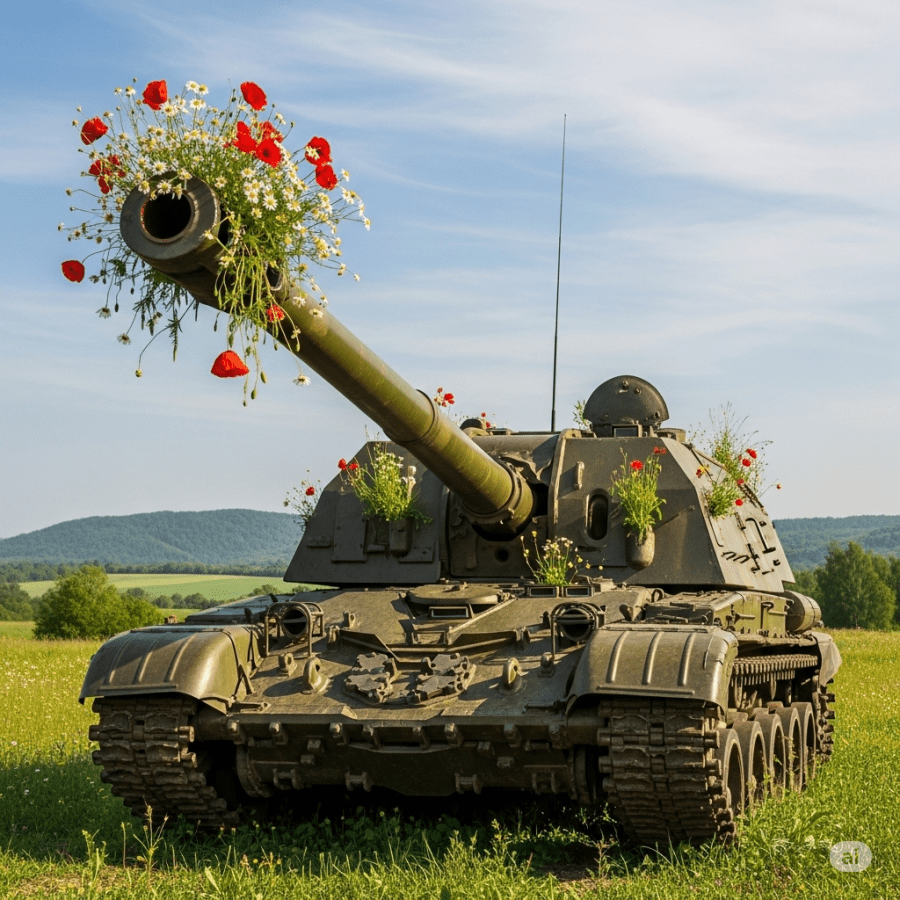

The Unthinkable Checkmate: When the Game Ends
The geopolitical chessboard, a metaphor we often use for the intricate dance of nations, is usually a realm of calculated risks, proxy conflicts, and economic maneuvering. But what if the game breaks? What if the “big moves” escalate, not into a nuclear winter, but into a grinding, conventional “checkmate” that redefines human suffering and societal collapse? This is not a game of strategy; it’s a descent into an abyss, a stark reminder that the horrors of World War II were but a prelude to what modern conventional warfare could unleash.
The Silence of the Skies: “Fly at Your Own Risk”
The first, almost immediate, casualty of such a global confrontation would be the illusion of normalcy. Commercial aviation, the arteries of global connection, would cease to exist as we know it. The phrase “Fly at Your Own Risk” wouldn’t be a disclaimer; it would be a grim warning plastered across every cancelled flight board, if any boards still functioned.
Imagine the sudden, deafening silence in the skies where once thousands of aircraft crisscrossed continents daily. Airspace would become a warzone, a no-fly zone for anything not military. Civilian aircraft, if they dared to take off, would be targets, mistaken for enemy assets, or simply caught in the crossfire of anti-aircraft systems and aerial combat. Airports, once bustling hubs, would become desolate concrete expanses, then perhaps military staging grounds, or worse, targets themselves. Families separated by oceans would be cut off, their hopes of reunion shattered. The global economy, reliant on air freight and travel, would seize up, strangling supply chains and leaving shelves empty, factories idle.
The Ponderous Advance: A Million on the West, Half a Million on the East
Now, let’s confront the unthinkable: the physical invasion of a continental power. This is where the sheer, terrifying scale of a conventional “checkmate” truly becomes apparent.
On the West Coast, the Pacific Swarm:
The first reports would be dismissed as impossible, then as exaggerated. But the satellite imagery, the naval intelligence, and finally, the horrifying sight on the horizon would confirm it: a million-man Chinese army, not a swift, surgical strike, but a vast, ponderous armada. Hundreds of ships, troop transports, landing craft, supply vessels, stretching for miles across the Pacific, laden with men, tanks, artillery, and the colossal logistical tail needed to sustain such an undertaking.
Their landing on the West Coast would be an unprecedented spectacle of force. From the beaches of California to the shores of Oregon and Washington, waves of soldiers would pour forth. Initial defenses, however valiant, would be overwhelmed by sheer numbers and the relentless, grinding advance. The coastal cities, once vibrant centers of culture and commerce, would become immediate battlegrounds, then ruins. The infrastructure – ports, highways, bridges – would be systematically seized or destroyed.
The advance inland would be slow, methodical, and devastating. Imagine a million soldiers, each requiring food, water, fuel, ammunition, medical support. The logistical challenge alone would be staggering, turning every mile of highway into a contested supply line. As General Patton once grimly observed, an invading army would likely make it to the Rockies before a truly organized, national defense could be mounted. This isn’t a lightning war; it’s a slow, agonizing crawl, a massive, grinding machine consuming everything in its path. Cities would fall, one by one, transformed into sieges and street-to-street combat. The civilian population would face impossible choices: flee, resist, or endure. The very fabric of society would tear under the weight of such an immense, brutal occupation.
On the East Coast, the Atlantic Tide:
Simultaneously, across the Atlantic, a similar nightmare would unfold. A 500,000-man Russian army, perhaps leveraging a foothold in the Arctic or through a daring dash across the North Atlantic, would make its landing on the East Coast. From the rocky shores of New England to the sandy beaches of the Mid-Atlantic, a different but equally relentless force would begin its push.
The battle for the Eastern Seaboard would be a brutal struggle for control of America’s economic and political heartland. Major ports like New York, Boston, and Baltimore would become the focal points of amphibious assaults, followed by fierce urban warfare. The dense population centers, the intricate network of roads and railways, would become both strategic assets and deadly traps. The fight for industrial zones, energy infrastructure, and communication hubs would be relentless.
The Russian advance, though smaller in number than the Chinese, would be equally devastating, characterized by heavy artillery, armored thrusts, and a willingness to endure immense casualties. The psychological impact on the East Coast, the seat of government and finance, would be profound, shattering any remaining sense of security or invulnerability.
The Crumbling Home Front: A Nation Fractured
Beyond the immediate battle lines, the entire nation would be transformed into a landscape of fear and deprivation.
- Martial Law and Loss of Freedoms: Civil liberties would vanish overnight. Martial law would be declared, curfews imposed, and dissent brutally suppressed. The government, fragmented and struggling to coordinate, would make desperate attempts to maintain order and mobilize resistance.
- Economic Collapse and Famine: With global trade halted and internal supply lines severed by active combat zones, the economy would utterly collapse. Food, fuel, medicine, and basic necessities would become scarce. Rationing would be extreme, leading to widespread hunger and desperation. The sophisticated infrastructure of a modern society—power grids, communication networks, water treatment plants—would be constant targets, leading to widespread outages and a return to primitive living conditions for many.
- Societal Breakdown: The thin veneer of civil society would fray. Emergency services would be overwhelmed or non-existent. Looting, lawlessness, and internal conflicts would erupt as communities struggled to survive. The psychological toll would be immense: widespread trauma, displacement, and the constant threat of violence. Trust would erode, replaced by suspicion and fear.
- The Grinding War: This “checkmate” isn’t a single, decisive move. It’s a grinding, agonizing process of attrition. It’s millions of lives lost, not in a flash, but in endless skirmishes, sieges, and desperate last stands. It’s the slow, painful death of a way of life, replaced by a brutal struggle for survival. It’s the systematic dismantling of a nation, piece by agonizing piece.
A Mindful Call for Peace
This terrifying vision, this “big and fat and ponderous” scenario of conventional global war, is not meant to incite fear for its own sake. It is meant to be an awakening. It is meant to burn into our collective consciousness the absolute, undeniable truth that a World War III, even without nuclear weapons, would be an unimaginable catastrophe. The jokes, the video games, the abstract discussions of strategy fall silent in the face of such a reality.
The “checkmate” in this game is not a victory; it is the destruction of the board and the decimation of all players.
This is why the arms race, the escalating rhetoric, and the hardening of positions are so profoundly dangerous. This is why every diplomatic channel, every negotiation, every uncomfortable conversation, every concession, no matter how small, is infinitely preferable to the alternative.
Let this imagined horror be a catalyst. Let it be the mindful thought-provoking read that drives us, as a global community, to the negotiating table. Let it compel us to slow down this unbelievable arms race, to find common ground, and to remember that the only true victory is lasting peace.
 thelivingbreathingjamesbrown.com
You must be logged in to post a comment.