

The Islamic State of Iraq and Syria (ISIS), also known as ISIL or by its Arabic acronym Daesh, is a Sunni jihadist group that emerged as a major global threat in the 21st century. Characterized by an exceptionally violent and extreme ideo logy, ISIS declared itself a caliphate and asserted religious authority over all Muslims, though this claim is widely rejected by mainstream Islamic scholars and leaders.
But, here’s something Big that you might not ever heard about? While we sleep, America’s enemies are being dealt a deadly blow.
USS Truman conducted largest airstrike in Navy history, official says
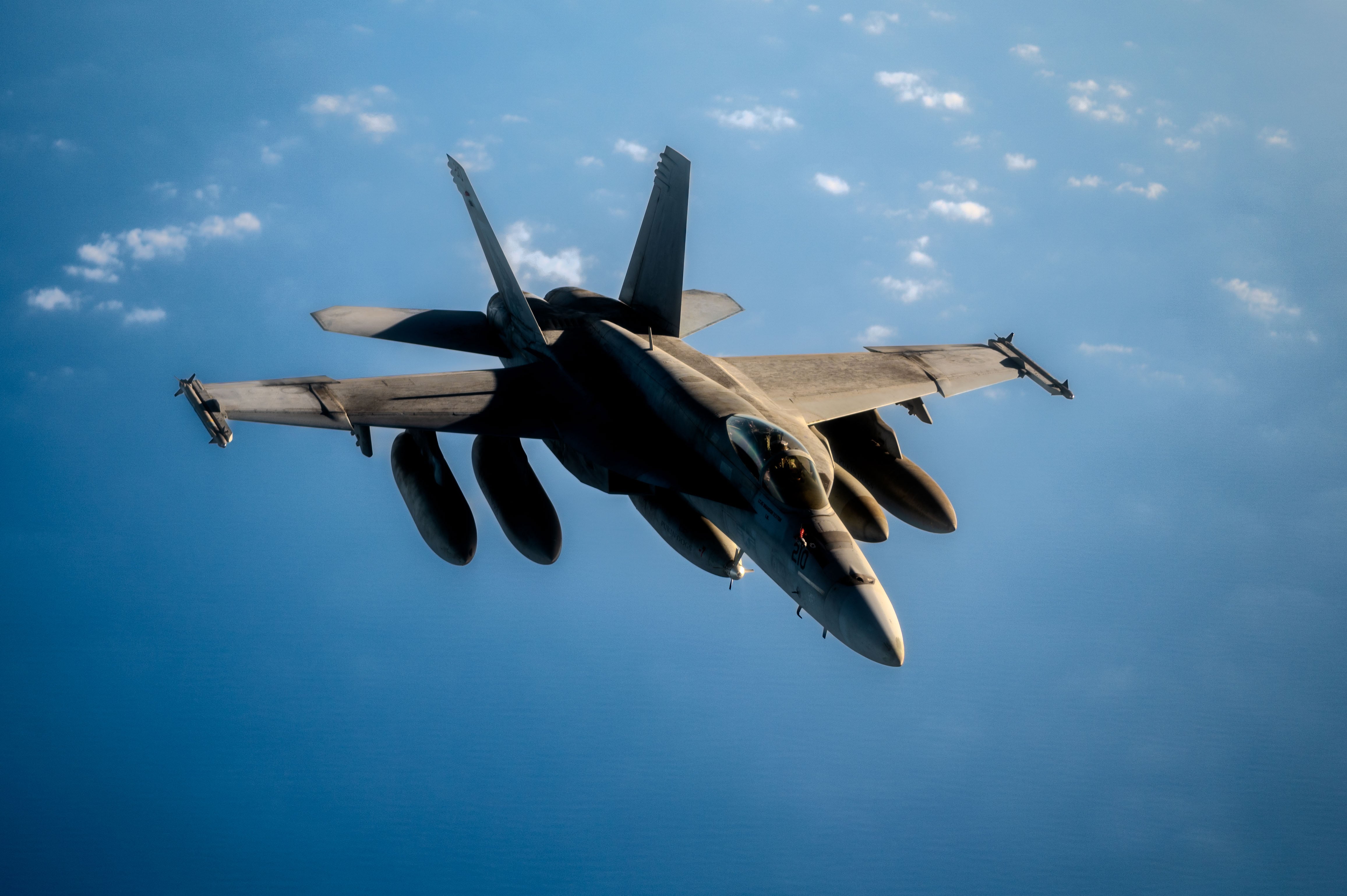
A U.S. Navy F/A-18E Super Hornet of the USS Harry S. Truman Carrier Strike Group prepares for aerial refueling on Feb. 1. (SSgt. Jackson Manske/U.S. Air Force)
So, you ask who or what is ISIS? Well read and learn.
Who is ISIS and What are Their Core Beliefs?
ISIS is a transnational Sunni Islamist insurgent and terrorist group. At its territorial peak in 2015, it controlled vast swathes of Iraq and Syria, from which it launched attacks both regionally and internationally.
Their ideology, often referred to as Salafi jihadism, is a blend of Sunni Islamist fundamentalism, Wahhabism, and Qutbism. Key doctrines of ISIS include:
- Restoration of the Caliphate: They believe they represent a restoration of the caliphate of early Islam, demanding allegiance from all Muslims.What is a simple definition of caliphate?
- Historically, a caliphate was an area where religious Muslims lived under the leadership of a caliph, who was considered to be a successor to Muhammad, Islam’s prophet and founder. A caliphate is a kind of state, but because it’s based on religion, it’s not bound by the international laws that govern nation-states.
- Purging “Defiled” Islam: They advocate for the purification of Islam from perceived apostasy, often through brutal sectarian killings.
- Imminence of the Day of Judgment: They believe the final Day of Judgment is near and will follow significant apocalyptic battles.
- Takfirism: A central tenet involves declaring other Muslims who do not adhere to their extreme interpretation as apostates, thereby justifying violence against them.
- Wala wal Bara (Loyalty and Disavowal): A strict adherence to loyalty to their version of Islam and disavowal of all un-Islamic ways, including those practiced by other Muslims.
ISIS’s ideology is a hybridization of doctrinaire Salafism and other Islamist currents, drawing on jihadi literature and historical narratives to justify its brutal practices and attract recruits.
How ISIS Came to Be
ISIS has its roots in the Iraq War (2003-2011). Its direct precursor was Al-Qaeda in Iraq (AQI), founded by Abu Musab al-Zarqawi in 2004. AQI was a central actor in the Sunni insurgency against the Iraqi government and foreign occupying forces.
- 2006: After Zarqawi’s death, AQI combined with several smaller militant groups and rebranded itself as the Islamic State of Iraq (ISI), aiming to expand its appeal and leadership among Iraqi militants. The highly sectarian nature of Iraqi politics at the time, particularly the repression of Sunnis under Prime Minister Nouri al-Maliki, created fertile ground for ISI.
- 2011: With the onset of the Syrian civil war, ISI members traveled to Syria, leveraging the growing instability to establish a new presence.
- 2013: ISI leader Abu Bakr al-Baghdadi announced the merger of ISI with a new Al-Qaeda affiliate in Syria, the Nusra Front, to form the Islamic State of Iraq and Al-Sham (ISIS/ISIL). However, Al-Qaeda, led by Ayman al-Zawahiri, rejected this move and formally severed ties with ISIS in 2014 due to ISIS’s extreme brutality and defiance.
- 2014: ISIS rapidly expanded, capturing significant territory in both Syria and Iraq, including major cities like Mosul. In June 2014, Baghdadi declared the establishment of a “caliphate” and renamed the group simply “the Islamic State.” This declaration was widely rejected by other Muslim groups, but it attracted tens of thousands of foreign fighters. The group began to implement its strict version of Islamic law, collecting taxes, organizing services, and generating immense revenue through oil smuggling, extortion, robbery, and kidnapping.
Why ISIS is a Big Threat to the U.S.
ISIS poses a significant and multifaceted threat to the United States due to its:
- Ideological Goal of Global Caliphate: ISIS and its affiliates aim to overthrow existing governments in the Muslim world and eventually attack the West to spread their ideology globally. They view the U.S. as a primary enemy.
- Direct Attacks and Inspiration: ISIS has orchestrated or inspired numerous terrorist attacks around the world, including in Western countries. While its territorial control in Iraq and Syria has been largely dismantled, the group continues to encourage “lone offender” attacks in Western countries via its propaganda. They specifically advocate for attacks against soldiers, law enforcement, and intelligence personnel.
- Propaganda and Recruitment: ISIS has proven dangerously competent at using modern technology and social media to disseminate propaganda, recruit followers, and radicalize individuals globally. They attract easily influenced individuals by offering a sense of belonging and promoting their violent extremist ideology. This “virtual caliphate” remains a threat even without physical territory.
- Global Affiliates and Networks: Beyond Iraq and Syria, ISIS has established branches and networks in various countries, including Libya, Afghanistan (Islamic State Khorasan Province – ISKP), West Africa (IS-WA), the Sahel (IS-Sahel), the Democratic Republic of Congo (IS-DRC), and Mozambique (IS-M). These affiliates pose regional threats and contribute to global instability, some actively seeking to conduct external attacks.
- Exploitation of Instability: ISIS thrives in ungoverned spaces and regions experiencing conflict, using these areas as safe havens to plan, train, and equip fighters for attacks. Their resilience and ability to evolve into covert networks in areas like Iraq and Syria allow them to continue undermining government authority and sabotage reconciliation efforts.
- Homeland Security Concerns: The threat to the U.S. homeland has expanded from sophisticated, externally directed plots to include individual attacks carried out by homegrown violent extremists inspired by ISIS.
Where the U.S. Has Attacked ISIS Around the World
The United States, primarily through Operation Inherent Resolve (OIR), has led a global coalition to combat ISIS. The main areas of operation have been:
- Iraq:
- U.S. military operations against ISIS in Iraq began with airstrikes in August 2014, expanding significantly thereafter.
- The U.S. supported and trained Iraqi security forces, helping them reclaim territory from ISIS.
- The territorial defeat of ISIS in Iraq was declared in December 2017.
- U.S. forces, under the Combined Joint Task Force – Operation Inherent Resolve (CJTF-OIR), continue to conduct counterterrorism missions and support Iraqi forces to prevent ISIS’s resurgence. The military mission of the Global Coalition to Defeat ISIS in Iraq is slated to conclude by September 2025, transitioning to bilateral security partnerships.
- Syria:
- U.S. airstrikes against ISIS in Syria began in September 2014.
- U.S. forces have supported the Syrian Democratic Forces (SDF) in the ground campaign against ISIS.
- The territorial defeat of ISIS in Syria, with the capture of its last stronghold in Baghuz Fawqani, occurred in March 2019.
- Approximately 2,000 U.S. military personnel remain in eastern and southern Syria, conducting counterterrorism missions and supporting partner forces who manage IS prisoners and displaced persons camps.
- U.S. forces have continued to strike ISIS and Al-Qaeda targets in Syria. Iraq has agreed to allow the coalition to continue supporting counter-ISIS operations in Syria from Iraq until at least September 2026.
- Libya:
- The U.S. conducted airstrikes against ISIS targets in Libya, particularly weakening the Islamic State in Libya (IS-Libya) and helping to oust it from its stronghold in Sirte in 2016. Operations occurred between November 2015 and October 2019.
- Afghanistan (and Pakistan border regions):
- The U.S. has targeted ISIS-Khorasan (ISIS-K or ISKP), an affiliate operating primarily in Afghanistan and the surrounding regions, which was established in 2015.
- U.S. forces conducted operations and supported Afghan forces (prior to the Taliban takeover) against ISKP. Even after the U.S. withdrawal, the U.S. has maintained an “over-the-horizon” counter-terrorism capability, targeting ISKP as necessary.
- Other regions:
- While not as extensive as in Iraq and Syria, the U.S. provides counter-terrorism support and intelligence sharing in areas where ISIS affiliates operate, such as parts of Africa (e.g., Nigeria, Niger, Burkina Faso, Democratic Republic of Congo, Mozambique) and other parts of the Middle East, to counter the global threat posed by ISIS.
The fight against ISIS continues, evolving from a large-scale territorial war to a sustained counter-insurgency and counter-terrorism effort aimed at preventing its resurgence and neutralizing its global network.
https://www.mei.edu/publications/shifting-definition-isis-caliphate
Pinpointing the exact number of ISIS members Texas has caught at its Southern Border is difficult due to the nature of how this information is reported and the overlapping jurisdictions of federal agencies. However, we can glean some insights from available data:
- Terrorist Watchlist Encounters at the Southwest Border: U.S. Customs and Border Protection (CBP) reports the number of individuals on the terrorist watchlist encountered at the Southwest border. While not all are ISIS members, these numbers indicate a significant concern. For instance, between Fiscal Years 2021 and May 2024, over 370 individuals on the terrorist watchlist were apprehended attempting to illegally cross the Southwest border. This represents a substantial increase compared to previous years. These encounters occur across the entire Southwest border, including Texas.
- Arrests with Suspected ISIS Ties (Nationwide, but border-related): In June 2024, it was widely reported that U.S. Immigration and Customs Enforcement (ICE) arrested eight individuals from Tajikistan with suspected ties to ISIS in various U.S. cities, including Los Angeles, New York, and Philadelphia. Crucially, these individuals reportedly entered the U.S. through the southern border in 2023 and early 2024. While the arrests weren’t in Texas, their entry point was the southern border, which includes the Texas stretch.
- ISIS-affiliated human smuggling networks: The Department of Homeland Security has identified over 400 undocumented immigrants from Central Asia as “subjects of concern” due to an ISIS-affiliated human smuggling network that facilitated their entry across the border. Approximately 150 of these individuals have been arrested and deported. While not all of these are confirmed ISIS members, the connection to an ISIS-affiliated network is a significant concern.
- Specific Texas Arrests: While less frequent in public reporting specifically linked to ISIS at the border, there have been other arrests related to ISIS in Texas. For example, in November 2024, a man in Houston was indicted for attempting to provide material support to ISIS, with court documents indicating he had been on the FBI’s radar since 2017. While this isn’t a direct “border catch,” it highlights ongoing domestic efforts to counter ISIS-related activity in Texas.
Key takeaways for Texas’s role:
- Texas’s Southern Border is a primary point of entry for many individuals attempting to cross illegally, including those who may have terror ties. Therefore, a significant portion of the “terrorist watchlist encounters” at the Southwest border would naturally occur in Texas.
- Federal agencies like CBP, ICE, and the FBI are actively involved in identifying and apprehending individuals with suspected terror ties along the border and within the state.
- Information regarding specific ISIS members caught directly by Texas state or local authorities at the border is rarely broken out separately from federal statistics, as these are primarily federal jurisdiction matters. Texas law enforcement often cooperates with federal agencies in these efforts.
In summary, while a precise number of “ISIS members caught by Texas” directly at the border isn’t publicly available, Texas’s southern border is a critical area where federal and state authorities are actively working to intercept individuals with potential ties to terrorist organizations like ISIS.
 thelivingbreathingjamesbrown.com