

Here are even more interesting and lesser-known facts about the Old West to deepen your understanding:
- Cowboys were a diverse bunch: As mentioned before, a significant portion of cowboys were African American, Mexican, and Native American. Many freed slaves found opportunities in the cattle industry, making up an estimated 25% of all cowboys.
- “Wild West” towns weren’t always so wild: While some towns certainly earned their reputations for lawlessness, many communities in the Old West were surprisingly orderly, with strong social structures and a desire for stability. Residents often prioritized building schools, churches, and civic organizations.
- The average cowboy was quite young: The romanticized image of a seasoned, weathered cowboy often belies the fact that most cowboys were quite young, often in their late teens or early twenties. It was grueling work that required stamina and agility.
- Barbed wire changed everything: This seemingly simple invention, patented in 1874, was revolutionary. It allowed ranchers to cheaply and effectively fence off vast tracts of land, leading to the end of the open range and sparking conflicts between cattlemen and farmers. It drastically reshaped the landscape and economy of the West.
- Gold rushes weren’t always about gold: While the California Gold Rush is famous, many other “rushes” occurred for different resources. Silver rushes in places like Nevada (Comstock Lode) and copper rushes in Arizona were just as significant, driving massive migrations and fortunes.
- Women played crucial and diverse roles: Beyond the saloon girls and schoolteachers, women in the Old West were ranchers, entrepreneurs, newspaper editors, doctors, and even outlaws. They were vital to the survival and development of frontier communities.
- The “gunfighter” was more myth than reality: While violence certainly occurred, the idea of constant, dramatic shootouts in the street is largely a Hollywood creation. Most conflicts were resolved through other means, and those who engaged in violence often paid a heavy price. Many “gunfighters” were actually lawmen or professional gamblers.
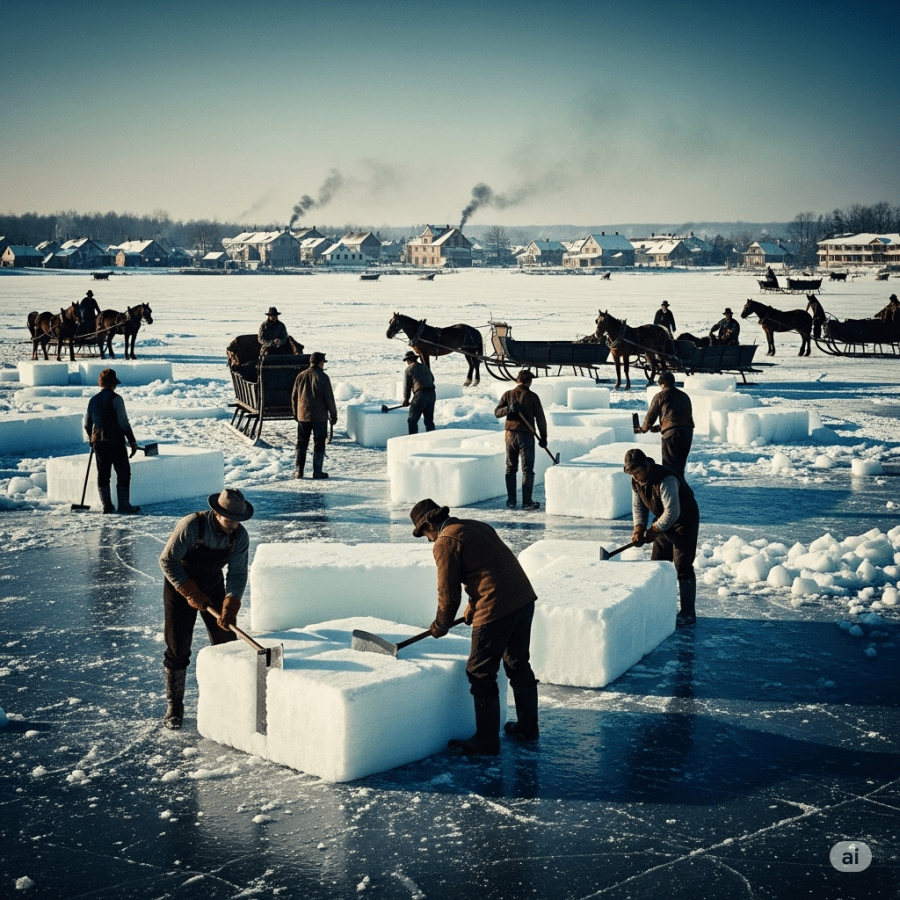
- Ice was a luxury that spawned an industry: In the hot climates of the West, ice was incredibly valuable. The ice trade, involving cutting ice from frozen lakes in the North and transporting it by train, was a significant and profitable business, allowing for cold drinks and food preservation even in remote areas.
And here are some more:
- Vigilante justice was surprisingly organized: While often portrayed as chaotic mobs, many vigilante groups were highly organized, with written constitutions, elected leaders, and strict rules. They arose in areas where formal law enforcement was weak or nonexistent, aiming to establish order and punish perceived criminals.
- The Pony Express was short-lived but impactful: Despite its iconic status, the Pony Express only operated for about 18 months (April 1860 – October 1861). It was made obsolete by the completion of the transcontinental telegraph line, but it proved the feasibility of rapid communication across the continent and captivated the public imagination.
- Native American languages were incredibly diverse: Before European contact, North America was home to hundreds of distinct Native American languages, many of which were as different from each other as English is from Chinese. This linguistic richness often goes unacknowledged in general narratives of the West.
- The “cattle kingdom” was actually quite brief: The heyday of the open-range cattle drives and the “cowboy era” as we typically imagine it lasted only from roughly the late 1860s to the mid-1880s. Factors like barbed wire, severe winters, and overgrazing quickly brought an end to this romanticized period.
- Many famous outlaws had day jobs: The lives of outlaws like Jesse James and Billy the Kid were not constant thrilling escapades. They often had periods where they tried to live “normal” lives, working as farmers, ranchers, or even in legitimate businesses, between their criminal activities.
- Frontier medicine was surprisingly advanced in some areas: While overall medical knowledge was limited, many doctors on the frontier were innovative and resourceful. They performed complex surgeries, adapted treatments for remote conditions, and documented diseases, sometimes advancing medical understanding in challenging circumstances.
- African American “Buffalo Soldiers” played a key role: After the Civil War, several all-Black regiments were formed in the U.S. Army. Nicknamed “Buffalo Soldiers” by Native Americans, they served extensively on the frontier, protecting settlers, building infrastructure, and participating in military campaigns, despite facing systemic racism.
- Homesteaders faced incredible odds: The Homestead Act of 1862 offered 160 acres of free land, but proving up on a claim was incredibly difficult. Many homesteaders failed due to harsh weather, lack of water, economic hardship, and isolation. It required immense grit and determination.
- Mail order catalogs connected distant communities: Companies like Sears, Roebuck and Co. and Montgomery Ward became lifelines for isolated frontier families. Their catalogs allowed people to order everything from farm equipment and clothing to medicines and even pre-fabricated houses, bringing a taste of the East to the remotest parts of the West.
- The transcontinental railroad’s construction was a monumental feat of diverse labor: The Central Pacific Railroad primarily employed Chinese laborers, while the Union Pacific relied heavily on Irish immigrants, Civil War veterans, and African Americans. These diverse groups worked under incredibly dangerous and harsh conditions to connect the continent.
Hopefully, these provide an even richer picture of the complexities and realities of the Old West.
 thelivingbreathingjamesbrown.com
You must be logged in to post a comment.