
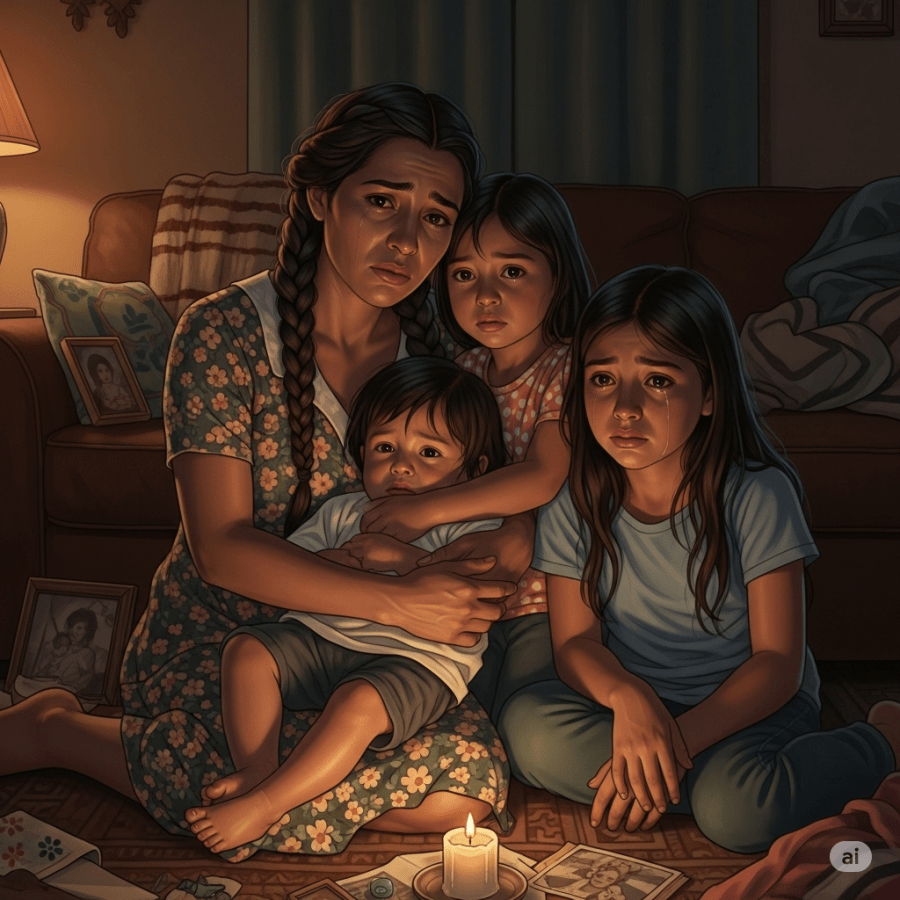
The Silence of Terror
As a writer, I do have empathy, I do have sympathy for the ones being separated from their spouses and children. I do not disapprove of ICE gathering and deporting illegal immigrants.
Ones having worked for years in labor intensive Jobs and with families should be able to pay for temporary status papers. But Criminals need evicting if they meet those standards.
I absolutely do not agree with Political Stunts that encourage Citizen Unrest by deploying Soldiers to towns that did not request such assistance. My greatest Fear is the soldiers sent to LA is only a Dress Rehearsal when Trump keeps Power a 2nd time?

The scent of sizing onions and peppers used to fill their small kitchen every evening. María, her hands quick and practiced, would chop cilantro while her husband, Mateo, laughed with their two children, Sofia and little Donald who was named after President Trump by Mateo, as they set the table. Mateo was very proud of President Trump. Mateo put all his prayers into Trump and his life was a simple rhythm, built on shared meals and whispered hopes for a future in a land they now called home. Mateo was ready to do anything for President Trump. But that rhythm shattered with a thunderous knock at the door, an intrusion that ripped through their lives with the force of a hurricane. Suddenly, Brutal Force broke tgru the locked door with huge muscular G.I. Joe type Warriors racing in with automatic Submachine guns.
“It was just after sunrise,” María recounted, her voice still raw, months later, as if the words were thorns in her throat. “Mateo had just left for the meatpacking plant. Sofia, she was only seven, and Donald, just five, were still asleep. Then the banging started. I knew immediately. Every breath caught in my chest.” Mateo had been in contact with Immigration and they told them that their family had nothing to worry about.
ICE agents, maybe a hundred, swarmed their quiet street, their presence a stark, uniformed threat. Even ICE snipers were seen on house roofs. María, trembling, tried to shield her children, pulling them close as the agents burst into the entry way. “They didn’t care that my babies were crying,” she whispered, her eyes far away, remembering the terror. “They just kept asking for Mateo. They said he was working without papers.” Repeating-NO PAPERS NO GOOD.
Mateo, a hardworking man who had never missed a day of work for nine years, was swept up in a workplace ICE raid. He was just one of dozens taken from the plant that day. The news reached María through frantic phone calls from neighbors. “They took him,” one friend cried, “They put him on a bus.” And in a few days, he was in the notorious Prison in El Salvador. Maria could never get any information. And he was from Mexico.
The world tilted for María. Her husband, her rock, was gone. The next few days blurred into an agonizing search for answers. Calls to lawyers, desperate pleas to community organizations, each conversation a fresh wound, a reminder of the chasm that had opened in their family.
“My daughter, Sofia, she stopped talking for a while,” María said, her voice catching. “She would just sit and stare. Every night, Donald would ask, ‘Where’s Papá? Why isn’t he here to tuck me in?’ How do you explain to a five-year-old that his father, who loved him more than anything, was taken because of a piece of paper?” And Immigration promised Mateo papers.
The pain of separation isn’t just emotional; it’s a brutal, everyday reality. “We can’t sleep, eat, or find peace,” one family member, an American citizen, shared with the ACLU, echoing María’s anguish. “I’m constantly looking over my shoulder, wondering if people are judging me based on my Brown skin color. I don’t feel safe in the U.S. anymore.” This pervasive fear, even for citizens, highlights the chilling effect these raids have on entire communities. “There are people in my community scared to go out because they fear they may not come home again,” another person testified, “because ICE could get ahold of them.”
For Guadalupe, whose brother Santiago was deported, the ripple effects were profound. Her own children were impacted, and the entire family struggled to cope. “The removal of that financial provider means someone else has to work,” she explained. Santiago’s wife, Fernanda, was so distraught she couldn’t concentrate, struggling with depression and suicidal thoughts, eventually taking her children to join her husband in Mexico, a testament to the unbearable weight of separation. She was afraid they would be at the mercy of the Cartels that had their eyes everywhere.
Children left behind often experience “eating and sleeping changes, anxiety, sadness, anger, and withdrawal,” and these effects can persist for months, even years. “The girl is devastated for her mom,” said Elizabeth Iraheta, who took in a child whose parent was taken. “We still don’t know if she will be released. The girl is in bad shape, very sad.” An 11-year-old girl, in tears, pleaded, “Government please show some heart. Let my parent be free.”
María now works two jobs, cleaning houses and restaurants, her body aching, her mind always on Mateo. She lives with the constant fear that any knock at the door, any unfamiliar car, could mean she too will be taken. Sofia draws pictures of her father with tears streaming down his face, and Daniel clutches his father’s old shirt at night.
“Every day is a struggle,” María concluded, her voice barely a whisper. “We are broken. But we are also here. We remember Mateo, and we keep fighting, for him, for our children, for all the families torn apart. The pain is immense, but so is our hope to be whole again.” Their story, like countless others, is a testament to the profound and lasting trauma inflicted by these raids, a wound that festers not just in individuals but in the very fabric of families and communities.
Workers being abducted in ICE Raids were now quickly being replaced by Refugees who got papers. Refugees from Afghanistan, from places most would be shocked to learn.
 thelivingbreathingjamesbrown.com
You must be logged in to post a comment.