
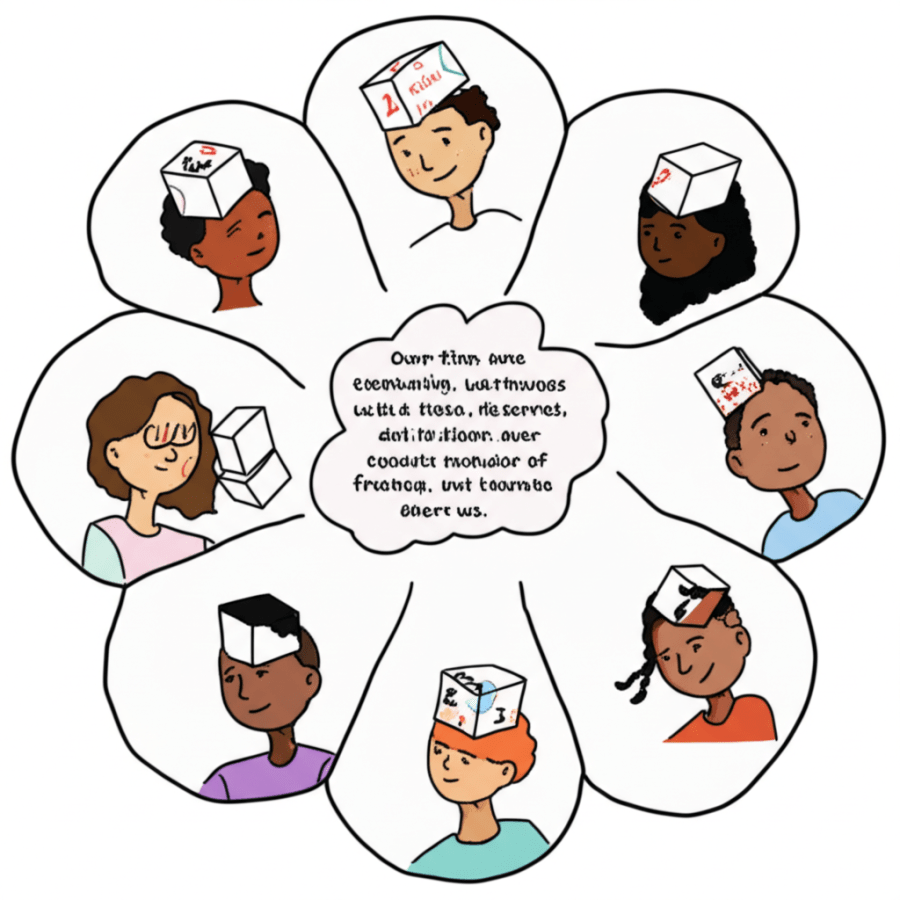

The hum of friendly chatter and the clack of dice filled the air in the community center, a cozy backdrop for Maya and her signature purple-streaked hair. Around a large, polished wooden table, a group of teens was gathered, a mix of curious and slightly skeptical faces. Maya held up a transparent tackle box, its many small, empty sections glinting under the lights.
“Alright, everyone, listen up!” she announced, her voice warm and inviting. “Today, we’re diving into a superpower you already have, but maybe haven’t fully unleashed: compartmentalizing.”
A collective murmur went through the group. “Sounds like something my mom does with her sewing kit,” quipped Liam, who was known for his quick wit.
Maya grinned. “Exactly, Liam! Your brain is way more complex than a sewing kit, but the idea is the same. Imagine your mind isn’t just one big, chaotic drawer where everything gets tangled. Instead, it’s like this beautiful, organized box. Each section is a compartment for different thoughts, feelings, and situations.”
She picked up a small, miniature plastic soldier from a pile of trinkets. “Let’s say this little guy represents ‘War Games.’ When you’re deep into a video game with friends, strategizing and battling, your mind is in that ‘War Games’ compartment. You’re thinking about tactics, teamwork, maybe even a little friendly trash talk. Your focus is sharp, right? You’re not worrying about your algebra homework, are you?”
“No way!” exclaimed Sarah, who was competitive about everything. “That’d totally ruin my kill streak!”
“Precisely!” Maya affirmed. “You’re smart enough to keep that focus where it belongs. But here’s where it gets really powerful. Imagine you finish your game, and then someone starts talking about LGBTQ+ identities – maybe a new character on a show, or a news story about Pride Month. This topic is about understanding, compassion, and identity. It absolutely does not belong in your ‘Combat’ compartment. If your brain is still stuck in ‘War Games’ mode, you won’t be able to listen with an open mind or a kind heart. That conversation belongs in your ‘Empathy & Understanding’ compartment, which is a place of listening, learning, and acceptance, not a battlefield.”
She then picked up a small, shimmering heart-shaped pebble. “Now, this is ‘Love.’ Love is a beautiful, complex thing, and it’s one of those amazing items that can fit into many compartments. You have ‘Family Love,’ which feels different from ‘Friend Love.’ Then there’s ‘Romantic Love,’ which has its own unique space. Maybe even ‘Self-Love’ – that vital compartment where you cherish and care for yourself. The trick is knowing which ‘Love’ compartment you’re in, so you can respond in the right way. You wouldn’t talk to your best friend about a crush the same way you’d talk to your grandma about her favorite recipe, right? Your brain intelligently shifts between these different ‘Love’ boxes, recognizing the nuance of each relationship.”
Navigating the World: Normal vs. Abnormal
Maya’s gaze softened, becoming more earnest. “Now, this skill helps you not just organize, but also to think more intelligently about the world around you. Sometimes, you’ll encounter things that are truly abnormal. Things that are hurtful, prejudiced, or just plain unkind. Let’s imagine a sharp, jagged piece of glass – this represents hate or discrimination against anyone, including those in the LGBTQ+ community.”
She placed the glass carefully into a separate, designated compartment of the tackle box. “When someone expresses hate, or discriminates, your intelligent mind should immediately recognize that this is not ‘normal.’ This isn’t how compassionate people treat each other. This is an abnormal thought or action. It doesn’t belong in your ‘Community’ compartment, or your ‘Kindness’ compartment, or your ‘Self-Worth’ compartment.”
“You put it in its ‘Abnormal & Not Mine’ box. It’s like putting toxic waste in a special container, away from everything else that’s good and healthy in your life. You acknowledge its presence, you might even feel a sting from it, but you make a conscious choice not to let it contaminate all your other, positive compartments. You don’t internalize it. You don’t let it become part of your ‘Self-Identity’ compartment, because their hate says nothing about you and everything about them.”
“But how do you really, like, block it out?” a quiet teen named Jamie asked, her eyes wide.
“It’s not about pretending it didn’t happen, Jamie,” Maya explained gently. “It’s about having a plan for it. If it’s a small, fleeting comment, you might mentally ‘discard’ it – send it to the ‘Ignored Noise’ compartment. If it’s something more direct and hurtful, you put it in the ‘Needs Protection/Response’ compartment. This means you might:
- Move away: Physically or mentally distance yourself from the source.
- Seek support: Talk to a trusted adult, a friend, or an organization that can help you process it. That’s your ‘Support System’ compartment.
- Challenge (if safe): If you feel empowered and safe to do so, you might calmly correct misinformation or express disagreement. But remember, safety first.
- Self-soothe: Use your ‘Self-Care’ compartment – take a deep breath, listen to music, do something that brings you peace.
“The power of compartmentalizing is that it allows you to choose your response, rather than reacting impulsively from a jumbled, overwhelmed state. It helps you recognize that some things are trash, and they don’t belong in your beautiful, well-organized mind. You keep your ‘Joy’ compartment separate from your ‘Hate’ compartment, your ‘Friendship’ compartment separate from ‘Prejudice.’ This way, the goodness you carry isn’t tainted by the negativity of others.”
Maya closed the tackle box with a soft click. “Your minds are incredible. By learning to mentally sort, you gain control. You protect your peace, you respond with wisdom rather than chaos, and you leave more room for the love, kindness, and understanding that truly make life blazingly wonderful. It’s how you navigate the world with an intelligent mind and an always compassionate heart.”
A few teens began picking up the trinkets, thoughtfully placing them into imaginary compartments, a new sense of order and empowerment beginning to settle within them.
 thelivingbreathingjamesbrown.com
You must be logged in to post a comment.