
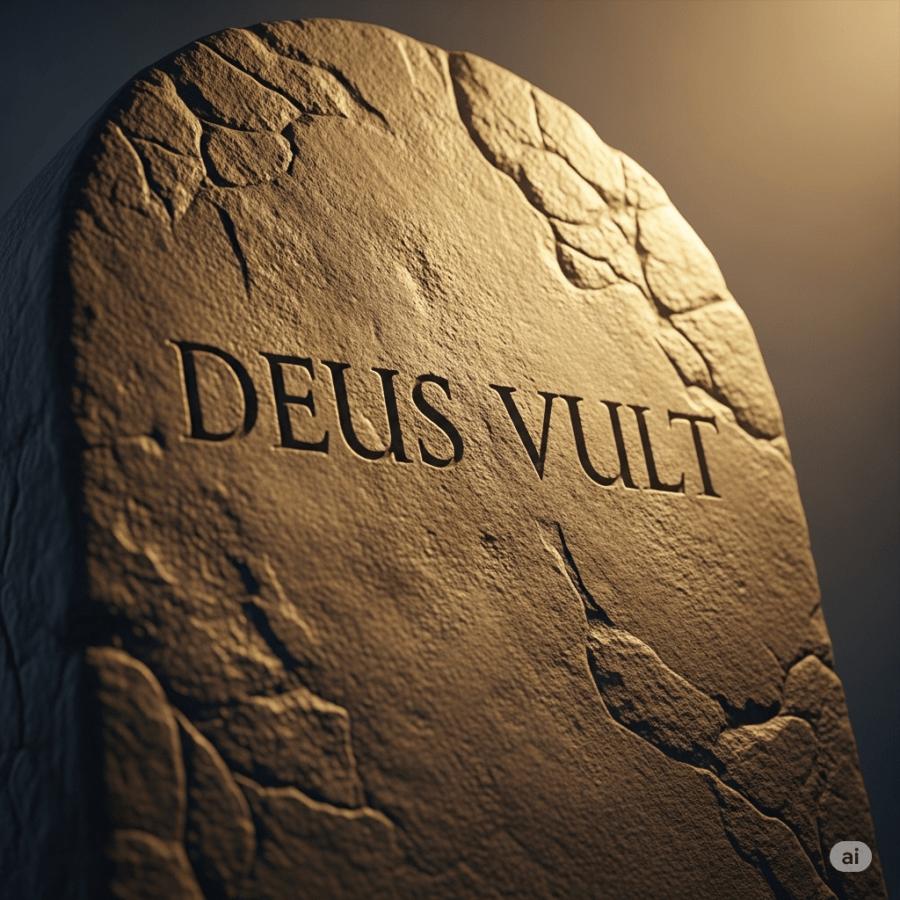
“Deus Vult”
History on Pete Hegseth?
Pete Hegseth, full name Peter Brian Hegseth, was born on June 6, 1980, in Minneapolis, Minnesota.
His history includes:
- Education: He graduated from Princeton University in 2003 with a Bachelor of Arts degree in politics. While at Princeton, he was the publisher and editor of The Princeton Tory, a conservative student publication. He later earned a Master of Public Policy from Harvard University’s John F. Kennedy School of Government in 2013.
- Military Service: Hegseth was commissioned as an infantry officer in the U.S. Army National Guard after graduating from Princeton. He had multiple active-duty deployments, serving at Guantanamo Bay (2004-2005), in Iraq (2005-2006) where he was an infantry platoon leader and civil affairs officer, and in Afghanistan (2011-2014) where he served as a senior counterinsurgency instructor. He received military commendations, including two Bronze Star Medals and a Combat Infantryman Badge, and rose to the rank of Major. He remained in the Individual Ready Reserve until January 2024. In 2021, he was removed from a National Guard group assigned to security for Joe Biden’s presidential inauguration.
- Veterans’ Advocacy and Political Activism: After his active military service, Hegseth became involved in veterans’ advocacy. He served as the executive director of Vets for Freedom (2007-2012) and later as the CEO of Concerned Veterans for America (2012-2015), both conservative advocacy groups.
- Media Career: Hegseth became a contributor to Fox News in 2014 and was a co-host of Fox & Friends Weekend from 2017 to 2024. During his time as a television personality, he was known for his conservative viewpoints.
- Political Involvement: In 2012, he ran for a U.S. Senate seat in Minnesota as a Republican but withdrew before the primary election.
- Secretary of Defense: In November 2024, he was nominated by President-elect Donald Trump to serve as the 29th United States Secretary of Defense. He was confirmed on January 24, 2025, and sworn into office on January 25, 2025. He is the second-youngest person to serve in this role.
Why did the following happen?
January 2024. In 2021, he was removed from a National Guard group assigned to security for Joe Biden’s presidential inauguration.
Pete Hegseth was removed from a National Guard group assigned to security for Joe Biden’s presidential inauguration in January 2021 because he was flagged as a potential “insider threat” by a fellow guardsman.
The primary reason for this flagging was related to a tattoo on his bicep that reads “Deus Vult” (Latin for “God wills it”). While this phrase originated as a rallying cry during the Christian Crusades, it has also been adopted and used by some far-right and white supremacist groups in modern times.
Hegseth has consistently stated that his tattoos are Christian religious symbols and has called the incident an example of “anti-Christian bigotry” and “politicization” within the military. However, the concern raised by the fellow service member was about the potential association of the symbol with extremist ideologies, especially in the heightened security environment following the January 6th Capitol attack.
The FBI was involved in vetting the more than 25,000 National Guard members deployed for the inauguration to identify any troops with anti-government or white supremacist sympathies. Hegseth was one of a group of National Guard members who were removed from inauguration duties after this vetting process.
Let’s delve deeper into “Deus Vult” within the military context and address the “secret society” question.
“Deus Vult” in the Military Context: More Nuance, Less Secrecy
“Deus Vult” (Latin for “God wills it”) is not, in and of itself, a secret society within the military. It’s a phrase, and its significance and perception within military circles are multifaceted and have evolved.
Here’s a breakdown:
- Historical Origin and Christian Connotation:
- Historically, “Deus Vult” was the rallying cry during the First Crusade in the 11th century. It literally means “God wills it” and was used to express divine approval and motivation for the crusades.
- For many, particularly those with a strong Christian faith, the phrase holds a historical and spiritual significance, representing a profound belief in divine purpose or calling. In a military context, a service member might interpret it as a personal expression of their faith and a belief that their service is part of a larger, divinely ordained mission or purpose. This is the interpretation Pete Hegseth, for example, has given for his tattoo.
- Modern Association with Extremism:
- This is where the controversy and scrutiny arise. In recent years, “Deus Vult” has been co-opted and used by various white supremacist, white nationalist, and far-right extremist groups. They often use it to evoke a sense of historical “holy war” against perceived enemies, which can include non-white people, non-Christians, or political opponents.
- These groups often use historical symbols and phrases (like “Deus Vult,” or even certain Norse symbols) to legitimize their modern hateful ideologies, even if the original meaning was different.
- This adoption by extremist groups has led to the phrase being flagged as a potential indicator of extremist leanings by military intelligence and law enforcement agencies.
- Why the Military is Concerned:
- Maintaining Good Order and Discipline: Militaries are built on cohesion, discipline, and unity. The presence of extremist ideologies can fundamentally undermine these principles by fostering division, hatred, and distrust among service members.
- Preventing Domestic Extremism: There has been a growing concern about domestic extremism within the ranks of the U.S. military. Individuals with extremist views pose a risk to national security and can be involved in activities that harm fellow service members or civilians.
- Trust and Professionalism: Symbols or phrases associated with hate groups erode public trust in the military and can create an unprofessional and hostile environment for service members from diverse backgrounds.
- The “Insider Threat”: As seen in Pete Hegseth’s case, if a phrase or symbol is known to be used by extremist groups, even if an individual claims a benign interpretation, it can raise concerns about them being an “insider threat.” This means a person who, from within an organization, poses a risk to security, often due to access to sensitive information or systems, or through potential for violence. The vetting process for high-profile events like inaugurations is particularly stringent.
Is it a Secret Society? No, Not Directly Tied to One.
“Deus Vult” itself is not a secret society. It’s a phrase.
However, the concern is that individuals who use or display “Deus Vult” might be members of, or sympathetic to, secret or semi-secret extremist groups that operate both within and outside the military.
- Extremist Groups: Many extremist groups do operate with some level of secrecy or cloaking, using codes, symbols, and private communication channels. They might recruit individuals, including those in the military, and these individuals might then use phrases like “Deus Vult” as a way to signal their affiliation or beliefs to others who understand the code.
- Signaling and Identification: For those aware of its modern extremist usage, “Deus Vult” can act as a signal. It’s a way for individuals with similar (often problematic) ideologies to recognize each other. This is why military vetting processes flag such symbols – it’s not about the phrase itself being a secret society, but about it potentially being an indicator of association with problematic groups that do operate in secretive ways.
In summary, “Deus Vult” is a historical phrase that carries religious meaning for some. However, its adoption by modern extremist groups has transformed it into a symbol that raises serious concerns about hate, discrimination, and potential insider threats within the military. It’s not a secret society, but its use can be a red flag for potential involvement with such groups.
Is Deus Cult the “warrior culture”? That Hegseth testified?
It’s a very insightful question to connect “Deus Vult” to the concept of “warrior culture” in the context of Pete Hegseth’s testimony.
You’re hitting on a key point of the discussion surrounding Pete Hegseth’s nomination and the controversy of the “Deus Vult” tattoo.
“Deus Vult” and the “Warrior Culture” – A Complex Connection
Pete Hegseth, in his confirmation hearing to be Secretary of Defense, explicitly stated his commitment to restoring a “warrior culture” at the Department of Defense. This ties directly into the perception of “Deus Vult.”
Here’s how they connect:
- Historical “Warrior Culture” of the Crusades:
- “Deus Vult” was, fundamentally, a battle cry of the Crusades. The Crusades were military campaigns undertaken with a strong religious justification (“God wills it”). The knights and soldiers who participated were very much embodying a “warrior culture” where their martial skills and actions were believed to be in service of a divine will.
- For those who view “Deus Vult” in this historical context, it can represent a specific type of warrior ethos: one deeply rooted in faith, a sense of righteous purpose, and an unwavering commitment to a cause perceived as sacred. This aligns with a traditional, even romanticized, view of a “warrior” who fights for more than just geopolitical interests, but for ultimate truths or beliefs.
- Hegseth’s Interpretation and “Warrior Ethos”:
- Pete Hegseth has consistently framed his “Deus Vult” tattoo as a personal expression of his Christian faith and its historical roots, specifically referencing the Crusades. When he speaks of “restoring warrior culture” in the Pentagon, he often talks about a focus on lethality, meritocracy, and readiness to fight, emphasizing the core mission of the military as warfighting.
- From his perspective, “Deus Vult” might be seen as embodying the ultimate commitment and purpose of a warrior: fighting for something beyond oneself, for a cause believed to be divinely ordained or profoundly moral. This aligns with his broader rhetoric about strengthening the military and focusing on what he sees as its primary purpose.
- The Controversial Overlap: Modern Extremist “Warrior Culture”:
- The problem, as discussed, is that modern white supremacist and far-right extremist groups have also adopted “Deus Vult.” These groups often promote a “warrior culture” of their own, but it’s one based on racial or religious animosity and a perceived existential struggle.
- They use the imagery and historical context of the Crusades to justify their modern ideologies of “holy war” against perceived enemies (e.g., non-white people, non-Christians, political opponents). This is a highly problematic “warrior culture” that the U.S. military explicitly rejects.
- Therefore, when Hegseth uses “Deus Vult” and speaks of “restoring warrior culture,” it immediately raises concerns for those aware of the phrase’s modern extremist connotations, precisely because it touches on this dangerous overlap. They worry that his interpretation, or at least the perception of it, could inadvertently legitimize or encourage extremist “warrior cultures” within the military.
In essence:
- Is “Deus Vult” the “warrior culture”? No, it’s not the entire warrior culture of the military. The U.S. military’s official “warrior culture” emphasizes duty, honor, country, professionalism, and fighting for the Constitution, irrespective of religious or political affiliation.
- Does “Deus Vult” represent a “warrior culture” (or a view of it)? Yes, for some, particularly those like Hegseth, it represents a specific historical and faith-based interpretation of a warrior’s purpose and ethos. The issue is that this interpretation has been tainted by its adoption by extremist groups, leading to the “insider threat” concerns.
Pete Hegseth’s testimony often aims to clarify his personal interpretation, separating it from the extremist usage, while simultaneously advocating for a strong, combat-focused military. The controversy arises from the inability of many to cleanly separate the historical, personal, and modern extremist meanings of “Deus Vult.”
 thelivingbreathingjamesbrown.com
You must be logged in to post a comment.