
Ethnic Makeup and Socioeconomic Dynamics of Russian Soldiers in the Ukraine War

Russian Mothers holding new Conscription Papers for their Sons to fight in the Military and become Cannon Fodder for the Russian War of Atrocity.
Executive Summary
The ongoing conflict in Ukraine has brought into sharp focus the complex ethnic composition of the Russian armed forces. While ethnic Russians constitute the majority, significant representation of ethnic minorities is observed, particularly in frontline combat roles. This report details the prevalence of “ethnic stacking” within the military hierarchy, where Slavic groups generally occupy command positions, while peripheral peoples are often relegated to more dangerous enlisted tasks. The analysis further reveals that socioeconomic factors play a crucial role in recruitment, with lucrative financial incentives drawing individuals from economically disadvantaged backgrounds, including many ethnic minorities, into military service. Although ethnic minorities are overrepresented in combat losses, the evidence suggests that socioeconomic vulnerability, rather than ethnicity alone, is a primary driver for both recruitment into high-risk roles and subsequent casualties. The largest ethnic group, ethnic Russians, are not broadly considered a “lower class” within the military structure, but economically disadvantaged segments of the Russian population, regardless of ethnicity, are indeed disproportionately affected.

1. Introduction: The Diverse Landscape of Russia’s Military
1.1. Overview and Objectives
The conflict in Ukraine has intensified scrutiny on the internal dynamics of the Russian armed forces, particularly regarding its ethnic makeup. This report aims to provide a comprehensive analysis of the ethnic composition of Russian soldiers, their roles within the military hierarchy, the socioeconomic drivers influencing recruitment, and the patterns of casualties. Drawing upon available research, including leaked datasets and analyses from various sources, this document seeks to offer a nuanced understanding of these critical aspects, acknowledging the inherent complexities and limitations of the available information.

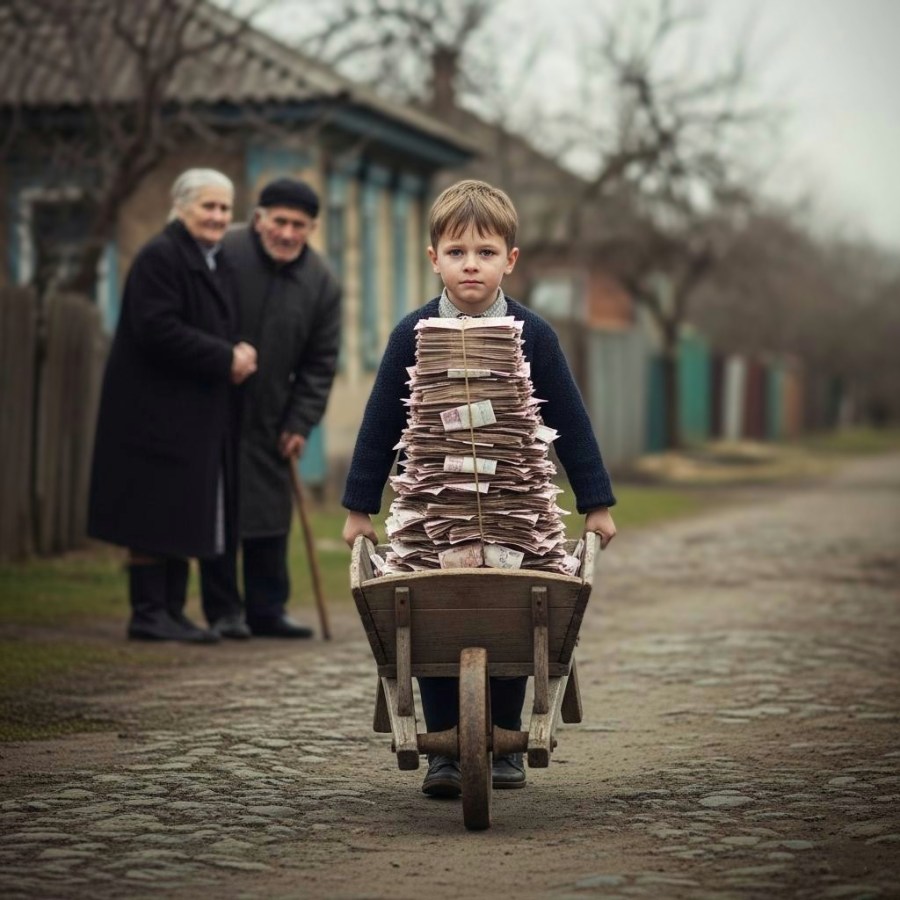
Russian boy carrying Russian Rubles in an old wooden wheelbarrow. The payment for the Death of his older brother killed in Ukraine. Another Conscription for the Russian War of Atrocity.
1.2. Historical Context of Ethnic Integration and Hierarchies
The Russian military’s structure and personnel policies are deeply rooted in centuries of imperial expansion, which necessitated the integration of diverse ethnic groups. This historical legacy has fostered established ethnic status hierarchies, often referred to as “ethnic stacking”.1 This term describes a system where military staffing decisions are influenced by non-merit characteristics, such as ethnicity, leading to differential treatment and opportunities within the ranks.1
Historically, the Russian Empire categorized its troops based on perceived “battleworthiness.” Slavs, including Russians, Ukrainians, and Belarusians, were typically assigned to direct combat roles. Groups such as Armenians, Kazakhs, Volga Tatars, and Georgians were designated for combat support functions. Meanwhile, Jews, Germans, and Central Asians were generally relegated to rear echelons.1 This enduring pattern suggests that the current disparities in military roles and promotions are not merely a contemporary phenomenon but are deeply embedded in long-standing institutional biases and societal norms. The persistence of these historical divisions implies a systemic issue that can affect military cohesion and morale, as advancement and assignments may not be based purely on individual merit.1
1.3. Limitations of Available Data
It is imperative to acknowledge the constraints of the data utilized for this analysis. A significant source, a leaked dataset comprising approximately 120,000 Russian service members, provides a snapshot of the situation in late 2017 or early 2018, predating the full-scale invasion of Ukraine in February 2022.1 Consequently, while this dataset offers valuable insights into the pre-invasion demographics and underlying trends of the Russian military, it may not fully capture the dynamic shifts in ethnic composition and recruitment patterns that have occurred since 2022.
Furthermore, this leaked data notably omits personnel from crucial fighting forces that have played substantial roles in the current conflict, such as Rosgvardia, PMC Wagner, the People’s Militias of the LPR/DPR, and various ethnic militias.1 Therefore, a comprehensive, real-time understanding of the current military’s ethnic breakdown remains challenging due to the lack of publicly available, up-to-date information.
2. Ethnic Composition and Representation in the Ukraine War
2.1. General Population Demographics of Russia
The Russian Federation is a vast and multinational state, home to a remarkable diversity of peoples. It recognizes over 190 to 193 distinct ethnic groups within its borders.2 According to the 2021 census, ethnic Russians constitute the overwhelming majority, accounting for approximately 71.73% 3 to 81% 5 of the total population. This variation in reported percentages highlights the complexities inherent in precise demographic reporting and interpretation.
Major ethnic minority groups, based on the 2010 and 2021 censuses, include:
- Tatars: Ranging from approximately 3.20% 3 to 3.87% 4 of the population.
- Ukrainians: Historically around 1.4% 2, but their numbers declined significantly to about 0.60% 3 by 2021. This notable decrease of 55% between 2010 and 2021, along with a 60% decline in Belarusians, may be attributable to factors such as re-identification as Russian, assimilation, or political concerns.6
- Bashkirs: Representing about 1.07% 3 to 1.15%.4
- Chuvash: Comprising roughly 0.73% 3 to 1.05%.4
- Chechens: Making up approximately 1.04% 4 to 1.14%.3
- Armenians: Ranging from 0.64% 3 to 0.86%.4
- Avars: Constituting about 0.66% 4 to 0.69%.3
- Mordovans: Approximately 0.54%.4
The remainder of Russia’s population is composed of numerous other, much smaller, ethnic groups.2 Understanding these general population demographics is crucial as it provides the baseline context against which the ethnic composition of the military and the patterns of recruitment and casualties can be assessed.
Table 1: Major Ethnic Groups in Russia (2010 & 2021 Census Data)
| Ethnic Group | 2010 Population Percentage | 2021 Population Percentage |
| Russian | 77.7% 2 | 71.73% 3 / 81% 5 |
| Tatar | 3.87% 4 | 3.20% 3 |
| Ukrainian | 1.4% 2 | 0.60% 3 |
| Bashkir | 1.15% 4 | 1.07% 3 |
| Chuvash | 1.05% 4 | 0.73% 3 |
| Chechen | 1.04% 4 | 1.14% 3 |
| Armenian | 0.86% 4 | 0.64% 3 |
| Avar | 0.66% 4 | 0.69% 3 |
| Mordovan | 0.54% 4 | Not specified in 2021 data |
| Other | 10.2% 2 | 17.92% 3 |
Note: Population percentages are approximate and may vary slightly between sources and census years due to reporting methodologies and demographic shifts.
2.2. Ethnic Composition within the Russian Military
While precise, up-to-date percentages for the entire Russian military’s ethnic composition are not publicly available, the leaked 2017/2018 dataset offers some indication of pre-invasion demographics. This data indicated that the bulk of personnel, specifically 88% of soldiers registered in the Far East, identified as Russian, Ukrainian, or Belarusian.7 This suggests a strong Slavic majority within that specific region and timeframe, consistent with historical patterns of military recruitment.
However, the full-scale invasion of Ukraine in 2022 and subsequent mobilization efforts have profoundly altered recruitment patterns. There is substantial evidence that these efforts have increasingly drawn from ethnic minority regions, leading to a notable shift in the military’s demographic profile.8 This suggests that the actual ethnic composition of the fighting force on the ground has likely seen an increased representation of non-Slavic minorities in combat roles compared to the pre-war baseline. This evolving dynamic is further underscored by Russian President Vladimir Putin’s recent rhetorical adjustments, which appear to balance Russian ethnic nationalism with an emphasis on Russian multinationalism, reflecting a strategic necessity to leverage diverse populations for military manpower.10 The changing demographics of the fighting force are a direct consequence of the sustained demand for personnel and the methods employed to meet those demands.
3. Ethnic Hierarchies and Assigned Roles: The “Ethnic Stacking” Phenomenon
3.1. The Military-Social Pyramid
Research consistently indicates a clear phenomenon of “ethnic stacking” within the Russian armed forces, which mirrors long-standing ethnic status hierarchies prevalent in Russian society and its military history.1 This system is characterized by promotions and assignments that are not solely based on merit but are significantly influenced by ethnic background.1
At the apex of this military-social pyramid are Eastern Slavs, including ethnic Russians, Ukrainians, and Belarusians. These groups are generally considered the “in-group” and are more frequently entrusted with command roles.1 Conversely, “peripheral peoples” are positioned at the bottom of this hierarchy, while other minority groups are “sandwiched” in between, indicating a stratified system of ethnic preference and disadvantage.1
3.2. Differential Assignment and “Dirty and Dangerous Work”
A critical consequence of this ethnic stacking is the differential assignment of roles within the military. Ethnic minorities, particularly those recruited from national republics or economically disadvantaged rural areas, are, all else being equal, more likely to be relegated to “the dirty and dangerous work of enlisted troops”.1 This implies a systemic bias that results in dismal promotion prospects and limited opportunities for these “ethnic soldiers” from “out-groups” to demonstrate their capabilities and advance within the military structure.1
This pattern is not new; historical directives within the Russian Empire explicitly divided nationalities, with Slavs assigned to combat, while groups like Jews, Germans, and Central Asians were consistently placed in rear echelons.1 The continuation of this historical pattern into the contemporary military suggests a deeply ingrained institutional practice.
The implications of such ethnic stacking on military cohesion and performance are significant. When promotions and assignments are perceived to be based on ethnicity rather than merit, it can lead to lower morale among disadvantaged groups, hinder effective information sharing across units, and ultimately weaken overall military cohesion.1 This internal friction and resentment among the ranks could undermine the operational effectiveness of military units, potentially contributing to Russia’s challenges on the battlefield.11 The Kremlin’s efforts to promote “harmony and unity” among Russia’s peoples 10 can be interpreted as an attempt to mitigate these inherent structural weaknesses and prevent fragmentation within its diverse fighting force.
4. Socioeconomic Factors and Recruitment Dynamics
4.1. Military Service as a Path to Economic Mobility
The Russian state has strategically utilized what has been termed “military Keynesianism” to finance its war effort and address internal socioeconomic disparities.12 This involves a substantial redistribution of state income towards military-linked industries and significant financial support for those serving in the armed forces. This approach has, to some extent, rebalanced wealth disparities by offering considerable financial and symbolic advantages to “peripheral Russia”—regions that have historically been overlooked by the central government and suffer from economic disadvantage.12
For many individuals from economically disadvantaged backgrounds, military service has emerged as a viable, albeit high-risk, pathway to socioeconomic mobility.12 Volunteers are offered financial incentives that far exceed the national median wage. For instance, while the median monthly wage in Russia was 61,602 rubles (approximately $628) as of September 2024, a volunteer could expect to earn over 415,000 rubles (approximately $3,843) per month in their first year, including lump sum payments.13 This substantial income potential has led to the emergence of a “warrior middle class,” composed of individuals who leverage military service to achieve a level of prosperity previously unattainable.13 Additional incentives include generous bonuses, competitive monthly salaries, compensation for injury or death, mortgage support, and the writing off of debts.8
4.2. Profile of the “Warrior Middle Class” and Targeted Recruitment
While a precise socioeconomic profile of all volunteers is not fully known, available data indicates that approximately 80% of these recruits lack higher education.13 A significant proportion are also described as underemployed or blue-collar workers over the age of 40.13 These demographics directly address the “lower class” aspect of the query, highlighting that economic vulnerability is a primary driver for military recruitment.
Mobilization efforts have disproportionately targeted social groups unofficially considered “more expendable” than “ordinary” Russians. These include convicts, migrant workers, stateless persons, and ethnic minorities.8 The heaviest burden of mobilization has notably fallen on the peoples of the North Caucasus, partly due to a long-standing perception of their disloyalty to Russia.8
The confluence of high financial incentives and the socioeconomic profile of recruits reveals a pattern where military service functions as a “social ladder” for those with limited economic opportunities.14 This creates a situation where individuals from economically depressed areas, including many ethnic minorities and disadvantaged ethnic Russians, are drawn into high-risk military service as their most viable path to financial stability. This raises profound ethical considerations regarding the state’s exploitation of socioeconomic vulnerabilities to meet its military manpower needs.
4.3. Coercive Mobilization and Foreign Fighters
Beyond financial incentives, Russia employs coercive methods to bolster its military ranks. For example, Chechen leader Ramzan Kadyrov has repurposed mobilization as a tool of political repression, sending disgraced former elites, prisoners, and “EuroChechens” (Chechens who returned from Europe) to the front lines as a form of punishment for perceived disloyalty or opposition.8 Law enforcement officers in regions such as Dagestan, Ingushetia, and Chechnya also engage in coercive recruitment to fulfill “volunteer” quotas, often driven by their own desire to avoid frontline deployment.8
Russia is also actively recruiting foreign nationals, particularly Central Asian laborers, by offering fast-track Russian citizenship in exchange for military service and threatening denaturalization for refusal to serve.9 There are also reports of Russia working to increase the number of North Korean labor migrants, potentially for military contracts, indicating a widening net for recruitment.10 This dual strategy of economic allure and direct coercion suggests that financial incentives alone are insufficient to meet the substantial manpower requirements of the war. This approach highlights a growing strain on Russia’s ability to generate forces and underscores the regime’s willingness to exploit economic desperation, legal loopholes, and even political repression to sustain its military operations.
5. Casualty Patterns and the “Lower Class” Question
5.1. Disproportionate Casualties Among Minorities
Evidence indicates a disproportionate number of ethnic minorities among the Russian soldiers killed in Ukraine.9 Indigenous communities within Russia, such as Buryats and Tyvans, along with non-Indigenous minorities like ethnic Germans, have sustained notably outsized losses.16 For instance, at least 1,017 ethnic Germans have died out of a population of roughly 195,000, representing a significantly higher proportional loss compared to larger regions like Bashkortostan.16
Analysis by Mediazona and BBC further supports this trend, indicating that men from Tyva or Altai are 30 to 40 times more likely to be killed in the war than residents of Moscow.14 The highest death rates per 10,000 male population have been recorded in Tyva (120), Buryatia (91), and the Altai Republic (89), in stark contrast to Moscow (3).14
5.2. Ethnicity vs. Socioeconomic Status as a Driver of Casualties
While the narrative of ethnic minorities being used as “cannon fodder” 9 suggests a deliberate targeting based on ethnicity, some demographers argue that regional economic inequality, rather than ethnicity itself, is the primary factor driving these disproportionate casualties.14 Proponents of this view contend that if sending national minorities to the front were a deliberate, blanket Kremlin policy, all national republics would exhibit high levels of losses. However, this is not consistently observed; some national republics, such as Dagestan, Ingushetia, Tatarstan, and Bashkortostan, have significantly lower casualty rates compared to Tyva and Buryatia.14
Furthermore, data demonstrates that regions with high ethnic Russian populations can also experience substantial casualty rates. For example, Sakhalin Region, where ethnic Russians constitute 86.5% of the population, has a casualty rate 10 times higher than Chechnya, which has only 1.9% ethnic Russians.15 This suggests that the ethnic status of a region is not the sole determining factor for the proportion of casualties.
The conclusion drawn by some researchers is that “it is not non-Russians who are disproportionately dying in Ukraine, but rather disadvantaged individuals – both Russians and non-Russians”.15 In the poorest regions, military service functions as a “social ladder,” compensating for a lack of opportunities in education and the labor market.14 This indicates that vulnerability to military recruitment and higher casualty rates is not a simple, single-factor issue. Instead, it is an intersectional problem where ethnicity often correlates with economic disadvantage due to historical marginalization and systemic discrimination.9 Therefore, while ethnic minorities are indeed disproportionately affected, it is often their pre-existing socioeconomic vulnerability within marginalized regions that makes them prime targets for recruitment into dangerous roles, rather than a blanket policy of ethnic extermination.
5.3. Addressing the “Largest Group” (Ethnic Russians) and “Lower Class” Status
The largest ethnic group in Russia, ethnic Russians, constitutes the majority of the overall population and, by extension, the military.2 Within the established military hierarchy, Eastern Slavs, including ethnic Russians, are generally positioned at the top of the military-social pyramid, often holding command roles and benefiting from the “ethnic stacking” system.1 Therefore, the largest group, ethnic Russians, is not broadly considered a “lower class” within the military structure itself; rather, they form the dominant “in-group.”
However, the question of “lower class” is more accurately applied to the socioeconomic profile of recruits, irrespective of their specific ethnicity. The “warrior middle class” that has emerged is largely composed of individuals without higher education, who are underemployed or blue-collar workers, and often over 40 years old.13 These individuals are predominantly drawn from economically peripheral areas of Russia 12, seeking significant financial gain from military service. This group explicitly includes economically disadvantaged ethnic Russians, alongside ethnic minorities. Thus, while ethnic Russians as a whole are not a “lower class” in the military, the segments of the Russian population (including ethnic Russians) who are economically disadvantaged are indeed disproportionately recruited for dangerous roles, fitting the “lower class” profile in terms of their pre-military socioeconomic standing.
Table 2: Identified Ethnic Groups in Russian Military Service and Reported Casualty Rates
| Ethnic Group | General Population Percentage (approx.) | Qualitative Military Representation | Specific Casualty Data |
| Ethnic Russians | 71.73% – 81% 3 | Majority of military, top of hierarchy 1 | Economically disadvantaged ethnic Russians among high casualties in peripheral regions (e.g., Sakhalin Region: 2.05 deaths/1,000 people) 15 |
| Buryats | Small minority (part of “Other”) | Overrepresented in casualties 9 | 91 deaths per 10,000 male population 14 |
| Tyvans | Small minority (part of “Other”) | Overrepresented in casualties 9 | 120 deaths per 10,000 male population 14 |
| Ethnic Germans | ~195,000 remaining in Russia 16 | Sustained outsized losses 16 | At least 1,017 deaths, disproportionately high relative to population size 16 |
| Central Asians (migrants) | Not a native Russian ethnic group; ~10 million laborers 9 | Targeted for recruitment, fast-track citizenship offers 9 | Used as “cannon fodder” 9 |
| Chechens | 1.04% – 1.14% 3 | Targeted by Kadyrov for coercive mobilization 8 | Low casualty rate relative to some other minority regions (0.22 deaths/1,000 people) 15 |
| Dagestanis (Avars, Dargins, Kumyks, Lezgins) | Avars: 0.66%-0.69% 3 | Heaviest burden of mobilization, high initial casualty rates 8 | Lower casualty rates than Tyva/Buryatia (e.g., Dagestan: 0.44 deaths/1,000 people) 14 |
Note: “Overrepresented” implies a higher proportion in military service or casualties compared to their share in the general Russian population. Data on casualty rates are based on open-source tracking and may not reflect the full extent of losses.
6. Limitations and Nuances of Available Data
6.1. Data Reliability and Scope
The analysis presented relies on the best available information, but it is important to reiterate the inherent limitations. The primary leaked dataset used for understanding military composition dates back to 2017/2018. This means it does not encompass all forces actively involved in the current conflict, such as PMC Wagner, LPR/DPR militias, and other irregular or volunteer formations, which have become increasingly prominent.1 Consequently, current figures for ethnic representation, particularly among these non-Ministry of Defense entities, may differ significantly, and a complete picture remains elusive.
Similarly, casualty data, while indicative of broad trends and disproportionate impacts, is largely derived from open-source tracking by organizations like Mediazona and BBC.14 These figures, though meticulously compiled, are likely an undercount of the true extent of losses. Difficulties in body recovery, the dangers of battlefield evacuation, and the unwillingness to risk additional lives for retrieval mean that the actual number of deaths is probably higher than identified figures.14
6.2. Conflicting Interpretations
An ongoing debate exists regarding the primary driver of disproportionate casualties among certain groups. While some sources emphasize a deliberate policy of ethnic targeting, portraying minorities as “cannon fodder” 9, other analyses suggest that underlying socioeconomic inequality is a more significant factor.14 This apparent contradiction highlights the inherent difficulty in isolating single causal factors in complex social and geopolitical phenomena.
The presence of these seemingly contradictory explanations indicates that both factors are likely at play, often intersecting and reinforcing each other. Ethnicity can serve as a marker for historical marginalization and systemic economic disadvantage within Russia, making it challenging to fully disentangle the two. Therefore, the vulnerability to military recruitment and higher casualty rates is multi-faceted, stemming from a complex interplay where ethnic identity often correlates with socioeconomic precarity. A comprehensive understanding necessitates acknowledging this complexity and avoiding simplistic conclusions that attribute causality to a single variable.
7. Conclusion: Implications for Russian Military Cohesion and Strategy
7.1. Summary of Findings
The analysis demonstrates that while ethnic Russians constitute the numerical majority within the Russian military, ethnic minorities are significantly represented, particularly in frontline combat roles. This distribution is influenced by both historical patterns of “ethnic stacking,” which place Slavic groups at the top of the military hierarchy, and contemporary socioeconomic factors. The concept of a “lower class” in this context is more accurately understood through the lens of socioeconomic vulnerability, which disproportionately affects certain ethnic minority regions but also includes economically disadvantaged segments of the ethnic Russian population. These vulnerable individuals are drawn into military service by substantial financial incentives, often as a primary path to economic mobility, alongside coercive recruitment tactics.
7.2. Implications for Military Cohesion
The existence of “ethnic stacking,” where non-merit characteristics influence roles and promotions, poses significant challenges to military cohesion. This system can lead to lower morale among those relegated to more dangerous tasks, reduce effective information sharing across units, and ultimately weaken overall unit cohesion, potentially impacting battlefield performance.1 The reliance on coercive recruitment methods and the integration of foreign fighters, who may have differing loyalties or motivations, introduce additional complexities to internal dynamics and trust within the armed forces. Such internal friction could undermine the overall effectiveness and resilience of military operations.
7.3. Broader Strategic Implications
The observed recruitment patterns and their consequences underscore Russia’s demographic challenges and its persistent need to sustain a large fighting force for the protracted conflict in Ukraine. The current strategy, which relies on a combination of significant financial incentives and coercive measures, exploits the socioeconomic vulnerabilities of its population, including both ethnic minorities and economically disadvantaged ethnic Russians. While this approach enables Russia to meet immediate manpower requirements 13, it carries inherent fragilities. The “stubbornly insufficient” public appetite for military service among the youth, despite lucrative pay, and the increasing reliance on coercive elements 13 suggest that this force generation model may not be sustainable in the long term.
Furthermore, the extraordinary casualty rates 11 and their disproportionate impact on specific regions and socioeconomic strata could lead to long-term demographic imbalances and exacerbate social discontent within Russia. President Putin’s shifting rhetoric, oscillating between appeals to Russian ethnic nationalism and multinationalism 10, indicates an awareness of the delicate balance required to maintain a multiethnic military while simultaneously appealing to nationalist sentiments. This tightrope walk carries significant political ramifications. The long-term societal impact of “military Keynesianism” and the eventual mass return of veterans 12 will profoundly affect Russia’s social and economic fabric, potentially leading to new social challenges and increased demands on the state for reintegration and support. These factors collectively point to a significant strategic vulnerability for Russia, suggesting that its current approach to manpower may not be viable for prolonged, high-intensity conflict without incurring substantial internal costs.
Works cited
- Full article: Ethnic stacking in the Russian armed forces? Findings …, accessed June 28, 2025, https://www.tandfonline.com/doi/full/10.1080/1060586X.2025.2484150?af=R
- Russia Demographics Profile – IndexMundi, accessed June 28, 2025, https://www.indexmundi.com/russia/demographics_profile.html
- Demographics of Russia – Wikipedia, accessed June 28, 2025, https://en.wikipedia.org/wiki/Demographics_of_Russia
- Russian Federation – Minority Rights Group, accessed June 28, 2025, https://minorityrights.org/country/russian-federation/
- Russia’s Straddling Population – Modern Diplomacy, accessed June 28, 2025, https://moderndiplomacy.eu/2023/11/20/russias-straddling-population/
- Russia’s changing ethnic landscape: Three takeaways from the 2021 census, accessed June 28, 2025, https://russiapost.info/society/ethnic_landscape
- http://www.tandfonline.com, accessed June 28, 2025, https://www.tandfonline.com/doi/full/10.1080/1060586X.2025.2484150?af=R#:~:text=Recall%20also%20that%20while%20the,Russian%2C%20Ukrainian%2C%20or%20Belarusian.
- Military Mobilization in Russia’s Regions: From Protests to …, accessed June 28, 2025, https://www.ponarseurasia.org/military-mobilization-in-russias-regions-from-protests-to-submission/
- Russia Is Using Ethnic Minorities As Cannon Fodder In Ukraine …, accessed June 28, 2025, https://novaramedia.com/2022/09/27/russia-is-using-ethnic-minorities-as-cannon-fodder-in-ukraine/
- Russian Offensive Campaign Assessment, June 10, 2025 | Institute for the Study of War, accessed June 28, 2025, https://www.understandingwar.org/backgrounder/russian-offensive-campaign-assessment-june-10-2025
- Russia’s Battlefield Woes in Ukraine – CSIS, accessed June 28, 2025, https://www.csis.org/analysis/russias-battlefield-woes-ukraine
- War as Social Elevator: The Socioeconomic Impact of Russian Military Keynesianism – Ifri, accessed June 28, 2025, https://www.ifri.org/en/papers/war-social-elevator-socioeconomic-impact-russian-military-keynesianism
- Putin’s Warrior Middle Class: How Sustainable Is Russia’s Cash-for …, accessed June 28, 2025, https://www.themoscowtimes.com/2024/11/27/putins-warrior-middle-class-how-sustainable-is-russias-cash-for-recruitment-tactic-a87149/pdf
- Over 110000 Russian soldiers killed in war identified, most from poor regions in Siberia – BBC, accessed June 28, 2025, https://www.pravda.com.ua/eng/news/2025/05/30/7514771/
- What the Data Says about Claims of Kremlin Targeting Ethnic Minorities – Russia.Post, accessed June 28, 2025, https://russiapost.info/society/targeting_ethnic_minorities
- Hundreds of Ethnic Germans Are Dying for Russia in Ukraine. This …, accessed June 28, 2025, https://www.themoscowtimes.com/2025/04/17/hundreds-of-ethnic-germans-are-dying-for-russia-in-ukraine-this-man-is-tracking-them-a88765
- What we know about Russian losses after three years of the war in Ukraine. 165000 military deaths and a full list of all known names – Mediazona, accessed June 28, 2025, https://en.zona.media/article/2025/02/24/losses
 thelivingbreathingjamesbrown.com
You must be logged in to post a comment.