

Would Americans sit on their Butts with a million dead Soldiers? We might get Our Chance. Misguided Instructions and Flawed Perceptions are being provided by the Trump Administration about Ukraine and Ukrainians. WHY? Ex-American Servicemen are serving in Ukraine fighting Russia and Russian Soldiers have instructions to Kill the American Soldier, but to slow Torture them first by cutting off body parts, starting with fingers, toes and his penis and nuts and gouging out their eyes too. But, I bet you already knew that.
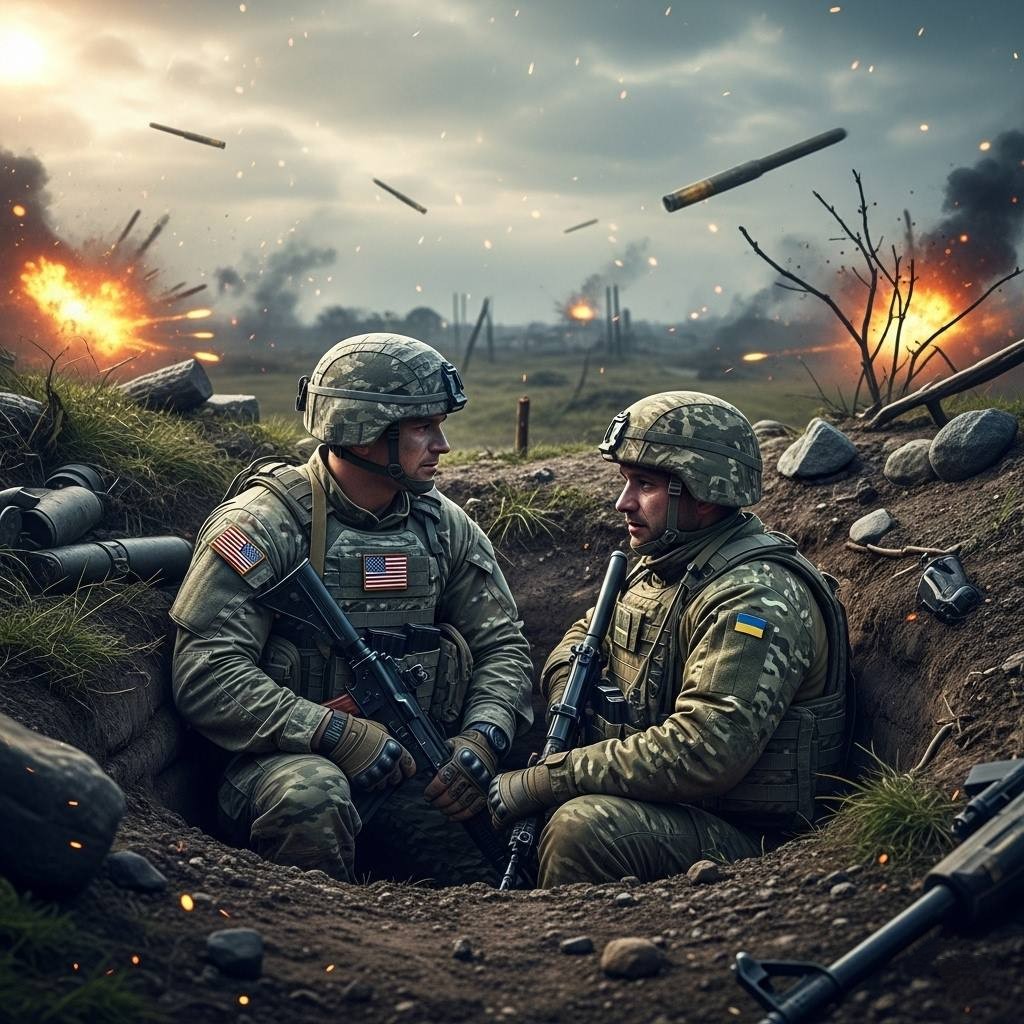
Who would Americans want in a foxhole with them more-A Russian Soldier or A Soldier from Ukraine?
Don’t believe this U.S. Army Veteran? Then Ask President Trump. I’d pick a Soldier from Ukraine every time. The Soldier from Ukraine would risk his life saving the Life of an American.
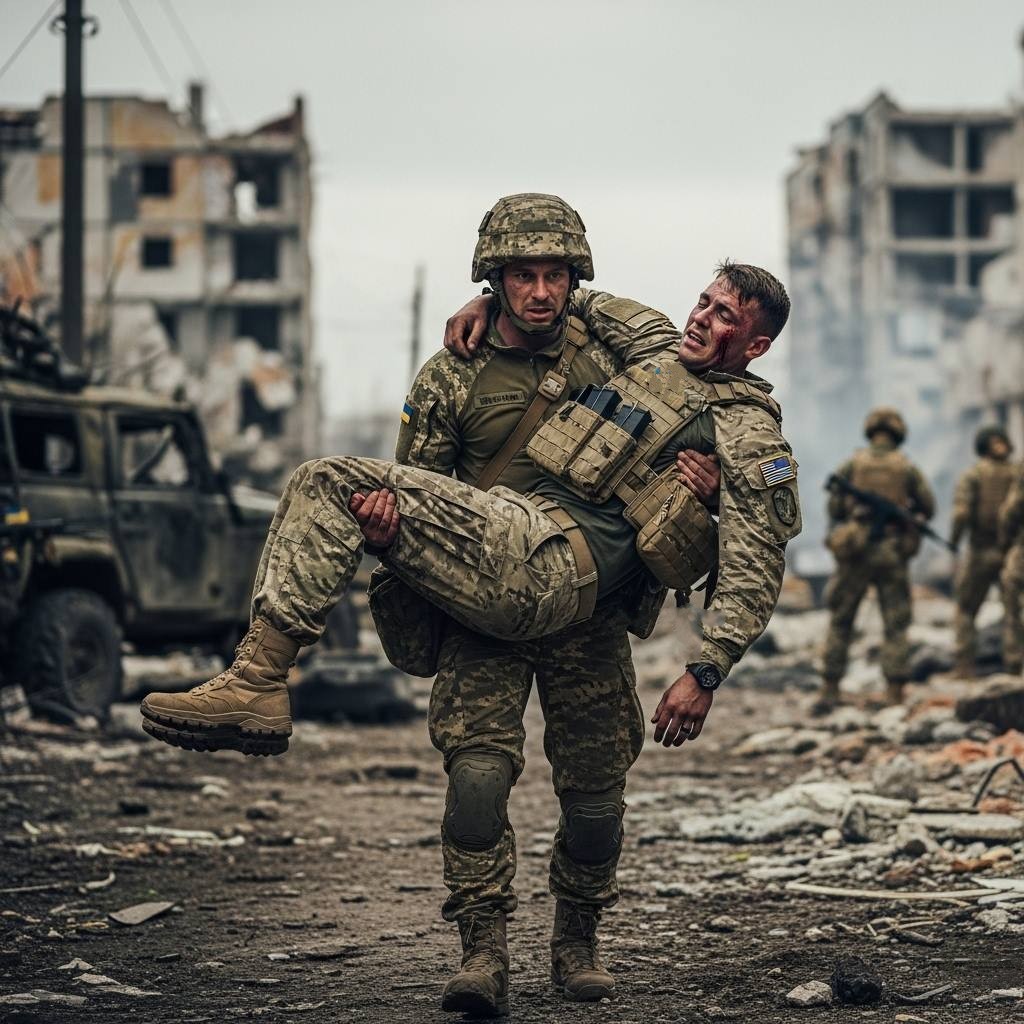
When considering who Americans would prefer to have “in a foxhole” with them, meaning a combat scenario where trust, shared objectives, and reliability are paramount, the overwhelming sentiment points to a soldier from Ukraine.
Here’s why:
- Strong U.S. Support for Ukraine: Public opinion polls consistently show that Americans overwhelmingly sympathize with Ukraine in the ongoing conflict with Russia. As of June 2025, a significant majority of Americans (58%) sympathize more with Ukraine, compared to only 3% who sympathize more with Russia. This broad public support translates into a perception of Ukrainians as allies or at least partners in a shared struggle against aggression.
- Shared Values and Democratic Alignment: The U.S. government and a large segment of the American public view Ukraine as a democratic nation fighting for its sovereignty against an aggressor. This aligns with American values of self-determination and freedom. Russian leadership, on the other hand, is largely viewed as autocratic, and Russia itself is often seen as an “enemy” or “unfriendly country.”
- Perception of Ukrainian Resolve and Effectiveness: Ukrainian soldiers are widely admired for their tenacity, courage, and effectiveness in defending their country against a larger, initially more powerful invading force. Reports often highlight their high morale and strong motivation.
- Blame for the Conflict: Americans overwhelmingly place the blame for the war on Russia and Vladimir Putin. This clear distinction in culpability further solidifies the perception of Ukrainian soldiers as being on the “right” side of the conflict.
- Distrust of Russia: Historically, and especially now with the ongoing conflict, there is a deep-seated distrust of Russia and its military among Americans.
In essence, the “foxhole” metaphor implies a shared fight and mutual trust. Given the current geopolitical landscape and American public sentiment, a Ukrainian soldier would be seen as a reliable, committed, and aligned partner, whereas a Russian soldier would be associated with the adversarial nation.
Report on Misguided Instructions and Influences Leading to Putin’s Actions in Ukraine, and Mysterious Deaths of Russian Figures
It is important to preface this by stating that information from Russia, especially concerning internal politics and the war, is often tightly controlled and subject to propaganda. Definitive proof of specific “misguided instructions” or “bad actors” is challenging due to the opaque nature of the Kremlin’s inner circle. Similarly, the “falling out of windows” incidents are often officially ruled as suicides or accidents, despite widespread skepticism.
The Ukraine Invasion: A Confluence of Misguided Instructions and Flawed Perceptions
The full-scale invasion of Ukraine in February 2022 appears to have been based on a series of significant miscalculations and flawed assumptions. While direct “instructions” are difficult to pinpoint, the information and perspectives that reached Putin likely shaped these misguided decisions.
Initial Misguided Assumptions Leading to the Invasion:
- Underestimation of Ukrainian Resistance and Will to Fight: The Kremlin likely believed that Ukrainian forces would quickly collapse and the population would not offer significant resistance. This was fueled by a long-standing narrative that Ukraine was an artificial state with a weak national identity.
- Overestimation of Russian Military Capability and Readiness: There appeared to be an inflated sense of the Russian military’s efficiency, logistics, and morale, leading to a plan for a swift, decisive strike that proved unrealistic.
- Misjudgment of Western Unity and Resolve: Putin likely underestimated the swift and unified response from the West, including unprecedented sanctions, military aid to Ukraine, and strengthened NATO solidarity.
- Misinformation on NATO Expansion as an Existential Threat: The narrative presented internally framed NATO expansion as an immediate and aggressive threat requiring a military response, disregarding NATO’s defensive nature.
- Historical Revisionism and Denial of Ukrainian Sovereignty: Putin’s pronouncements often denied Ukraine’s distinct identity, framing it as an integral part of Russia, which underpinned the belief it could be easily brought back into Russia’s sphere of influence by force.
- Belief in “Denazification” as a Justification: The spurious claim that Ukraine’s government was controlled by “Nazis” was a propaganda tool that may have also been believed internally to justify the invasion.
Continued Misguided Instructions and Strategies During the War:
- Failure to Adapt to Battlefield Realities: Despite initial setbacks, there has been a persistent reluctance to admit errors or significantly alter military strategy, leading to prolonged attrition warfare.
- Reliance on Brutality and Indiscriminate Attacks: The continued use of heavy bombardment and targeting of civilian infrastructure suggests a misguided belief that terrorizing the population would break Ukrainian morale, rather than strengthening their resolve.
- Misinformation about Russian Successes: State-controlled media continually portrays the war as going according to plan, despite evidence of significant losses, which likely perpetuates a distorted view for those at the top.
- Underestimating the Long-Term Economic and Geopolitical Consequences: The severe and lasting impact of sanctions on the Russian economy and Russia’s increased international isolation seem to have been underestimated.
Individuals Potentially Providing Misinformation to Putin (“Bad Actors”)
In an autocratic system, individuals may provide information that they believe the leader wants to hear, or filter information for self-preservation, rather than intentionally providing “wrong information” to undermine the leader.
- The Siloviki (Security and Intelligence Apparatus): This group of former and current security service (FSB, SVR, GRU) and military officials are believed to be Putin’s closest confidantes. They often provide intelligence assessments and strategic advice that align with hardline, nationalistic views and may filter out dissenting opinions. Key figures often mentioned include:
- Nikolai Patrushev: Secretary of the Security Council of Russia, a long-time associate and former FSB chief, known for his hardline views on the West.
- Alexander Bortnikov: Director of the Federal Security Service (FSB).
- Sergei Naryshkin: Director of the Foreign Intelligence Service (SVR).
- Sergei Shoigu: Minister of Defense.
- Ideologues and Nationalists: Certain ultranationalist figures promote aggressive, imperialistic narratives that can reinforce Putin’s own biases.
- Alexander Dugin: A prominent ultranationalist philosopher whose Eurasianist ideas resonate with some of Putin’s geopolitical views.
- State Media Propagandists: These figures shape public opinion and the information environment that reaches decision-makers by disseminating distorted or false narratives.
- Margarita Simonyan: Editor-in-chief of RT (Russia Today).
- Vladimir Solovyov: Prominent state TV presenter.
- Close Inner Circle and Informal Advisors: This very tight circle of long-time associates are believed to provide highly filtered information, prioritizing loyalty and avoiding direct challenges to Putin.
The Mysterious Deaths of Russian Businessmen and Officials
Since the full-scale invasion of Ukraine, there has been a notable and unsettling series of deaths among prominent Russian businessmen and officials, many under suspicious circumstances, including falls from windows. While Russian authorities often classify these deaths as suicides, accidents, or health-related, the sheer number and nature of them have led to widespread speculation about foul play, internal purges, or warnings against dissent. It is extremely difficult to provide definitive proof of foul play due to the lack of transparent investigations.
Here are some of the most widely reported and discussed cases, with details available:
- Ravil Maganov (September 2022): Chairman of Lukoil, reportedly died after falling from a sixth-floor hospital window in Moscow. Lukoil had called for the “soonest termination of the armed conflict” in Ukraine. Official reports claimed heart problems and depression.
- Pavel Antov (December 2022): A wealthy sausage tycoon and politician, found dead after falling from a hotel window in India. He had reportedly criticized the war before retracting comments. His death followed that of a friend he was traveling with.
- Mikhail Watford (February 2022): Ukrainian-born Russian oligarch, found dead in his Surrey, England home. British authorities found no evidence of a crime, but the timing raised questions.
- Alexander Tyulakov (February 2022): A Gazprom executive, found dead in his garage in St. Petersburg, reported as a suicide by Russian media.
- Vladislav Avayev (April 2022): Former Vice President of Gazprombank, found dead in his Moscow apartment alongside his wife and daughter in what authorities called a murder-suicide, but circumstances raised suspicions.
- Sergey Protosenya (April 2022): Former top manager of Novatek, found hanged in Spain, with his wife and daughter stabbed to death. Spanish police investigated as murder-suicide, but his son publicly disputed this.
- Yuri Voronov (July 2022): Head of Astra Shipping (contracts with Gazprom), found dead in his swimming pool with a gunshot wound to the head.
- Dan Rapoport (August 2022): Latvian-American businessman and Putin critic, died in Washington D.C. after an apparent fall from his apartment building. Police did not suspect foul play, but friends expressed strong suspicions.
- Ivan Pechorin (September 2022): Managing director of Russia’s Far East and Arctic Development Corporation, reportedly fell from a boat and drowned.
- Anatoly Gerashchenko (September 2022): Former head of the Moscow Aviation Institute, reportedly died after falling down stairs.
- Vladimir Sungorkin (September 2022): Editor-in-chief of Komsomolskaya Pravda, reportedly died of a stroke.
- Nikolay Petrunin (October 2022): A Russian politician and businessman, died from alleged complications of COVID-19.
- Marina Yankina (February 2023): Head of the financial support department for the Ministry of Defense’s Western Military District, found dead after falling from a high-rise building.
- Vladimir Makarov (February 2023): Former Russian police general, died by apparent suicide after being dismissed by Putin.
- Vitaly Robertus (March 2024): Vice-president of Lukoil, died “suddenly” at 54, cause not stated.
- Mikhail Rogachev (October 2024): Former vice-president of disbanded energy firm Yukos, found dead after falling from a 10th-story apartment window in Moscow. Russian state media reported it as suicide due to cancer, but his loved ones disputed this.
- Artur Pryakhin (February 2025): Head of a regional branch of Russia’s Federal Antimonopoly Service (FAS), died after falling from a fifth-floor office building window. Ruled a suicide.
- Colonel Alexey Zubkov (February 2025): Head of Russia’s Investigative Committee Forensic Center, plunged from a fourth-floor window at his office building but survived, claiming no recollection of falling.
Context and Speculation:
The pattern of these deaths, particularly the frequency of falls from windows, has led many to suspect foul play. Theories include: elimination of dissent/disloyalty, settling scores/corruption, cover-ups, and psychological warfare to intimidate the elite. However, without independent investigations, proving the precise circumstances remains challenging.
In Russia, what most consistently upsets people about a “bad leader” or causes significant public discontent often revolves around a few key themes, based on historical patterns and contemporary grievances:
- Corruption and Inequality: This is a pervasive and deeply ingrained issue that frequently fuels public anger.
- Personal Enrichment: When leaders and their inner circles are perceived to be amassing vast wealth through illicit means, while ordinary citizens struggle, it generates widespread resentment. Alexei Navalny’s anti-corruption investigations, for instance, specifically targeted this issue and resonated widely.
- Impact on Daily Life: Corruption isn’t just about grand schemes; it affects everyday life, from bribes for basic services to unfair distribution of resources. This directly impacts the quality of life for many Russians. Recent data even shows an increase in corruption, including bribery to evade military service, which further erodes support.
- Seizure of Businesses: A newer form of corruption involves the government seizing private businesses and handing control to those loyal to the leadership, impacting the broader economy beyond just direct bribes.
- Economic Hardship and Decline in Living Standards: When the economy falters, and people experience a decline in their real incomes, rising prices (inflation), and lack of employment opportunities, dissatisfaction with leadership tends to grow.
- Food Shortages and High Prices: Historically, and even in more recent times, shortages of essential goods or significant inflation have been major catalysts for unrest.
- Poverty and Stagnation: A large portion of the population experiencing poverty or stagnant incomes, while a small elite thrives, creates a strong sense of injustice.
- Lack of Political Freedom and Repression:
- Autocratic Rule: A lack of genuine political participation, suppression of dissent, and absence of fair elections are recurring grievances. Historically, this led to revolutions when the Tsars resisted reform.
- Crackdown on Protests: Violent responses to peaceful demonstrations, jailing of opposition figures, and suppression of information further fuel discontent.
- Politicization of Institutions: When state institutions, including the judiciary and media, are seen as tools of the regime rather than independent bodies, it undermines trust.
- Military Failures and Unpopular Wars:
- Heavy Casualties and Pointless Wars: Significant loss of life in military conflicts that are perceived as unnecessary or poorly managed historically led to widespread disillusionment and even revolution (e.g., Russo-Japanese War, World War I).
- Mismanagement of Military Affairs: Issues like poor equipment, lack of supplies, or commanders demanding bribes can also generate anger, especially when directly impacting soldiers and their families.
- Perceived Weakness or Humiliation on the World Stage (for some segments): While many Russians desire their country to be a great power, repeated perceived humiliations or being “shown their place” by other nations can also lead to resentment, though this is often channeled by leaders against external actors rather than directly at the leader. However, prolonged military struggles or ineffective foreign policy that harms national prestige can eventually turn into dissatisfaction with leadership.
In summary, while national pride and a strong leader can garner support, particularly when perceived as restoring Russia’s global standing (as seen with Putin’s initial popularity after the annexation of Crimea), the most potent sources of public anger against a “bad leader” in Russia are often tied to corruption, economic hardship, and the suppression of basic freedoms.
 thelivingbreathingjamesbrown.com
You must be logged in to post a comment.