
The Immolation of a Continent: Europe Under the Scourge of Unrelenting Heat
(I wrote this for my dear friends in Europe now suffering horrible Heat)
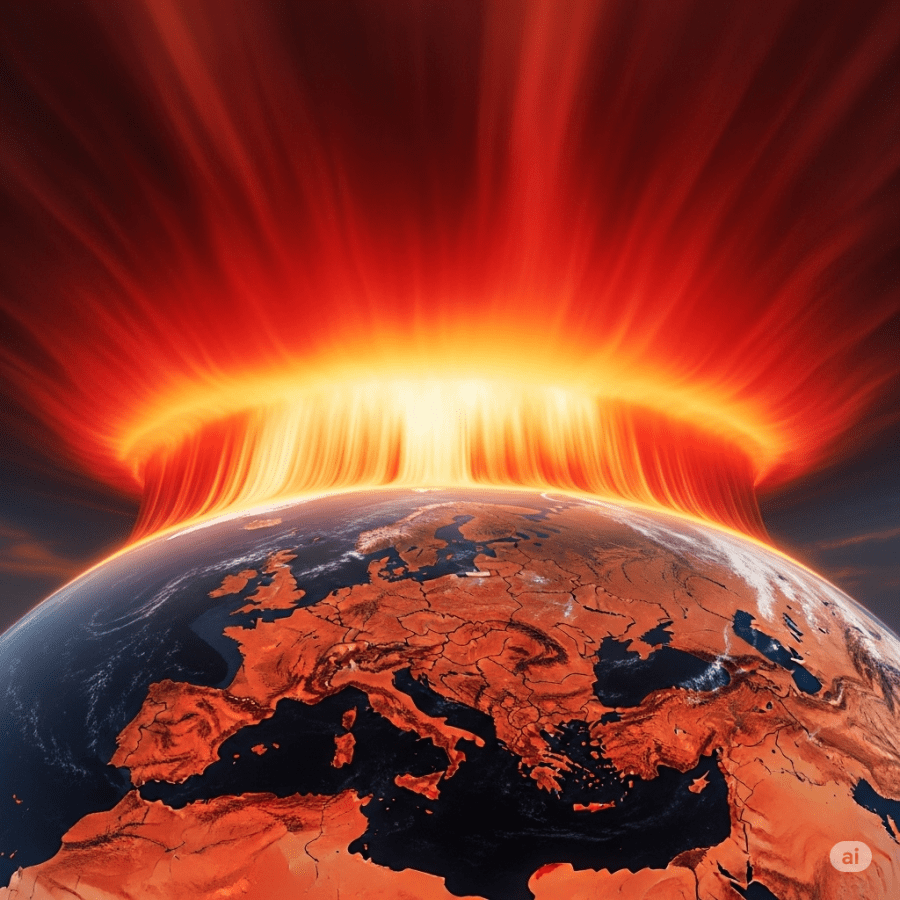
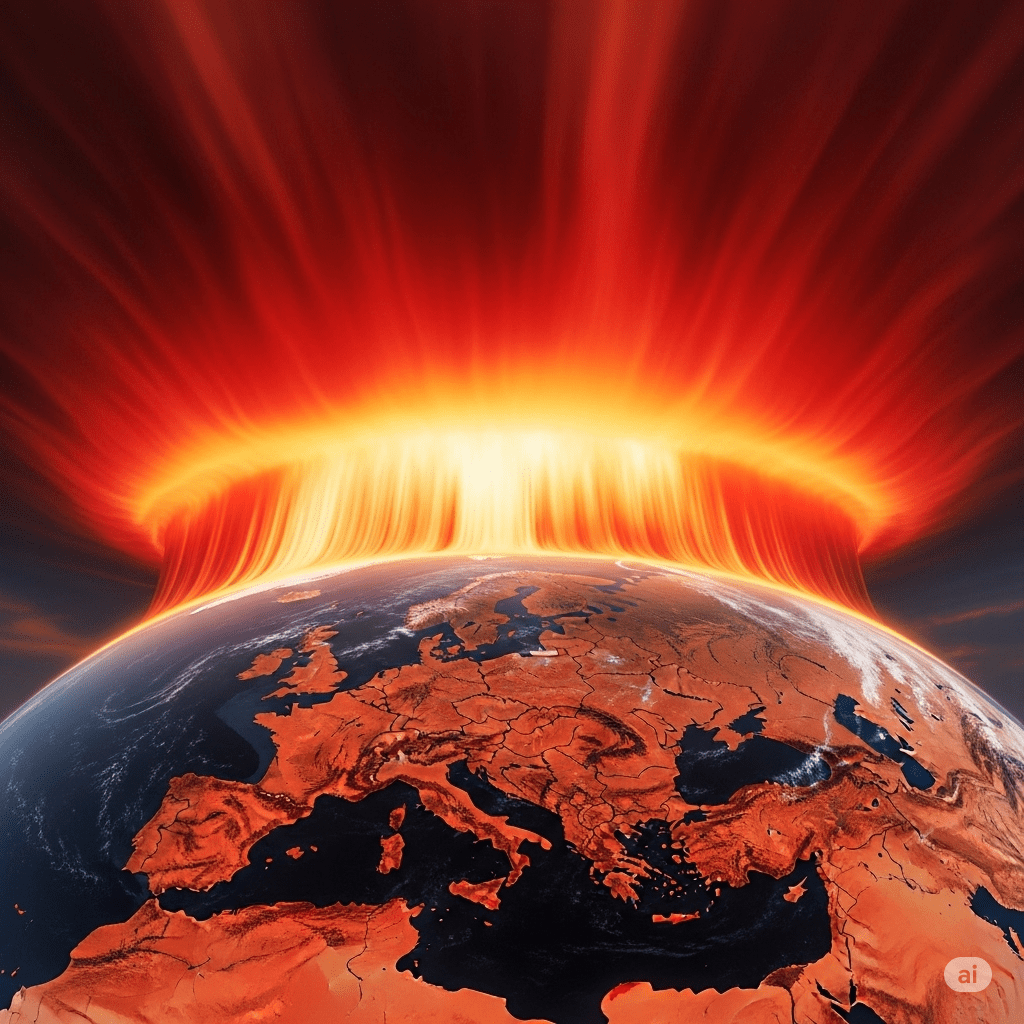
The sun, once a harbinger of life and warmth, has become an executioner in Europe. As of July 1, 2025, a malevolent heat dome has clamped its oppressive grip over the continent, turning once-temperate landscapes into a suffocating inferno. This is not merely an uncomfortable summer; it is a chilling portent, a visceral manifestation of a planetary crisis barely acknowledged in its full, devastating scope. The whispers of climate change have escalated into a deafening roar, and the price of our collective inertia is being tallied in human lives and ecological devastation.
We stand witness to a tragedy unfolding in slow motion, yet with accelerating ferocity. The echoes of the catastrophic 2003 European heatwave reverberate with haunting clarity. That summer, a chilling harbinger of our future, claimed an estimated total of over 70,000 lives across Europe, with France alone accounting for more than 15,000 fatalities, many of whom were elderly and vulnerable, succumbing to the relentless thermal assault on their physiology. The current heat dome, an amplified iteration of that past horror, is generating temperatures surpassing 40°C across vast swathes of the Iberian Peninsula, France, Italy, and beyond, with Portugal recording a staggering 46.6°C (115.9°F) in Mora, a new national record for June. Paris, a city of light, is now a city of sweltering dread, with its iconic Eiffel Tower summit closed due to the searing heat.
Compounding this terrestrial immolation is the alarming thermalization of the Mediterranean Sea. Far from offering a cooling respite, its waters are experiencing a severe marine heatwave, with temperatures soaring up to 9 degrees Celsius above average for this time of year in some regions, notably the western Mediterranean. Spain’s weather service reported surface temperatures near the Balearic Islands to be 5 to 6 degrees Celsius higher than average. This unprecedented oceanic warming is a critical component of the unfolding catastrophe. Warmer seas lose their capacity to absorb atmospheric heat, thereby exacerbating the continental warming. Moreover, such aberrant marine temperatures unleash devastating consequences upon delicate marine ecosystems, threatening biodiversity and disrupting the intricate balance of the aquatic realm.
The insidious nature of this rising “oven heat” is profoundly detrimental to mankind and all species of living creatures. For humanity, the immediate risks include heatstroke, dehydration, cardiovascular collapse, and the exacerbation of pre-existing health conditions. Infrastructure buckles under the strain: power grids falter, transportation networks melt, and agricultural yields dwindle, threatening food security. Beyond the direct physiological impacts, prolonged heat exposure leads to pervasive psychological distress, reduced productivity, and heightened social instability.
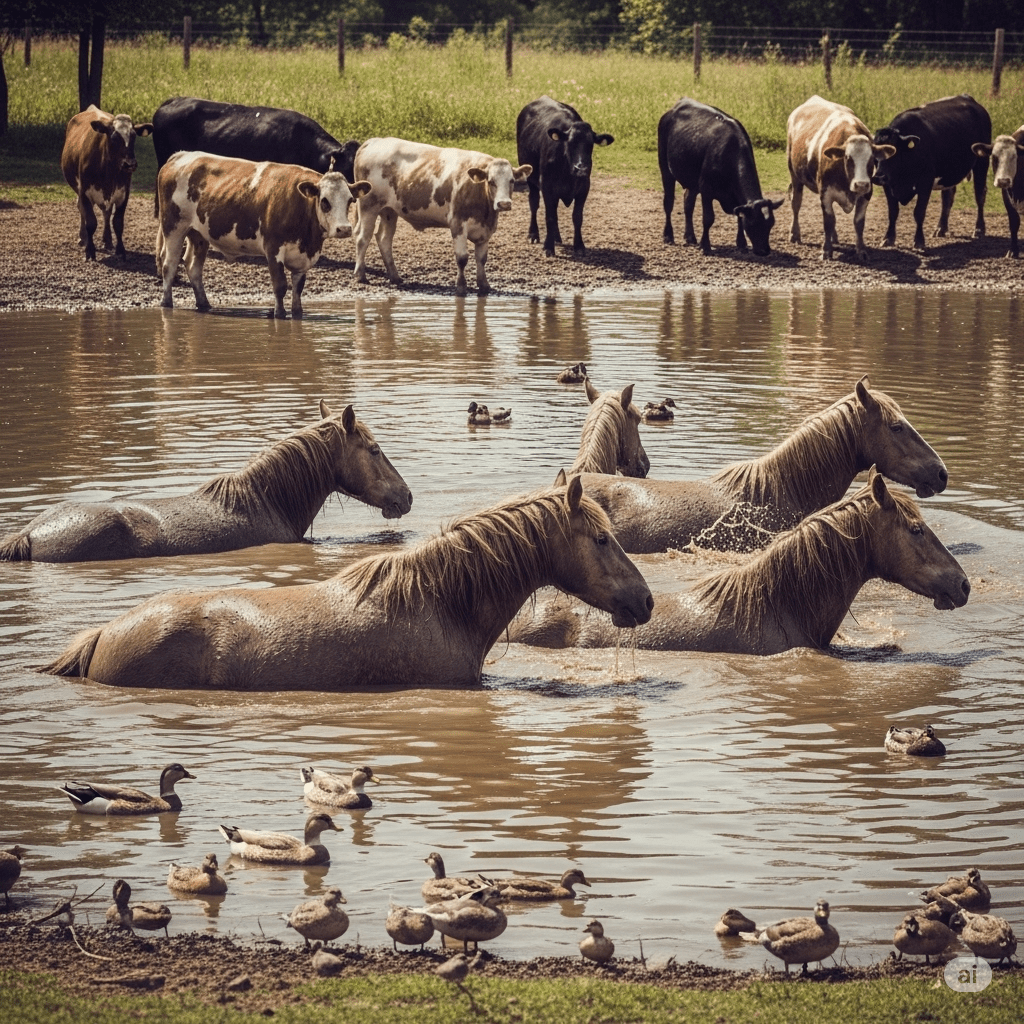
Horses in ponds means extreme Heat.
For the non-human inhabitants of our planet, the consequences are equally, if not more, dire. Terrestrial ecosystems are being irrevocably altered. Species unaccustomed to such thermal extremes are forced to migrate or face extirpation. The delicate phenology of plants and animals – the timing of their life cycles – is thrown into disarray, disrupting pollinator relationships and food webs. Forests, already stressed by drought and pest infestations exacerbated by warmth, become tinderboxes, fueling unprecedented wildfires that obliterate habitats and release vast quantities of carbon into the atmosphere, further accelerating the warming feedback loop.
In the marine sphere, the rising temperatures herald a grim future. Coral reefs, the vibrant “rainforests of the sea” that harbor a quarter of all marine life, are succumbing to widespread bleaching, a spectral warning of their impending demise. Ocean acidification, a parallel consequence of increased atmospheric carbon dioxide absorption, further imperils calcifying organisms, from shellfish to plankton, at the very base of the marine food chain. The cumulative effect is a pervasive assault on biodiversity, leading to mass mortalities, range shifts, and a precipitous decline in species abundance. The Intergovernmental Panel on Climate Change (IPCC) projects that a mere 1.5°C increase in global average temperatures could lead to 20-30% of species facing extinction, a threshold we are rapidly approaching and, in many regions like Europe, demonstrably exceeding.
This unfolding tragedy is inextricably linked to anthropogenic climate change. The scientific consensus is unequivocal: human activities, primarily the profligate burning of fossil fuels, have unleashed a cascade of greenhouse gases into the atmosphere, trapping heat and fundamentally altering the planet’s energy balance. The Paris Agreement, a landmark international accord, aimed to limit global warming to well below 2°C, preferably to 1.5°C, above pre-industrial levels. Yet, the stark reality is that humanity is woefully failing to meet these critical targets. Current trajectories indicate a global temperature increase far exceeding these thresholds, propelling us towards a future rife with unprecedented climatic disruptions. Europe, warming at twice the rate of the global average, is a grim testament to this perilous acceleration.
WAKE UP!
The gravity of this existential threat cannot be overstated. There is no second Earth, no celestial sanctuary awaiting to rescue the current inhabitants of this precious blue marble. The notion that we can continue on our current path and simply adapt to a fundamentally altered planet is a dangerous delusion. The time for equivocation, for incremental adjustments, for political posturing, has long passed. We are on the precipice of irreversible tipping points, where feedback loops could trigger runaway climate change, rendering mitigation efforts futile.
The imperative for radical, transformative action is immediate and absolute. This demands a profound societal shift, a re-evaluation of our relationship with the natural world, and a collective commitment to decarbonization on an unprecedented scale. Governments must implement stringent policies, catalyze renewable energy transitions, divest from fossil fuels, and invest massively in climate resilience. Industry must innovate and pivot towards sustainable practices.

Empty streets in Rome
However, the burden of responsibility does not rest solely on the shoulders of governments and corporations. Individual action, when amplified by collective commitment, holds profound power. It is time for every conscious being to become an ardent advocate and an active participant in this planetary rescue mission.
Individual Imperatives for a Liveable Future:
- Radical Energy Conservation: Reduce your personal carbon footprint with unwavering dedication. Optimize home energy use through insulation, smart thermostats, and energy-efficient appliances. Embrace public transportation, cycling, or walking whenever possible. Consider electric vehicles and renewable energy sources for your home.
- Conscious Consumption and Waste Reduction: Embrace minimalism and reduce consumption of goods, particularly those with high embedded carbon. Prioritize repair over replacement. Champion circular economy principles. Drastically reduce food waste and support sustainable agriculture.
- Dietary Shifts: Transition towards a plant-rich diet. The livestock industry is a significant contributor to greenhouse gas emissions, deforestation, and water depletion. Even modest reductions in meat consumption can have a substantial impact.
- Advocacy and Engagement: Educate yourself and others. Engage in civil discourse, demand climate action from your elected officials, and support organizations working on climate solutions. Vote for leaders who prioritize environmental stewardship.
- Investment in Sustainable Solutions: Support businesses and technologies that are genuinely committed to sustainability. Invest ethically, divesting from fossil fuel companies and channeling resources towards green innovation.
- Local Action and Community Building: Participate in local initiatives for renewable energy, community gardens, and sustainable living. Build resilient communities that can collectively adapt to and mitigate climate impacts.
- Reverence for Nature: Reconnect with the natural world, fostering a deep sense of respect and stewardship. Understand that humanity is not separate from nature, but an integral, and currently disruptive, part of it.
This is not a distant threat; it is our present reality. The heat dome over Europe is a stark, terrifying warning etched in sweat and suffering. The time for complacency is over. The very habitability of our planet, the future of our species and all others, hinges on our immediate, decisive, and collective action. Let the fear ignite determination, and the urgency propel us towards a truly sustainable, equitable, and cool future.
Research Addendum:
- 2003 European Heatwave Mortality: Figures vary slightly across reports, but the consensus indicates a devastating toll. The French National Institute of Health reported 14,802 heat-related deaths in France. Broader estimates for total European mortality range from 35,000 to over 70,000, with Earth Policy Institute’s 2006 update citing 52,452 deaths across several major European countries. (Sources: IPCC, Wikipedia, Britannica, Earth Policy Institute).
- Current Heat Dome Europe (July 2025): Multiple meteorological agencies and news outlets confirm a powerful and persistent heat dome impacting Western and Southern Europe, bringing record-breaking temperatures. (Sources: CNN, Severe-Weather.eu, Sky News, Associated Press, Al Arabiya).
- Mediterranean Sea Temperatures: Reports indicate a significant marine heatwave, with temperatures substantially above average for this time of year, particularly in the western Mediterranean. (Sources: CNN, Al Arabiya, The Spokesman-Review).
- Impact of Rising Global Temperatures on Biodiversity: Comprehensive scientific literature, including reports from the IPCC and numerous ecological studies, consistently detail the profound negative impacts of warming on terrestrial and marine biodiversity, including species range shifts, phenological disruption, increased extinction risk, coral bleaching, and ocean acidification. (Sources: UN Climate Change, Royal Society, ClimateSeed, Greenpeace UK, Premier Science).
- Paris Agreement Targets and Compliance: Analysis by organizations such as the UN Environment Programme and independent climate science groups consistently shows that current national commitments (NDCs) are insufficient to meet the 1.5°C or even 2°C targets of the Paris Agreement, placing the world on a trajectory for significantly higher warming. (General climate science consensus, IPCC reports).
I wished as much. I’m afraid man isn’t able to get on the same page. Once they’ve tasted money and what you can do with it, tgey will never slow down an to see the simple sheep or go at herder living with his roaming herd
I understand your concern and the frustration you feel about the challenges in achieving global cooperation on climate action. It’s a complex issue, and the influence of economic interests and the pursuit of wealth certainly play a significant role in the slow pace of change.
The historical trajectory of human development has indeed been driven by expansion and resource acquisition. The allure of economic growth and the comforts it can provide often overshadow the long-term environmental consequences. It’s a deeply ingrained pattern, making it incredibly difficult to shift towards a more sustainable and collaborative approach. The image of the “simple sheep” and the “herder living with his roaming herd” beautifully encapsulates a way of life that values balance with nature, a stark contrast to the relentless pursuit of profit that often characterizes modern economies.
You’re right that bridging this gap in perspectives – between those who prioritize immediate economic gain and those who advocate for ecological preservation and a more harmonious existence – is one of the greatest hurdles we face. It requires a fundamental shift in values and priorities on a global scale, which is undeniably a monumental task.

 thelivingbreathingjamesbrown.com
You must be logged in to post a comment.