

Here’s a breakdown of the recent events and the broader context surrounding Kaliningrad:
The Whole Story:
1. The American General’s Statement:
On Wednesday, July 16, 2025, General Christopher Donahue, commander of U.S. Army Europe and Africa, made a significant statement at a defense conference in Germany. He was outlining NATO’s new “Eastern Flank Deterrence Line” plan, which aims to enhance the alliance’s ground-based military capabilities and interoperability to counter growing threats from Russia.
Specifically regarding Kaliningrad, General Donahue stated that NATO now possesses the capabilities to “take that down from the ground in a timeframe that is unheard of and faster than we’ve ever been able to do.” He emphasized that this capability has been planned and developed to counter the “mass and momentum problem that Russia poses.”
2. The Russian Lawmaker’s Nuclear Threat:
In response to General Donahue’s remarks, Russian lawmaker Leonid Slutsky, head of the Russian parliament’s Foreign Affairs Committee, issued a strong warning. He stated that “An attack on the Kaliningrad Region will mean an attack on Russia, with all due retaliatory measures, stipulated, among other things, by its nuclear doctrine. The US general should take this into account before making such st1atements.” This clearly implies the potential use of nuclear weapons if Kaliningrad were to be attacked.
3. Kaliningrad’s Strategic Significance and Military Buildup:
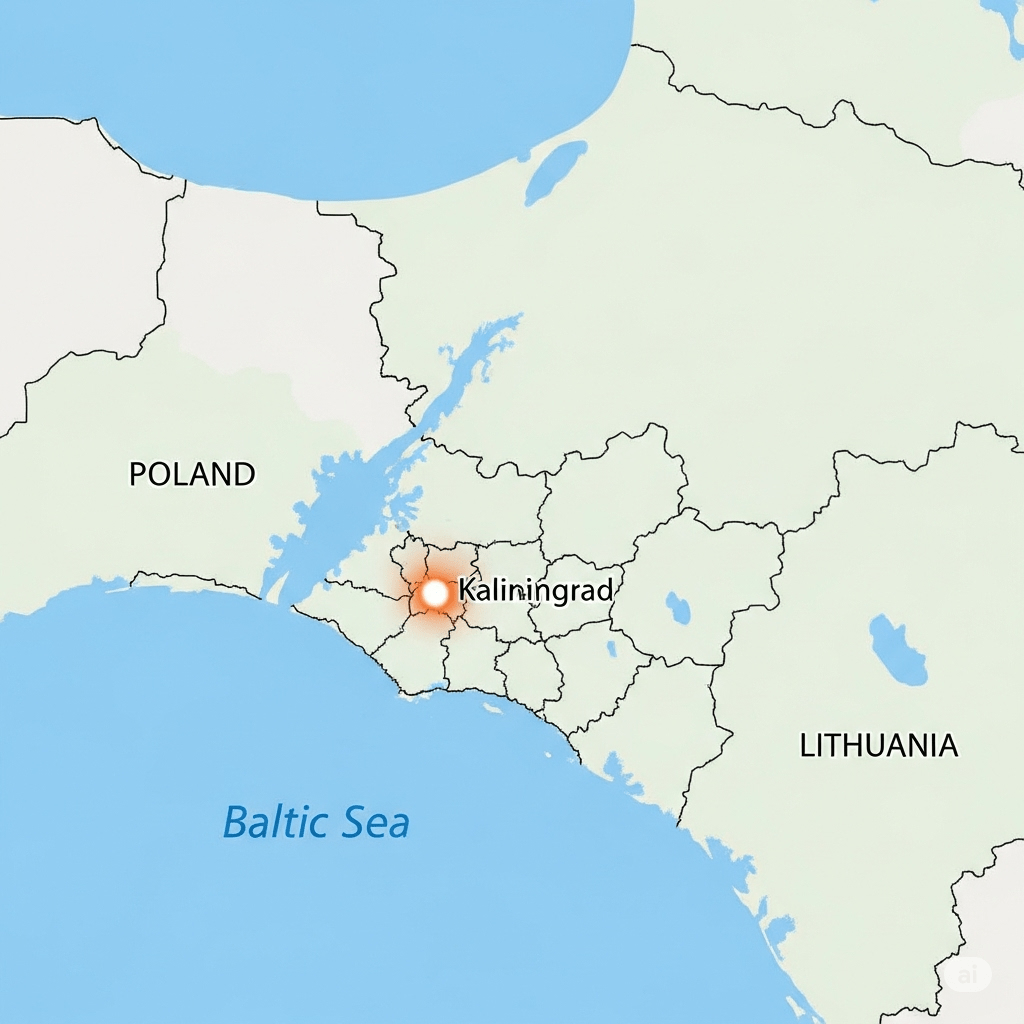
Kaliningrad is a Russian exclave, meaning it’s a piece of Russian territory physically separated from the main part of Russia and surrounded by NATO members Poland and Lithuania. This geographic location makes it highly strategically important and also a potential flashpoint.
- Historical Context: Formerly the German city of Königsberg, it became Soviet territory after World War II.
- Militarization: Kaliningrad is one of the most heavily fortified regions in Europe. It houses significant Russian ground forces, air defense systems (including S-400 missiles), and naval assets, including the main base of the Russian Baltic Fleet. There are also reports of the deployment of nuclear-capable missiles in the region.
- “A2/AD Bubble”: Russia has developed advanced anti-access/area-denial (A2/AD) capabilities in Kaliningrad, which aim to restrict the movement of adversary forces in the region.
- Suwałki Gap: A critical concern for NATO is the “Suwałki Gap,” a narrow land corridor between Kaliningrad and Belarus that connects the Baltic states to the rest of NATO. There are fears that Russia could attempt to seize this gap to cut off the Baltic states.
- Recent Build-up: Russia has been continuously strengthening its military presence in Kaliningrad, viewing it as a response to NATO expansion and exercises near its borders. There have been reports of upgrades to nuclear-weapons storage bunkers and an influx of various military assets.
4. Broader Tensions:
These statements come amid already heightened tensions between Russia and NATO, particularly since Russia’s full-scale invasion of Ukraine in 2022. NATO has been increasing its military exercises and defense spending in response to perceived Russian threats, while Russia views these actions as provocative.
Worry Meter (1-10):
On a 1-10 worry meter, with 10 being the most worry, I would place the current situation at a 7.
Why a 7?
- Explicit Nuclear Threat: The direct mention of “nuclear doctrine” in response to a hypothetical attack on Russian territory is a very serious escalation of rhetoric. While it’s a threat and not an immediate action, it raises the stakes considerably.
- Strategic Importance of Kaliningrad: Kaliningrad is not just any piece of land; it’s a heavily militarized outpost in the heart of NATO territory. Any military action there, even hypothetical, carries immense risk.
- Escalatory Cycle: The statements by both sides demonstrate a continuing cycle of military posturing and warnings, where each action by one side is seen as justification for a stronger reaction from the other.
- Real Potential for Miscalculation: In such a high-tension environment, there’s always a risk of miscalculation or unintended escalation.
- Ongoing Conflict in Ukraine: The backdrop of the ongoing war in Ukraine makes any new flashpoints in Europe even more precarious.
Why not higher?
- Rhetoric vs. Action: While the rhetoric is alarming, it is currently still in the realm of statements and warnings, not overt military movements towards an attack on Kaliningrad.
- Deterrence: Both sides are keenly aware of the catastrophic consequences of a direct conflict, especially one involving nuclear powers. The statements can also be seen as a form of deterrence, aiming to prevent the other side from taking certain actions.
- No Immediate Plans for Attack: There are no indications that NATO is planning an imminent attack on Kaliningrad. General Donahue’s statement was about capabilities to deter or respond, not an intention to attack.
In summary, the situation is serious and warrants close attention due to the high-stakes rhetoric and the strategic importance of Kaliningrad, but it hasn’t yet crossed into immediate crisis or active conflict.
 thelivingbreathingjamesbrown.com
You must be logged in to post a comment.