

The ancient manuscript lay open on the worn wooden table, its pages brittle and yellowed with the passage of countless years. The ink was faded, the leather binding cracked, but its words held a truth stronger than stone. In the small, drafty church, an old man stood over it, his shoulders stooped and his head bowed, the weight of a long life pressing down on him. His hands were gnarled, the leathery skin hardened by decades of toil, and the blue veins on the back of his hands stood out, throbbing with a slow, steady pulse. He was a worn-down preacher, and a profound loneliness, quiet and familiar, had become his constant companion. He knew his journey was nearing its end, and he often wondered what his final purpose would be, alone in a place the world had forgotten. The only warmth came from the solitary oil lamp that cast a golden glow on the sacred text.
Suddenly, a gust of cold autumn wind, smelling of damp earth and coming rain, rattled the heavy oak front door. It creaked open with a low, mournful sigh. The preacher looked up, startled, his old eyes adjusting to the sudden draft. A small figure stood silhouetted in the doorway, framed by the deepening twilight. As she stepped inside, the light of the lamp caught her, revealing a face like a work of art from a terrible, unseen sculptor. She was painfully thin, a walking skeleton cloaked in rags, her bones pushing against her pale skin. Her eyes, sunken deep in their sockets, were hollow from eating nothing but scraps for what seemed like an eternity. She walked slowly, a fragile ghost, down the middle aisle, her small frame dwarfed by the towering, empty pews. She came to a stop before the old man, her voice barely a whisper, thin as the wind that had carried her here.
“Now,” she said, her head bowed, “I have no one.”
The preacher’s heart, which had been so heavy with its own loneliness, seemed to catch fire. He gently closed the Bible and, with a touch so soft and deliberate it was like a blessing, placed his hand on her head. “No,” he said, his voice a low, steady rumble, “as long as I live, you have me.”
Her name was Elspeth, and in the low, quiet light of the church, she began to speak of her life. It was a hard story to bear, a tale of a world that had turned its back on her. She had been left in the city by a man she called “Da,” who had promised to return “tomorrow.” That tomorrow never came, and for two years, she had lived on the cold, unforgiving streets. She spoke of the gnawing, constant hunger that made her bones ache, and of the nights she had to find shelter behind overflowing dustbins just to escape the biting wind. The loneliness she spoke of was the most devastating part of all—a complete and utter isolation that felt like a physical weight on her chest. Her small voice cracked as she recounted her tale, a litany of every hope promised and every trust betrayed. The preacher listened, his face etched with a quiet compassion that held no judgment, only sorrow for the suffering she had endured.
When she was done, he reached out and took her cold, emaciated fingers into his own. “My child,” he said, his voice now a little stronger, “the world can be a brutal and cruel place. But its cruelty is not the measure of your worth, nor is it the final word on your journey. It is merely the darkness that makes the light of a kind heart all the more brilliant. You were brave to walk through that darkness, and your courage has brought you to a place of rest.”
It was fall in the highlands of Scotland, and the only roads to his church and the small, one-bedroom shack behind it had long since disappeared under a blanket of moss and overgrown weeds. He knew she was completely dependent on him, and he took on that responsibility with a quiet gratitude, as if she were a gift from the heavens. He led her to his tiny kitchen, a warm place made cozier by the crackling fire in the hearth. The hearth was his only source of heat and his only stove. He cut up dried sausage, rich with flavor and salt, and peeled and stewed potatoes in a cast-iron pot. The aroma filled the room, a warm, comforting hug that promised nourishment and safety. It was the first time in her life she had a hot meal that was just for her. As she ate, the warmth began to seep back into her hands and feet, a slow, gentle thaw that brought a blush of color back to her cheeks.
Later, as they sat by the fire, he told her his grand story. He had been a young shepherd, no more than a boy, tending his flock alone in a lonely field. One day, a man in simple robes appeared to him. The man didn’t speak but simply sat with him on a sun-warmed stone. They sat in a profound, peaceful silence that was more powerful than any sermon. It was Jesus, and He had simply sat with him until the shepherd’s heart was overflowing with light. The man then disappeared, but the feeling remained, and from that day forward, the shepherd knew his purpose was to share that same quiet kindness.
Over the next two weeks, the preacher showed her a life she had only ever dreamed of. He taught her how to read from the very Bible that had been the start of their journey, its stories coming alive under his patient guidance. She helped him with chores, bringing up water from the well and tending to his lone cow and two sheep in the field beside the shack. Slowly, her hollow cheeks began to fill out, and the light returned to her eyes, so much so that they began to glimmer like tiny stars on a winter’s night. She learned to laugh again, a sound so bright and pure it was like music in the old, silent church. She began to find a new strength in her small frame, and a new sense of purpose in her heart.
One morning, the old man returned from a long walk to the nearest village. He had found a family—a couple with four children, who had a good, kind heart and were unafraid to share love and compassion. He found a family with a mother who had enough room in her heart for one more child. A family with children who loved to laugh and play and would be thrilled to have a new sister.
When the time came to say goodbye, they stood in the doorway of the church, the same spot where she had first appeared. The old man looked at her and said, “You were not alone. You have never been alone. And now, you have a home with a family who will love you.” Elspeth, her eyes now brimming with tears of gratitude, hugged him tightly. As she walked away, hand in hand with her new family, the old man knew that a piece of her story was now a part of his, and a piece of his, a new, joyful chapter, was now a part of hers. The light had found its way out of the suffering.
I, the living breathing James Brown, pray that you too will find the Hope or Aid you need. Here are books to read-


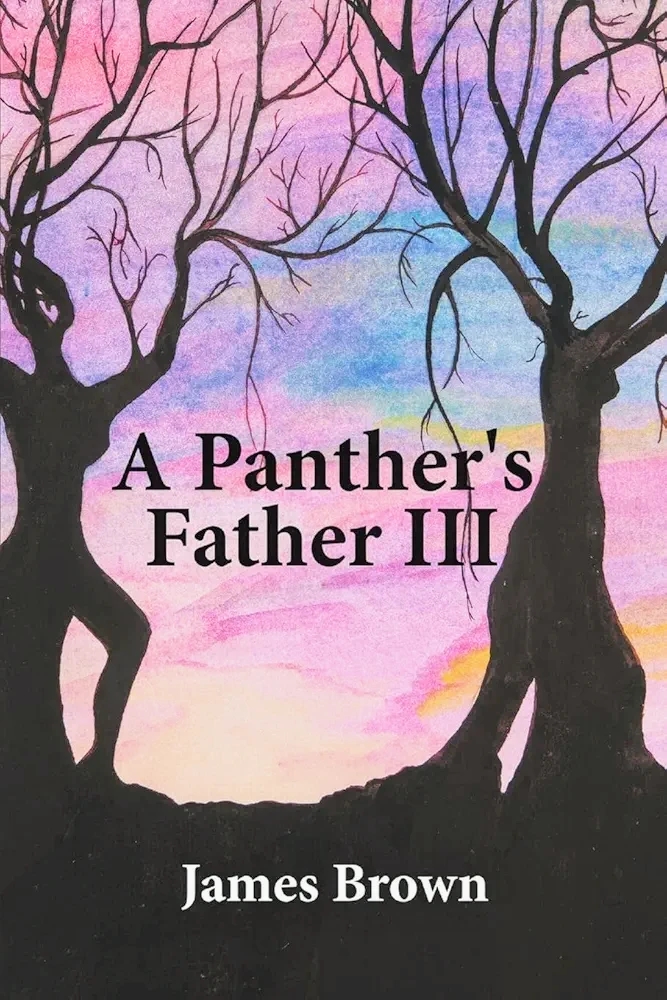
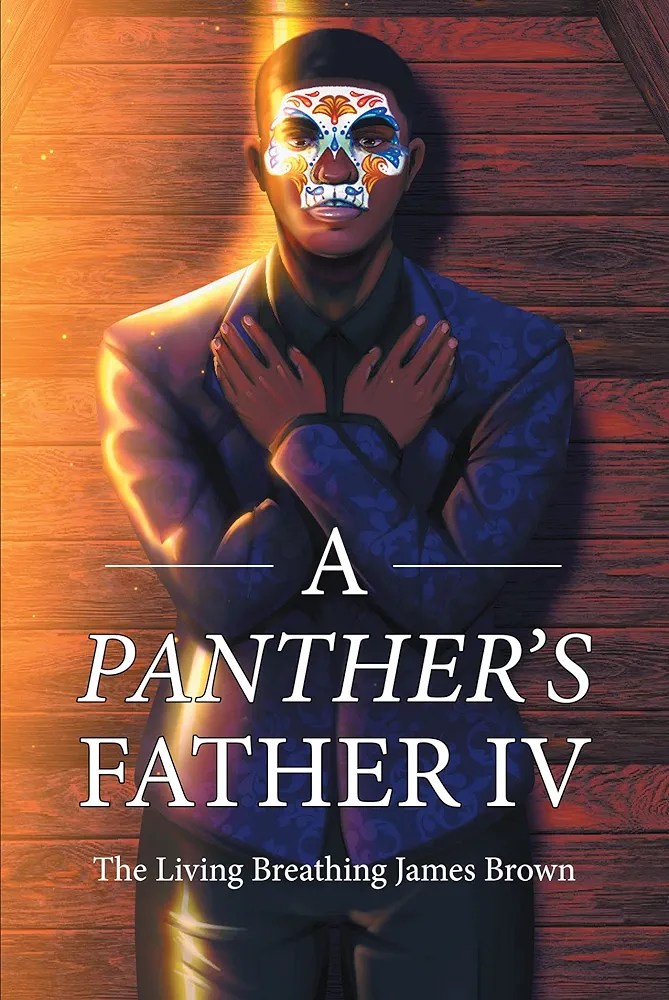
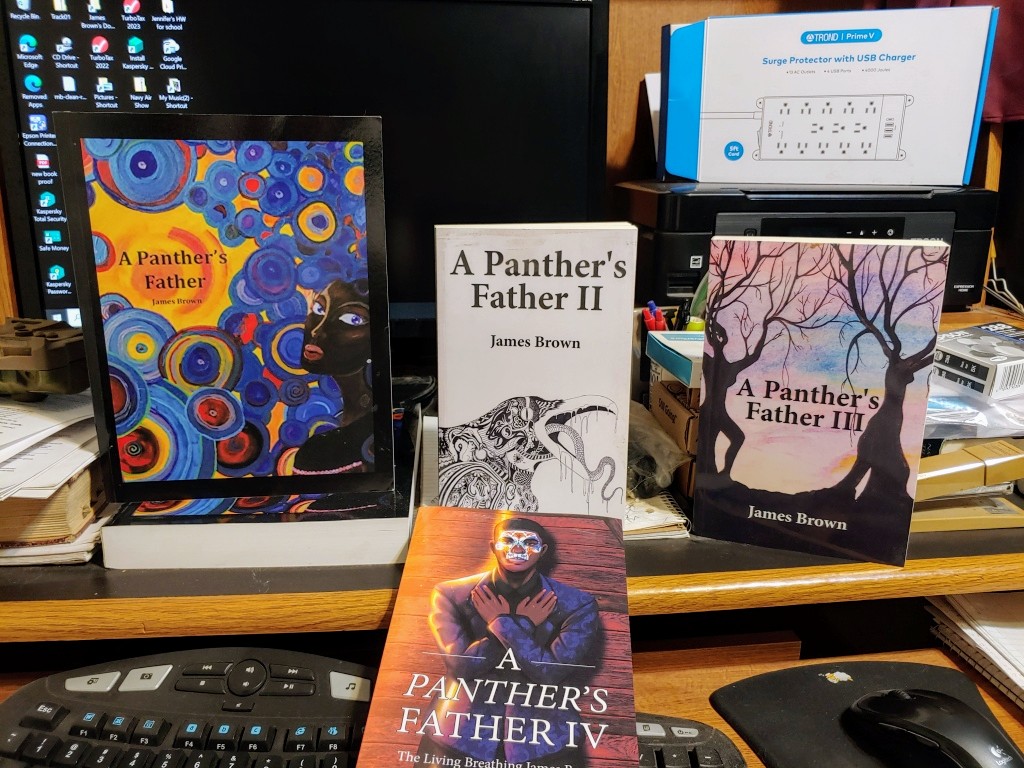
 thelivingbreathingjamesbrown.com
You must be logged in to post a comment.