


Are you Rich? And are the dark clouds of Hades hoovering above you? Can’t get to sleep?
The statement “It is easier for a camel to go through the eye of a needle than for a rich man to enter the kingdom of God” (Matthew 19:24) is one of Jesus’s most powerful and memorable declarations. It’s a statement designed to provoke thought and, as you’ve noted, create a “great mass of worry” for those who hold great wealth. To understand what Jesus was thinking, we have to look beyond a simple, literal interpretation and consider the context, the symbolism, and the spiritual challenge he was presenting.
The Literal and the Metaphorical
On its face, the image is one of impossibility. A camel, the largest animal in the Middle East, attempting to squeeze through the small opening of a sewing needle. This stark visual creates the initial “worry” and leaves no room for ambiguity. It’s a hyperbole, a figure of speech meant to exaggerate for effect.1 But what was Jesus’s purpose in using such a dramatic image?
Many scholars believe there was a more specific, metaphorical meaning. One popular interpretation suggests that the “eye of a needle” was a small, narrow gate in the walls of Jerusalem. When the main gate was closed at night, this smaller gate was the only way to enter the city. A camel carrying a heavy load would have to be stripped of all its burdens and then struggle to get through on its knees. This interpretation gives a glimmer of hope: it’s not impossible, but it is extremely difficult and requires a radical shedding of what weighs you down.
The Spiritual Burden of Wealth
Regardless of which interpretation is accurate, Jesus’s intention was to reveal the profound spiritual challenge that comes with material wealth. He wasn’t condemning the rich simply for having money, but for the inherent temptation that comes with it. Money often creates a sense of self-sufficiency. When we have enough to buy what we need, solve our problems, and feel secure, we may feel less need for God. This self-reliance is the true obstacle. The rich man’s possessions are a burden that prevents him from humbling himself and seeking a deeper reliance on God, much like the camel weighed down with goods.
Jesus understood that wealth can become a substitute for a relationship with God. It offers a kind of false security that distracts from the true treasures of the spirit.2 The “worry” for the rich, then, is not that their money is evil, but that their love for it might be. Jesus himself said, “You cannot serve both God and money” (Matthew 6:24). The verse serves as a wake-up call, a direct challenge to examine one’s heart and priorities. It asks the rich man: Are your possessions a tool you use to serve God, or are they a master you serve above all else?
The disciples, upon hearing this, were astonished. They asked, “Who then can be saved?” (Matthew 19:25). This reaction shows how radical Jesus’s statement was. It turned the conventional wisdom of the time on its head. In their culture, wealth was often seen as a sign of God’s favor and blessing. Jesus’s teaching was a direct refutation of this idea. He wasn’t just talking about a camel; he was talking about a total paradigm shift. He was telling them that salvation is not a reward for earthly success, but a gift that requires a profound change of heart—a heart that is unburdened and ready to follow him, regardless of the cost.
Ultimately, the message is one of divine grace. After the disciples’ despairing question, Jesus offered a final, hopeful thought: “With man this is impossible, but with God all things are possible” (Matthew 19:26). The “worry” is meant to lead to a surrender. The rich cannot save themselves with their money, but through a total reliance on God’s power, even this seemingly impossible transformation is within reach. It’s a call to action, to shed the burdens of wealth and pride and embrace a spiritual journey that leads to true riches in Heaven.
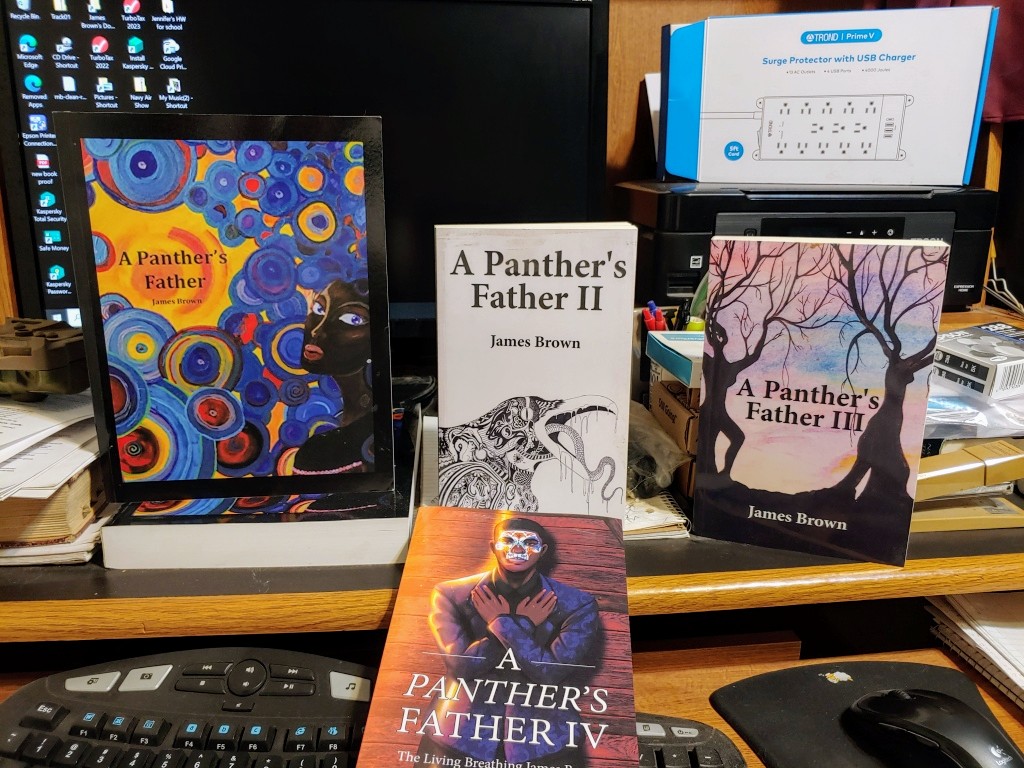
Now, read a Book-
 thelivingbreathingjamesbrown.com
You must be logged in to post a comment.