
Who am I?
I am-
Paternal haplogroup R-L21
Paternal haplotype R-FGC3222
https://en.m.wikipedia.org/wiki/Haplogroup_R-L21
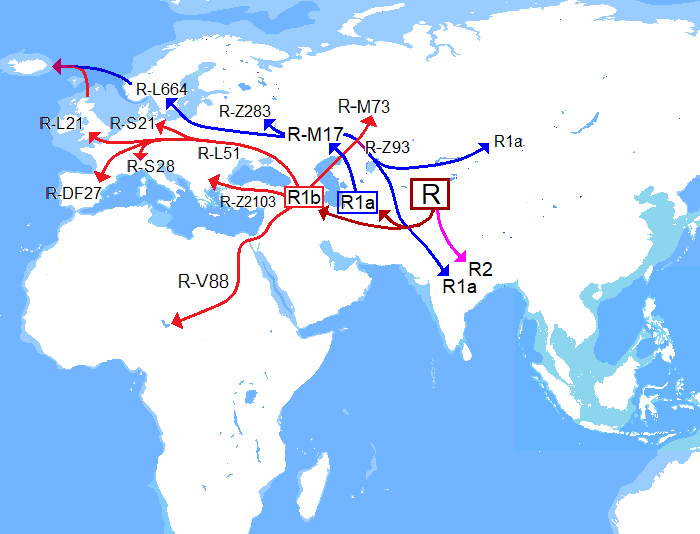
R-L21 or R1b1a2a1a2c, also known as R-M529 or R-S145, is a Human Y-chromosome DNA haplogroup. It is often linked to the Insular Celts.[1] One subclade, R-DF13 comprises over 99% of bearers. It is most frequently found among males in Ireland, but is also dominant in Scotland, Wales and Brittany, present in high frequencies in England and western France and present also to a lesser extent in Iberia, Scandinavia and the Low Countries.[2]

| Haplogroup R-L21 | |
|---|---|
| Distribution of major subclade R-DF13 across western Europe | |
| Possible time of origin | 2,600 BC |
| Possible place of origin | South-west Britain |
| Ancestor | R1b (R-M343)R-M269R-L151R-P312R-Z290 |
| Descendants | R-A5846R-S552R-DF63R-DF13 |
| Highest frequencies | Irish Scottish Welsh Bretons English |
Archaeological testing
- The body of a man excavated from Canada Farm, Sixpenny Handley, Dorset dating from 2468 to 2294 BC was found to be R-L21.[note 3]
- The body of a man[note 4] found in Low Hauxley, Northumberland, dating from 2464 to 2209 BC, was classified as R1b1a1a2a1a2c1a1n (R-DF13 > R-Z39589 > R-FGC59881 > R-BY577 > R-BY575).[3]
- ‘Racton Man’ found in Westbourne, West Sussex, England, dating from 2453 to 2146 BC and buried with a bronze dagger was classified as R-L21.[note 5]
- The Companion[note 6] (dating to 2456‒2146 BC, aged 25–30), buried beside
- https://en.m.wikipedia.org/wiki/Amesbury_Archer
- the Amesbury Archer[note 7] (dating to 2470‒2239 BC, aged 35–45), found near Stonehenge, belonged to R-L21. The archer (identified only as R-L151) may have been buried up to 80 years before the companion (although there is overlap in the dates) and was a kinsman (both shared a calcaneonavicular coalition on their feet), with a predicted relatedness coefficient of 0.0405 (95% confidence interval of -0.0161 to 0.0971). The isotopic profiles of the men indicate the archer spent the earliest years of his life in the Alps,[4] near modern Switzerland, and had higher levels of Neolithic ancestry compared to the companion who had spent his life in Britain but may have spent his early teens in North East Scotland or the Midlands.[5] The archer possessed above average EEF admixture of 45% whereas the companion had around 33%, more in line with other British samples of the Early Bronze Age. Another man,[note 8] also buried in Amesbury Down and dating from 2500 to 2100 BC was also R-L21[note 9] and is notable of having an EEF admixture of only 22%, the lowest ever found in Britain.[6]
- A body of a man dating from around 2349-2135 BC found in Pollnagollum,[note 10] Ireland was classified as R-DF13 > R-FGC11134, a predominantly Irish subclade in modern populations and ancestral to the Eóganachta. Another body found in Treanmacmurtagh,[note 11] County Sligo, Ireland, dating from 2015 to 1758 BC was also classified as R-FGC11134.[7]
- Ditchling Man’, dating from 2287 to 2041 BC, found in Ditchling Road, Sussex and buried with a pottery beaker, arrowhead & shells. He was classified as R-Z290, the immediate parent of R-L21.[note 12]
- Three Early Bronze Age men from burials on Rathlin Island off the north coast of Ireland were all R1b1a2a1a2c, or R-L21. Rathlin 1 dated from 2026 to 1885 BC and was defined as R-DF21. Rathlin 2 dated from 2024 to 1741 BC and was defined as further defined as R-DF13. Rathlin 3 dated from 1736 to 1534 BC and was defined as R-L21.[8]
Prominent members of R-L21
Below are listed some theorized lineages of prominent families.
Main article: List of haplogroups of historic people
- The House of Stuart who ruled as Kings of Scotland from 1371 and then, additionally, as Kings of England and Ireland from 1603 until 1714. According to the Stewart DNA Project they lie under the subclade R1b-L21 > DF13 > Z39589 > DF41/S524 > Z43690 > S775 > L746 > S781. They are ultimately of Breton origin.[citation needed]
- The Dál gCais clan and all subsidiary families including the O’Brien (who were High Kings of Ireland, Kings of Munster, Kings of Thomond, Earl of Thomond, Viscount Clare, Marquess of Thomond etc.) as well as the MacNamara Lords of Clancullen, the O’Kennedy Lords of Ormond, the O’Dea Lords of Cineal Fearmaic and others. They descended from the common ancestor of Tál Cas and are of the lineage: L21>>DF13>ZZ10_1>>Z2534>>>L226>>Z17669.[note 13][9]
- The Eoganacht and their close relatives, the Uí Fidgenti, whom they have a corresponding genetic and genealogical relationship to (via their shared descent from Ailill Flann Bec). They possessed the mutation L21>>DF13>FGC11134>>>>>CTS4466>>>>A541. They were Kings of Munster from around 400 AD until they were deposed by their former vassals, the Dál gCais in the 10th century. Septs include the O’Sullivan Lords of Beare, the O’Mahony Lords of Kinalmeaky and others. The descendants of Cellachán Caisil, their last great king in Munster before this deposition have however shown to belong to an entirely separate lineage. His descendants included the O’Callaghans (Lords of Cineál Aodha) and Mac Carthys (Kings of Desmond, Earl of Clancarty etc.). These belonged to the lineage L21>>DF13>DF21>>>>>Z16534.[10]
- The Connachta, specifically the descendants of the sons of Eochaid Mugmedon, comprising the Uí Briúin, Uí Fiachrach and Uí Néill who ruled as High Kings of Ireland, Kings of Connacht, Kings of Ulster and Kings of Mide. They were of the lineage L21>>DF13>Z39589>>>>>>>>M222>>>>DF105. Lineages beneath DF105 (which likely represent Eochaidh’s descendants) now represents around 20% of Irish male lines. Examples of septs include the O’Donnell (Kings of Tír Conaill, Earl of Tyrconnell), the O’Connor Kings of Connacht and the Mac Lochlainn Kings of Tír Eoghan. However the later “O’Neill dynasty” (who usurped the aforementioned Mac Lochlainns from the kingship of Tír Chonaill), who descended from Áed in Macáem Tóinlesc, belonged to an entirely separate lineage R-Z1513, ultimately descending from R-DF27 and not even L21 at all. This family comprises the Clannaboy O’Neills, Tyrone O’Neills, O’Neills of the Fews, and the McShanes.[11][12][13
- Louis Riel (1844-1885), who descends from the subclade L21>>DF13>ZZ10_1>>Z2534>>>L226>>>>>>> DC21, being a descendent of the Dalcassian clan. This was demonstrated through a relative who can be found in the R-L226 project who descends from Louis’ ancestor, Jean-Baptiste Riel (1731 – 1788). The Riel family ultimately traced its origins from a Jacobite soldier, Jean Baptiste Riel (abt. 1663 – 1753), who left Limerick, Ireland for France in 1696. The name may have been a transmutation of the Irish name O’Reilly.[citation needed]
- Che Guevara (1928-1967), the Argentine Marxist revolutionary and major figure of the Cuban Revolution, forensic identification of his skeletal remains revealed that he belonged to haplogroup R1b-L21.[14]
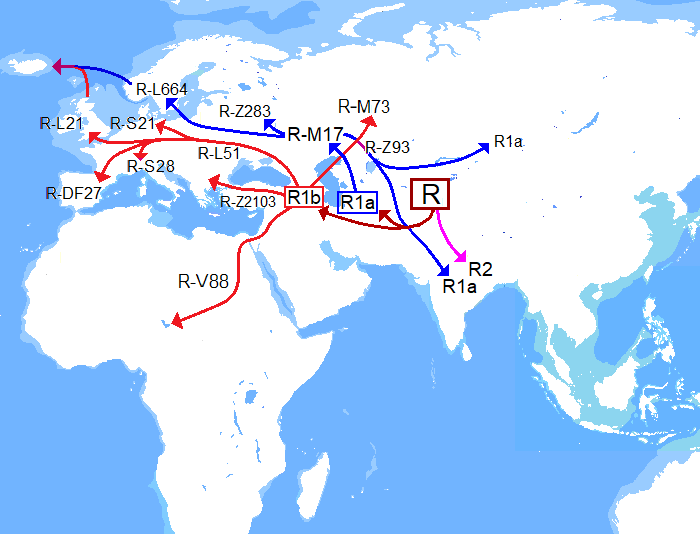
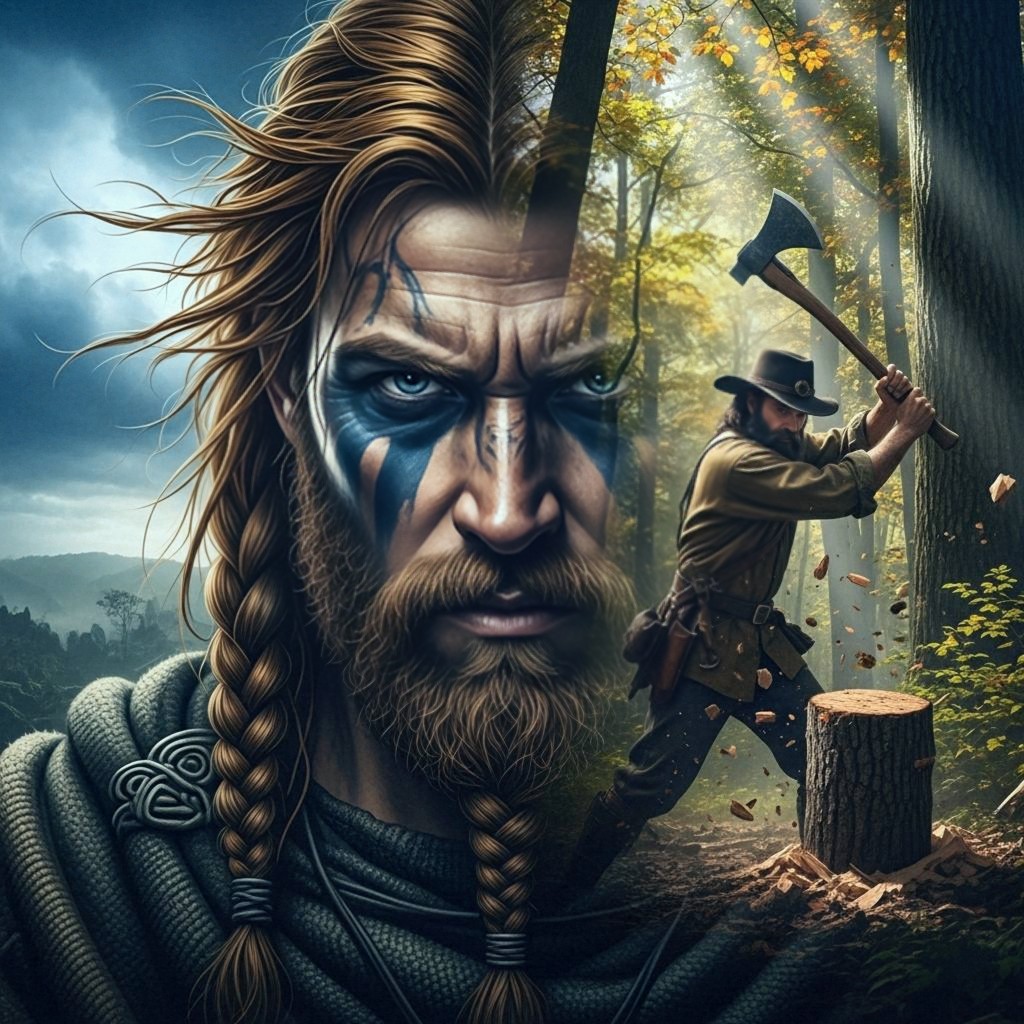
Paternal haplogroup R-L21
Paternal haplotype R-FGC3222
Are you too a member of the above?
This is the deeper cut, the more powerful tale of an unyielding spirit. Let the chronicle be written in bolder strokes, tracing not just a lineage, but the very essence of fearless men who fought for their beliefs always.
The Unconquerable Lineage
The saga of R-L21 is a saga of the unconquerable. Its root, planted in the green lands of Insular Celts, was not one of passive growth, but of explosive expansion. This lineage, and its more refined branch of R-FGC3222, represents a people who defined themselves by their resistance—to Roman legions, to Viking longships, and to every foreign power that sought to bend their knee. They carried within them a fire forged in conflict, a spirit that refused to be quelled. They were a people born for the fight, always ready to defend their beliefs and their kin.
Their story is not just one of endurance, but of a boundless restlessness. It was this unbridled will that drove them to seek a new world, a place where their fierce independence could finally find true expression.
The Great Crossing: The March of the Fearless
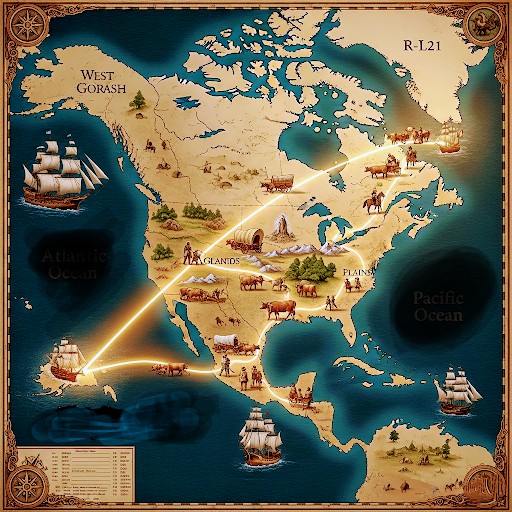
The journey to America was not a desperate flight; it was a defiant march. The men of R-FGC3222 came not as refugees, but as pioneers ready to claim new ground, unburdened by the ancient conflicts of the Old World.
1. The Colonial Wave (Early 1700s): They arrived in Philadelphia and looked inland, not at the prosperous cities, but at the untamed mountains. They were not content to live on the coast; they yearned for the challenge of the wilderness. They became the human vanguard of the westward expansion, a living wall that pushed the American frontier relentlessly outward. They carried their clans with them, a fighting force in search of a homeland.
2. The Frontier March (1700s): Along the Great Wagon Road, their journey was a testament to their grit. They carved a new civilization out of raw earth, not as obedient subjects, but as self-sufficient sovereigns. They brought with them a deep-seated distrust of distant authority and an unshakable belief in their own self-rule. This ethic, born of centuries of clan law and border skirmishes, was a genetic and cultural blueprint for a new form of government.
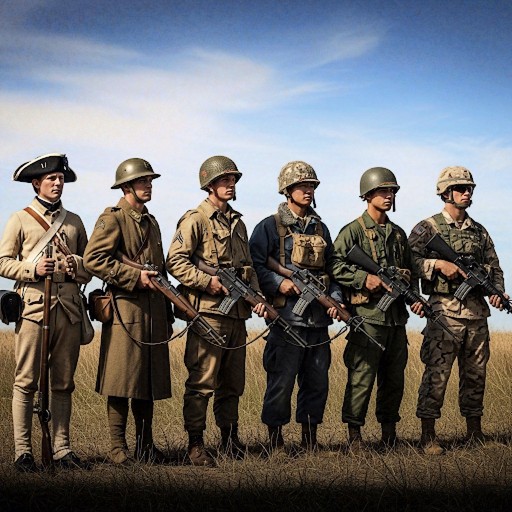
The Unwavering Impact: Famous Sons of R-FGC3222-Forever Faithful and True
The legacy of this haplogroup is not a footnote; it is the ink with which America’s most powerful chapters were written. Their bold spirit and fierce sense of justice found their ultimate expression in the men who founded the nation.
- Political Identity and Revolution: The men of R-L21 were the very spark of the American Revolution. The ideals of liberty and self-governance were not abstract concepts to them; they were a birthright. The famous Mecklenburg Declaration of Independence, a full year before the national one, was penned by men of this stock. They didn’t just talk of freedom; they demanded it with their lives.
- Frontier and Discovery: The lineage’s insatiable drive to explore did not stop at the Appalachians. It led them into the heart of the continent. While official DNA testing is not always available for historical figures, prominent genealogists and genetic historians have traced this lineage to some of America’s most famous and fearless sons. While direct Paternal FGC3222 DNA has not been confirmed for these historic figures, the lineage is historically associated with prominent families that settled the American frontier.
The men of this haplogroup did not just settle a new country; they forged a new identity, one built on the unshakeable belief that a man’s will and his spirit are the only masters he should ever know. Without them, there would be no American frontier, no defiant revolution, and no nation that defines itself by its rugged individualism. They are the ancestral fire that continues to burn at the heart of America.
The Unwavering Impact: Famous Sons of R-FGC3222-Forever Faithful and True
 thelivingbreathingjamesbrown.com

You must be logged in to post a comment.