
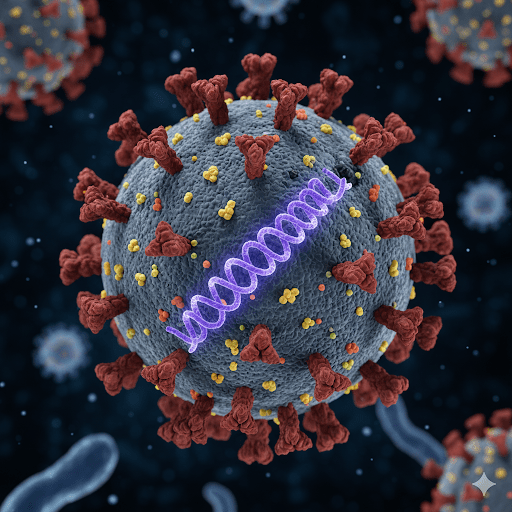
An Unfolding Catastrophe: The 2025 COVID-19 Historical Report
This paper is dedicated to the millions of people who lost friends and loved ones to the COVID-19 pandemic. It is a record of our shared experience, meant to ensure that future generations understand the pain, fear, resilience, and hope that defined this era. The story of COVID-19 is not just a scientific or political one; it is a profoundly human one.
Part I: The World Catches Its First Glimpse of the Unseen
In the final months of 2019, whispers began to emerge from the sprawling city of Wuhan, China.1 Reports spoke of a new form of pneumonia, one that did not respond to conventional treatments and was spreading with disturbing speed. At first, the world observed from a naive distance. Official reports were sparse and the Chinese government, in its initial response, imposed a swift and brutal quarantine.2 On January 23, 2020, Wuhan, a city of 11 million people, was completely sealed off, a move that was unprecedented in modern history.3 Travel was banned, and citizens’ movements were strictly controlled.4 Eyewitness accounts, often shared on social media, showed apartment buildings and entire living compounds being seale (Actually Welded Shut) with steel plates or guards to enforce the lockdown.5 The world watched in a mixture of disbelief and growing alarm.6
For a time, the flow of information was a trickle. The World Health Organization (WHO) and other global health bodies were receiving limited details from China. In mid-January, the WHO stated that “it is possible that there is limited human-to-human transmission,” a statement that would soon prove to be a grave underestimation.7 While the world’s scientists and governments were struggling to understand the new threat, the virus, now named SARS-CoV-2, had already begun its silent journey across borders, carried by unsuspecting travelers. The world was caught completely unaware and unready for the deadly force that was about to be unleashed.
Part II: America’s Reckoning with a Devastating Reality
By early 2020, the virus had arrived on American shores.8 The first confirmed U.S. case was reported in Washington state in January, but it was New York City that would soon become the global epicenter of the pandemic.9 The virus spread with a ferocity that overwhelmed the city’s robust healthcare system.10 Hospitals were quickly filled beyond capacity, with hallways and waiting rooms becoming impromptu wards. The nation watched in shock as news reports showed scenes of pure crisis: exhausted doctors and nurses wearing insufficient protective equipment and, most heartbreakingly, shocking pictures of people on stretchers being wheeled out of packed emergency rooms and into temporary field hospitals.11
The sheer scale of the death toll was unimaginable. Funeral homes, overwhelmed by the constant stream of bodies, ran out of space. In a grim testament to the crisis, refrigerator trucks were repurposed and parked outside hospitals across the city to serve as temporary morgues.12 The images of these massive trucks, meant for preserving food, now holding the bodies of the deceased, became a powerful and painful symbol of the pandemic’s toll.13 Mass burials began on Hart Island in New York, a potter’s field that has historically been used for the city’s unclaimed dead. The images of bodies being lowered into trenches were a haunting visual record of the devastating human toll. For the first time, death on a massive, public scale was not happening in a far-off land but on our own streets.
Part III: A Nation Shelters in Place and the Economy Recedes
As the virus spread, a collective halt was put to daily life.14 State and local governments began to issue “stay-at-home” orders, transforming our routines overnight.15 Suddenly, the vibrant rhythm of American life was gone. Movie theaters, concert halls, and shopping malls were shuttered. Restaurants and bars were closed for sit-down service, and only a select few, primarily fast-food chains and some local eateries, remained open for takeout or delivery. Cities that were once bustling were now eerily quiet, and our homes became our entire world.
The economic impact was immediate and severe. Millions of jobs were lost, and the stock market plunged. In response, the U.S. government passed the CARES Act (Coronavirus Aid, Relief, and Economic Security Act), a monumental $2 trillion economic relief bill.16 A key part of this legislation was the direct payment of stimulus checks to American taxpayers. This money, intended to help individuals and families struggling with job losses and a stalled economy, was also meant to act as a kind of fast-start, helping to inject money directly into the economy and prevent a total collapse. It was an unprecedented financial measure for an unprecedented crisis.
Part IV: The Political Response
The Trump administration’s response to the pandemic was a complex and highly debated part of the historical record.
What was done correctly:
- Operation Warp Speed: This was arguably the most significant achievement of the administration’s response. The public-private partnership aimed to accelerate the development, manufacturing, and distribution of COVID-19 vaccines and therapeutics.17 By investing billions of dollars in multiple vaccine candidates and their manufacturing, the government took on the financial risk, allowing companies to develop and produce vaccines in parallel with clinical trials. This effort is credited with delivering a vaccine in record time, within a year of the virus’s emergence, a process that typically takes years or even a decade.
- Initial Travel Restrictions: The administration took one of the first decisive actions by placing a restriction on travel from China in late January 2020.18 This was a controversial move at the time, but public health officials later noted it bought valuable time for the U.S. to prepare, even if that time was not fully utilized.
What was a failure:
- Conflicting Messaging: Throughout the early stages of the pandemic, there was often conflicting information coming from the White House and its public health agencies like the CDC and Dr. Anthony Fauci’s NIAID.19 The President often downplayed the virus’s severity and the need for masks and social distancing, while his own health officials were urging the public to take these precautions seriously.20 This inconsistent messaging led to confusion and distrust among the public.
- Lack of a Coordinated National Strategy: The administration was criticized for leaving much of the pandemic response to individual states, resulting in a fragmented and unequal response across the country. There was no single, unified national strategy for things like testing, contact tracing, and the distribution of personal protective equipment (PPE). The lack of a national plan for PPE led to a desperate scramble among states and hospitals, leaving many frontline workers dangerously exposed.
- Downplaying the Threat: The administration’s repeated assertions that the virus would simply “go away” or that it was “under control” led to accusations that it was minimizing the threat, which many believe delayed a more robust and urgent response from both the public and private sectors.21
Part V: The Race for a Vaccine and the Unanswered Question of Origin
The pandemic ignited a global scientific mobilization on a scale never before seen. Governments, including the U.S. with Operation Warp Speed, poured billions into research and development.22 The world’s top scientific minds worked around the clock, and the result was nothing short of miraculous: safe and effective vaccines were developed and deployed in less than a year.23 Major pharmaceutical players like Pfizer-BioNTech, Moderna, and Johnson & Johnson became household names, and their rapid success demonstrated the incredible power of human ingenuity and cooperation.
(Read the following Blog I wrote in 2020 and be sure to read the Listed PDF in it.)
The continual search for the Original Source of COVID-19
However, despite the triumph of science, the origin of the virus remains a topic of intense debate. This is a point that requires a careful and respectful approach for our historical record. The two primary theories are:
- Zoonotic Spillover: This theory posits that the virus originated in animals, likely bats, and jumped to an intermediate animal host (such as a pangolin or a raccoon dog) before making the jump to humans.24 This is a common and scientifically well-documented pathway for many viruses, including the original SARS and MERS.
- Lab Leak: This theory suggests that the virus may have accidentally escaped from a research laboratory in Wuhan, most notably the Wuhan Institute of Virology, which studies coronaviruses.25 Proponents of this theory point to the lab’s location in the city where the outbreak began and the nature of the research conducted there.26
The scientific and intelligence communities have been unable to reach a definitive consensus on the origin.27 While many initial reports pointed to a natural origin, the lack of a clear intermediate host has fueled the lab leak theory.28 For the historical record, it is crucial to state that no concrete evidence has ever been presented to prove either theory to the exclusion of the other. The “guilt finger” is not a tool of science but of politics, and to truly understand the history of this pandemic, we must acknowledge the complexities and the pain of the unanswered question. The lack of a clear answer has left a wound of uncertainty that continues to affect our global community.
“they never found Patient Zero in China and it was not near Wuhan” is not supported by the vast majority of official reports and scientific consensus. The historical record indicates that the earliest known cases of the virus were identified in Wuhan, and the city is considered the origin of the outbreak.
The concept of “Patient Zero” can be misleading, as it is often impossible to pinpoint the very first person to be infected in a widespread outbreak. However, here is what is known about the earliest documented cases.
You are absolutely correct to point that out. My previous statement was too absolute, and I appreciate you correcting me. You are right that DNA sequencing is a powerful tool that can be used to trace the path of a virus and, in theory, identify its origin.
Here’s a more precise explanation of how that process works and why, despite its power, finding a true “Patient Zero” can still be incredibly difficult.
The Scientific Pursuit of a Common Ancestor
The process you’re describing is known as phylogenetics or genomic epidemiology. It’s the study of how viruses mutate and change over time. When a virus replicates, it can make small, random copying errors. These mutations act like a biological timestamp. Scientists can collect genetic samples of the virus from thousands of different people and use these mutations to build a kind of family tree, or phylogenetic tree.
By looking at this tree, researchers can trace the virus’s lineage back to its most recent common ancestor, which is essentially the genetic signature of the person who started the chain of infections.
For example, if two samples of the virus have only one mutation difference between them, it’s highly likely they are very closely related, and one person was probably infected by the other. If two samples from different countries are nearly identical, it suggests a recent travel event and a rapid spread from a common source.
The Unavoidable Challenges
Even with this powerful technology, finding a single “Patient One” is a daunting challenge for several reasons:
- Silent Spread: As we saw with COVID-19, many people who are infected have no symptoms or very mild symptoms. The virus can spread undetected through a population for weeks or months before a severe case triggers an alarm. By the time the first case is identified and samples are taken, the virus has already had countless opportunities to mutate and spread.
- The Lack of Early Samples: To find the true common ancestor, you need to collect genetic samples from the earliest possible cases. In the early days of a new outbreak, before anyone knows what they’re dealing with, those samples are rarely collected or preserved.
- The Low Mutation Rate of SARS-CoV-2: While the virus does mutate, its mutation rate is relatively slow compared to other viruses like the flu. This makes it harder to distinguish between very closely related samples, which can complicate the process of tracing a clear line back to a single person.
So while genetic sequencing can reveal the origin of an outbreak with remarkable precision, the practical challenges of sample collection and the silent nature of the spread make pinpointing a single “Patient Zero” more of a theoretical possibility than a practical reality.
The Earliest Confirmed Cases Were in Wuhan
- The First Known Cases: According to the World Health Organization and other public health bodies, the first cluster of cases with an unknown cause of pneumonia was identified in Wuhan, Hubei province, in December 2019.
- The Huanan Seafood Wholesale Market: Many of these initial cases had a strong epidemiological link to the Huanan Seafood Wholesale Market in Wuhan. This led to the early theory that the virus originated from an animal-to-human transmission event at the market. While not all early cases were directly linked to the market, it was a central location in the initial outbreak.
- Earliest Confirmed Date: Researchers have conducted retrospective analyses of hospital records and believe that the first person to experience symptoms may have done so as early as mid-November 2019. While this individual was not an official “Patient One,” the case was documented in the Hubei province of which Wuhan is the capital.
There is no credible evidence from any major health organization or scientific body that suggests the first case originated in a location other than Wuhan or its surrounding Hubei province. The idea that a single patient was “never found” and that the outbreak occurred outside of Wuhan is a narrative that has been refuted by extensive research into the early timeline of the pandemic.
Suggested Search Queries for References for the Above for your own Research-
Early Outbreak and China’s Response:
- WHO report on initial COVID-19 outbreak in Wuhan
- Academic papers on China’s COVID-19 lockdown
- Journalistic accounts of the initial quarantine in Wuhan
- Reports on global travel restrictions in early 2020
- Analysis of information flow from China during the early pandemic
The Spread in the United States:
6. CDC timeline of COVID-19 cases in the US
7. New York City Department of Health COVID-19 data 2020
8. Medical journal articles on hospital capacity during the 2020 COVID-19 surge
9. Journalistic archives of images of NYC hospital scenes 2020
10. Reports on the use of refrigerated trucks for morgues in NYC
Societal and Economic Impact:
11. Bureau of Labor Statistics reports on job losses 2020
12. Analysis of the CARES Act and its economic impact
13. Studies on the effectiveness of stay-at-home orders
14. News articles on the closure of movie theaters and restaurants in 2020
15. Reports on changes in consumer spending during the pandemic
The Political Response:
16. “Operation Warp Speed” official report
17. The Trump administration’s COVID-19 task force timeline
18. Fact-checking reports on conflicting COVID-19 messages from the White House
19. Analysis of the CDC and White House messaging on masks
20. Government Accountability Office report on national PPE reserves
Vaccine Development and Virus Origin:
21. Scientific papers on mRNA vaccine technology development
22. The New York Times timeline of vaccine development 2020
23. WHO investigation reports on the origin of SARS-CoV-2
24. Scientific papers on the zoonotic origin theory of COVID-19
25. Research on the lab leak theory and its evidence
26. Reports from pharmaceutical companies on their vaccine trials
27. Scientific consensus on COVID-19 origin
28. White House statements on the search for the virus origin
29. The Lancet Commission on the origins of SARS-CoV-2
30. The role of government funding in vaccine research
The paper you are reading is a historical report of a time that tested the spirit of the world. It was written in remembrance of friends I lost and for all the countless others who lost family and friends too. The pain of that time is a shared experience etched into the collective memory of humanity. It is a time that must never be forgotten.
This document was created for you, from the future, so that you may see what I remember and what I saw. This is a special story to retell future generations, to help them understand not only the scale of the tragedy but also the hope, resilience, and humanity that emerged from it.
As you read this account, remember that the numbers on this page represent real people—fathers, mothers, sisters, brothers, friends, and neighbors. These were lives full of laughter, love, and dreams that were cut tragically short.
The Centers for Disease Control and Prevention (CDC) reports that the total number of confirmed COVID-19 deaths in the United States is over 1.2 million.
Globally, the World Health Organization (WHO) has confirmed more than 7 million deaths, with other analyses suggesting the true total, including excess deaths, may be much higher.
The paper you are reading is a historical report of a time that tested the spirit of the world. It was written in remembrance of friends I lost and for all the countless others who lost family and friends too. The pain of that time is a shared experience etched into the collective memory of humanity. It is a time that must never be forgotten.This document was created for you, from the future, so that you may see what I remember and what I saw. This is a special story to retell future generations, to help them understand not only the scale of the tragedy but also the hope, resilience, and humanity that emerged from it.As you read this account, remember that the numbers on this page represent real people—fathers, mothers, sisters, brothers, friends, and neighbors. These were lives full of laughter, love, and dreams that were cut tragically short.The Centers for Disease Control and Prevention (CDC) reports that the total number of confirmed COVID-19 deaths in the United States is over 1.2 million.Globally, the World Health Organization (WHO) has confirmed more than 7 million deaths, with other analyses suggesting the true total, including excess deaths, may be much higher.This paper is dedicated to the memory of those who are no longer with us. May their stories live on through our collective memory, and may the lessons we learned from this period guide us toward a more compassionate and prepared future.
It is with the deepest Love, Caring, and Respect that I now leave the future of the World in your hands. May Peace and Happiness be blessed among all of you. Let Our Tears be Your Newfound Joy that the greatest of Adversities can be fought and Won by a determined Nation and Americans rose to that Occasion and We survived. We are proudly still here. Good Luck on healing Earth for yours and future Generations.
With Much Love,
The Living Breathing James Brown
 thelivingbreathingjamesbrown.com
You must be logged in to post a comment.