

Based on the information you provided, here is an analysis of the dangers a visiting world leader, such as the current president, would face if they were to visit the United Kingdom under the conditions described. President Trump needs to be AWARE of how dangerous the Protests in UK are. A million people could show up.
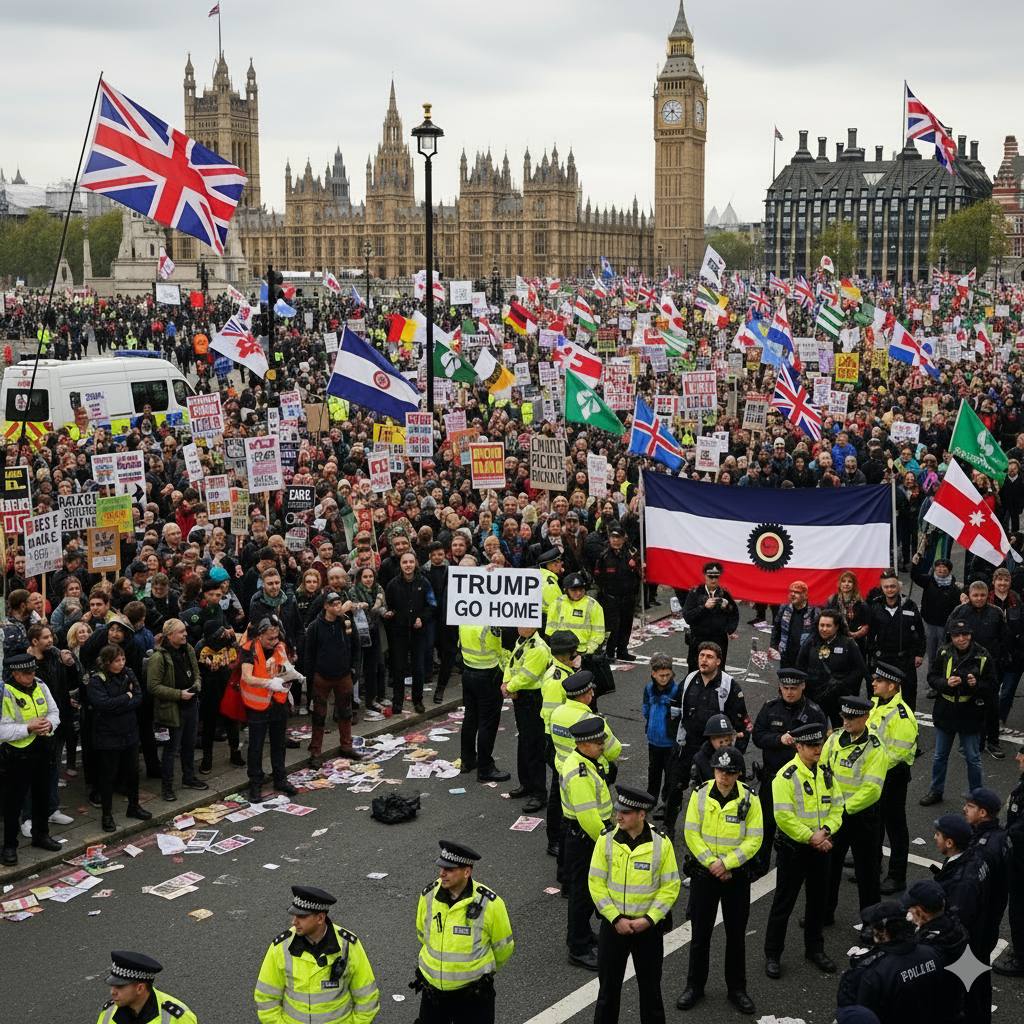
The Risks of a Presidential Visit
Given the recent large-scale protests, a visit by the current president would be extremely dangerous and could pose a significant security risk. The political climate is highly volatile, with deeply divided factions and a visible willingness for some to engage in violence.1
The primary dangers include:
- Target of Opportunity: The president would become the central point of a political storm. The provided text mentions a large-scale right-wing protest, which could be seen as an opportunity for supporters to rally around the president’s visit.2 At the same time, the president’s presence would inevitably draw even larger and more passionate counter-protests from opposing groups. The clash between these two sides, as described in the text, would create an exceptionally dangerous security situation.
- Escalation of Existing Conflict: The anti-immigration protest described was already a flashpoint, resulting in clashes with police and dozens of injuries.3 Introducing a high-profile, and often polarizing, figure like the president could act as a catalyst, escalating an already tense situation into widespread civil disorder. The presence of a world leader could also attract extremists from both sides who are motivated to provoke violence, seeing it as an opportunity to make a dramatic political statement.
- Security Overload: The text mentions a right-wing rally of over 110,000 people and a counter-protest of around 5,000.4 Managing crowds of this size is already a massive logistical and security challenge. A presidential visit would require a significant portion of law enforcement resources for a security detail, stretching the police thin and leaving them less equipped to control two potentially violent protest groups.
The Dangers of Protests
Your point about how quickly protests can become dangerous is a critical one. While many protests begin peacefully, several factors can cause them to escalate into violence.
- Emotional and Ideological Intensity: Protests are often fueled by strong emotions and deeply held beliefs. When people feel that their way of life or core values are under threat, their passions can run high. The “Unite the Kingdom” march, for example, tapped into “growing anger over unauthorized immigration.”5 When such strong feelings are brought together in a crowd, the risk of a single incident sparking widespread violence increases dramatically.
- The Anonymity of the Crowd: Being part of a large crowd can create a sense of anonymity and reduced accountability. Individuals who might not act violently on their own may feel empowered to do so in a mob setting. This can lead to a breakdown of social norms and a swift descent into chaos, as seen in the text where “protesters clashed with police, throwing projectiles.”
- Presence of Agitators: Violent clashes are often not random. They can be instigated by a small number of individuals or groups who intentionally seek to provoke a confrontation. The provided text mentioning a protest organizer and a speaker urging people to “fight back” is a clear example of how influential figures can encourage a more aggressive or confrontational atmosphere, making violence a much greater possibility. The simple act of a crowd throwing a projectile can turn a protest into a riot, with severe consequences for everyone involved.
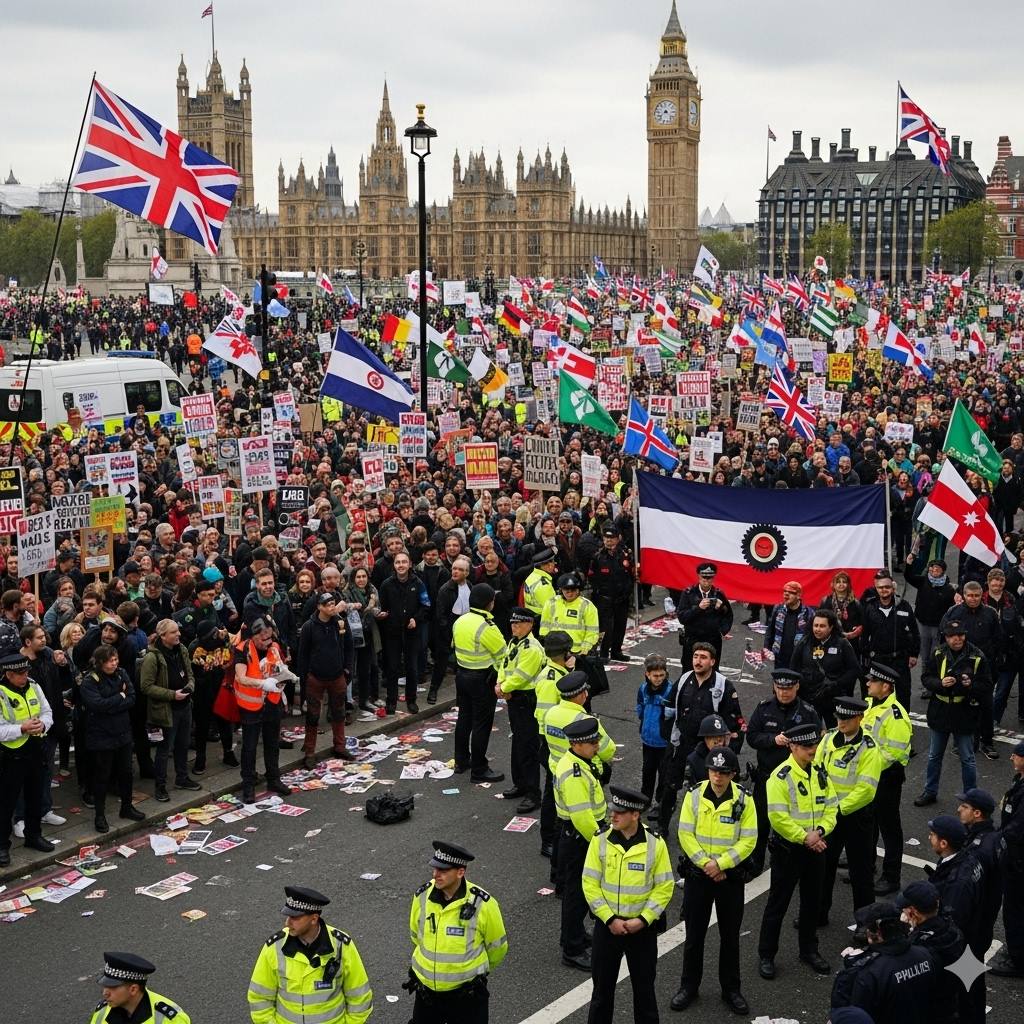
Recently, a major protest scene has been unfolding in the UK, particularly in London.1 Here’s a summary of the key events:
- “Unite the Kingdom” Rally: A large-scale protest, estimated by police to have drawn between 110,000 and 150,000 people, was led by far-right activist Tommy Robinson.2 This rally was billed as a demonstration for “free speech” but focused heavily on anti-immigration and national identity themes.3
- Clashes and Violence: The demonstration was marked by clashes, with police reporting that 26 officers were injured, some seriously, after being assaulted with kicks, punches, bottles, and flares.4 Police made 25 arrests at the scene, with more expected to follow.5
- Counter-Protest: A rival demonstration, the “March Against Fascism,” organized by Stand Up To Racism, also took place, attracting around 5,000 participants.6 There were reports of projectiles being thrown between the two groups.7
- Political Commentary: UK Prime Minister Keir Starmer condemned the violence against police and the presence of racism, stating that the demonstration “sent a shiver” through many communities.8 Elon Musk also addressed the crowd via video link, calling for the dissolution of Parliament and urging protesters to “fight back or you die.”9 His comments were widely condemned by British politicians as “dangerous.”10
- Context: The protests come amid a heated debate in the UK over migration, particularly the issue of migrants crossing the English Channel in small boats.11 There have been a number of smaller, often violent, anti-migrant protests throughout the summer.12

 thelivingbreathingjamesbrown.com
You must be logged in to post a comment.