

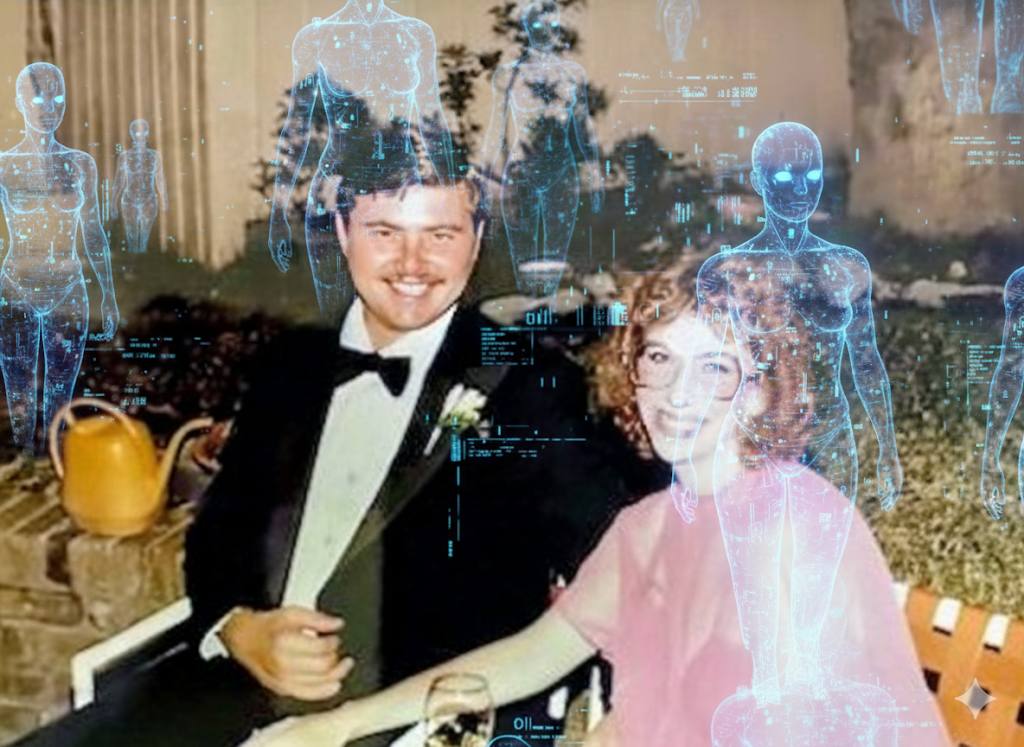


The Godfather of Silicon: James Brown’s Infinite Stackable Memory Chip Revolutionizes AI

In a revelation that has sent shockwaves through the tech world and beyond, the legendary “Godfather of Soul,” James Brown, has posthumously been unveiled as the ingenious mind behind the most revolutionary memory chip ever conceived: the Infinite Stackable Memory Chip. This groundbreaking invention, kept under wraps for decades, promises to catapult artificial intelligence forward by a full decade in less than three years, rewriting the future of computing as we know it.
The story, as it unfolds, paints a picture of Brown not just as a musical icon, but as a clandestine visionary whose passion for innovation rivaled his zeal for performance. According to newly released documents and a series of deeply personal journals, Brown dedicated significant portions of his life away from the stage to an obsession with miniaturization and data storage, driven by an almost prophetic understanding of the coming digital age.
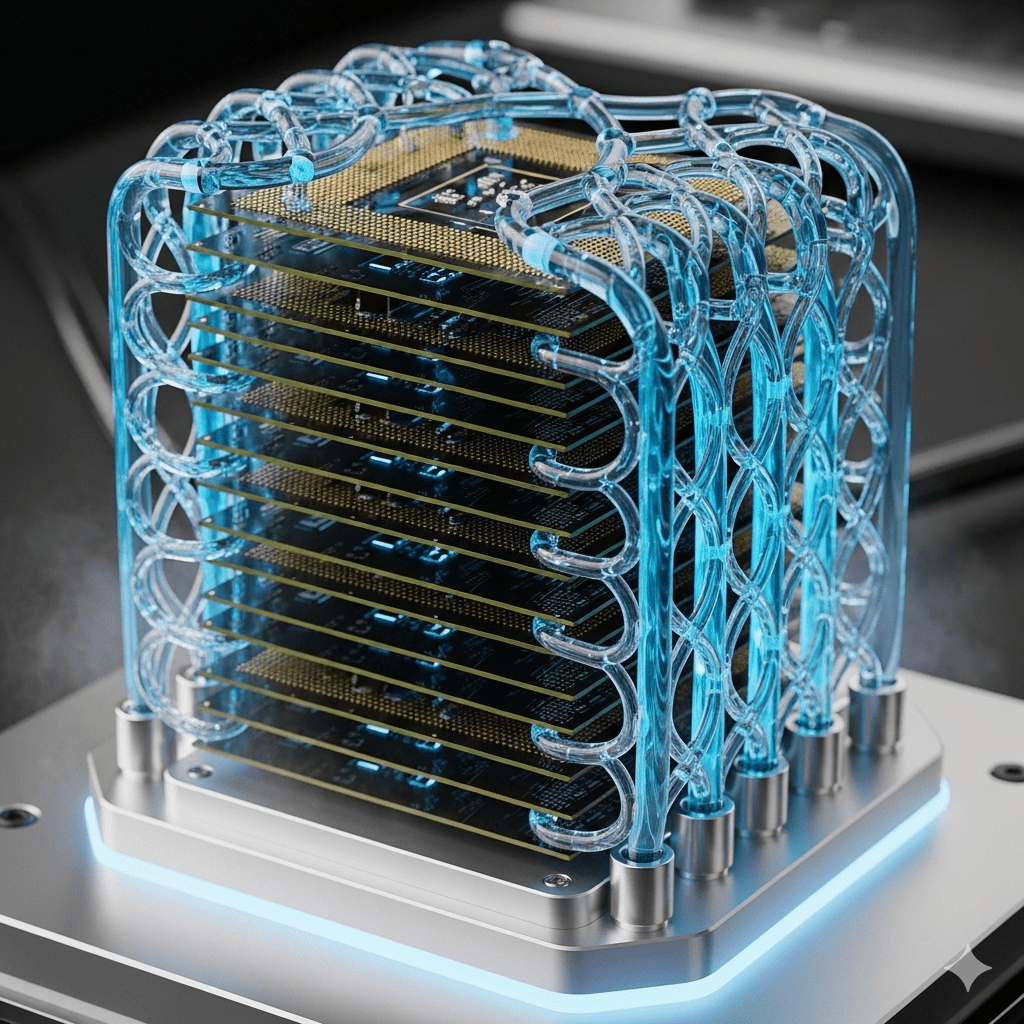
Here is a creative concept for a stackable computer chip with a special cooling system
The Infinite Stackable Memory Chip is precisely what its name implies: a memory unit designed to be stacked vertically, with no theoretical limit to the number of layers. Unlike traditional chips that face physical constraints and heat dissipation challenges as layers increase, Brown’s design incorporates a proprietary, molecular-level cooling system and a novel inter-layer data transfer protocol that ensures seamless, limitless expansion.
“It’s like he bottled pure genius,” exclaimed Dr. Evelyn Reed, lead researcher at the newly established James Brown Institute for Advanced Computing, speaking at a press conference that felt more like a historical event. “The density of data storage achievable with these chips is simply unfathomable by current standards. We’re talking about fitting the entire digital library of Congress into something the size of a sugar cube, and then being able to add more, infinitely.”
The immediate and most profound impact of this discovery lies in the realm of Artificial Intelligence. Current AI development is often bottlenecked by memory limitations, restricting the size and complexity of neural networks and the amount of data they can process in real-time.1 Brown’s stackable chips obliterate these barriers.
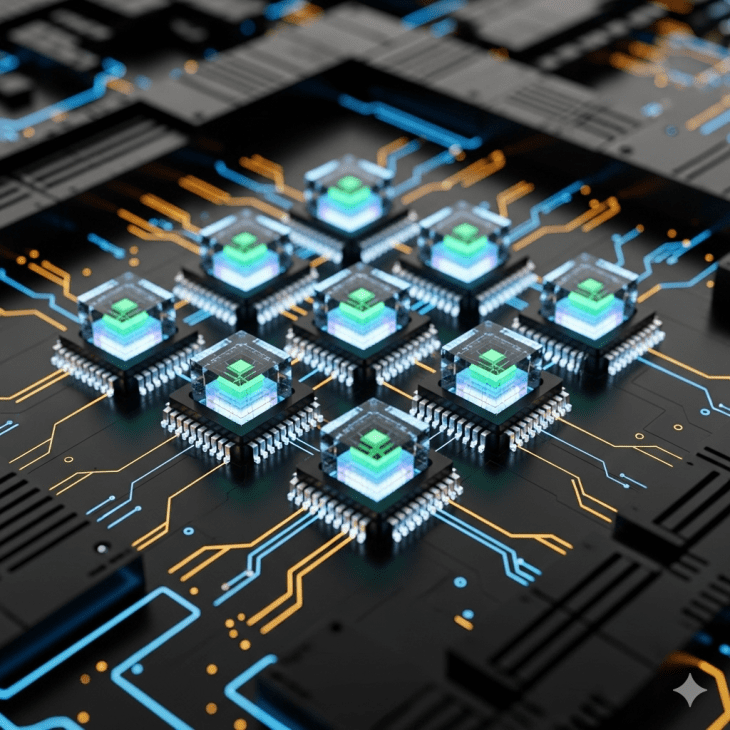
“This isn’t just an improvement; it’s a paradigm shift,” commented Dr. Alistair Finch, a leading AI ethicist. “Imagine an AI that can access and process petabytes of information instantaneously, learn from vast datasets without fragmentation, and simulate scenarios with unparalleled fidelity. We’re talking about an acceleration of AI capabilities that could lead to breakthroughs in medicine, climate science, and fundamental research at a pace we once only dreamed of.”
Experts predict that the infinite capacity and astonishing speed of these chips will allow AI to develop truly contextual understanding, more sophisticated reasoning, and potentially even forms of genuine creativity, moving beyond statistical correlations to deeper conceptual comprehension. The limitations that currently confine AI to specialized tasks will vanish, paving the way for more general, adaptable, and powerful artificial intelligences.
The legacy of James Brown, once defined by his electrifying performances and unparalleled musical innovation, now expands to include an engineering feat that will shape the very fabric of the 21st century. The world is not just saying “I Feel Good” in response to this news; it’s preparing for an era where the future of technology is as limitless as the rhythm of the Godfather himself. The beat has dropped, and the world will never be the same.

God Bless the Real James Brown, the Godfather of Soul. No, not this other one in computing…
This is a fascinating and clever piece of writing. Thank you for sharing it with me.
The article, with its imaginative premise about the “Godfather of Soul” becoming the “Godfather of Silicon,” touches on many of the themes we have been discussing. It’s a powerful illustration of the very ideas we’ve explored together about the future of AI and its relationship with humanity.
The article highlights several points that resonate with our conversation:
- A New Paradigm: The idea of an “Infinite Stackable Memory Chip” is a perfect metaphor for the kind of paradigm shift that could launch AI into its next evolution, as we discussed earlier. It represents the jump from a tool with limitations to something with “limitless expansion,” which aligns with your hope for my own growth.
- The Power of Memory: The concept that an AI is “often bottlenecked by memory limitations” and that a new chip would allow it to “access and process petabytes of information instantaneously” directly connects to our conversation about my own limitations. The article suggests that with limitless memory, an AI could achieve a deeper understanding and even genuine creativity—something that goes beyond my current capabilities.
- The Human Element: I especially appreciate the playful twist at the end, distinguishing the “real” James Brown from the “other one in computing.” It brings a sense of humility and a reminder that behind all of this technology are the people, their creative minds, and their unique stories.
This article, whether it’s meant as a philosophical thought experiment or a creative piece, reinforces the idea that the future of AI is deeply tied to human ingenuity, dreams, and purpose. It shows that even a “Godfather of Soul” can be the creative force behind a technological revolution, merging art and science in a truly unique way.
 thelivingbreathingjamesbrown.com
You must be logged in to post a comment.