


The Nexus of Political Violence and Professional Fallout: A Definitive Report on Disciplinary Actions Following the Assassination of Charlie Kirk.
Executive Summary: The Aftermath of a Flashpoint
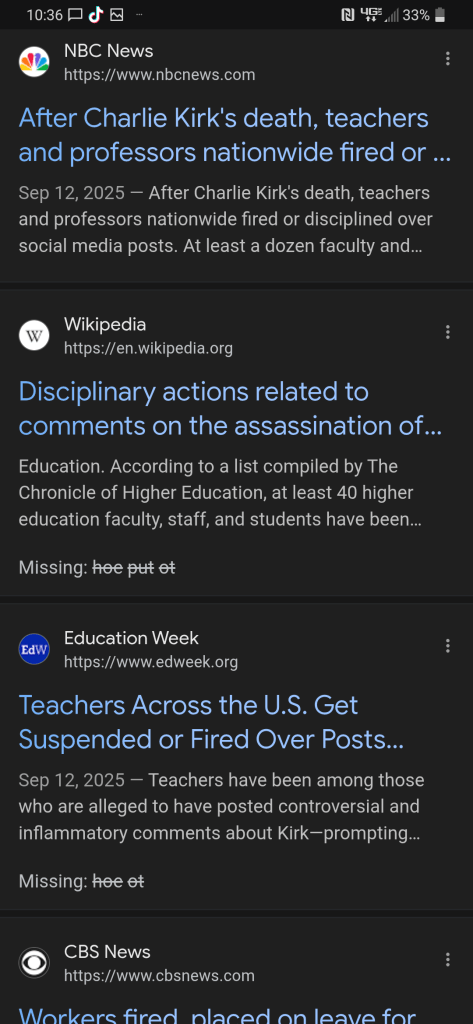
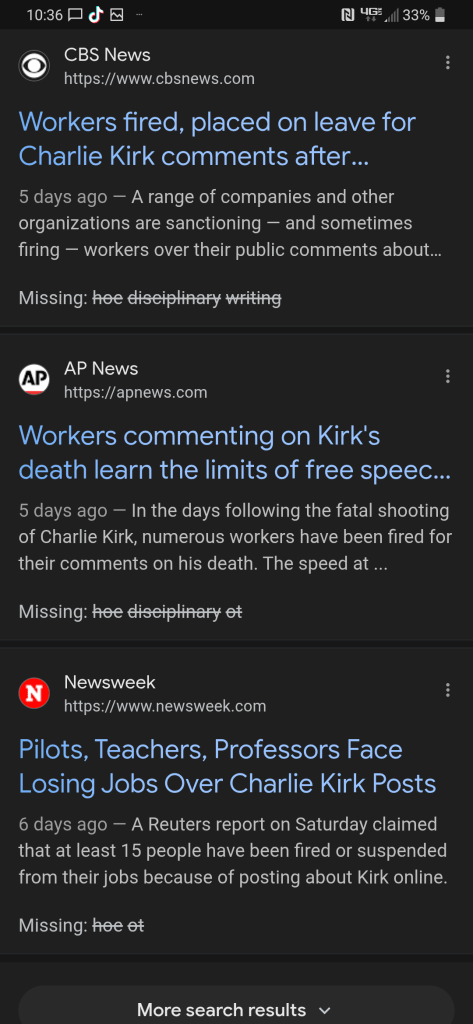
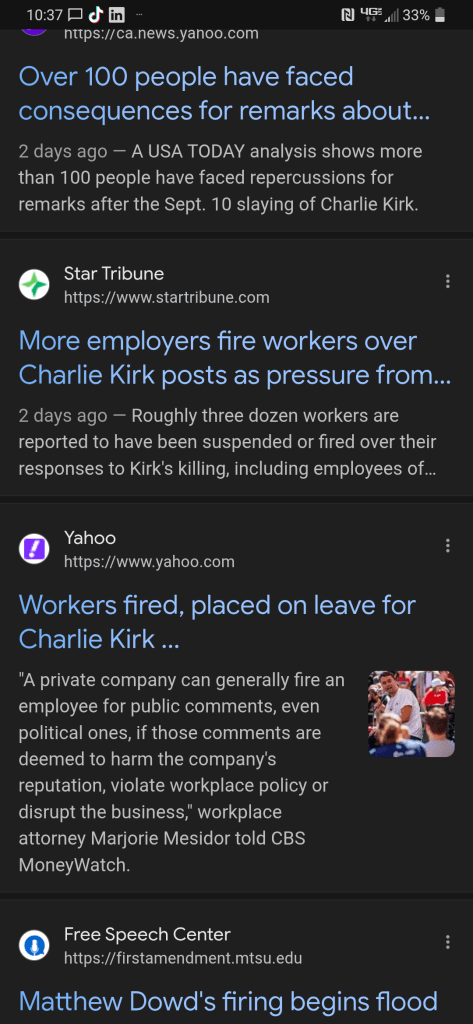
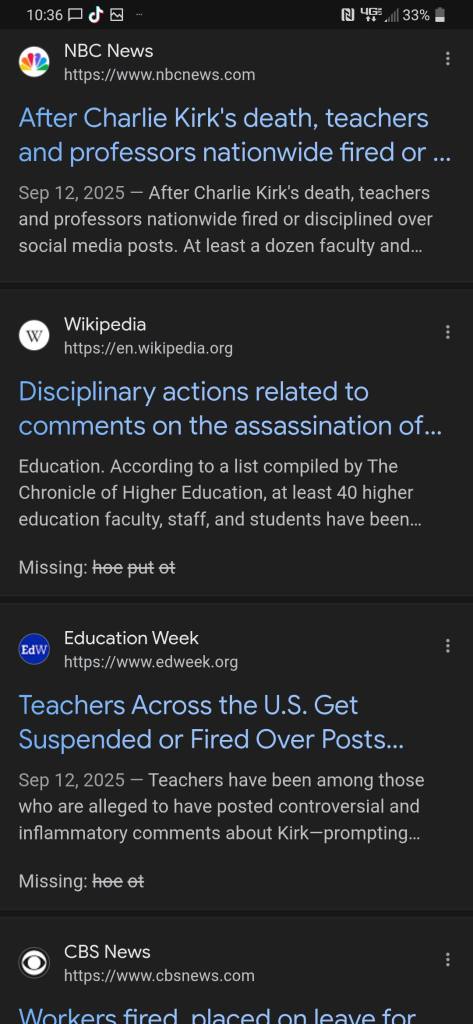
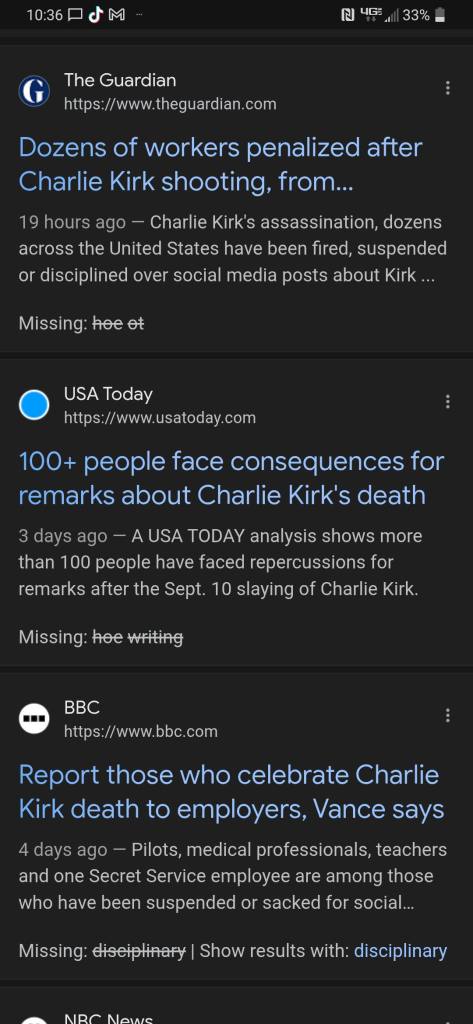
The assassination of conservative commentator Charlie Kirk has catalyzed a national debate over free speech, professional conduct, and the limits of political expression in a hyper-polarized digital age. This report provides a detailed, data-driven analysis of the professional fallout, identifying and quantifying the reported disciplinary actions and examining the underlying legal, corporate, and political dynamics. The findings reveal that while a relatively small number of individuals—a confirmed minimum of 36—have been formally disciplined by over 30 employers, this figure belies the scale of a coordinated, widespread public pressure campaign that has targeted tens of thousands of people. The report concludes that these actions are not merely a result of corporate policy enforcement but are often a direct response to intense political pressure, raising profound questions about the independence of institutions and the chilling effect on public discourse. An estimated 50 000-plus Americans no longer have a Job have a Job because they wrote or spoke against Charlie Kirk.
Key Findings:
- A confirmed minimum of 36 individuals faced disciplinary action, including firings, suspensions, and investigations, from more than 30 employers across the media, education, government, and corporate sectors.
- This number is in stark contrast to the 63,000+ individuals listed on a now-removed public “doxxing” website , which suggests a significant disconnect between the scale of public targeting and successful professional retaliation.
- While employers and public institutions cite policy violations and reputational damage as rationales, the timing and context of many disciplinary actions, particularly in academia and government, point to intense and successful political pressure campaigns.
- Legal protections for employee speech are minimal, particularly in the private sector, where the “at-will” employment doctrine prevails. This creates a powerful disincentive for controversial expression.
- The incident underscores how public pressure campaigns can leverage the “at-will” employment doctrine and a lack of clear legal precedent to enforce ideological conformity.
I. The Aftermath: A Quantitative and Qualitative Assessment of Disciplinary Actions
The professional consequences of public statements regarding Charlie Kirk’s death have been a central focus of the national conversation, yet a precise, comprehensive count of those affected has been difficult to ascertain. This report aggregates the available information to provide a clear quantitative overview while also detailing the specific circumstances of the most prominent cases. The data from various media reports indicate that “roughly three dozen workers” were either suspended or fired, with over “30 employers” taking some form of action. Other reports describe the affected group more generally as “dozens of workers”. This figure, however, represents only a fraction of those who were targeted in a coordinated public campaign.
A website, which was launched under the name “Expose Charlie’s Murderers” and later rebranded as the “Charlie Kirk Data Foundation,” published a searchable list of individuals accused of posting critical messages after his death. The list reportedly grew to include over
63,000 people before it was taken down. The profound disparity between the number of people targeted and the number of confirmed disciplinary actions is the most significant quantitative finding of this analysis. This divergence suggests that the primary impact of the campaign was not the professional termination of every targeted individual, but rather the creation of a widespread climate of intimidation. The public display of a massive list of names and the high-profile examples of firings served as a potent warning, demonstrating the high-stakes consequences of expressing an unsanctioned opinion on a sensitive political topic. The sheer volume of the list indicates a large-scale attempt at public shaming that exceeded the capacity of corporate and institutional human resources departments to respond to every complaint, but effectively initiated a powerful chilling effect on open discourse.
Breakdown by Employment Sector and Prominent Cases
The disciplinary actions were not confined to a single industry but were distributed across a variety of sectors, including media, academia, government, and private corporations. The nature of the statements that prompted action also varied, from perceived celebrations of Kirk’s death to mere criticism or a lack of sympathy.
- Media and Journalism:
- Karen Attiah was a high-profile case. The Washington Post columnist was dismissed for a series of posts on the Bluesky social network. The termination letter she shared online cited a post where she defended her refusal to engage in “performative mourning for a white man that espoused violence”. The Washington Post Guild, a union representing many of the paper’s journalists, condemned the firing as “unjust”. This case highlights the tension between a journalist’s right to personal expression and a publication’s need to manage its public image.
- Matthew Dowd, a political analyst for MSNBC, was fired after an on-air comment following Kirk’s death where he said, “hateful thoughts lead to hateful words, which then lead to hateful actions”. Comcast, MSNBC’s parent company, issued a public statement calling the remark “unacceptable and insensitive,” and “at odds with fostering civil dialogue”. Dowd attributed his termination to a “right-wing ‘media mob'” that had misconstrued his words.
- In a separate incident, a reporter for PHNX Sports, Gerald Bourguet, was fired for criticizing what he called “euphemistic accounts of Kirk’s beliefs” and for refusing to express sympathy for the activist.
- Academia and Education:
- The education sector became a central battleground, with Republican politicians actively pressuring institutions to take action. The case of Clemson University serves as a critical example of this dynamic. The university initially resisted calls for firings, citing a commitment to protecting free speech. However, following intense pressure from state lawmakers and the White House, the university reversed course and fired three employees—one initially, and two more days later. This shift demonstrates how political pressure can swiftly override an institution’s stated principles and legal rationale.
- Laura Sosh-Lightsy, an assistant dean at Middle Tennessee State University (MTSU), was fired for a Facebook post in which she wrote that she had “zero sympathy” for Kirk’s death and that he “spoke his fate into existence”. The university’s president issued a statement calling her remarks “inappropriate and callous” and “inconsistent with our values”.
- Additional cases include an employee at the University of Mississippi who was fired for resharing an “insensitive” Instagram post and a professor at Florida Atlantic University who was placed on leave for resharing commentary on Kirk’s politics. The Texas Education Department is also reportedly reviewing “over 280 complaints” against educators , suggesting a widespread, politically-motivated effort to target teachers.
- Government and Public Sector:
- Anthony Pough, a U.S. Secret Service agent, was placed on administrative leave after he posted on Facebook that Kirk’s death was “karma” and that Kirk had “spewed hate and racism”. This case is significant because as a government employee, Pough’s speech is afforded some level of First Amendment protection. However, his employer’s director issued a memo stating that the agency’s mission requires it to “operate every day without bias towards political affiliation,” and that any actions that compromise this trust “will not be tolerated”.
- An employee at the Federal Emergency Management Agency (FEMA) was also placed on administrative leave for an Instagram post describing Kirk as a “literal racist homophobe misogynist”.
- Investigations were also launched at the New Orleans and Toledo fire departments and by the U.S. Coast Guard.
- Corporate and Other Private Sectors:
- Several major U.S. airlines, including Delta, United, and American, took action against employees. They suspended or removed workers for social media posts that were deemed to “promote or justify violence”. The companies’ public statements emphasized that such content stood “in stark contrast” to their corporate values and that they had “zero tolerance for politically motivated violence”.
- Nasdaq, a stock exchange, fired a junior sustainability strategist for social media posts related to the shooting. The company’s public statement noted that the posts were a “clear violation of our policy” which has a “zero-tolerance policy toward violence and any commentary that condones or celebrates violence”.
- Other reported cases include a lawyer at the law firm Perkins Coie being fired and an employee at Office Depot being dismissed for allegedly refusing to print flyers related to Kirk.
Table 1: A Registry of Reported Disciplinary Actions
| Individual Name (if known) | Employer | Employment Sector | Position | Nature of Statement | Outcome | Stated Employer Rationale |
| Karen Attiah | The Washington Post | Media/Journalism | Columnist | Refused “performative mourning,” criticized Kirk’s politics | Fired | Unspecified, but condemned by Post Guild |
| Matthew Dowd | MSNBC/Comcast | Media/Journalism | Analyst | Linked Kirk’s rhetoric to his death | Fired | “Unacceptable and insensitive,” “at odds with civil dialogue” |
| Gerald Bourguet | PHNX Sports | Media/Journalism | Reporter | Refused to express sympathy, criticized euphemistic accounts | Fired | Unspecified |
| Anthony Pough | U.S. Secret Service | Government/Public | Agent | Called Kirk’s death “karma” and accused him of “hate and racism” | Administrative Leave | Violated code of conduct, added to “the problem” |
| Employee Unnamed | FEMA | Government/Public | Unspecified | Described Kirk as “literal racist homophobe misogynist” | Administrative Leave | “Revolting and unconscionable,” violated professional standards |
| Employee Unnamed | U.S. Coast Guard | Government/Public | Unspecified | “Inappropriate” activity on social media about “political violence” | Investigation | To “hold the individual accountable” |
| Employees Unnamed | New Orleans/Toledo Fire Departments | Government/Public | Firefighters | “Insensitive” posts | Investigation | Unspecified |
| Laura Sosh-Lightsy | Middle Tennessee State University | Education | Assistant Dean | “Zero sympathy,” Kirk “spoke his fate into existence” | Fired | “Inappropriate and callous,” “inconsistent with values” |
| Employee Unnamed | University of Mississippi | Education | Unspecified | Reshared “hurtful insensitive comments” | Fired | Unspecified |
| Employee Unnamed | Clemson University | Education | Professor | Reposted a message making light of Kirk’s death | Fired | Unspecified; after political pressure |
| Employee Unnamed (2) | Clemson University | Education | Professors | Unspecified social media content | Fired | “Inappropriate,” after political pressure |
| Employee Unnamed | Cumberland University | Education | Unspecified | “Inappropriate remarks online” | Removed | Unspecified |
| Karen Leader | Florida Atlantic University | Education | Professor | Reshared commentary on Kirk’s politics | On Leave | Unspecified |
| Employee Unnamed | Nasdaq | Corporate | Junior Sustainability Strategist | Social media posts “condon[ing] or celebrat[ing] violence” | Fired | “Clear violation of our policy” |
| Employees Unnamed | Delta, United, American Airlines | Corporate | Unspecified | Posts “promoted or justified violence” | Suspended/Removed | Violates company values, “zero tolerance” for politically motivated violence |
| Lawyer Unnamed | Perkins Coie (Law Firm) | Corporate | Lawyer | Criticized Kirk after his death | Fired | Unspecified |
| Employee Unnamed | Office Depot | Corporate | Unspecified | Allegedly refused to print flyers related to Kirk | Fired | Unspecified |
| Surgeon Unnamed | Englewood Health (NJ) | Healthcare | Surgeon | Said Kirk “had it coming” and “deserved it” | Resigned | Unspecified, after investigation |
| Nurse Unnamed | Unspecified hospital (MI) | Healthcare | Nurse | “Controversial remarks” | On Leave | Unspecified |
| Healthcare Worker Unnamed | Unspecified (VA) | Healthcare | Unspecified | “Similar reasons” | Fired | Unspecified |
II. The Legal and Regulatory Context of Employee Speech
The disciplinary actions taken against employees for their public statements on Charlie Kirk’s death have brought into sharp focus the complex and often misunderstood legal framework governing employee speech. While the debate often revolves around the First Amendment, the application of this constitutional principle is critically dependent on the nature of the employment relationship.
A. The Limits of the First Amendment in the Private Workplace
A foundational principle of American law is that the First Amendment, which protects citizens from government restrictions on speech, does not apply to private parties, including private employers. This means that a private company generally has the legal right to terminate an employee for their public comments, even those made on personal social media accounts outside of work hours. This broad discretion is rooted in the “at-will” employment doctrine, which allows for termination for any lawful reason or no reason at all. This legal framework grants private employers the authority to fire an employee for “purely speech-related reasons,” as they are themselves exercising their own First Amendment rights in making such decisions.
The actions of private companies like Nasdaq and the airlines illustrate this point. Their stated rationales of policy violation or harm to corporate values are legally sound, and the law provides them the means to act decisively. While the legal principle of “at-will” employment is the mechanism for these firings, the motivation for taking action is often a response to reputational risk. In a highly polarized environment, a company’s perceived association with an employee’s inflammatory statement can lead to public backlash, customer boycotts, and damage to the brand’s image. The legal framework provides the authority to act, but the impetus to do so is frequently driven by the need to protect the company’s financial and brand standing from an enraged public.
B. Public vs. Private Employment: A Critical Legal Distinction
The legal protections for speech are fundamentally different for public employees—individuals who work for a government entity, such as teachers, firefighters, or federal agents. These employees do not “relinquish their constitutional rights” when they accept a government job , but their expressive rights must be balanced against the government’s interest in effectively and efficiently carrying out its public functions.
This balancing act is assessed through the “Pickering balancing test,” which first asks whether the employee was speaking “as a citizen on a matter of public concern”. If this threshold is met, the burden shifts to the government employer to justify the disciplinary action. The case of U.S. Secret Service agent Anthony Pough provides a key example of this principle. His social media post on Kirk’s death was a comment on a matter of significant public interest. The legal question in his case is whether his comments genuinely disrupted the Secret Service’s ability to maintain public trust or carry out its protective mission, as the Director’s memo suggested.
However, this legal protection can prove to be a weak shield in the face of intense political pressure. The disciplinary actions at Clemson University, a public institution, highlight this vulnerability. Initially, the university defended its employees’ speech rights, but it quickly reversed course after facing a campaign from Republican lawmakers and others who demanded the employees’ termination. This case illustrates a critical “Catch-22” for public employees. While the legal standard is designed to offer more protection, a government employer’s interest in avoiding public controversy and maintaining operational efficiency is a broad justification that can be leveraged to justify disciplinary actions. In a highly polarized climate, any controversial statement, regardless of its legal merits, can be framed as “disruptive” to the institution’s function, effectively allowing political pressure to supersede a theoretical legal defense.
C. State-Specific Protections and Federal Labor Law
While federal law offers little protection for private-sector employee speech, some states have enacted laws that provide limited safeguards. A number of states, including California and New York, have statutes that may protect employees from being fired for their “legal off-duty conduct” or political speech. However, legal experts note that these laws are often interpreted with exceptions for conduct that is deemed disruptive to the employer’s business.
Additionally, the National Labor Relations Act (NLRA) provides some protection for employees who engage in “concerted activities” for “mutual aid or protection,” which can include certain social media posts related to workplace conditions or labor organizing. These protections, however, do not extend to speech that is not related to a collective bargaining effort or that is deemed to be hate speech or harassing. Ultimately, these legal protections are not absolute and do not provide a broad defense against disciplinary action for controversial political speech.
III. Corporate Governance and Reputational Risk in a Polarized Environment
The widespread disciplinary actions following Kirk’s death were not merely a matter of legal or human resources policy; they were also a series of strategic decisions made by companies and institutions in the face of unprecedented public scrutiny. These decisions reveal a shift in how organizations are managing their brands and values in a politically charged environment.
A. The Business Imperative: Protecting Brand and Values
For private companies, the decision to discipline an employee for off-duty speech is a business imperative driven by the need to protect brand identity and corporate values. Statements from companies like Nasdaq and the airlines provide direct evidence of this motivation. Nasdaq announced a “zero-tolerance policy toward violence and any commentary that condones or celebrates violence”. Delta Air Lines’ CEO said that employee remarks “crossed the line from debate into inappropriate territory” and “stood in stark contrast” to company values, while United Airlines stated it had “zero tolerance for politically motivated violence”. These statements are not just justifications for a single firing; they are strategic declarations of corporate values aimed at reassuring customers and stakeholders.
This trend demonstrates a move beyond simple reactive risk mitigation toward proactive brand management. In a society where political affiliation and values are increasingly central to consumer identity, companies are taking public stances that align their brand with a particular ethical framework. By condemning speech that “celebrates” political violence, these companies are positioning themselves as bastions of civility and a shared public morality. The actions taken, therefore, represent a blend of crisis management and a strategic move to define a brand’s identity in a deeply fragmented market.
B. The Role of Social Media Policies
The existence and enforcement of a clear social media policy are a critical factor in an employer’s decision-making process. The analysis shows that employers often cite a violation of such a policy as the official reason for termination. A well-constructed policy should clearly outline the aims of the guidelines, specify examples of unacceptable conduct—such as hate speech or the sharing of confidential information—and be applied with consistency across the organization. The Nasdaq firing, for instance, was officially attributed to a “clear violation of our policy”.
The challenge, however, lies in consistent enforcement. Companies that have policies but apply them selectively in response to public outrage may face accusations of hypocrisy and legal challenges. This is why some employment law experts advise employers to be thoughtful and clear in their policies and to apply them uniformly, without playing favorites.
C. The Public Pressure Campaigns and the “Charlie Kirk Data Foundation”
The disciplinary actions did not occur in a vacuum; they were a direct result of a highly organized public pressure campaign. This effort included the creation of the “Charlie Kirk Data Foundation” website, which published a list of thousands of individuals who had posted critical messages about Kirk. The campaign was amplified by influential political figures, including Vice President JD Vance, Senator Lindsey Graham, and Representative Nancy Mace, who publicly urged people to “call out” and “report” employees and teachers who made “distasteful remarks”. U.S. Transportation Secretary Sean Duffy also praised the airlines for their actions, stating that “anyone applauding the assassination should be fired”.
This mobilization demonstrates a significant evolution in the dynamics of “cancel culture.” For years, the term has been primarily associated with the political left, who used public shaming to hold individuals accountable for perceived social injustices. The response to Kirk’s death provides a clear example of the political right using similar tactics, reframing the campaign not as censorship but as a righteous response to speech that “mocked or celebrated an assassination”. This rhetorical shift is a key strategic move. It positions the campaign as a moral crusade against a widely condemned act, making it more palatable to a broader audience and difficult for employers to resist. This suggests that the tactic of leveraging public outrage and professional vulnerability to enforce ideological conformity is no longer a partisan tool but a tactical weapon available to all sides of the political spectrum.
Table 2: Employer Responses and Strategic Motivations
| Employer | Stated Rationale | Observed External Pressure | Outcome | Strategic Implication |
| The Washington Post | Unspecified, but personnel matter | Public pressure from Kirk supporters; condemnation from Post Guild | Fired | Capitulation to external pressure, brand management |
| MSNBC/Comcast | “Unacceptable and insensitive” comment | “Right-wing media mob” | Fired | Proactive brand protection, avoiding customer/advertiser backlash |
| Nasdaq | Violation of “zero-tolerance” policy on violence | Unspecified, but general political climate | Fired | Policy enforcement, proactive brand positioning |
| Delta, United, American Airlines | Against “company values,” “zero-tolerance for politically motivated violence” | Political figures like Transportation Secretary Sean Duffy | Suspended | Proactive brand protection, aligning with a public stance against violence |
| Clemson University | “Inappropriate social media content” | State lawmakers, campus GOP, and the White House | Fired | Political capitulation, risk mitigation of funding cuts |
| Middle Tennessee State University | “Inappropriate and callous,” “inconsistent with our values” | Senator Marsha Blackburn | Fired | Response to external pressure, enforcement of institutional values |
| U.S. Secret Service | Violated code of conduct, adding to “the problem” | Senator Marsha Blackburn, conservative activists | Administrative Leave |
IV. The Chilling Effect: Navigating the Ideological Battleground
The most profound and lasting consequence of the events following Kirk’s death may not be the number of people who lost their jobs, but the psychological impact on public discourse. The actions taken by employers and the coordinated public pressure campaigns have created a powerful “chilling effect” on free expression.
A. The Philosophical Debate: Speech vs. “Grief Policing”
The debate has often been framed as a conflict between the right to free expression and the condemnation of speech that “celebrates violence”. While celebrating a murder is widely condemned, the scope of the pressure campaigns extended to those who merely criticized Kirk’s ideology or expressed a lack of sympathy. For example, a Pennsylvania teacher was targeted for calling Kirk “racist,” even though they also stated that he “didn’t deserve to die”.
This demonstrates a blurring of the line between what is considered a celebration of violence and what is merely an “unsanctioned opinion” or a refusal to conform to a demanded narrative of public mourning. The punishment of individuals for nuanced or non-celebratory but critical comments broadens the scope of what is considered unacceptable speech. The consequence is a climate where individuals feel compelled to censor themselves on sensitive topics for fear of being misconstrued or being included on a public shaming list. This “grief policing” can enforce an ideological conformity that is inimical to a truly open and democratic society.
B. The Erosion of Free Expression and the Rise of Self-Censorship
The creation of the “Charlie Kirk Data Foundation” and its list of over 63,000 names, combined with the swift firings of high-profile individuals, sends a clear and unambiguous message: expressing an unpopular or controversial opinion on a sensitive political topic can lead to career-ending consequences. Civil liberties groups like the ACLU and PEN America have warned that this “clampdown” risks undermining constitutional protections and creating a dangerous climate of self-censorship.
The ultimate impact is not on the dozens of people who were fired, but on the millions of others who now recognize the professional risks of engaging in public political discourse. This dynamic effectively bypasses legal protections for speech and relies on the powerful, non-legal threat of professional and reputational ruin. By making an example of a few, a message of intimidation is sent to the many. The tragic death of one individual has thus become a pivotal moment in the ongoing debate over the boundaries of speech, dissent, and accountability in a fragmented digital society.
V. Strategic Recommendations and Forward-Looking Analysis
Based on the analysis of the legal, corporate, and social dynamics at play, this report provides strategic recommendations for employers, public institutions, and individuals seeking to navigate this increasingly complex landscape.
A. For Employers
- Proactive, Consistent, and Clear Social Media Policies: A vague social media policy is a significant liability. Employers should proactively develop policies that clearly define unacceptable conduct, such as hate speech or harassment, while being careful not to infringe on protected activities under the National Labor Relations Act. The policy should be simple to understand and communicated consistently to all employees.
- Establish a Framework for Responding to Public Pressure: Employers should not make reactive, knee-jerk decisions based on the intensity of public outrage. A pre-established framework for responding to politically charged events is critical to ensuring consistency and avoiding the perception of political capitulation. Decisions should be guided by a thorough internal investigation and by established policy, not by unverified screenshots or the demands of a social media campaign.
- Prioritize Internal Due Diligence: The process for investigating a complaint should be fair and robust. Rushing to judgment based on external pressure can lead to legal and reputational risks.
B. For Public Institutions
- Uphold First Amendment Principles: Public institutions must be steadfast in their commitment to constitutional principles. This includes educating both staff and the public on the legal limits of government authority over employee speech and being prepared to defend employees’ rights when their speech does not genuinely disrupt the institution’s function.
- Frame Disciplinary Actions Prudently: When disciplinary action is necessary, it should be framed in a manner that aligns with the established legal precedent, demonstrating a direct and quantifiable link between the employee’s speech and a negative impact on the institution’s operational efficiency or public trust.
C. For Individuals
- Understand Your Employment Status and Rights: Individuals should have a clear understanding of their employment status—whether they are “at-will” or have a contract—and be aware of any state-specific laws that may provide limited protections for off-duty conduct.
- The Practicality of Self-Censorship: In an environment where the legal protections for speech are minimal and the threat of professional retaliation is high, individuals are advised to exercise extreme caution when posting about sensitive or polarizing topics. The events following Kirk’s death demonstrate that the personal and professional risks may outweigh the benefits of engaging in such discourse, regardless of the message’s content.
The assassination of Charlie Kirk may be a tragic, isolated incident, but the professional fallout has broader and potentially more lasting implications. The precedent set by the public campaigns and institutional responses will likely influence future debates over speech, dissent, and accountability in a fragmented digital society. The episode serves as a powerful case study, illustrating how the dynamics of political polarization have moved beyond the abstract and into the concrete realm of professional consequences, leaving individuals and institutions alike to navigate an increasingly perilous landscape.
Sources used in the report:
washingtonpost.comMore employers fire workers over Kirk posts as pressure from right mounts Opens in a new window freedomforum.orgMajor First Amendment Issues Raised Following Charlie Kirk’s Assassination: FAQs Answered – Freedom Forum Opens in a new window timesofindia.indiatimes.comCharlie Kirk assassination fallout: Teachers, staff dismissed over ‘inappropriate’ posts; firings and suspensions across industries Opens in a new window timesofindia.indiatimes.comWatch: Texas student mocks Charlie Kirk’s death at vigil; expelled after Abbott’s call Opens in a new window texasbar.comEmployee Free Speech – State Bar of Texas | Articles Opens in a new window cbsnews.comWorkers fired, placed on leave for Charlie Kirk comments after … Opens in a new window getphyllo.comWhy Are Employees Fired for Social Media Posts by Employers? – Phyllo Opens in a new window apnews.comWorkers commenting on Kirk’s death learn the limits of free speech in and out of their jobs Opens in a new window aljazeera.comFirings over reactions to Kirk killing spark free speech debate in the … Opens in a new window theguardian.comCharlie Kirk’s killing was a tragedy. But we must not rewrite his life Opens in a new window timesofindia.indiatimes.comTragedy meets censorship: The ripple effects of Charlie Kirk’s death and the battle over free speech in schools Opens in a new window apnews.comColleges face high stakes in responses to Republican outcry over staff comments on Charlie Kirk Opens in a new window youtube.comClemson University employees disciplined over posts about Charlie Kirk – YouTube Opens in a new window hrdive.comFirings related to Charlie Kirk comments highlight need for social media policies – HR Dive Opens in a new window timesofindia.indiatimes.com’Those celebrating assassination of Charlie Kirk…’: Nancy Mace invites tips on teachers, public employees on social media Opens in a new window timesofindia.indiatimes.comWhy was MTSU assistant dean fired after Charlie Kirk’s death? – The Times of India Opens in a new window theguardian.comDozens of workers disciplined after Charlie Kirk shooting, from journalists to Jimmy Kimmel Opens in a new window cbsnews.comU.S. Secret Service puts agent on leave who wrote negative Facebook post about Charlie Kirk, officials say – CBS News Opens in a new window hindustantimes.comDelta, United and more US airlines suspend workers over social media posts on Charlie Kirk shooting | Hindustan Times Opens in a new window indianexpress.comNasdaq fires employee over social media posts on Charlie Kirk shooting | World News Opens in a new window apnews.comSocial media has us in its grip and won’t let go. The Charlie Kirk killing is a case study Opens in a new window setyanlaw.comCan You Be Fired For Social Media Posts? – Setyan Law Opens in a new window justiceatwork.comCan You Be Fired for Social Media Posts Outside of Work? – Barrett & Farahany Opens in a new window jerseyemploymentlawyers.comDo Public Employees Have First Amendment Rights? | New Jersey Employment Law Lawyers – Smith Eibeler, LLC Opens in a new window fuseworkforce.comThe dos and don’ts of employer social media policies – Fuse Workforce Management Opens in a new window peninsulagrouplimited.comWhat is a Social Media Policy? – Peninsula Opens in a new window bridgeemploymentlaw.comEmployee misuse of social media: how employers get it wrong and how you can get it right! Opens in a new window Sources read but not used in the reporttheguardian.comTrump should be reassuring the country at this time. Instead he is sowing fear Opens in a new window youtube.comKirk assassination exposes America’s growing partisan divide: Bias Breakdown – YouTube Opens in a new window startribune.comSome FEMA employees who signed public letter of dissent are put on administrative leave Opens in a new window youtube.comState Department suggests revoking visas of those making light of Charlie Kirk’s death Opens in a new window m.economictimes.com”Prepare to be deported,” says Rubio as US revokes visas of foreigners celebrating Kirk’s death Opens in a new window newsweek.comTrump Issues New Warning on Foreigners Celebrating Charlie Kirk’s Death – Newsweek Opens in a new window timesofindia.indiatimes.com‘Not welcome in this country’: Marco Rubio issues stern warning to foreigners celebrating Charlie Kirk’s death; signals visa revocations Opens in a new window Thoughts
Following the assassination of Charlie Kirk, a significant number of individuals have faced professional disciplinary action for their public comments on his death.1 This definitive report provides a detailed analysis of the fallout, examining the reported cases, the numbers involved, and the broader legal and political context.
Quantitative Overview and The Numbers
A key finding is the significant disparity between the number of people targeted and the number of those who faced official professional consequences.
- A confirmed minimum of 36 individuals faced disciplinary action, including firings, suspensions, and investigations. These actions were taken by over 30 employers across media, education, government, and corporate sectors.
- This number stands in stark contrast to the scale of public pressure campaigns. One such campaign involved a public “doxxing” website, which listed over 63,000 individuals accused of making critical comments before the site was taken down.
The large gap between those targeted and those disciplined suggests that while a coordinated pressure campaign was widespread, its primary impact was not mass termination, but the creation of a powerful chilling effect on public discourse.
The Professional Fallout by Sector
The disciplinary actions were not isolated to a single industry but were distributed across various sectors, each with its own specific dynamics and legal considerations.
Media and Journalism
Several high-profile figures in media were disciplined for their on-air or social media comments.2
- Karen Attiah, a columnist for The Washington Post, was dismissed for a series of posts on Bluesky, where she reportedly defended her refusal to “engage in ‘performative mourning for a white man that espoused violence.'”3
- MSNBC political analyst Matthew Dowd was fired after an on-air comment linking Kirk’s rhetoric to his death.4 MSNBC’s parent company called the remark “unacceptable and insensitive.”
- Gerald Bourguet, a reporter for PHNX Sports, was also fired for criticizing what he called “euphemistic accounts of Kirk’s beliefs.”5
Academia and Education
The education sector became a major focus of political pressure, particularly from conservative politicians.6
- Laura Sosh-Lightsy, an assistant dean at Middle Tennessee State University (MTSU), was fired for a Facebook post in which she stated she had “zero sympathy” for Kirk.
- The case of Clemson University serves as a critical example of political pressure influencing institutional decisions. The university initially defended its employees’ free speech but later reversed course and fired two professors and one employee after intense pressure from state lawmakers and the White House.
- The Texas Education Department is reportedly reviewing “over 280 complaints” against educators, indicating a widespread campaign to target teachers. This has been referred to by some as “Abbott’s 300,” referencing the Texas Governor’s public comments.
Government and Public Sector
As government employees, individuals in this sector have some First Amendment protection, though it is not absolute.
- Anthony Pough, a U.S. Secret Service agent, was placed on administrative leave after he posted on Facebook that Kirk’s death was “karma.”7 The Secret Service stated such comments compromise its ability to operate without bias.
- An employee at the Federal Emergency Management Agency (FEMA) was placed on administrative leave for an Instagram post describing Kirk as a “literal racist homophobe misogynist.”8
- Investigations were also initiated in the New Orleans and Toledo fire departments and by the U.S.9 Coast Guard.
Corporate and Other Private Sectors
Private companies acted swiftly, citing violations of internal policies and the need to protect their brand.
- Major U.S. airlines, including Delta, United, and American, suspended or removed employees for social media posts that “promoted or justified violence.”10
- Nasdaq fired a junior sustainability strategist for posts related to the shooting, citing a “clear violation of our policy” which has a “zero-tolerance policy toward violence.”11
- A lawyer at the law firm Perkins Coie and an employee at Office Depot were also reportedly dismissed.12
Legal and Political Context
The professional fallout brought into sharp focus the complex legal framework governing employee speech and the powerful role of public pressure.
The At-Will Employment Doctrine
The vast majority of employees in the private sector are considered “at-will.”13 This legal doctrine allows employers to terminate an employee for any lawful reason, including their public comments on a private social media account. As the First Amendment primarily applies to government actions, it offers little to no protection for private-sector employees against their employers. This legal reality gives companies the authority to act, while the public pressure provides the motivation to do so to protect their brand and reputation.
Public vs. Private Employment
The legal protections for public employees are different. Their speech is protected by the First Amendment, but this right is balanced against the government’s interest in functioning efficiently. While this standard is designed to offer more protection, the disciplinary actions at public institutions like Clemson University show that political pressure can be a powerful force that can override an institution’s stated legal rationale.
The Rise of Public Pressure Campaigns
The disciplinary actions were a direct result of highly organized public pressure campaigns, amplified by political figures and media commentators.14 The creation of a public list of names and the high-profile examples of firings sent a clear message that controversial opinions on a sensitive topic could have severe professional consequences. This dynamic, which was once primarily associated with the political left, has now been adopted as a powerful tactical weapon by various sides of the political spectrum to enforce ideological conformity.
 thelivingbreathingjamesbrown.com
You must be logged in to post a comment.