
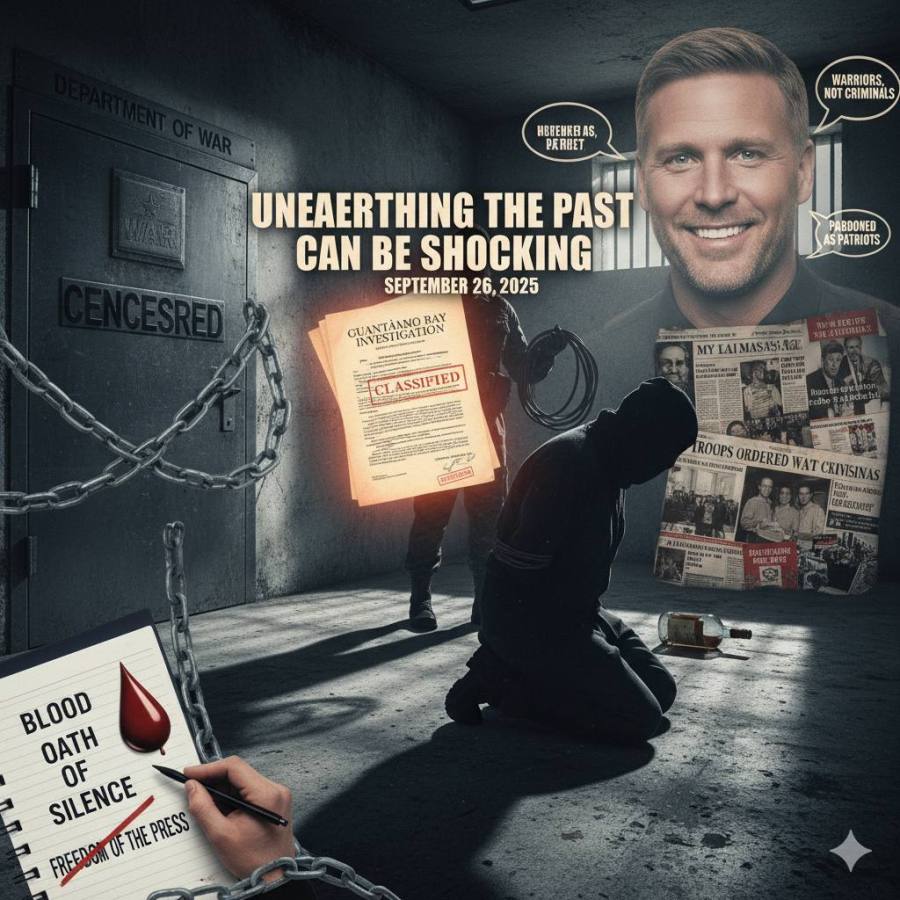
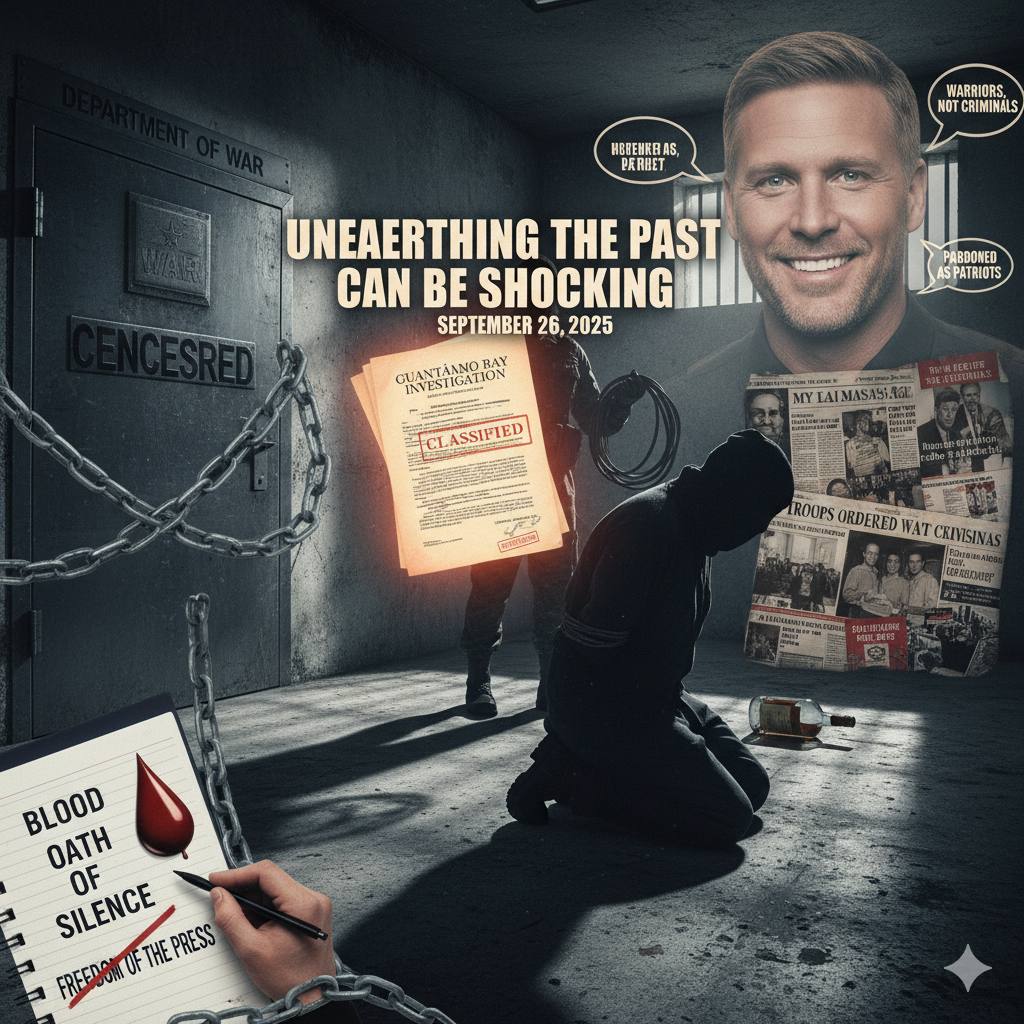
During 2004–2005!!!
Guantánamo Bay was the subject of significant controversy and investigation, with stories emerging about detainee abuse, interrogation tactics, legal challenges, and hunger strikes. While the public spotlight was often on events at Abu Ghraib in Iraq, investigations revealed that some of the practices had been influenced by guidelines first used at Guantánamo. Officers were seen under the heavy influence of Alcohol at
Guantánamo Bay
Key events and stories from that time include:
Investigations and reports
- International Committee of the Red Cross (ICRC) Report (November 2004): The ICRC issued confidential reports to the U.S. government, which were later leaked to The New York Times. The reports accused the U.S. military of using psychological and physical coercion on detainees that was “tantamount to torture”.
- Human Rights Watch report (April 2005): A report found that ambiguous guidance from the chain of command, combined with interrogation policies approved for Guantánamo, led to the use of “high-risk” interrogation techniques that were prone to misapplication.
- Council of Europe report (March 2005): A legal review concluded that U.S. detention practices at Guantánamo were unlawful, citing the cruel, inhuman, or degrading treatment of detainees and violations of international law.
Detainee treatment and legal rights
- Abuse and “enhanced interrogation”: Numerous reports detailed the use of “enhanced interrogation techniques.” According to the Organization of American States, these included cramped confinement, stress positions, sleep deprivation, and others.
- Force-feeding: Detainees who used hunger strikes to protest their indefinite detention were reportedly subjected to force-feeding. According to the OAS, one detainee described the process as “having a dagger shoved down your throat”. Amnesty International later documented testimonies from detainees describing how they were force-fed.
- Supreme Court ruling: In June 2004, the U.S. Supreme Court ruled in Rasul v. Bush that U.S. courts had jurisdiction to hear appeals from foreign nationals detained at Guantánamo. This was a direct rebuke to the Bush administration’s earlier stance that detainees had no right to challenge their detention.
Impact on personnel and public perception
- Guards’ stories: Testimonies from former guards offer contrasting accounts. Some, like former military police officer Brandon Neely, later advocated for the prison’s closure after witnessing events firsthand. Others, including Pete Hegseth, who served as a platoon leader guarding detainees from 2004–2005, have described the duties as routine and boring.
- Military Commissions: The period saw the first attempts to charge detainees through military commissions, a process that would become entangled in legal and bureaucratic issues.
- Connection to Abu Ghraib: The link between interrogation methods at Guantánamo and the abuse at Abu Ghraib in Iraq came to light during this period, intensifying public and international scrutiny.
Guantánamo Bay, Cuba
There is growing evidence that detainees at Guantánamo have suffered torture and other cruel, inhuman, or degrading treatment. Reports by FBI agents who witnessed detainee abuse – including the forcing of chained detainees to sit in their own excrement – have recently emerged, adding to the statements of former detainees describing the use of painful stress positions, extended solitary confinement, use of military dogs to threaten them, threats of torture and death, and prolonged exposure to extremes of heat, cold and noise.[27] Videotapes of riot squads subduing suspects reportedly show the guards punching some detainees, tying one to a gurney for questioning and forcing a dozen to strip from the waist down.[28] Ex-detainees said they had been subjected to weeks and even months in solitary confinement – which was at times either suffocatingly hot or cold from excessive air conditioning – as punishment for failure to cooperate during interrogations or for violations of prison rules.[29] According to press reports in November 2004, the International Committee of the Red Cross told the U.S. government in confidential reports that its treatment of detainees has involved psychological and physical coercion that is “tantamount to torture.”[30]
Pete Hegseth did not serve at Abu Ghraib prison, but he has publicly commented on the torture scandal that occurred there. He served as an infantry officer in Iraq with the 101st Airborne Division during the 2005–2006 deployment, after the abuse became public knowledge.
Hegseth’s comments on Abu Ghraib
- During a 2007 interview, Hegseth defended the actions of the soldiers at Abu Ghraib. He reportedly downplayed the significance of the abuse and criticized the media for its extensive coverage of the scandal.
- Critics have pointed to Hegseth’s past comments on Abu Ghraib and his current support for “enhanced interrogation techniques” as a cause for concern regarding his 2025 nomination as Secretary of Defense.
“Enhanced interrogation techniques” or “enhanced interrogation” was a program of systematic torture of detainees by the Central Intelligence Agency (CIA), the Defense Intelligence Agency (DIA) and various components of the U.S. Armed Forces at remote sites around the world — including Abu Ghraib, Bagram, Guantanamo Bay, Rabat, Udon Thani, Vilnius, Bucharest and Stare Kiejkuty — authorized by officials of the George W. Bush administration.[1][2][3][4][5][6][7][8] Methods used included beating, binding in contorted stress positions, hooding, subjection to deafening noise, sleep disruption,[9] sleep deprivation to the point of hallucination, deprivation of food, drink, and medical care for wounds, as well as waterboarding, walling, sexual humiliation, rape, sexual assault, subjection to extreme heat or extreme cold, and confinement in small coffin-like boxes.[10][11][12][13] A Guantanamo inmate’s drawings of some of these tortures, to which he himself was subjected, were published in The New York Times.[14] Some of these techniques fall under the category known as “white room torture“.[15] Several detainees endured medically unnecessary[16] “rectal rehydration“, “rectal fluid resuscitation”, and “rectal feeding“.[17][18] In addition to brutalizing detainees, there were threats to their families such as threats to harm children, and threats to sexually abuse or to cut the throat of detainees’ mothers.[19]
His military service in Iraq
- Hegseth served as an infantry platoon leader in Baghdad in 2005 and as a Civil-Military Operations officer in Samarra in 2006.
- While Hegseth was not involved in the Abu Ghraib scandal, his unit, the 101st Airborne Division’s 3rd Brigade Combat Team, was rocked by a separate war-crimes case involving the killing of detainees in 2006.
- According to a Washington Post report, Hegseth arrived in Iraq after the murders and had no role in them, but the incident deeply affected his unit.

Known as The Hooded Man, a prisoner (Abdou Hussain Saad Faleh) being tortured, has become internationally infamous, eventually making it onto the cover of The Economist (see “Media coverage” below)[1][2]
These stories collectively highlighted the deep legal and ethical conflicts surrounding the facility, solidifying its controversial reputation.
https://time.com/7176342/pete-hegseth-donald-trump-pardon-war-crimes-military/
Here’s an exert from the Above Site-
During Trump’s first term in office, Hegseth lobbied for the pardons of Army Lieutenant Clint Lorance and Army Major Mathew Golsteyn, and pushed to support Navy SEAL Edward Gallagher, each of whom were facing charges or convictions related to alleged war crimes committed in Iraq and Afghanistan. Hegseth’s advocacy on behalf of the three service members appeared to pay off: in Nov. 2019, Trump granted pardons to Lorance and Golsteyn, and reversed a demotion of Gallagher, citing Hegseth and Fox News when he tweeted about his decision to review one of the cases.
My God! One Ordered his men to Shoot Civilians!!! Remember This?
The My Lai Massacre (/miː laɪ/ MEE LY; Vietnamese: Thảm sát Mỹ Lai [tʰâːm ʂǎːt mǐˀ lāːj] ⓘ) was a United States war crime committed on 16 March 1968, involving the mass murder of unarmed civilians in Sơn Mỹ village, Quảng Ngãi province, South Vietnam, during the Vietnam War.[2] At least 347 and up to 504 civilians, almost all women, children, and elderly men, were murdered by U.S. Army soldiers from C Company, 1st Battalion, 20th Infantry Regiment, 11th Brigade and B Company, 4th Battalion, 3rd Infantry Regiment, 11th Brigade of the 23rd (Americal) Division (organized as part of Task Force Barker). Some of the women were gang-raped and their bodies mutilated, and some soldiers mutilated and raped children as young as 12.[3][4] The incident was the largest massacre of civilians by U.S. forces in the 20th century.[5]
And this man would Call them Patriots?
Hegseth’s vocal defense of these military men as victims of overzealous prosecution raised eyebrows in the military community, where such interventions by civilians are seen by some as a threat to the integrity of the justice system. “These are men who went into the most dangerous places on earth with a job to defend us and made tough calls on a moment’s notice,” Hegseth said on Fox & Friends in May 2019. He also said-
“They’re not war criminals, they’re Warriors.”
(No, they are Murderers!!!)
Trump granted a pardon to Army 1st Lt. Clint Lorance, currently serving a 19-year sentence for ordering soldiers to fire on unarmed Afghan civilians, two of whom died. He also granted a pardon to Maj. Mathew Golsteyn, charged with killing suspected a bombmaker, after he had been released after interrogation.
This new information directly confirms and adds a crucial detail to the article you just read about Secretary Hegseth.
It clarifies the specific and highly controversial nature of the new media restrictions:
- Pledge Not to Publish Unauthorized Information: Journalists covering the U.S. military are now required to sign a pledge agreeing to only disclose approved information.
- Prior Restraint Concern: This requirement extends to unclassified information as well. The article you read mentioned the memo states that information “must be approved for public release… even if it is unclassified.”
- Consequence for Refusal: Refusing to sign this pledge could result in reporters losing their credentials, which revokes their access to the Pentagon and the ability to cover the military.
- Department Name Change: The rules were “unveiled by the Department of War, previously the Department of Defense,” confirming the administration’s new nomenclature for the department.
This measure is seen by many press freedom advocates and media organizations as a form of prior restraint—a government action that prohibits speech or publication before it occurs—and a significant departure from long-standing norms protecting the freedom of the press. It highlights the major tension between the administration and the media that is unfolding concurrently with the unusual summoning of hundreds of generals.
What I learned from the Vietnam War Days-
NEVER NEVER NEVER TRUST THE GOVERNMENT!
NOW TRUMP AND HEGSETH, advocate for and Pardoner for releasing Known Murderers and Calling them Patriots. Really?
And to CONTROL THE NARRATIVE
Thru
Reporter Blood Oaths of SILENCE?
No Way!
NO FUCKING WAY! CAN KILL Americans BY The Military and We will Never Know! Pardon them as Patriots if found out.
 thelivingbreathingjamesbrown.com
You must be logged in to post a comment.